
The Definitive Guide to American Workwear Collecting
Before American workwear became a “fashion trend”, it was a necessity. Denim jackets built for miners, canvas chore coats worn by railroad workers, military-grade fabrics engineered to survive years of hard labor: these garments were never designed to be beautiful. They became beautiful because they were built to last.
Today, American workwear is one of the most sought-after categories in vintage collecting. But it is also one of the most misunderstood. For every serious collector who can date a selvedge denim by its weave, there are a hundred buyers who mistake reproduction for original, or who overlook the most significant pieces because they do not yet know what to look for.
This guide is for the serious side. Whether you are just starting to build a collection or looking to deepen your knowledge, here is everything you need to understand American workwear: where it came from, what makes a piece worth collecting, and how to develop the eye that separates an amateur from an archivist.
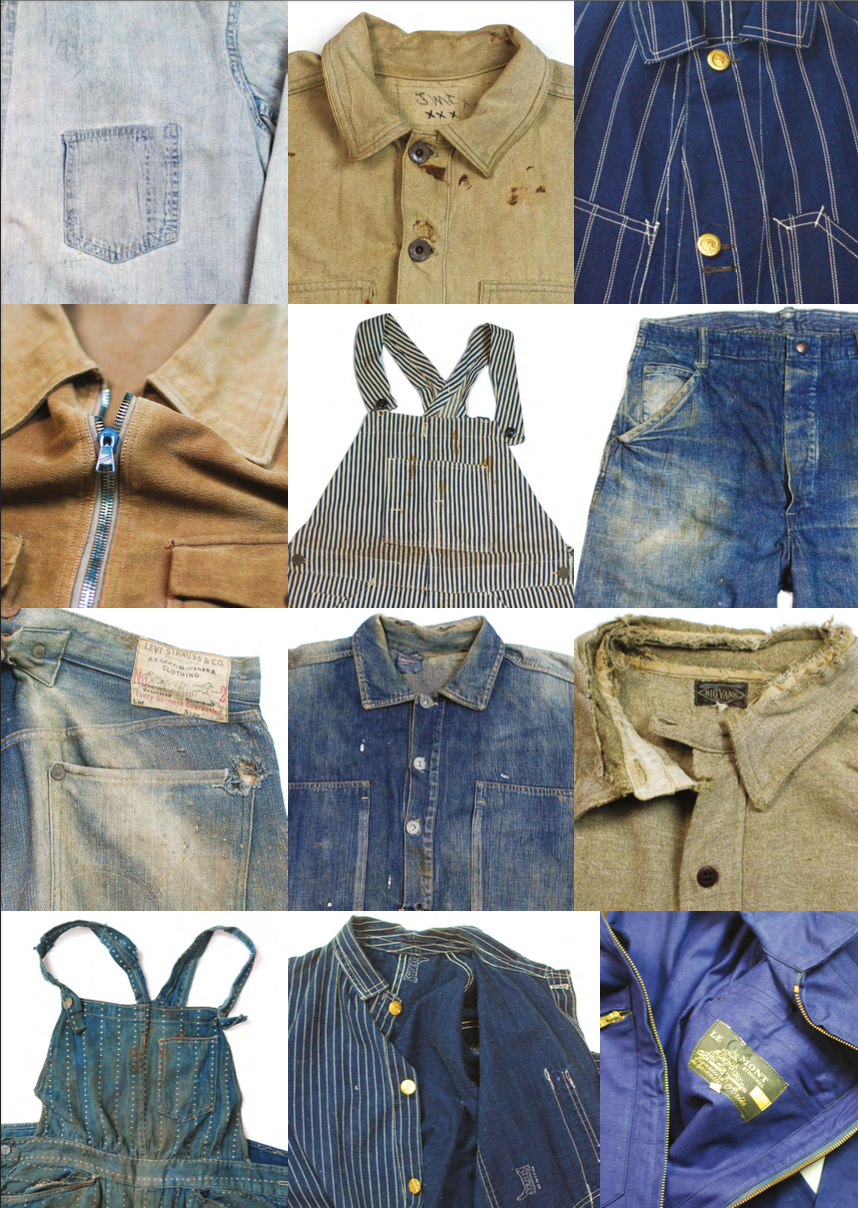
What Is American Workwear?
American workwear was born out of necessity during the industrial era of the 19th century. As the United States expanded westward and built its industrial base, a specific category of clothing emerged: durable, functional, and built entirely for labor.
The story begins with denim. Levi Strauss & Co.'s first rivet-reinforced work pants, patented in 1873, were designed for gold rush miners in California. But denim was just one thread in a much larger fabric. By the early 20th century, an entire ecosystem of workwear had developed: chore coats, coveralls, engineer stripes, hickory shirts… each category tied to a specific profession, region, and era.
Key manufacturers like Lee, Carhartt, Hercules, and OshKosh B'Gosh defined the mainstream landscape. But alongside the major brands, hundreds of smaller regional manufacturers produced work clothing for specific industries, logging in the Pacific Northwest, coal mining in Appalachia, farming in the Midwest. These lesser-known labels are often where the most significant collecting happens.
After World War II, American workwear began its slow transformation from functional necessity to cultural artifact. As synthetic fabrics replaced natural ones and manufacturing moved offshore, the pre-war garments that had been built to last began to stand out not just as clothing, but as evidence of a different era of making.
Why Collect American Workwear?
Three things make American workwear particularly compelling as a collecting category.
Construction quality
Pre-war American workwear was built with a level of material and construction that simply does not exist today. Fabrics like Stifel prints -- the iconic printed cotton produced by the Stifel & Litner Company were woven to survive years of hard labor. Selvedge denim, chain-stitched seams, solid metal hardware: every detail was engineered for durability, not aesthetics. The result is a category of objects that age extraordinarily well.
Historical specificity
Unlike many collecting categories, American workwear is deeply contextual. A garment's value is inseparable from its history who made it, when, for what industry, in what region. This specificity rewards deep knowledge and creates a collecting discipline where expertise genuinely matters. The more you know, the more you see.
American workwear is one of the most direct expressions of working-class American culture. It tells the story of the people who built the country, not the politicians or the industrialists, but the miners, the farmers, the railroad workers. Collecting it is, in some sense, an act of cultural preservation.
Cultural significance
The 4 Categories Every Collector Should Know
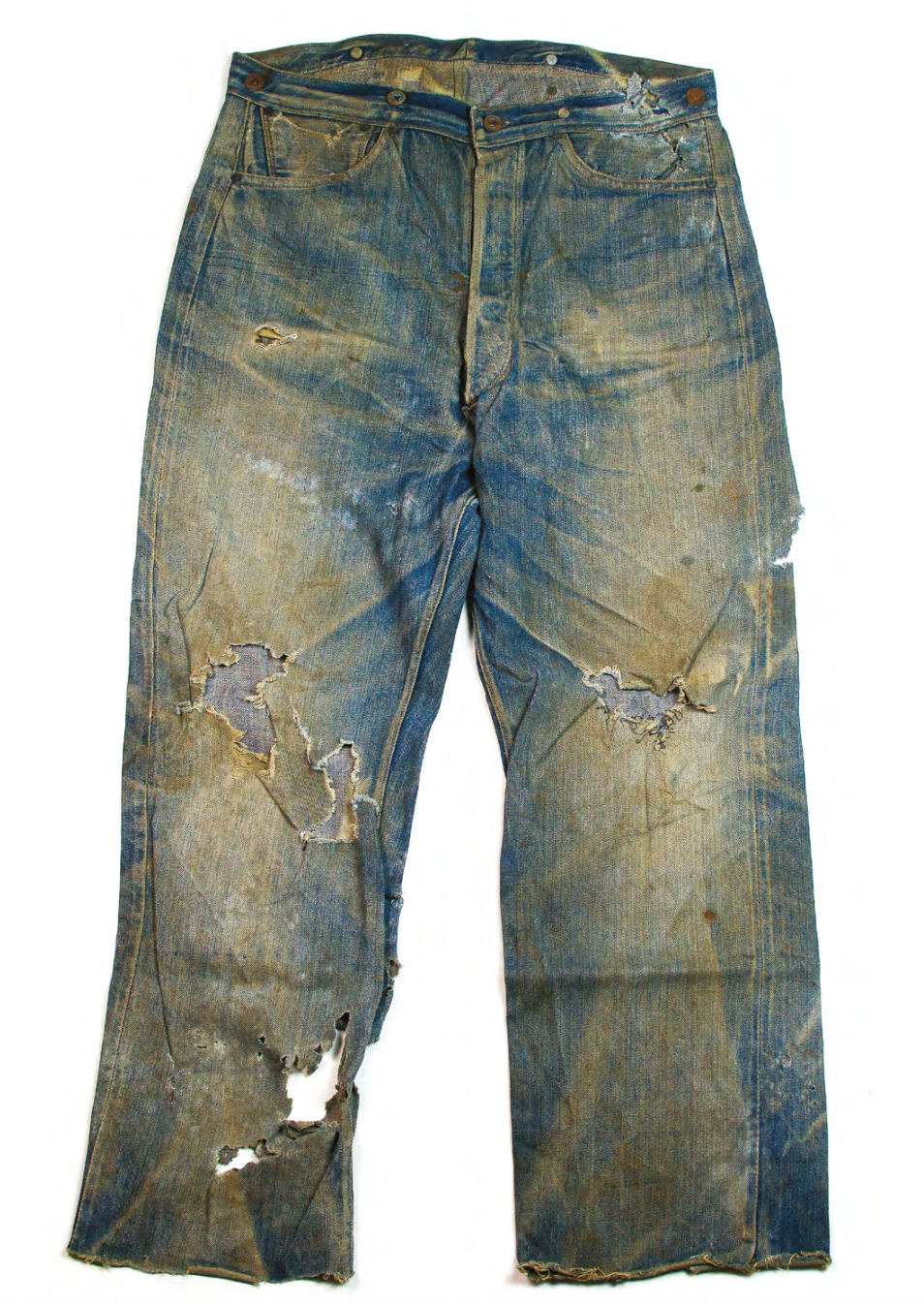
The Big Bend Pants
American Workwear
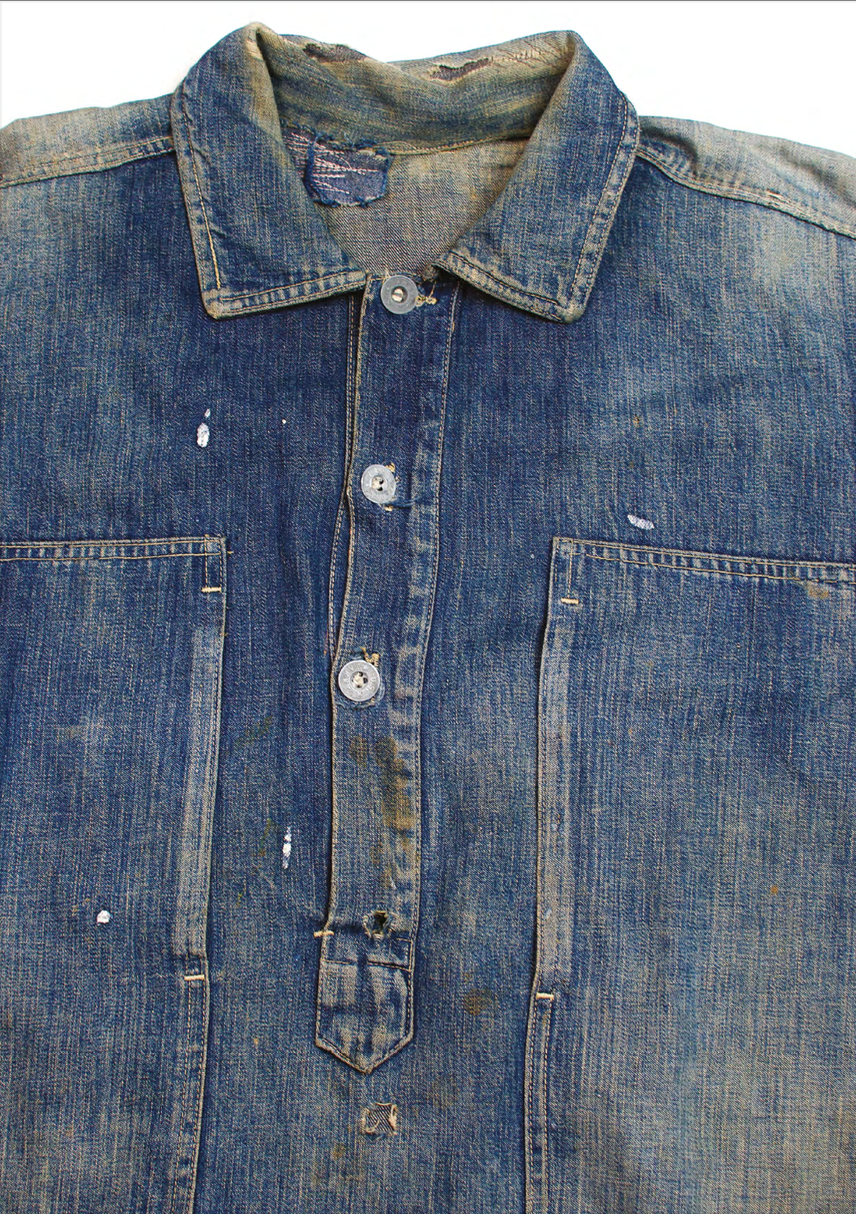
The foundation of any serious collection. Denim jackets, chore coats, overalls, hickory shirts, engineer stripes, coveralls. Look for pre-war examples with original hardware, selvedge construction, and period-accurate labels.
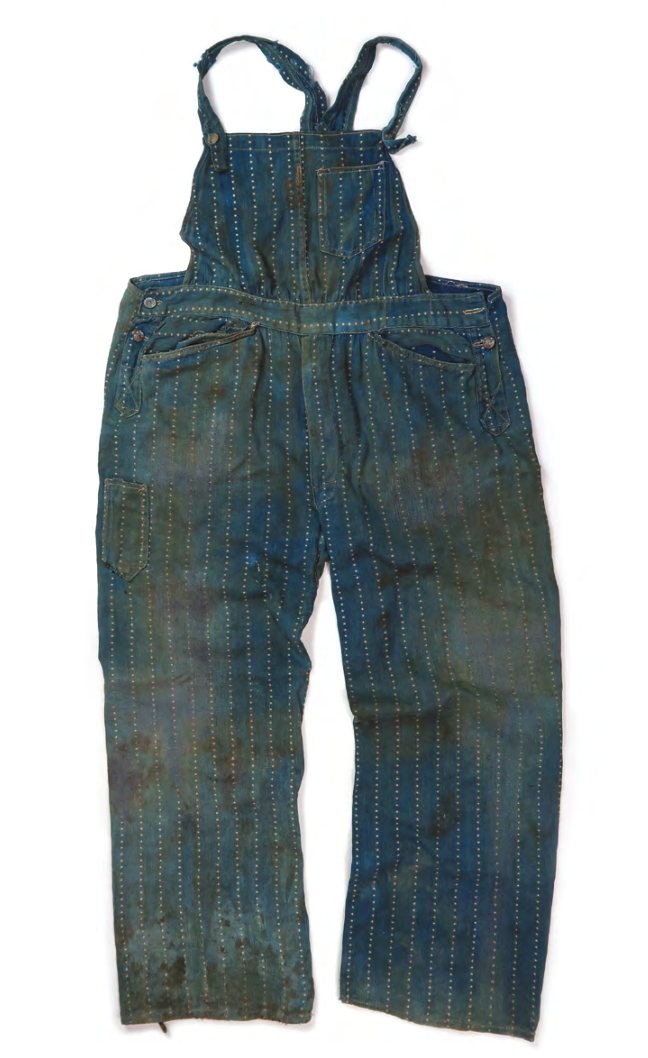
Star Wabash Overalls
Stifel Fabrics
One of the most specialized and underappreciated categories in workwear collecting. Stifel produced distinctive printed cotton fabrics from the mid-19th century through the early 20th century: geometric patterns, indigo dyes, and a material quality that has never been replicated at scale. Garments made in Stifel fabric are among the rarest and most valuable in the workwear canon. Most serious collectors encounter them only a handful of times in a lifetime.
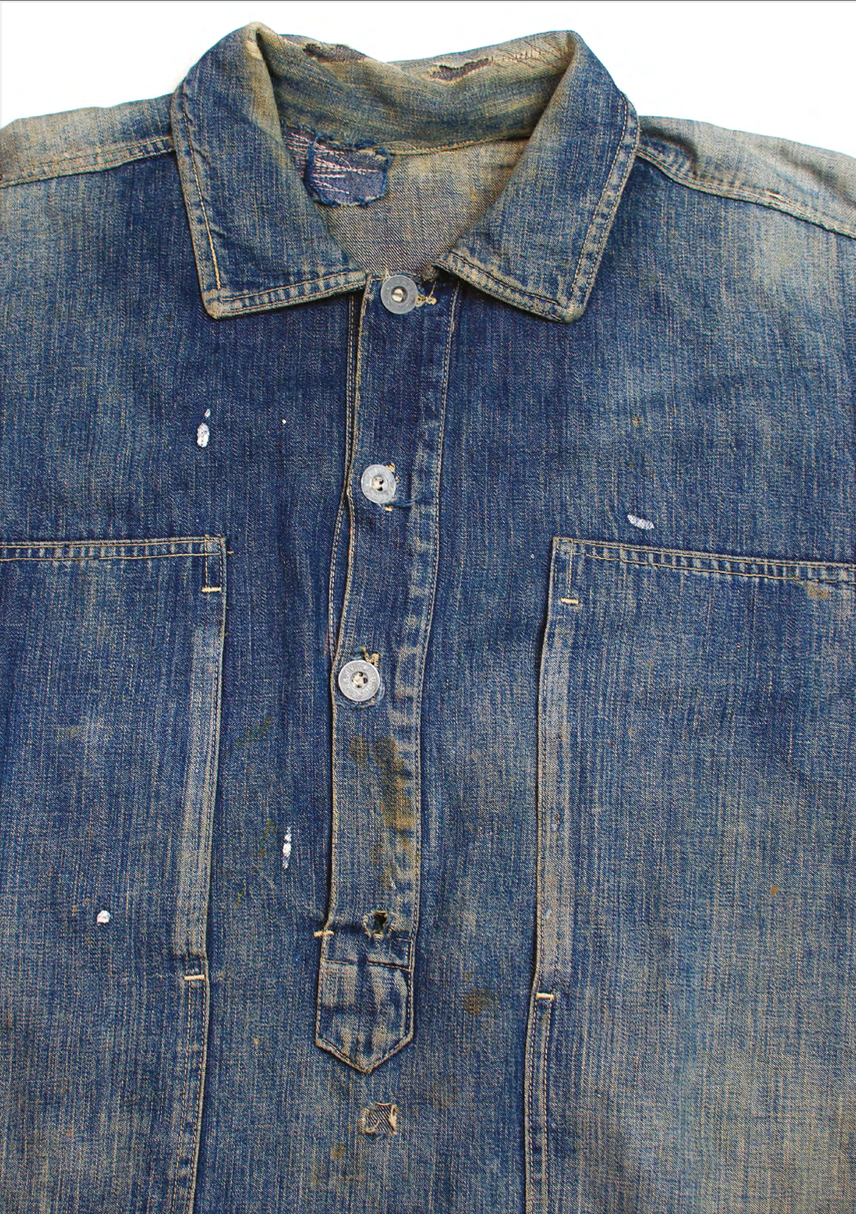
US Army Fatigue Shirt
American Militaria
Military clothing and workwear share more construction DNA than most people realize. U.S. military garments -- particularly from WWI and WWII -- influenced workwear design directly, and vice versa. The influence ran both ways: the military borrowed from workwear, and workwear manufacturers borrowed back.
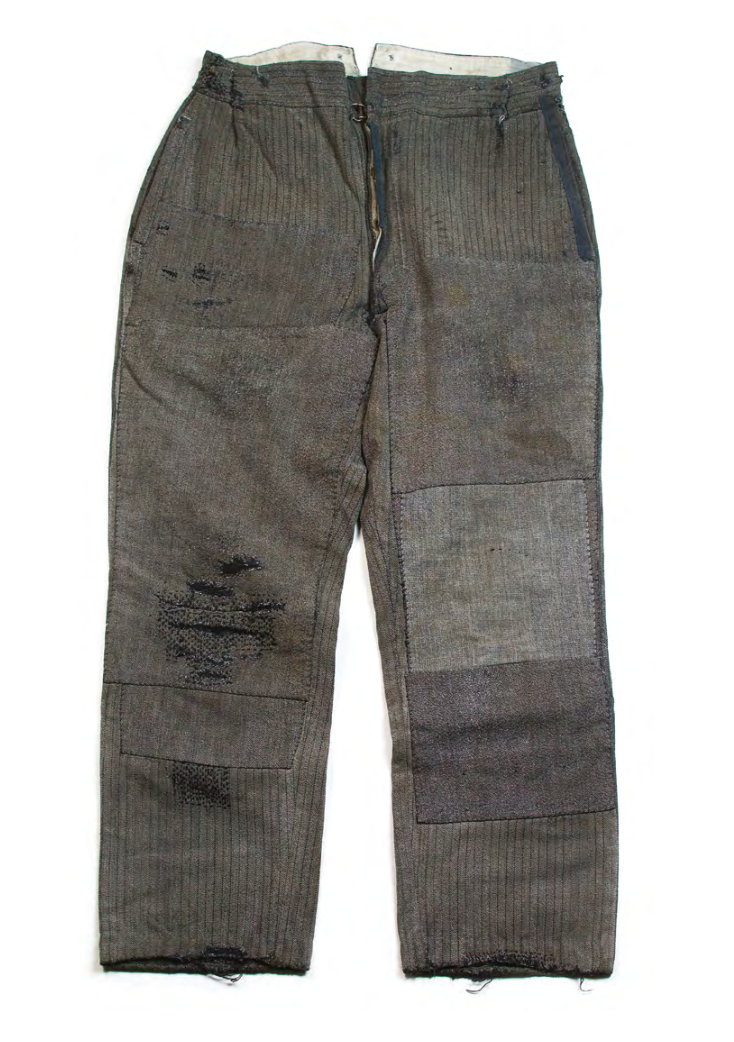
Mended french farmer pants
Bonus: European Workwear
Often overlooked by American-focused collectors, European workwear and particularly French workwear, offers some of the most distinctive pieces in the heritage category. French moleskine work jackets, salt-and-pepper coveralls, s bring a different aesthetic tradition to the collection while maintaining the same emphasis on construction quality and material integrity. For collectors looking to move beyond the familiar, European workwear is where the most interesting discoveries are currently happening.
How to Start Collecting American Workwear
Start with knowledge, not money.
The most common mistake new collectors make is buying before they understand what they are looking at. American workwear collecting rewards expertise above all else. Spend time learning to read labels, understand construction details, and recognize period-accurate hardware before you commit significant budget. The knowledge compounds; the mistakes are expensive.
Learn to read a label.
Labels are the most reliable way to date a garment. Union labels have well-documented date ranges that are freely available online. Brand labels evolved predictably -- a Levi's Red Tab, for example, can be dated precisely based on its typography, stitching, and hardware. Workwear-specific forums and communities are invaluable for building this knowledge quickly.
Prioritize condition and originality.
In American workwear collecting, original condition is everything. A well-worn piece with honest fading and natural aging is almost always more valuable than a piece that has been altered, or aggressively washed. Learn to distinguish natural wear from damage, and original construction from later repairs. This distinction is where real knowledge pays off.
The best pieces rarely surface on general vintage markets. Building relationships with other serious collectors through specialist forums, Instagram communities, and dedicated dealers is the most reliable path to significant finds. The workwear collecting community is smaller and more knowledgeable than most; being part of it matters.
Build relationships.
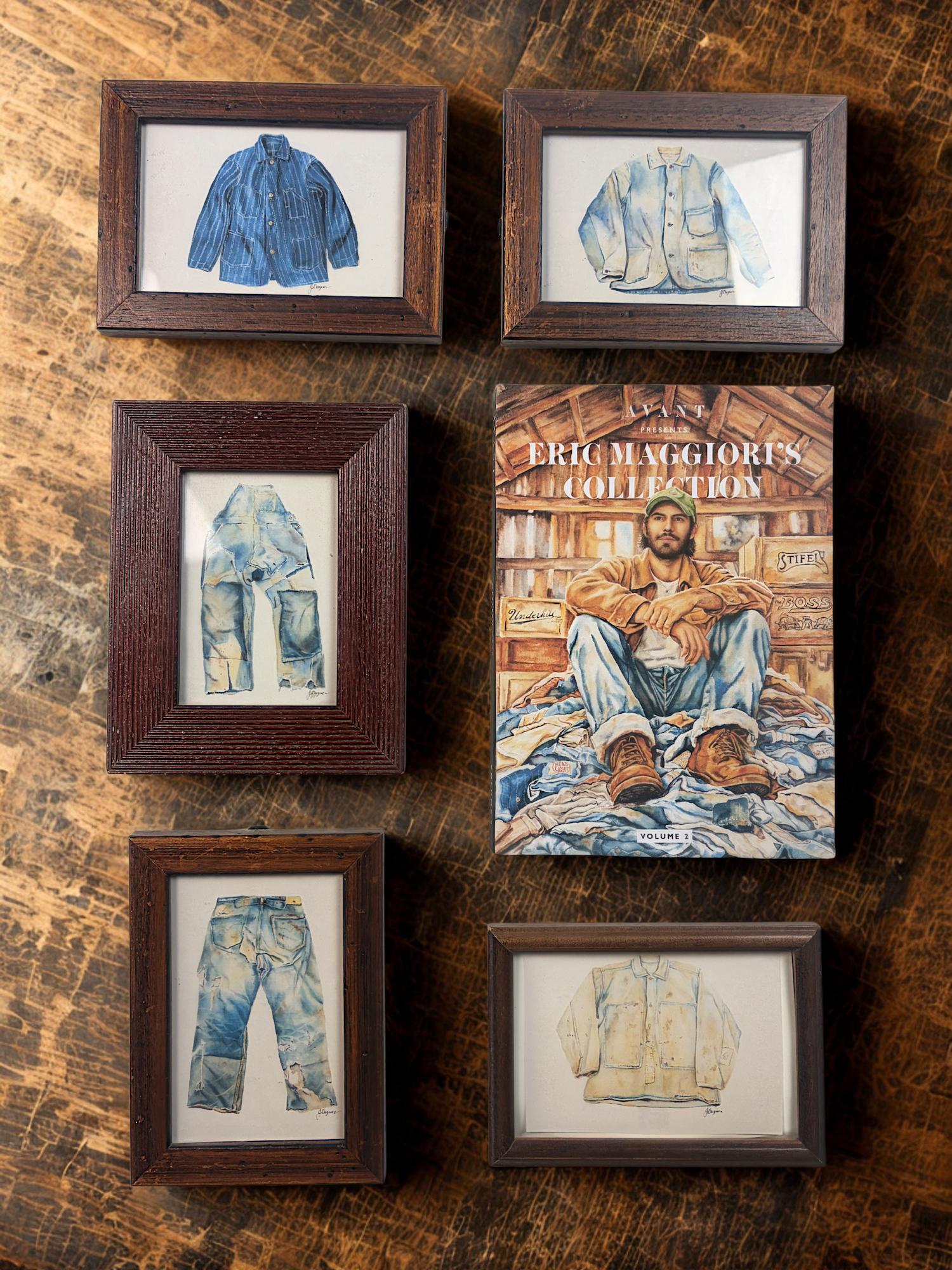
Every serious discipline has its foundational texts.
Eric Maggiori has spent decades building what many consider one of the most significant private archives of Heritage Clothing, spanning all four categories described above, with particular depth in American workwear, Stifel fabrics, and American militaria. His collection is not just extensive. It is curated with the eye of someone who has spent large amount of time learning to tell the difference between a significant piece and an ordinary one.
Eric Maggiori’s Collection Volume II, published by AVANT Magazine, is the first systematic documentation of this archive made accessible to the broader collecting community. 260 pages. Six categories (including Vintage tees and Sports Memorabilia). And something that sets it apart from every other volume in the heritage clothing canon: a QR code paired with every garment, linking to a short video in which Eric himself explains the piece: its provenance, its construction, what makes it rare.
Part printed archive. Part documentary series. Not a coffee table book, a field guide. For anyone serious about understanding American workwear collecting, it is the resource you need to get.
And, of course, don’t forget our two major best-sellers on the topic — An Anthology of Workwear I and Workwear II — now reunited in a pack with a special price !
The Reference the Field Has Been
Waiting For
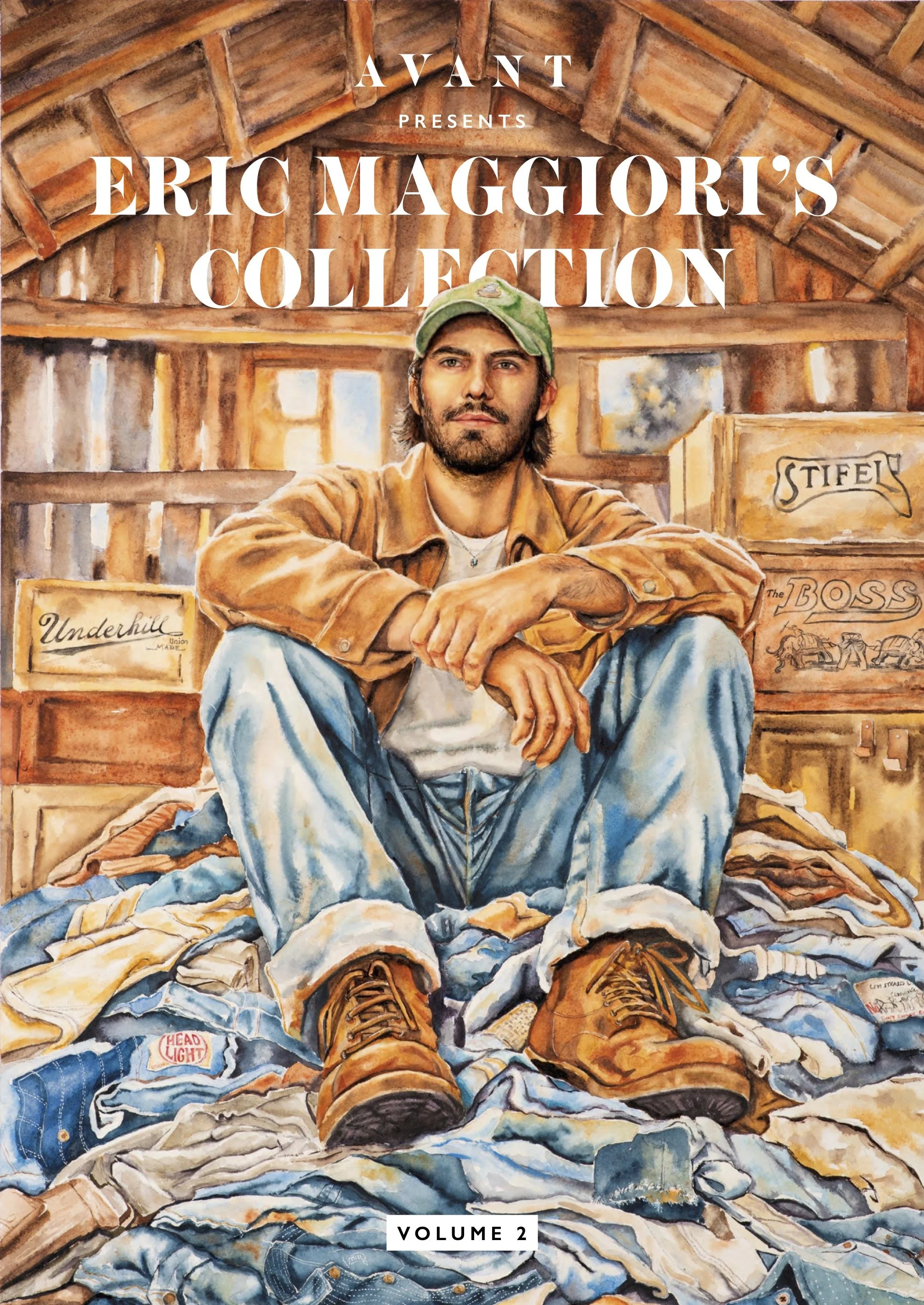
260 pages + 2 hours of exclusive films. Eric Maggiori's complete archive: American workwear, militaria, Stifel, European workwear, vintage tees. The reference book serious collectors use.
Eric Maggiori has spent years acquiring pieces most collectors will never see in person. Volume II puts that knowledge directly in your hands not as a coffee table object, but as a working reference.
And when the page isn't enough, you scan the QR code and hear Eric explain it himself. Over two hours of that, included.
Inside you'll discover
American Workwear: Understand why certain pieces are worth 10x what the market thinks, from the Gold Rush to the mid-20th century
European Workwear: The undervalued category. Get ahead before everyone else catches on
American Militaria: Fatigue uniforms, flight jackets, field gear. Authenticate pieces most experts miss.
J.L. Stifel & Sons: The rarest textiles in the archive. The knowledge most dealers get wrong
Vintage Tees & Sports Memorabilia: The most personal part of the archive which is also the most unpredictable one.
The QR Experience
Every garment is paired with a QR code linking to a short film presented by Eric himself, in front of the piece, explaining what it is, where it came from, and what most people miss.
Over two hours of exclusive content. Embedded throughout 260 pages.
Part book. Part documentary. The kind of object you study, reference, and pass down.
Specs: 260 pages · Softcover · Full color · 170 × 240 mm · English
📍 Worldwide Shipping France/EU: €5–15 | UK: €12–18 | US/Canada: $10–15 | Asia/Other: €40–60
💡 Bundle tip: Buy 2+ items in one order = lower shipping cost per item
✓ Exact cost calculated at checkout
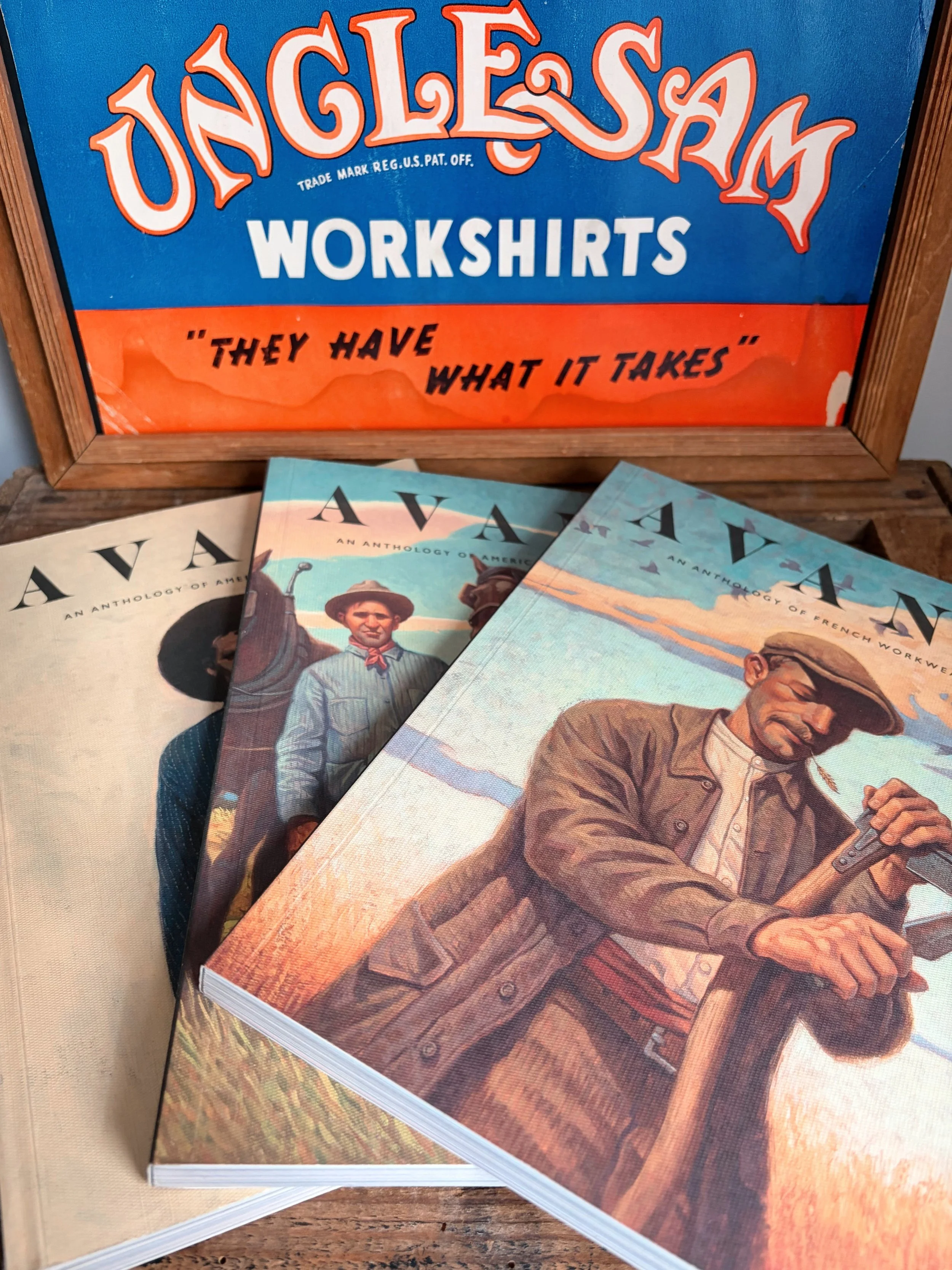
From American railroads to French ateliers.
A focused exploration of workwear through three volumes, tracing its origins, function, and lasting influence on modern style.
$147 → $109
Bundle price, save 38$.
What’s inside:
1. An Anthology of American Workwear
The foundations: garments built for labor, durability, and purpose.
A deeper dive into the evolution of workwear and its influence across cultures and generations.
3. An Anthology of French Workwear
An exploration of workers, farmers, and peasants during the 19th and 20th In France.
Product details (per book):
Softcover
196 pages
170 × 240 mm
Full color
Language: English
Shipping: Worldwide