
In the vintage world, Kinji Teramoto is nothing short of a legend. The Japanese collector and founder of 35 Summers has just opened Rocky Mountain Featherbed’s first European store in Paris. With AVANT’s Outerwear issue only days away, it was the perfect opportunity to sit down with Kinji and talk about his journey, the revival of iconic American brands, and why he has no plans to retire just yet.
Interview by Eric Maggiori
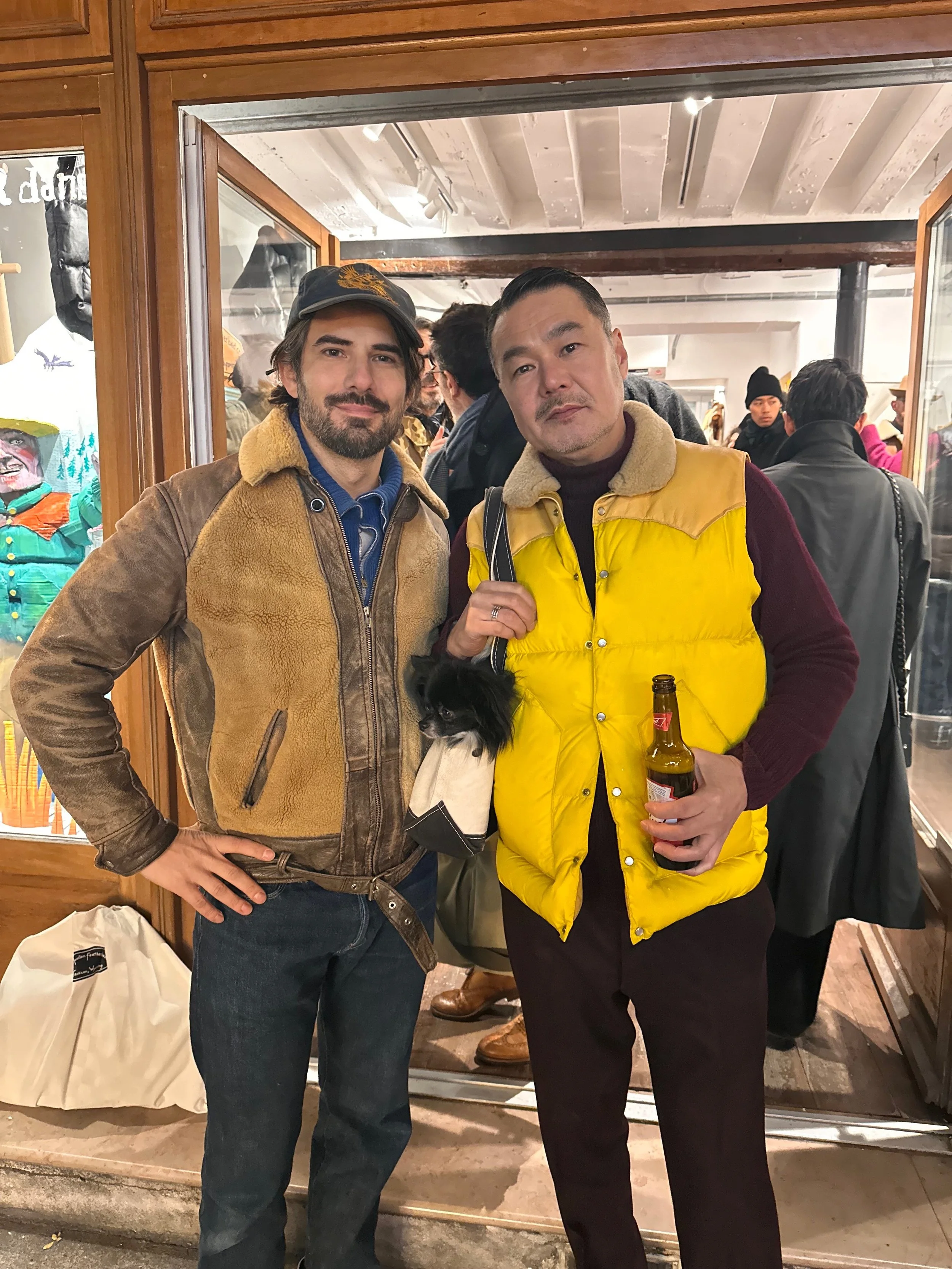
Eric Maggiori and Kinji Teramoto in Paris.
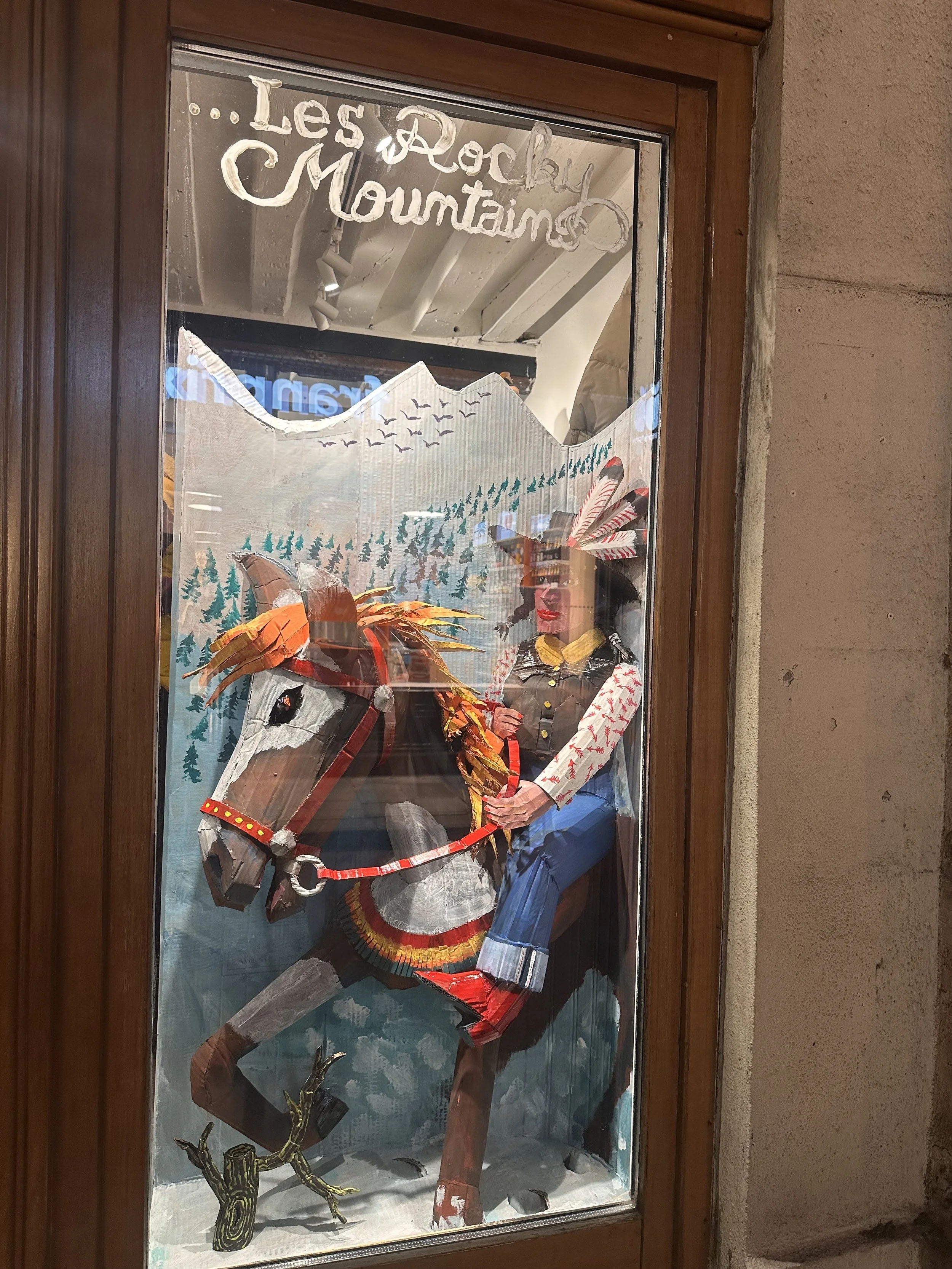
The timing could not be better. As AVANT releases an issue devoted entirely to outerwear, one of the most distinctive names in vintage-inspired downwear has put down roots in Paris. Rocky Mountain Featherbed has just opened its first European boutique at 27 rue du Bourg-Tibourg, on the same street as Anatomica. This is no coincidence, as Kinji and Anatomica founder Pierre Fournier have been close friends and business partners for many years. Kinji Teramoto, then, is the man responsible for bringing Rocky Mountain Featherbed back to life in 2005. He arrived at our interview with history quite literally on his back: the first Christy Vest he bought forty-four years ago, and still wears today. That single garment became the starting point for a collection that now includes 220 original Rocky Mountain Featherbed pieces. Naturally, our conversation took place inside the new Paris store, surrounded by the world Kinji has brought to life.
AVANT: Rocky Mountain Featherbed has just opened its first European boutique. Why did it have to be Paris?
Kinji Teramoto: Because of Pierre Fournier. Paris is also the most international city in the world. Everyone comes here during Fashion Week, so it is a natural place for the brand to meet people from everywhere.
So choosing a location on Rue du Bourg-Tibourg, literally 20 meters from Anatomica, was no coincidence?
To be honest, it is actually a coincidence ! We were looking for a space in this neighborhood, and we had actually visited a larger space somewhere else. But in the end, it didn’t happen, and we found this one, on the very same street. That was a big surprise. To me, it felt like destiny.
Let’s go back to the beginning. How did you first enter the clothing business?
I worked for Harriss in Tokyo, then moved back to Kobe and joined an import company that sold foreign brands wholesale. I was a good salesman, but at 24, I decided that I no longer wanted to work for somebody else. I founded my own company the following year, in 1989. And I decided to call it 35 Summers.
Why this name ?
It came from Tom Waits in the film Rumble Fish. He plays Benny, the owner of a diner, and at one point he talks about having « thirty-five summers left ». When I founded my company at 25, I turned that idea around. I would count 35 summers from the age of 24, which would take me to 60. That was supposed to be the moment I retired.
But you turned 60 in 2024. So what happened to the plan?
Well, I changed my mind (laughs). I decided to continue until I am 80, so I gave myself twenty more years. Eighteen now! To mark the beginning of this new chapter, I even changed the way I write the company name to 35IVE SUMMERS. I am not ready to stop.
You began collecting vintage in the early 1980s, when most people around you were looking for modern fashion. What drew you to it?
Yes, you are right. In the early 1980s, everyone in Japan wanted Yohji Yamamoto or Comme des Garçons. I was almost alone digging for vintage because I simply thought it was cooler to wear. Like many people, I began with Levi’s: old 501s, 506 jackets, pieces from 1947 or earlier. At first, I was looking for clothes to wear, not trying to build an archive. But I kept going. Vintage is addictive, I think you know that (laughs). Once you decide to keep digging, it can drive you crazy.
How did you first come across Rocky Mountain Featherbed?
So, 44 years ago, I was in a vintage shop Osaka and I came across this very first Christy Vest from Rocky Mountain Featherbed. That one piece started everything for me. I still have it, and I still wear it. To be honest, this is my baby.
What made the vest so different from the other outdoor clothing you were finding?
Rocky Mountain Featherbed was founded by Cub Schaefer in Jackson, Wyoming, in 1973. Originally, the brand was conceived to make down comforters, (hence the name), but Cub quickly added down-filled ski vests with a distinctive leather yoke to their lineup.Cub said he was inspired by Native American leather capes and developed that single-piece leather yoke. The result worked for cowboys living and working in the cold, but also for skiers in Jackson Hole. It brought the western world and the outdoor world together in one garment. I always thought it was fascinating.
How did you go from finding that jacket to reviving the brand?
Well, years later, when I had established my company in Kobe, an American friend who had worked at Patagonia called me. A designer with connections to Jackson and to the original Rocky Mountain Featherbed founder was visiting, and he asked me to take her to dinner. I went wearing my vest. She recognized it immediately and told me that I might have a chance to acquire the name. So I began searching. I contacted lawyers and people in the United States until we found who held the rights. I secured the name in 2004, and Rocky Mountain Featherbed returned the following year.
The original company had left very little documentation behind. How did you reconstruct its history?
By collecting the clothes. I now own 220 original Rocky Mountain Featherbed pieces, including almost every model. Some are extremely rare, such as a black down vest and a black mountain parka. The company did not produce catalogs. I have only found advertisements in local newspapers, so the garments themselves became the archive. Every detail matters. But if you have passion, it is easy. You need passion, obsession, and a little money of course.
You are also working on a book. Is that a way of creating the catalog the original brand never had?
Exactly. The archive has to be recorded and shared. If you own the garments and study them closely, you can understand what the company was doing and preserve that knowledge for the future.
How do you use that archive without turning Rocky Mountain Featherbed into a brand that only reproduces the past?
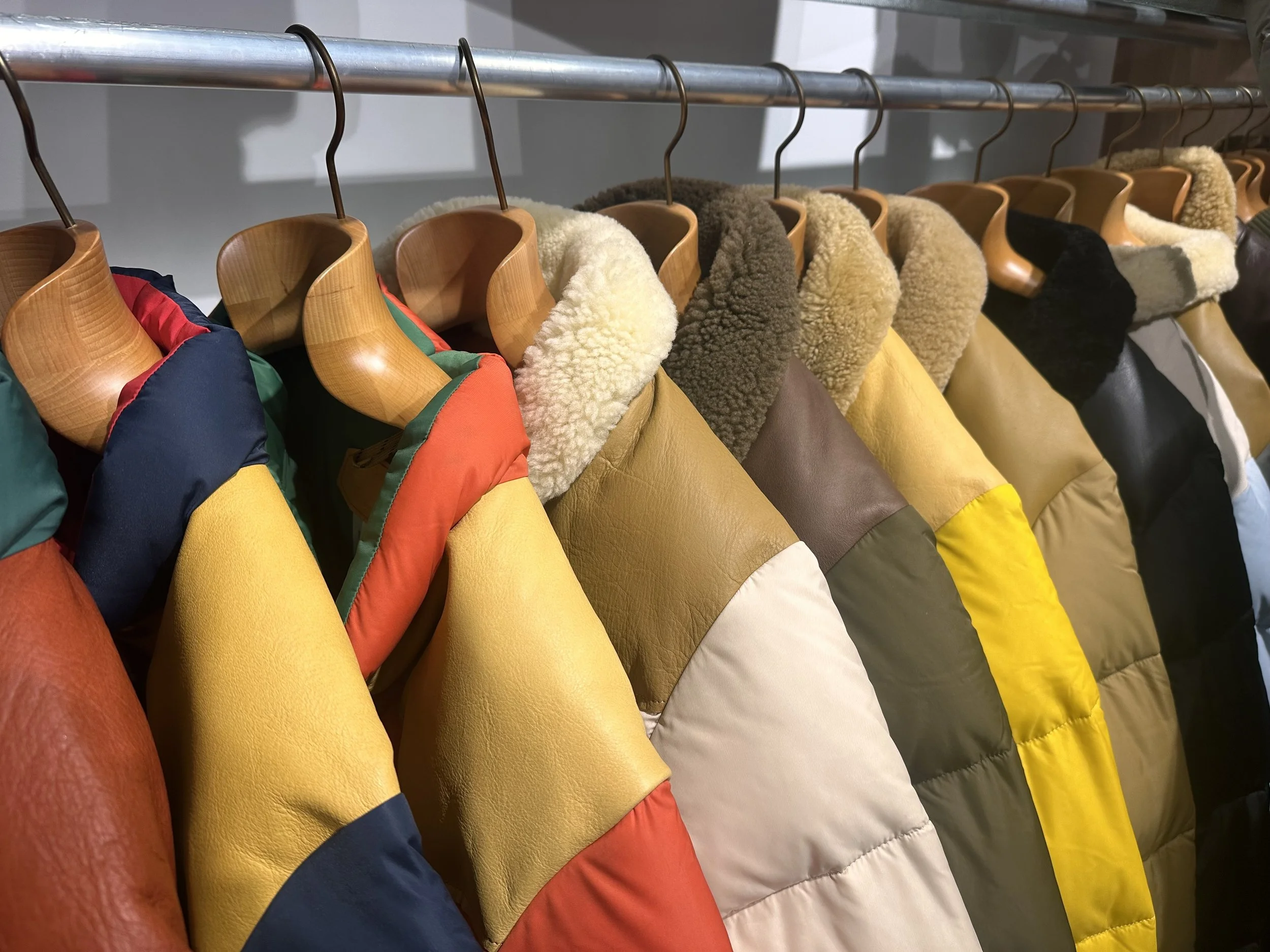
I have to respect the brand’s heyday and what Cub Schaefer created. The Christy Vest is a core item, and it must continue. But the original company never made a Christy Jacket with long sleeves for example, so we created one. That is a simple example of how the brand can move forward. We protect the core, then extend it little by little through new shapes, colors, and materials. We also need pieces for spring, and perhaps for summer. Heritage gives us a foundation, but the brand still has to live in the present.
Outerwear seems to be attracting a new audience today. Do you see that as another cycle?
Yes. Heavy-duty outdoor clothing was very strong in the 1980s and remained important into the 1990s. Now it has returned again. Fashion always works in cycles, but there is also a real change in the way people want to live. More people are interested in the outdoors and the countryside, and they need clothing that keeps them warm. A good piece can also last for decades. My own vest is forty-four years old, and I can still wear it.
What do you hope this Rocky Mountain Featherbed Paris store will become?
I want it to become a classic Paris store, as Pierre did with Anatomica. He opened Anatomica in 1994. I am starting here in 2026, and I want to stay for at least thirty years. So I can definitely not retire (laughs).
Rocky Mountain Featherbed Paris
27 rue du Bourg-Tibourg, 75004 Paris
Open Monday to Saturday, 11 a.m. to 7 p.m., and Sunday, 1 p.m. to 7 p.m.