American Football Clothing as Folk Heritage
There is something incredibly familiar about early American football clothing.
A wool sweater. A jersey with a hand-sewn number. A jacket bearing the name of a school. Familiar, yes. And yet, these garments were never designed to belong to what we now call sportswear.
At first, they were simply everyday clothes, taken from closets and worn onto the field. Like workwear or military garments, they were produced with no intention of preservation. And that is precisely why heritage clothing enthusiasts remain so deeply attached to them.
Long before football developed its own visual language, it borrowed one from everyday life.
And it all started with wool.
Early American Football Clothing: Wool as a Starting Point
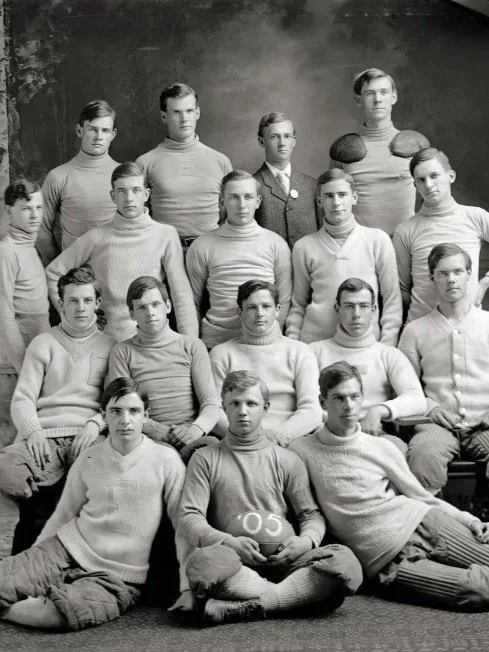
In the early 1900s, football clothing did not clearly distinguish between what was a sweater and what was a jersey. Both belonged to the same wardrobe. They may very well have been folded on the same shelf at home.
These were wool garments already worn in daily life, layered according to the weather rather than according to rules. First a jersey worn close to the body, then a sweater pulled on top. Not an official uniform, but a habit shaped by practicality.
At the time, football was played primarily in the Northeast and the Midwest of the United States, outdoors, in autumn and winter. The cold was not always extreme, but it was persistent: humidity, wind, wet clothing, long moments of stillness between plays.
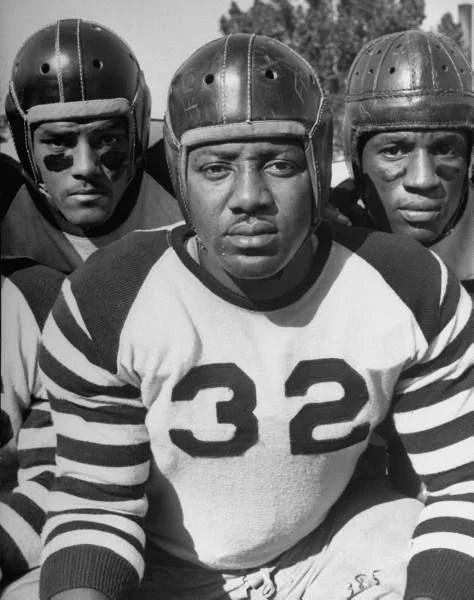
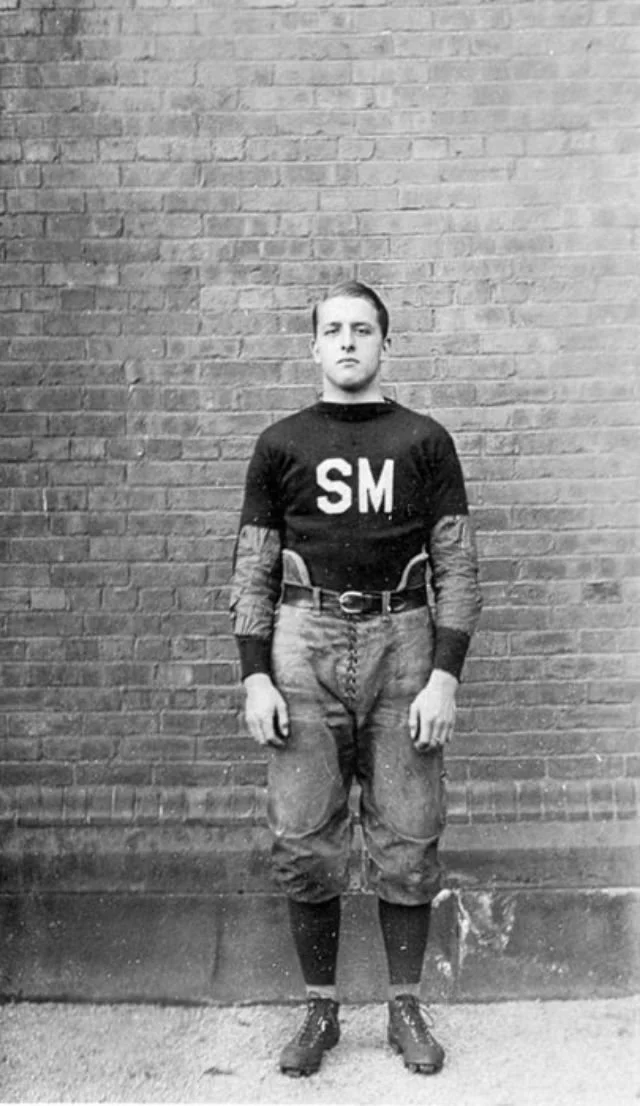
Early collegiate American football jersey, wool knit, early 20th century.
Wool imposed itself naturally. It was accessible. Inexpensive. Already present in wardrobes.
It stretched, retained warmth, tolerated friction, and continued to protect even when damp. After all, when it was cold, this was what men wore to class, to work, or to play. So why change a winning formula?
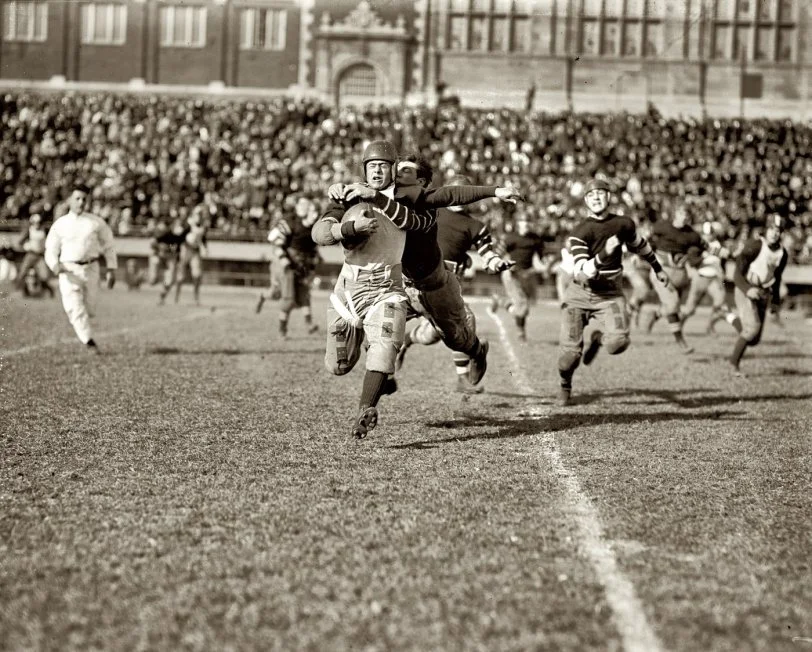
Over time, the fabric recorded this physical proximity to the game. Wool softened where shoulders leaned forward. Knits relaxed at the elbows. Stitching loosened where arms repeated the same gestures, game after game.
Layering and Adaptation on the Field
Football clothing evolved slowly, through successive adjustments rather than abrupt shifts.
An extra layer was added when needed. A cardigan, for instance. Reinforcements appeared where wear demanded them.
Protection existed and gradually became more defined, but it did not redefine the garment; it was added alongside.
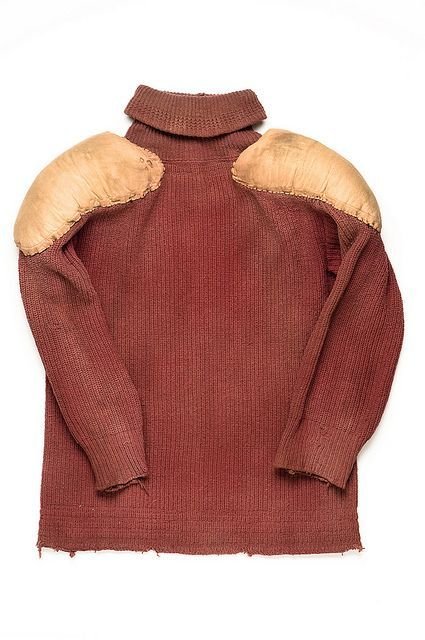

What matters here is not the equipment itself, but the approach. Nothing was hidden. Nothing was overthought. Clothing changed the way all clothing changes when it is worn often and kept long enough.
The Introduction of Football Jackets and the Language of Schools
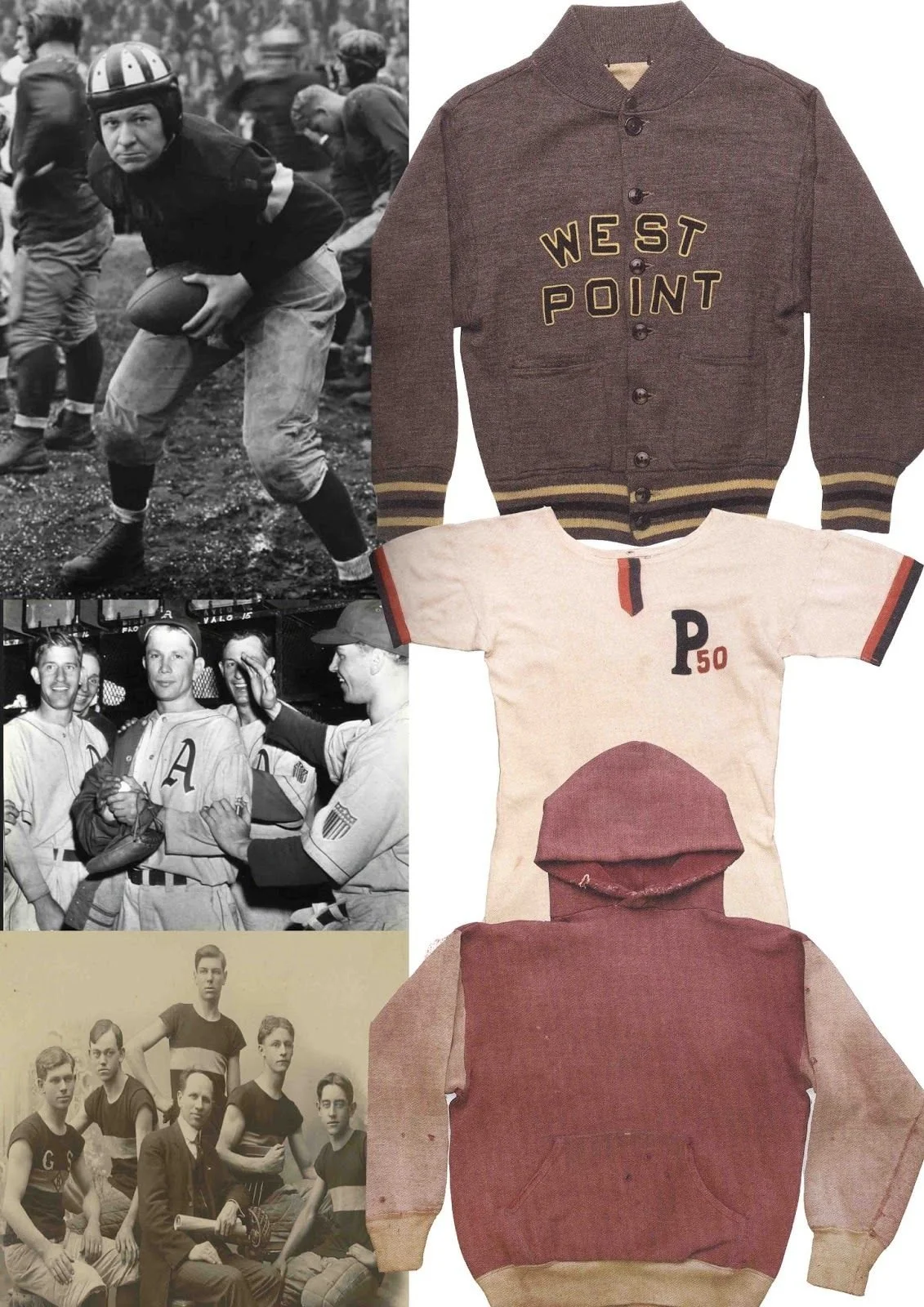
It was not until the 1930s that the lettered sweater began to evolve into a more structured garment: wool body, leather sleeves… what would later be recognized as the varsity jacket. Its origins, however, remained firmly rooted in collegiate sports culture, not in any single professional team.
The letters sewn onto collegiate sweaters and jackets were not decorative elements. They were awarded by the institution itself, in recognition of sustained and meaningful participation on a team. They were not bought. They were earned.
These were not garments reserved for game day. They were worn during the week, on campus, and in town.
Why Early Football Clothing Became Collectible
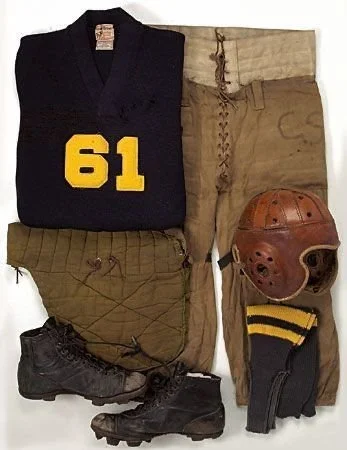
University of Michigan Football 1930s
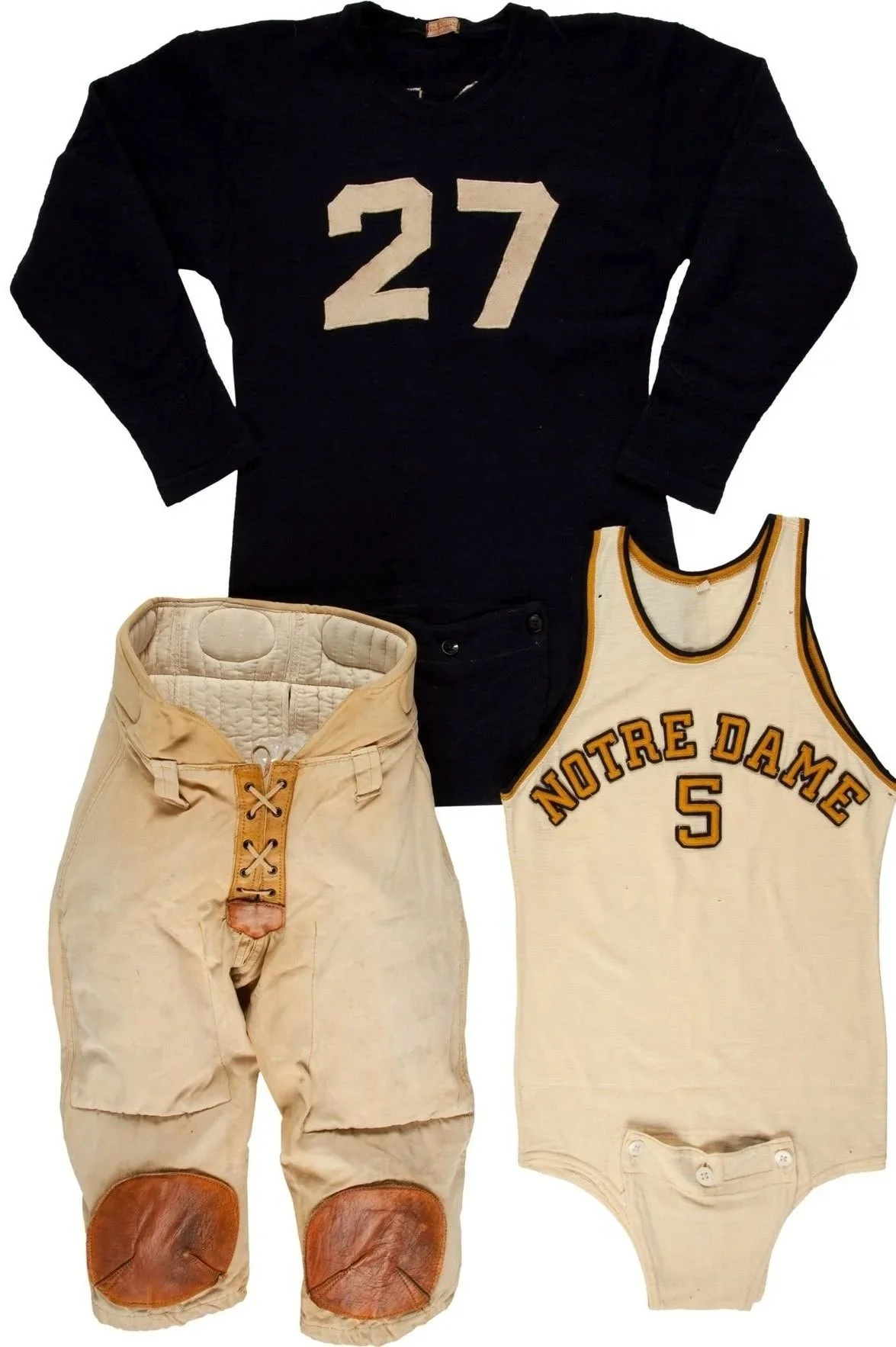
Imaged by Heritage Auctions, HA.com
These sweaters, jerseys, and jackets were never meant to be collected.
They were worn hard, repaired when necessary, then reused the following season. Many disappeared naturally , cut down, repurposed, discarded once the fabric finally gave out. What remains today is not representative of what once existed. It is what survived.
That rarity is accidental, and collectors recognize it instinctively.
Like workwear or military clothing, these pieces were produced without any intention of preservation. Their value today lies precisely in that absence of intent. Each garment feels singular, shaped by the life it lived rather than by a specification sheet.
What also draws collectors is the material honesty of these pieces. Wool that has softened but not vanished. Stitching that reveals the hand that made it. Numbers sewn slightly off-center. Irregular letters. Unstandardized proportions. Nothing here feels optimized or repeatable.
Placed alongside early work jackets, school sweaters, or military knits, vintage football garments feel immediately at home. They belong to the same family of objects, kept because they were useful, then collected because they carried time so visibly.
Clothing that never tried to become heritage, and somehow did.