Roman and Williams Designers: The Duo Behind America’s Most Atmospheric Interiors
Who’s Roman, and who’s Williams?
If you’re looking at the picture of this couple, the answer is: neither.
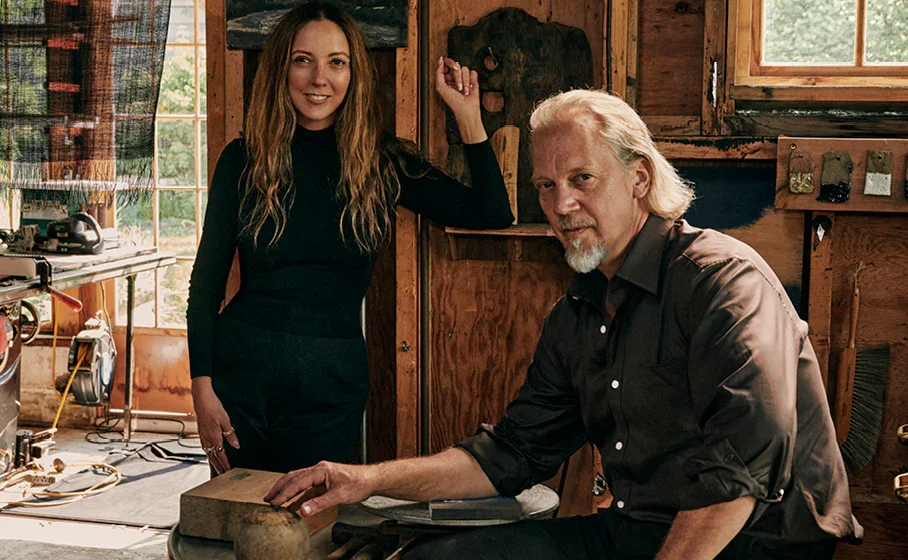
Behind the name are Robin Standefer and Stephen Alesch, partners in life and in work, and the minds behind one of the most distinctive design studios of the past two decades.
Based in New York, Roman and Williams has quietly shaped a recognizable American atmosphere, one built on memory, material, and a certain idea of lived elegance.
Because Roman and Williams does not design interiors in the traditional sense.
It creates environments that feel familiar, almost remembered, even when encountered for the first time.
You may not know their names. But you’ve seen their rooms. And something, immediately, made sense.
That sensibility finds an echo in the work of Alfredo Paredes, the same attention to atmosphere, the same ability to construct a world rather than simply decorate it.
Even the name carries that logic.
Roman and Williams is drawn from their maternal grandfathers: a gesture that feels less like branding, and more like continuity. A quiet way of placing the present in direct conversation with the past.
A cinematic beginning
Before Roman and Williams became a design studio, it was a way of seeing.
Robin Standefer and Stephen Alesch met working in film, trained in fine art and architecture, and carried that cinematic instinct into every project they would later create.
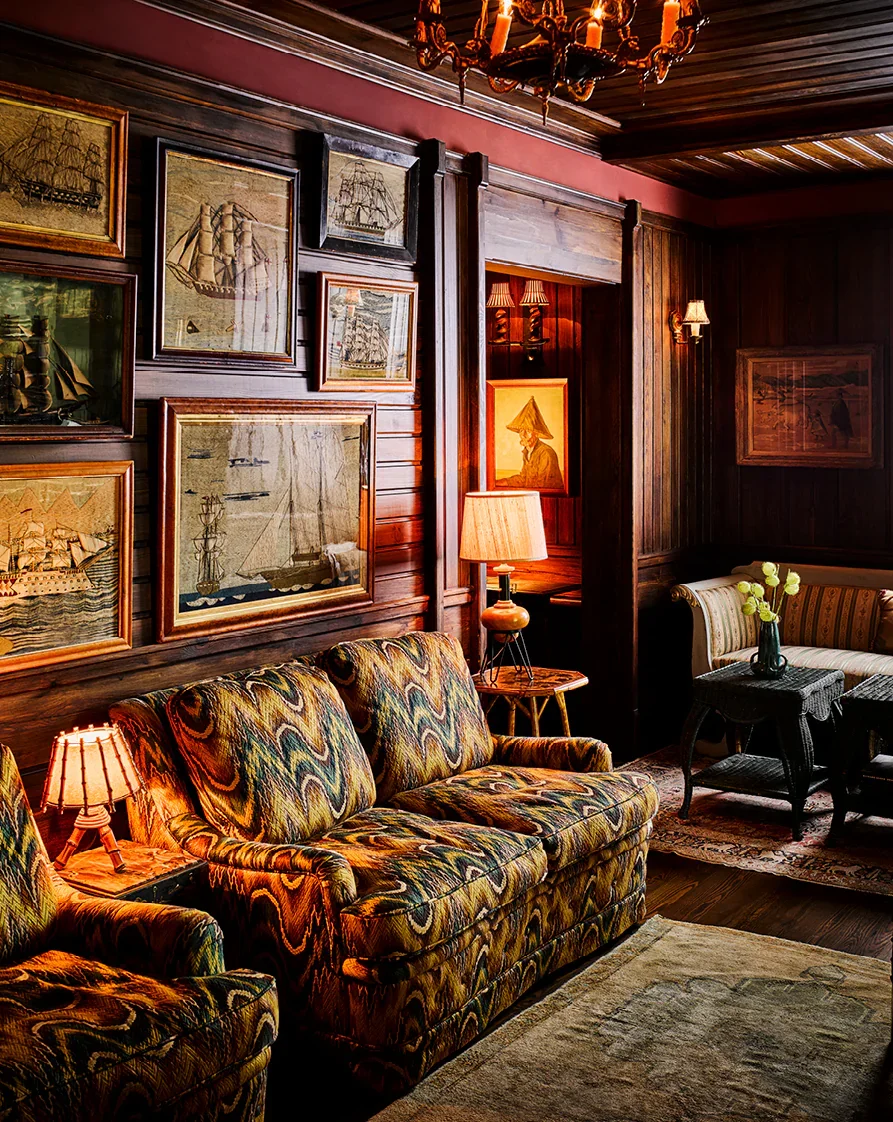
Greydon House, courtesy of Roman and Williams
That origin explains everything, and that’s why a Roman and Williams interior is never just arranged, rather
It is composed. Nothing feels accidental, yet nothing feels staged.
It’s like stepping into a scene already in motion.
Rooms that feel lived before they are finished
In a time where interiors are often designed to be photographed, Roman and Williams builds spaces that resist that immediacy.
Their philosophy, as described by the studio, is rooted in tradition, inquiry, and a refusal to repeat a fixed style.
That refusal is precisely what gives their work consistency.
Not visual sameness, but emotional coherence.
Across homes, hotels, and restaurants, there is always the same underlying tension: refinement, history, luxury. Without stiffness, nostalgia or heavy display.
For AVANT, this is familiar territory. It is the same balance that defines the best heritage garments: pieces that feel worn into, not performed.
Sea Ranch, Montauk: where American ease becomes architecture
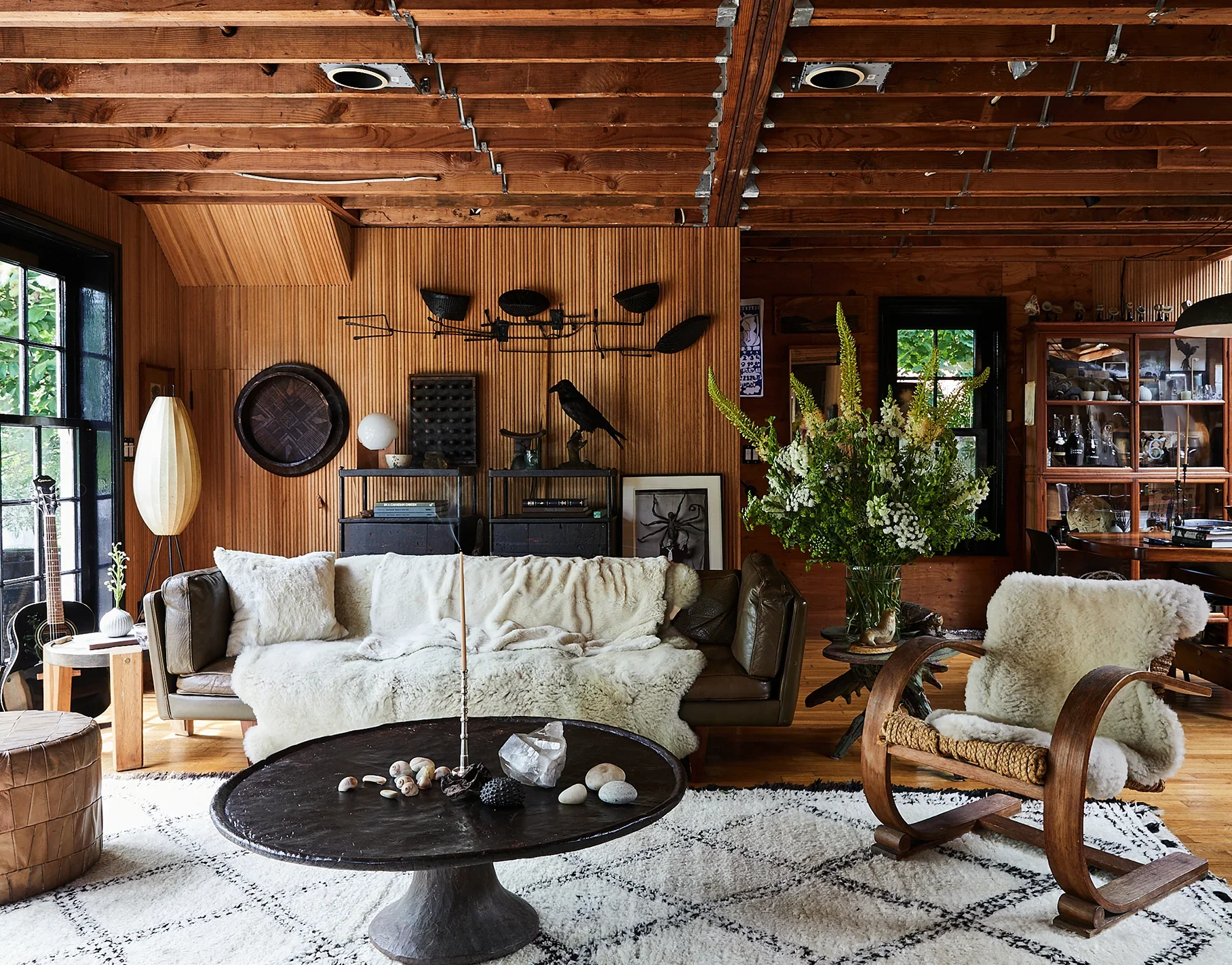
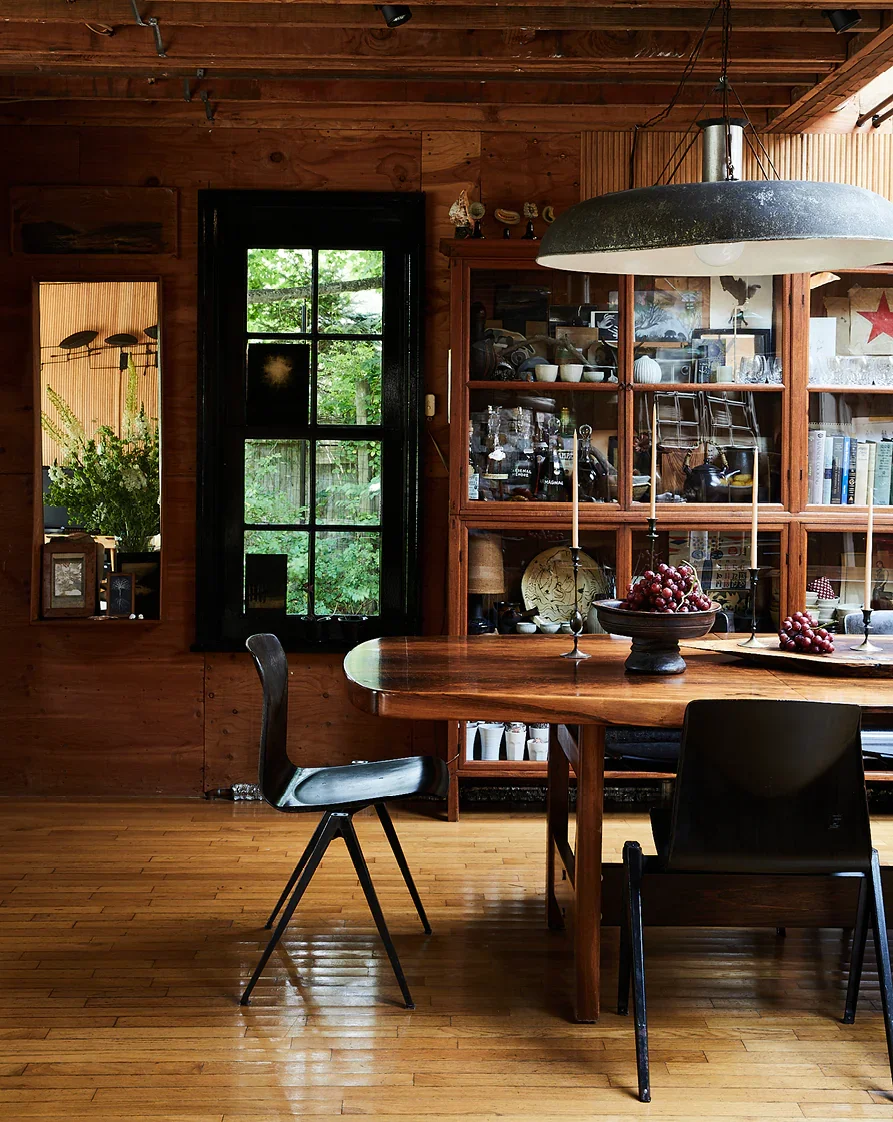
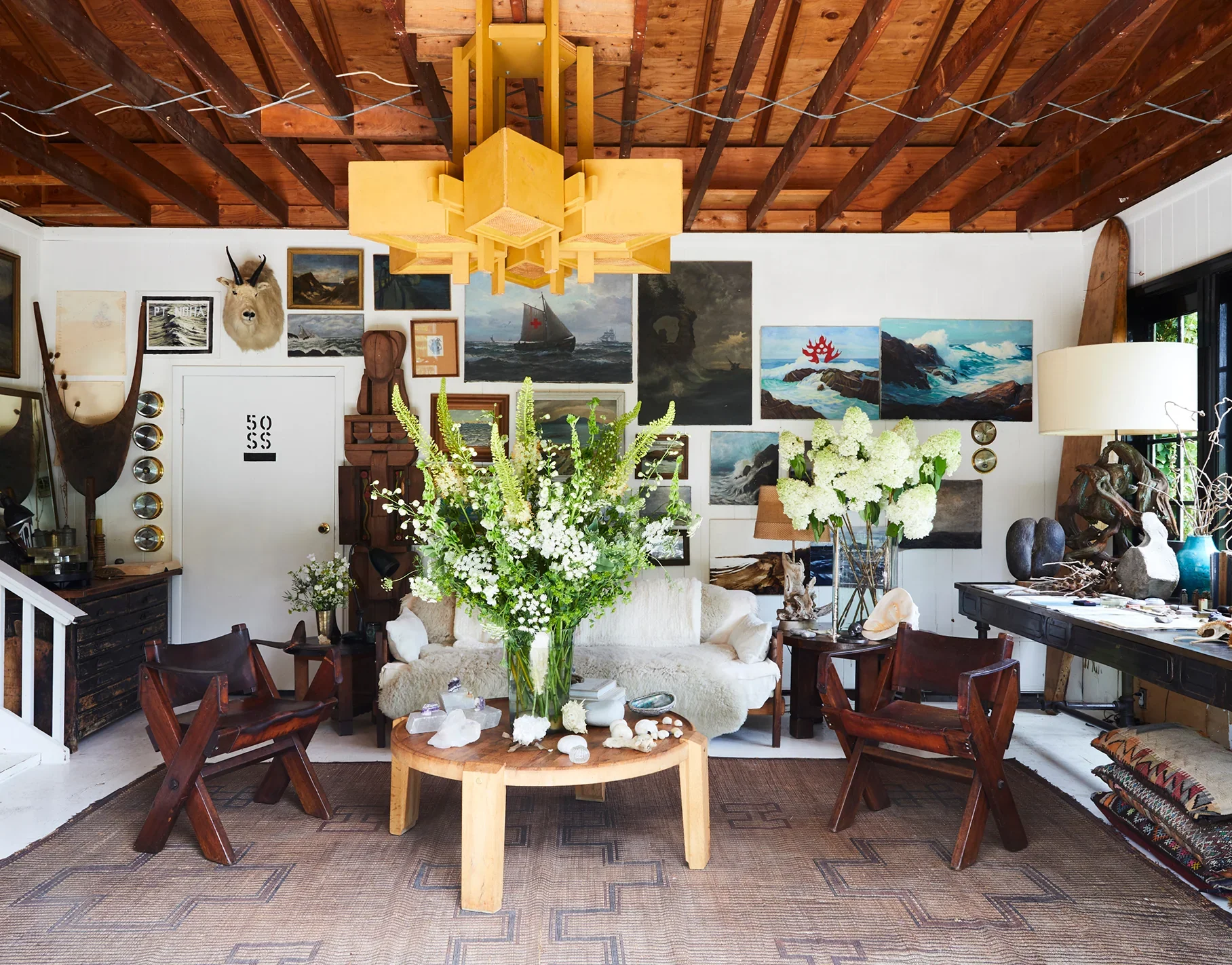
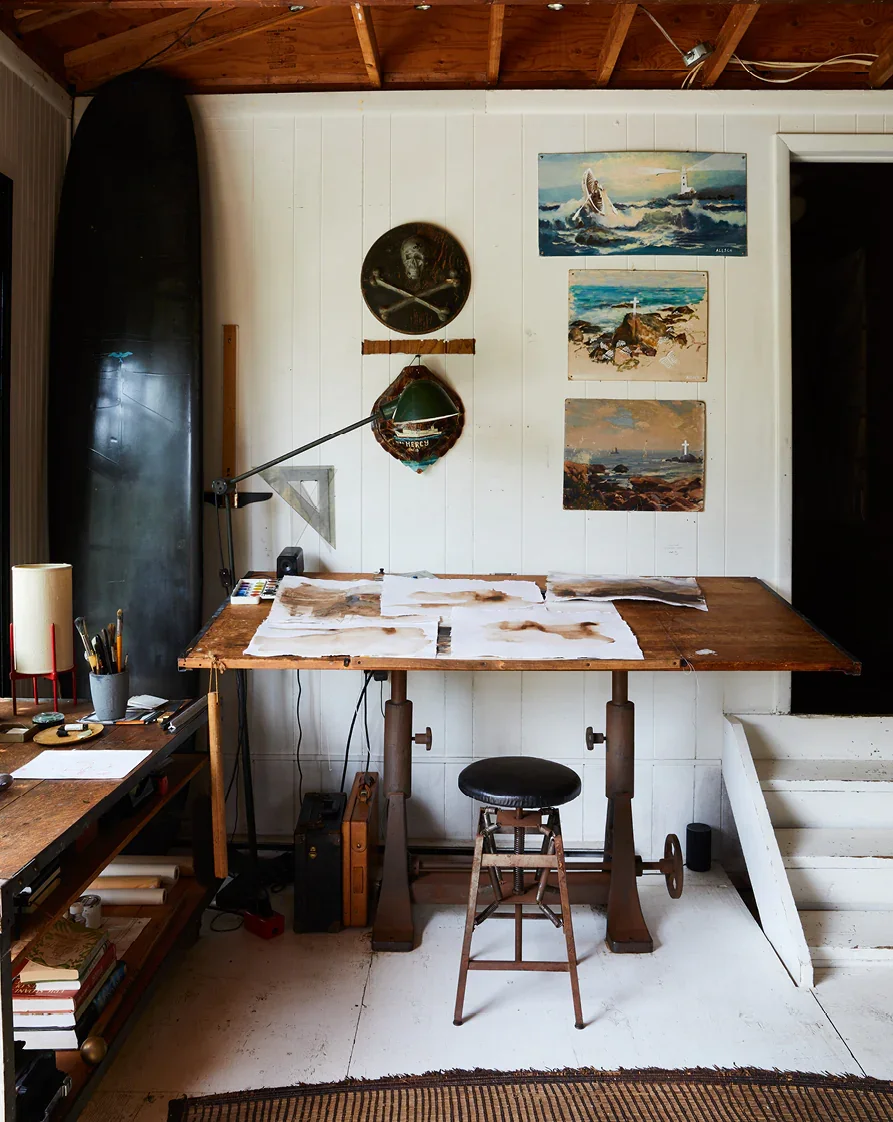
If one project captures the language of Roman and Williams, it is Sea Ranch in Montauk.
Originally a modest 1950s structure, the house that serve as a personal retreat and laboratory for the couple was transformed through restraint rather than excess. The studio describes removing drywall, introducing wood windows and doors, and adding tambour walls to shift the entire rhythm of the space.
What follows is a study in contrast:
Danish buffalo leather against sand-covered floors
rosewood next to weathered surfaces
collected objects placed without hierarchy
candlelight, fire, salt air
You can definitely see that Sea Ranch is not a “design project” but a way of living, made visible.
East Hampton Residence: the discipline of restraint
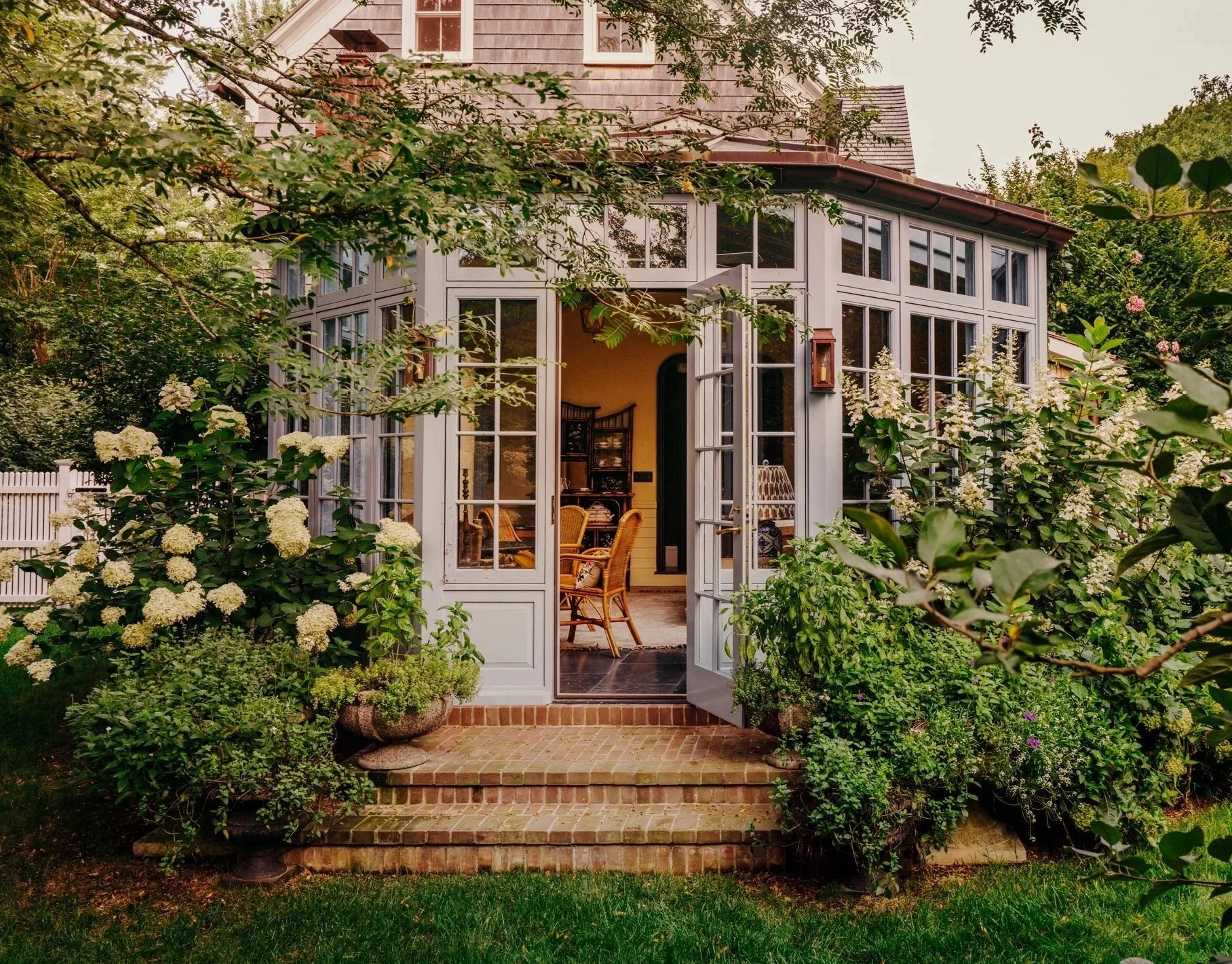
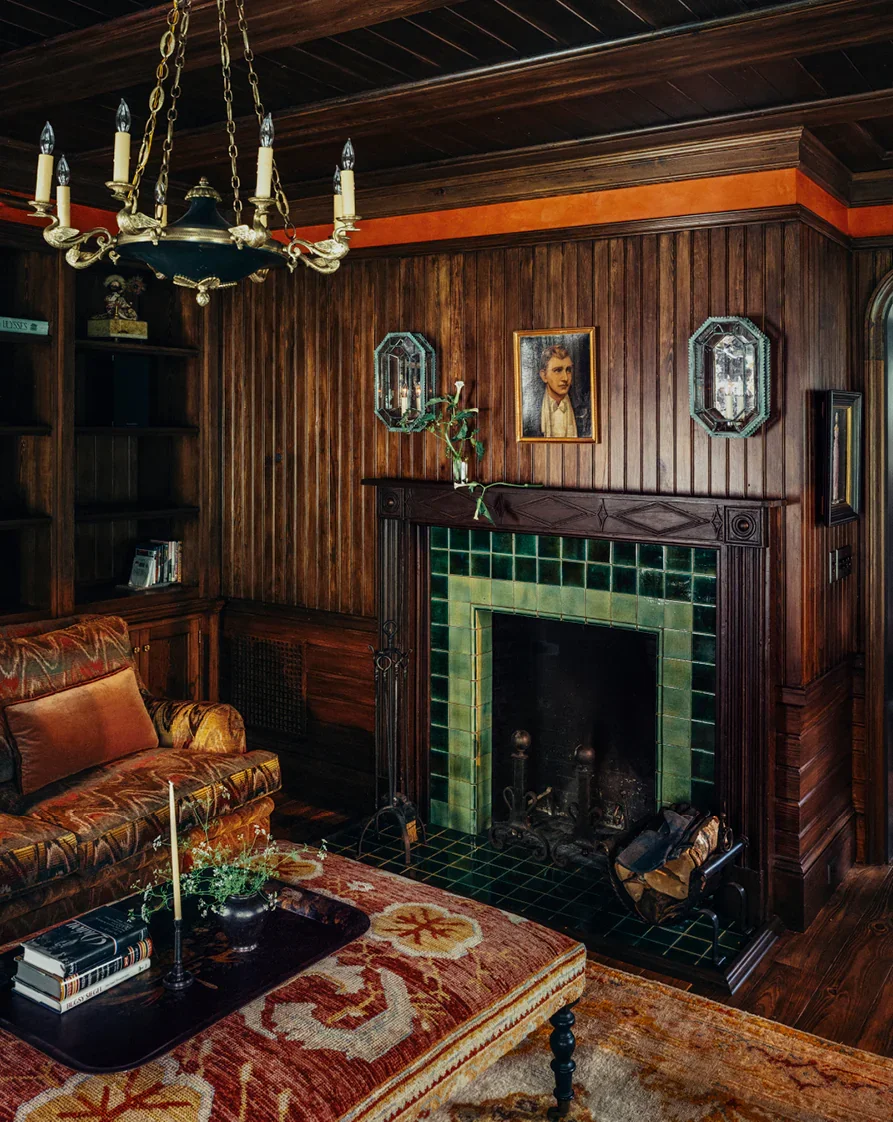
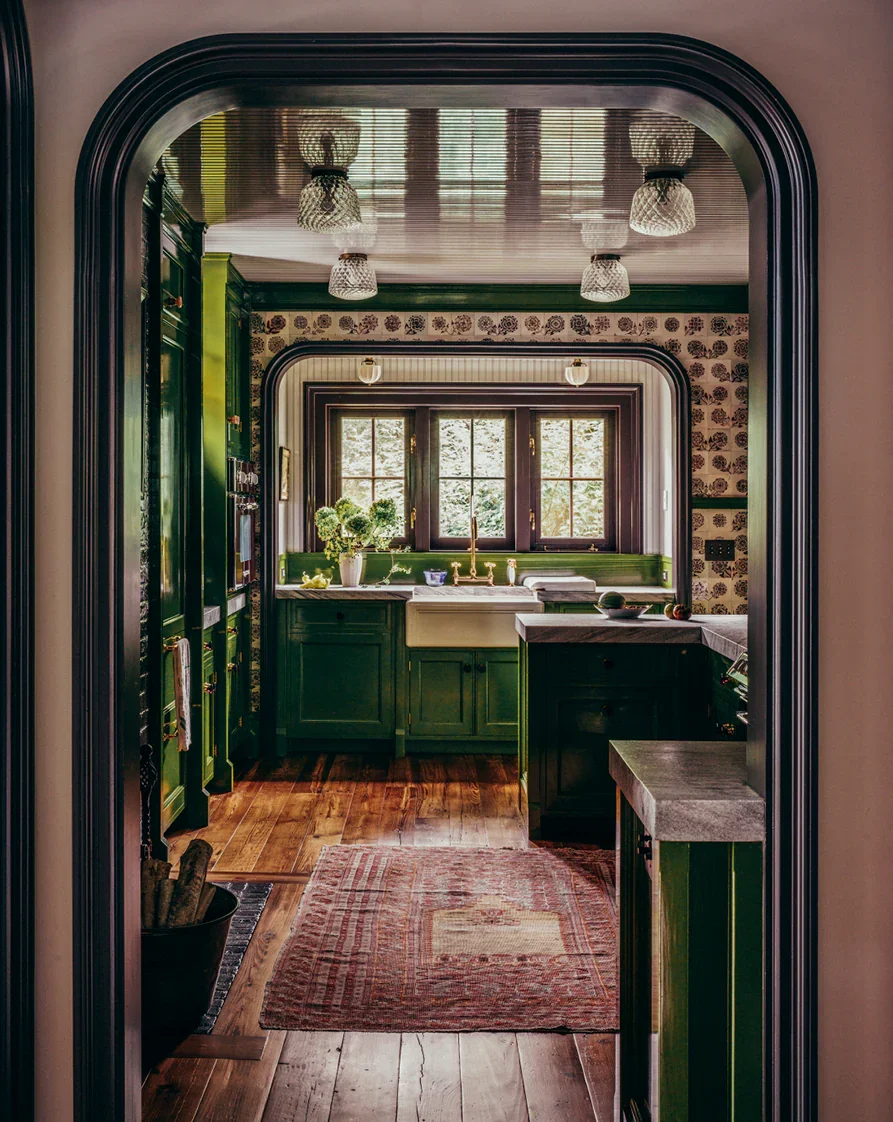
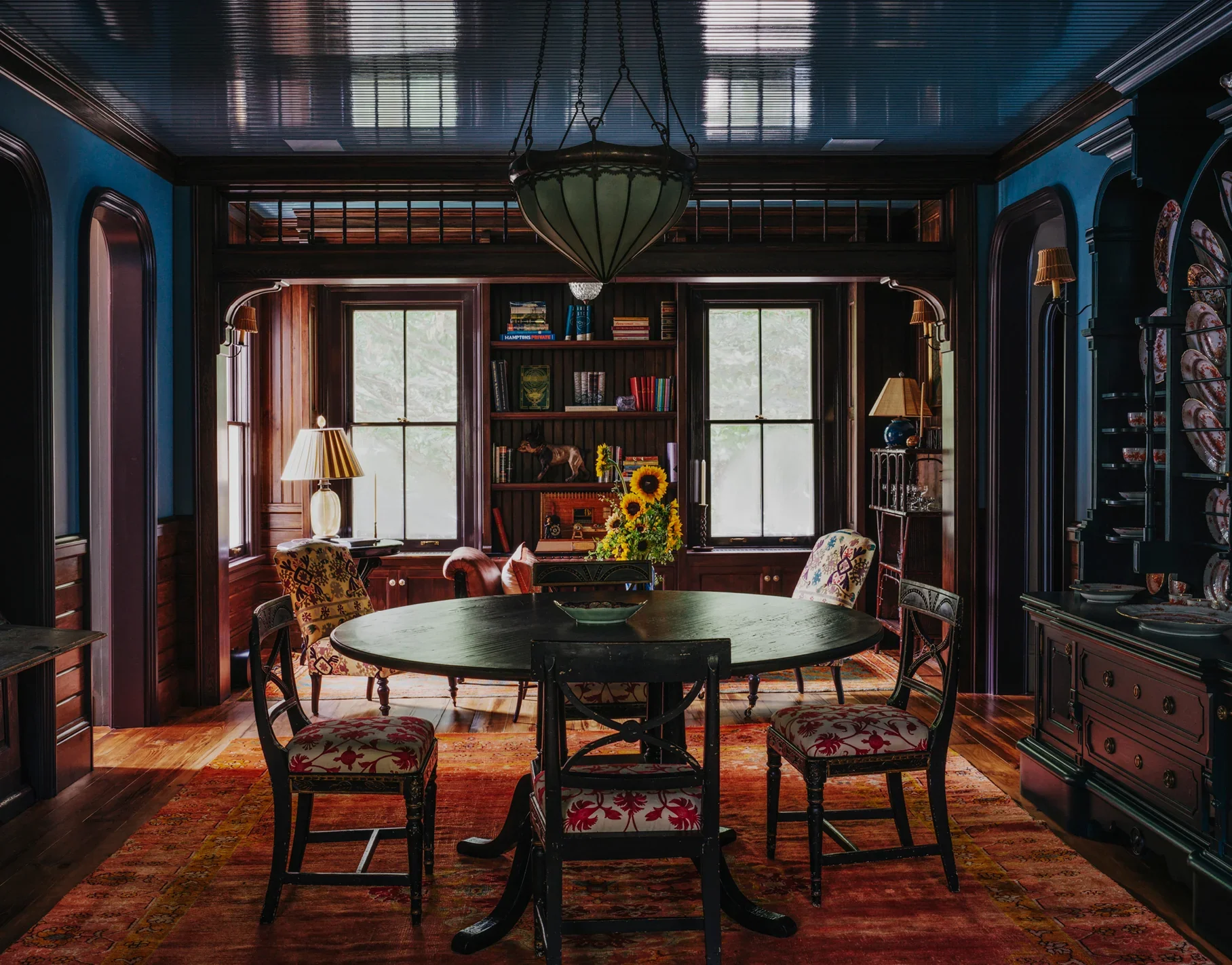
If Montauk expresses freedom, East Hampton expresses control.
The East Hampton Residence sits on the quieter side of American taste: less expressive, more distilled.
Here, proportion replaces decoration.Light replaces statement. Materials speak without interruption.
It is a house that does not try to impress. And precisely for that reason, it stays.
The designers behind Roman and Williams
Robin Standefer and Stephen Alesch belong to a category that rarely gets named clearly.
They are not decorators or stylists. They are not minimalists, nor maximalists. They are world-builders.
Their work spans private residences, restaurants, hotels, and cultural institutions, yet always returns to the same intention: creating environments that feel inhabited, even at first glance.
That consistency has quietly shaped a broader visual culture.
You see it in boutique hotels, in retail spaces that feel like homes or in the growing rejection of sterile luxury.
Roman and Williams did not invent that shift but they gave it form.
Our Favorite Roman and Williams Addresses
Roman and Williams is not only a studio: It is a constellation of places.
In New York, places that shaped a visual language:
Le Coucou: A French Restaurant, both format and intimate, with a timeless atmosphere.
Boom Boom Room: A cinematic space above the city (in the Standard High Line).
Ace Hotel NYC: One of the first interiors to redefine boutique hospitality.
Roman and Williams Guild: The Studio’s own space, very hybrid, somewhere between a shop & a home.
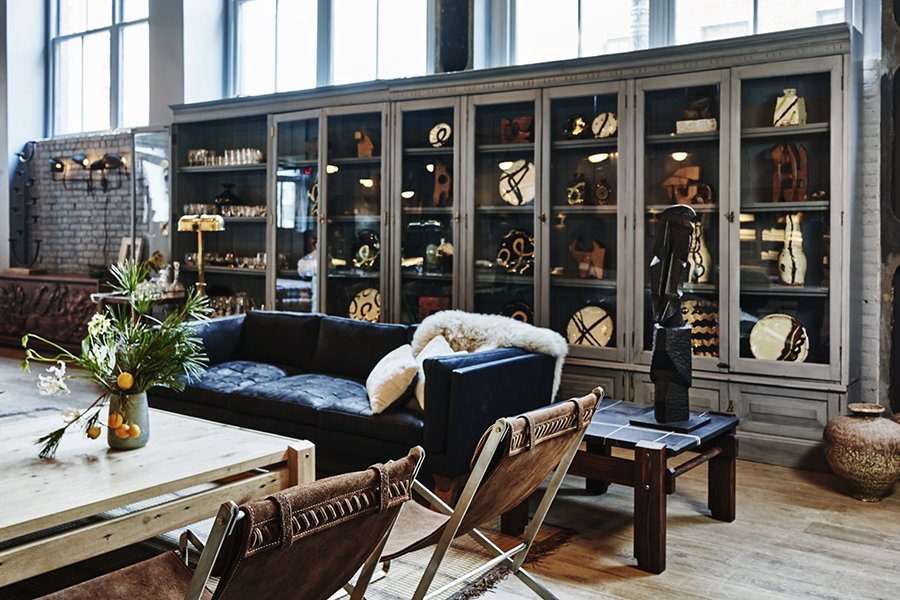
Roman and Williams Guild in New York
Beyond New York, a broader Americana atmosphere
The Met, British Galleries: A museum space where architecture and storytelling meet.
Estelle Manor (UK): A countryside property where American sensibility meets European context.
Freehand Hotel (NYC): A more relaxed interpretation of hospitality, built on the same layered philosophy.
Chicago Athletic Association Hotel: A historic building reinterpreted without losing its original spirit.
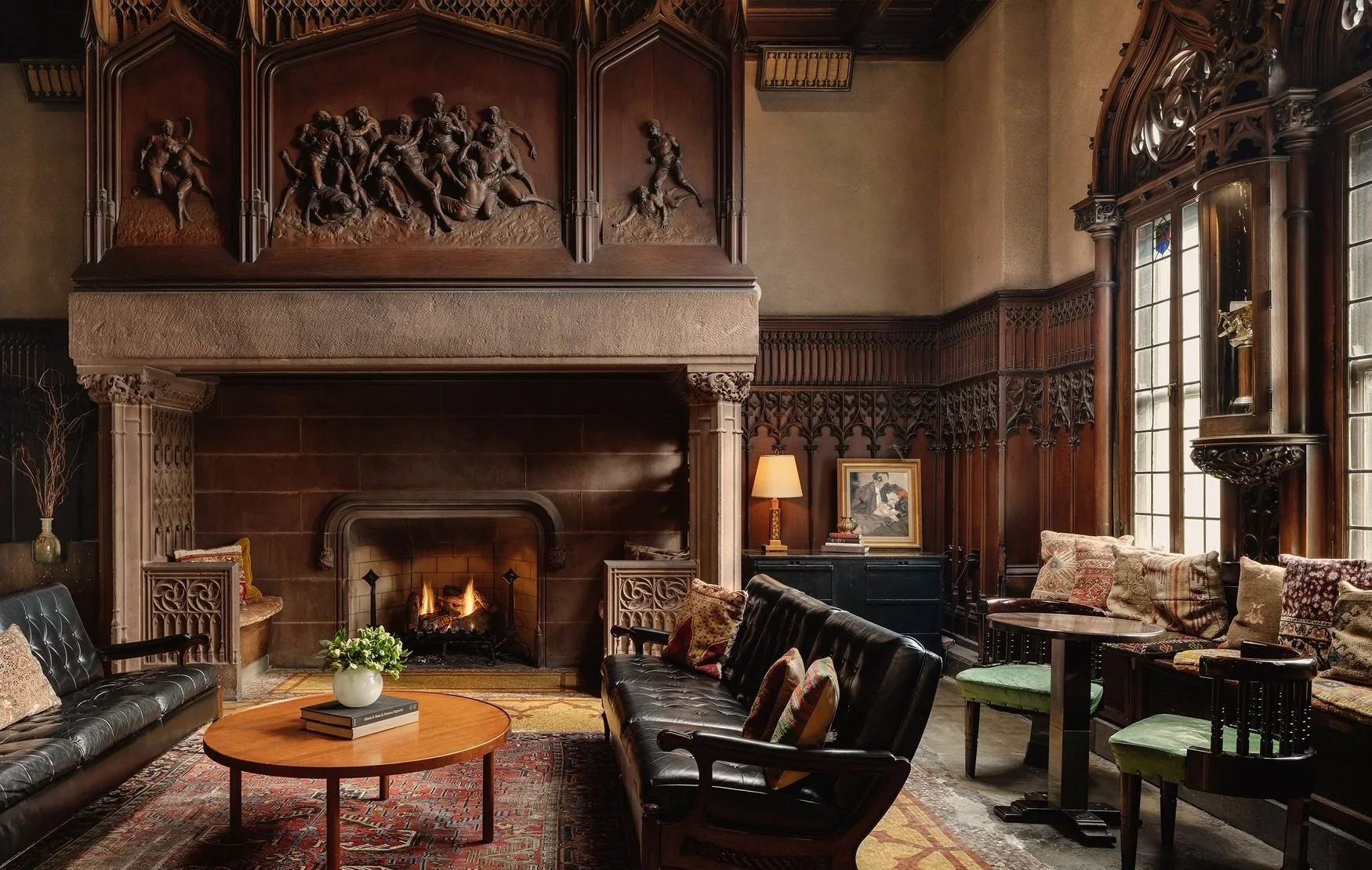
Chicago Athletic Association Hotel, credit Roman and Williams
Through the AVANT lens
At AVANT, heritage has never been limited to clothing. It lives in rooms like these.
In wood that ages well, in leather that softens over time, in objects that are kept, not collected.
Roman and Williams expands that conversation.
It shows that Americana is not only worn: It is inhabited.
Not only styled, but simply lived.