
The Stifel Jacket That Almost Vanished
In 2021, Michelle Barkley, 51, was clearing out her mother's basement in a small town in Missouri. Her mother had just passed. In the basement, there was a pile of old clothes.
"We were about to throw them in the dumpster," she recalled. "But one jacket caught my eye, and I decided to pull it back out."
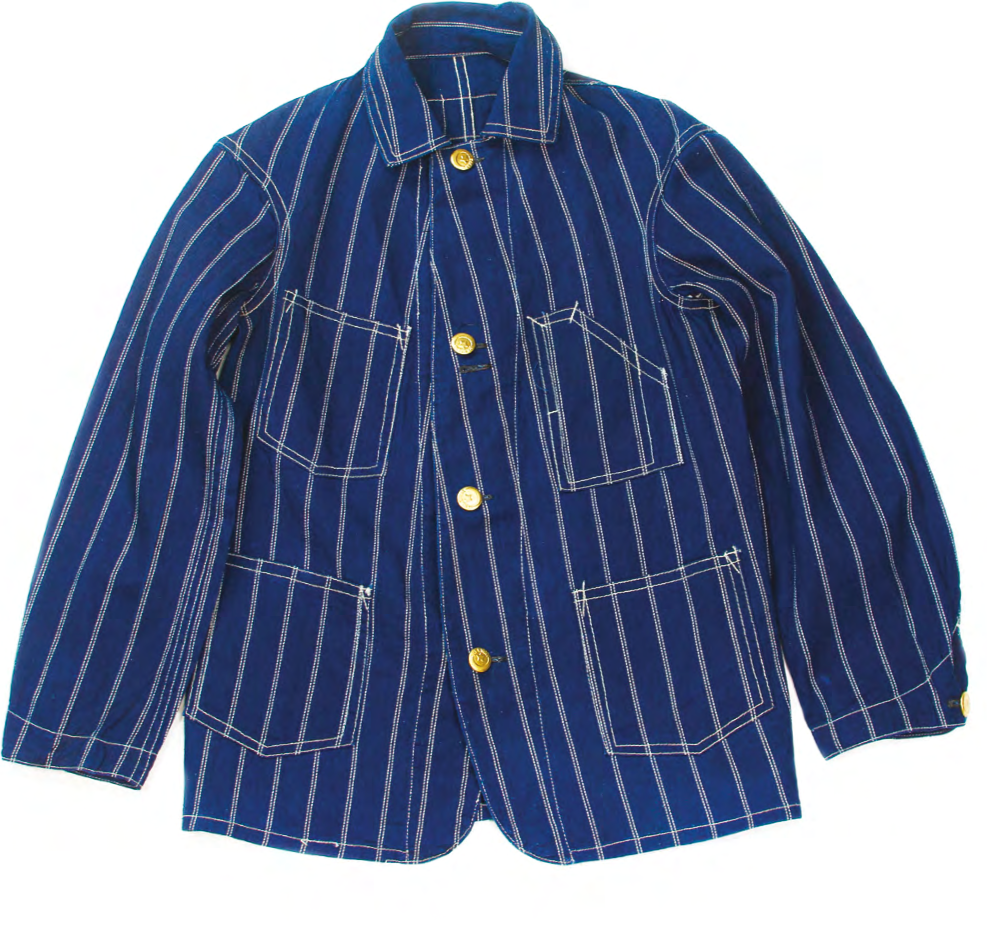
What Michelle saved that day, in a split second from a pile headed for the garbage, was a Klemm chore jacket from 1933. Made with Stifel fabric. With one single owner in nearly a century of existence: her grandfather, Clifford Lee Harris, a World War I veteran who had served in France in 1917 and 1918.
What Makes Stifel So Rare
J.L. Stifel & Sons is a name that means almost nothing to most people and everything to serious heritage clothing collectors. The Wheeling, West Virginia company produced some of the most distinctive shirting and denim fabrics in American history: complex stripe and dobby patterns, unusual weave structures, colors that held their depth in ways that mass-produced competitors couldn't replicate.
The Klemm jacket in Eric Maggiori's Collection is made in an indigo blue Stifel fabric with an unusual double dotted parallel line pattern, a weave that is essentially impossible to find today in comparable condition. The fabric is dense, saturated, and deeply specific. To a collector who knows what they're looking at, it stops the conversation entirely.
Stifel fabrics appear throughout Volume II as one of the six categories in the archive. They represent what Eric Maggiori describes as the knowledge most dealers get wrong: the ability to identify a rare textile from its weave, not its label.
One Man. One Jacket. One Life.
Clifford Lee Harris served in France during WWI. He came home, attended university, went to work for the railroad. He was, by Michelle's account, a tall and extremely slim man almost lanky, narrow shoulders. The jacket, which appears small for an average adult, was made to fit him precisely. A garment cut for a specific body, worn by one person across decades.
He passed away in July 1983 at the age of 84. After that, the jacket remained untouched in his daughter's basement for nearly forty years. Michelle didn't know what she had. Almost nobody would have.
The Buttons Tell Their Own Story
The gold buttons on the Klemm jacket are engraved with three things: the brand name, a half-moon, and a star. The symbolism is not accidental.
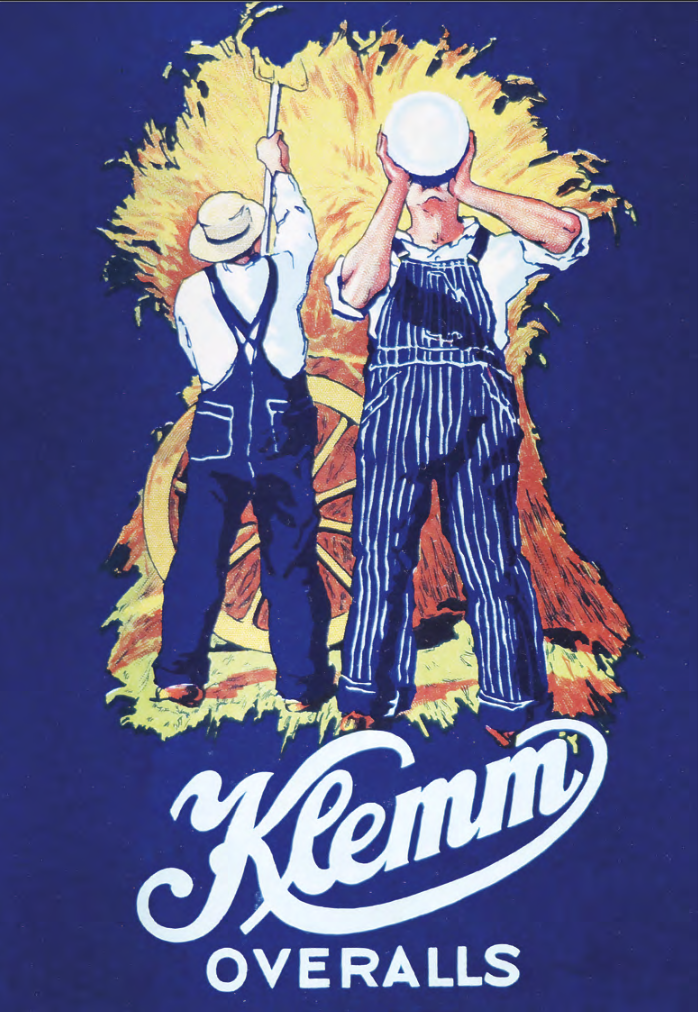
Carl Wilhelm Klemm, the German-born merchant who founded the Klemm company in Bloomington, Illinois, in the early 1870s, arrived in town by train one night. He looked up at the sky. He saw the moon and the stars. And in that moment, he knew he had found the place where he would build his life and his business. The crescent and the star became the mark of the company, a logo with a personal story behind every thread.
Klemm survived Carl's death, devastating fires, and multiple economic crises across more than a century of operation. The company finally closed in 1981.
France, Full Circle
After months of discussion and negotiation, Michelle sold the jacket to Eric Maggiori. Her reasoning, shared directly: her grandfather had served in France. She had lived in France herself. "I think it's beautiful that the jacket is now in France, where its history will be respected."
The jacket is documented in full in Eric Maggiori's Collection Volume II: the Stifel fabric, the construction details, the single-owner provenance, and the complete brand history of Klemm. Eric explains the piece on film.
Discover the story of the Klemm jacket, and many more like this, in Eric Maggiori's Collection Volume II, out now.
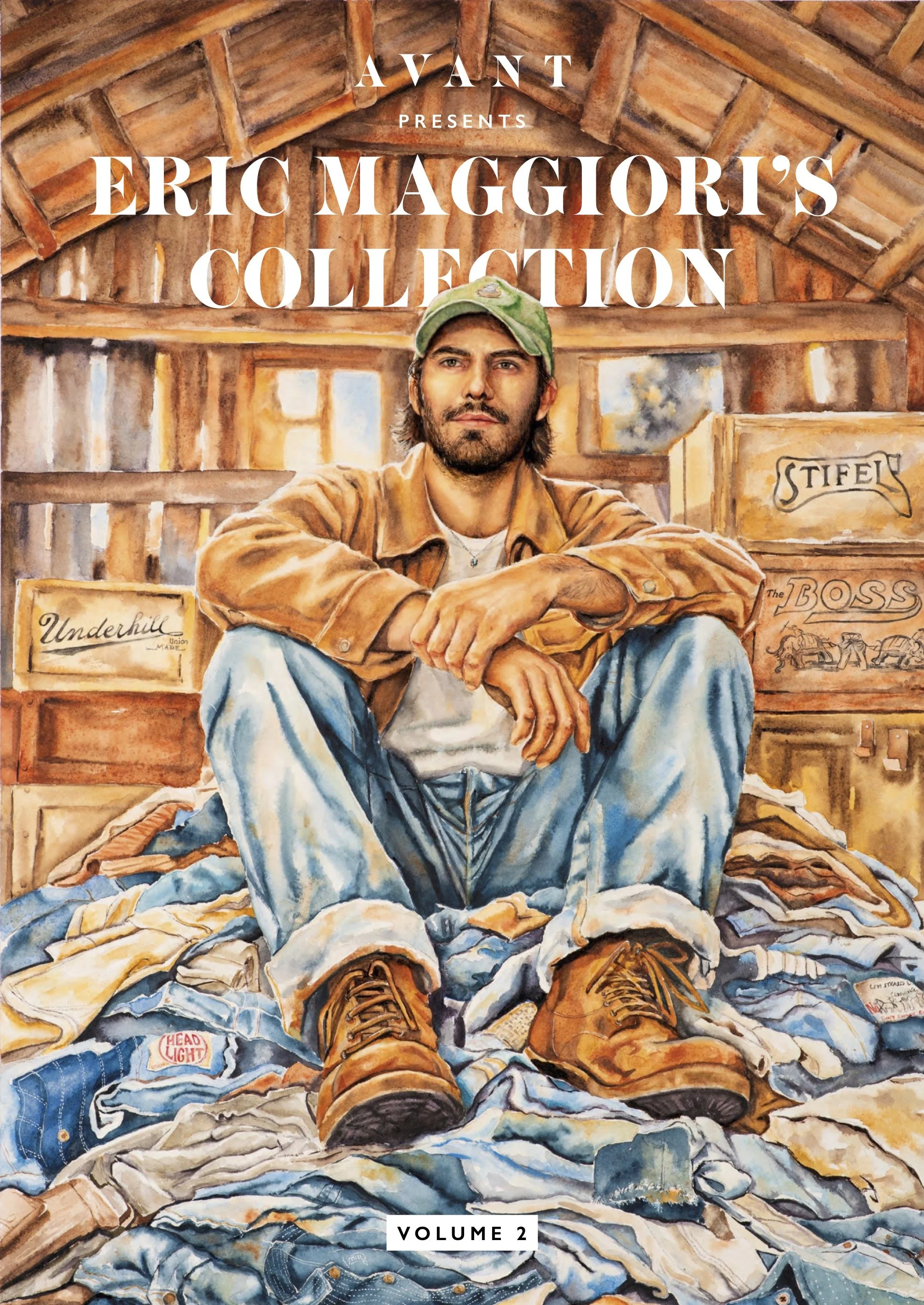
260 pages + 2 hours of exclusive films. Eric Maggiori's complete archive: American workwear, militaria, Stifel, European workwear, vintage tees. The reference book serious collectors use.
Eric Maggiori has spent years acquiring pieces most collectors will never see in person. Volume II puts that knowledge directly in your hands not as a coffee table object, but as a working reference.
And when the page isn't enough, you scan the QR code and hear Eric explain it himself. Over two hours of that, included.
Inside you'll discover
American Workwear: Understand why certain pieces are worth 10x what the market thinks, from the Gold Rush to the mid-20th century
European Workwear: The undervalued category. Get ahead before everyone else catches on
American Militaria: Fatigue uniforms, flight jackets, field gear. Authenticate pieces most experts miss.
J.L. Stifel & Sons: The rarest textiles in the archive. The knowledge most dealers get wrong
Vintage Tees & Sports Memorabilia: The most personal part of the archive which is also the most unpredictable one.
The QR Experience
Every garment is paired with a QR code linking to a short film presented by Eric himself, in front of the piece, explaining what it is, where it came from, and what most people miss.
Over two hours of exclusive content. Embedded throughout 260 pages.
Part book. Part documentary. The kind of object you study, reference, and pass down.
Specs: 260 pages · Softcover · Full color · 170 × 240 mm · English
📍 Worldwide Shipping France/EU: €5–15 | UK: €12–18 | US/Canada: $10–15 | Asia/Other: €40–60
💡 Bundle tip: Buy 2+ items in one order = lower shipping cost per item
✓ Exact cost calculated at checkout