The Adirondack Great Camp: America's first heritage interior
There are interiors that whisper, and there are interiors that breathe. The Adirondack Great Camp belongs firmly to the second category. Long before Ralph Lauren made plaid and patina the lingua franca of American luxury, a constellation of timber lodges hidden in the New York wilderness was quietly inventing what the country would later call its native style. To step inside a Great Camp is to enter the prototype of every cabin retreat, every cashmere-throw catalogue, every Aspen ski chalet that followed. It is, in the most literal sense, where American interior design began to look like itself.
The Birth of a Wilderness Aesthetic
The story starts in the 1870s, in the six-million-acre forest preserve north of Albany. The Adirondacks were, for the Gilded Age industrialist, what Capri was for the European aristocrat: a remote elsewhere where one could perform leisure with theatrical seriousness. The man who codified the genre was William West Durant, a Cornell-educated railway heir whose father owned much of the region. Beginning with Camp Pine Knot on Raquette Lake in 1877, Durant built lodges that fused Swiss chalet structure, Japanese joinery, and the timber techniques of the local Iroquois and French-Canadian carpenters.
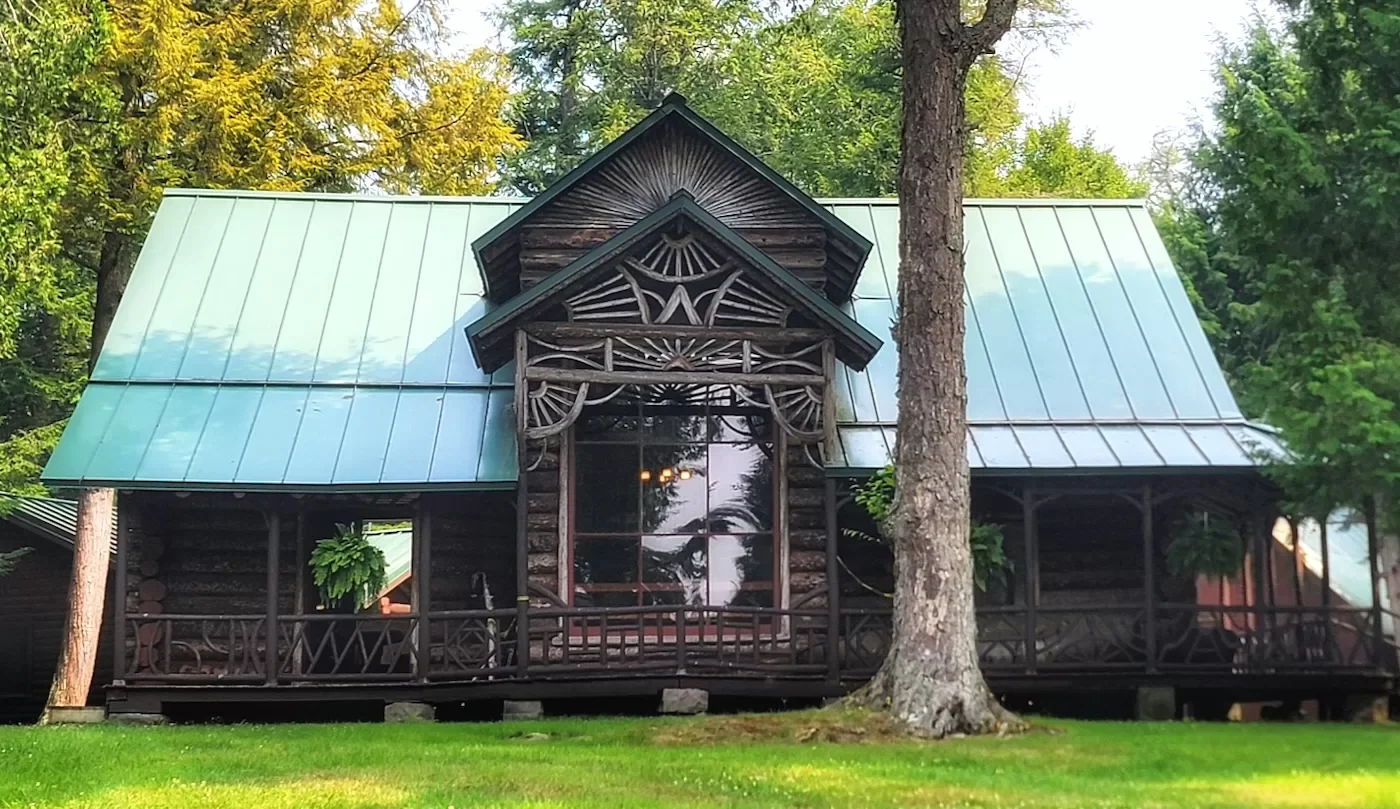
By the 1890s, Durant was selling these compounds to the biggest fortunes: the Vanderbilts, the Whitneys, the Morgans, and the Rockefellers. Camp Sagamore, completed for Alfred Vanderbilt in 1897, sat on a private lake and contained twenty-seven buildings, including a bowling alley sheathed in birch bark.
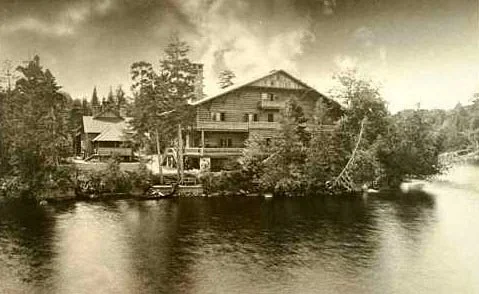
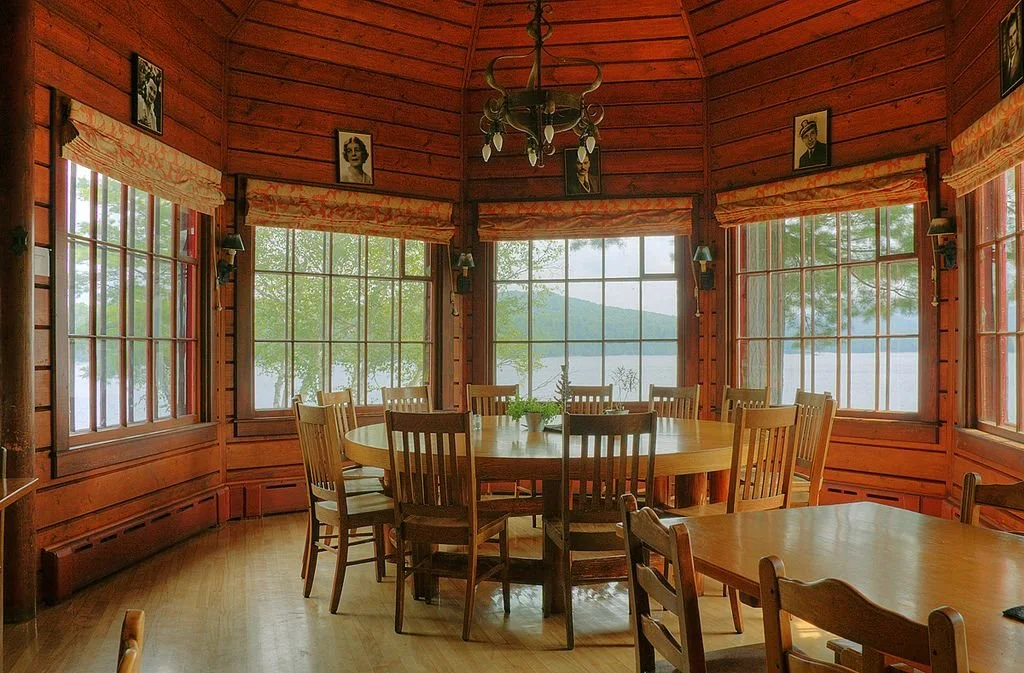
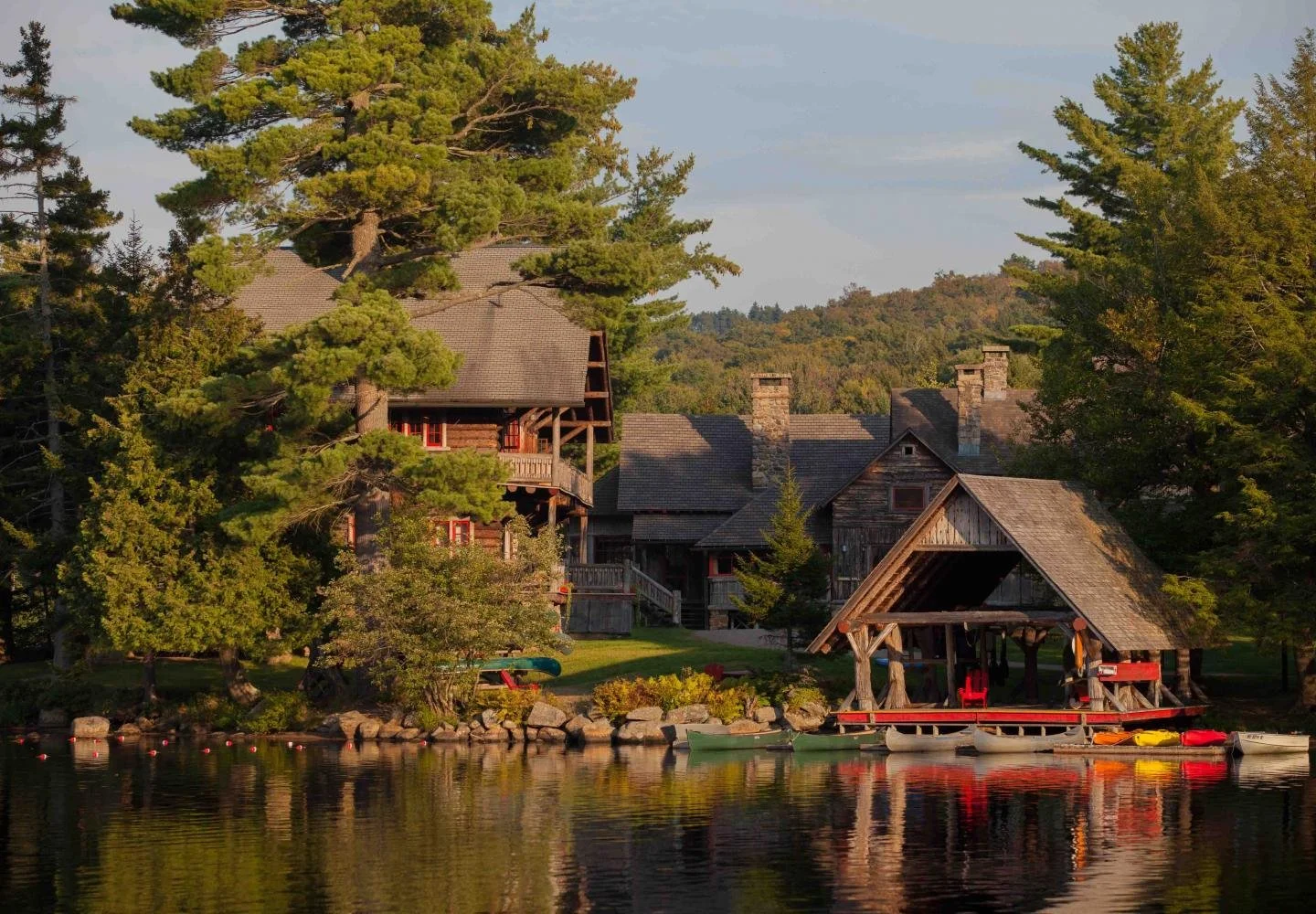
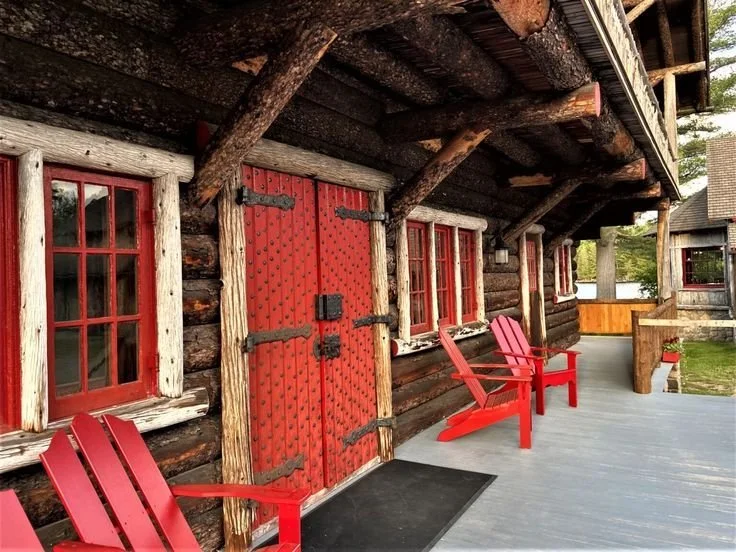
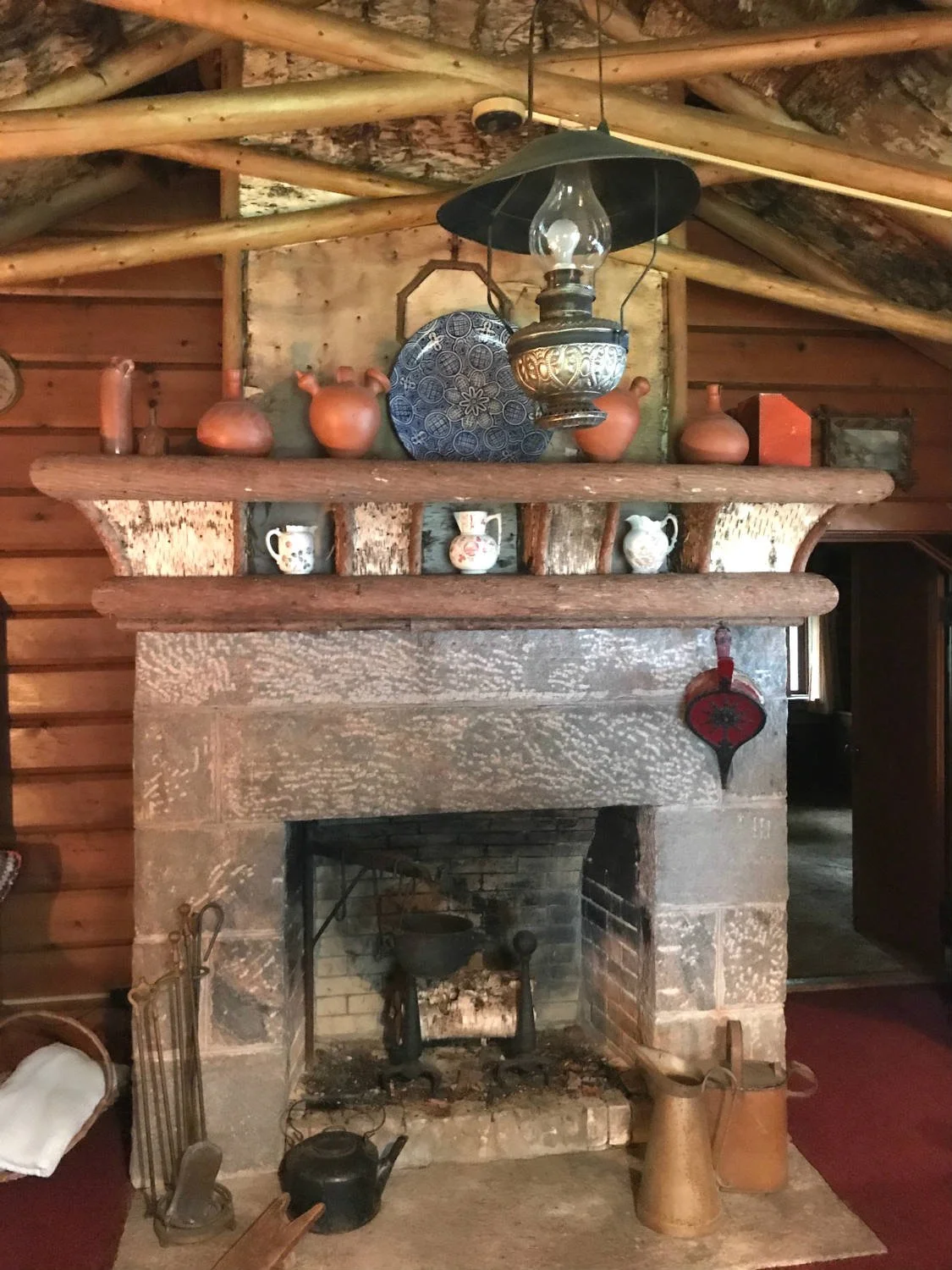
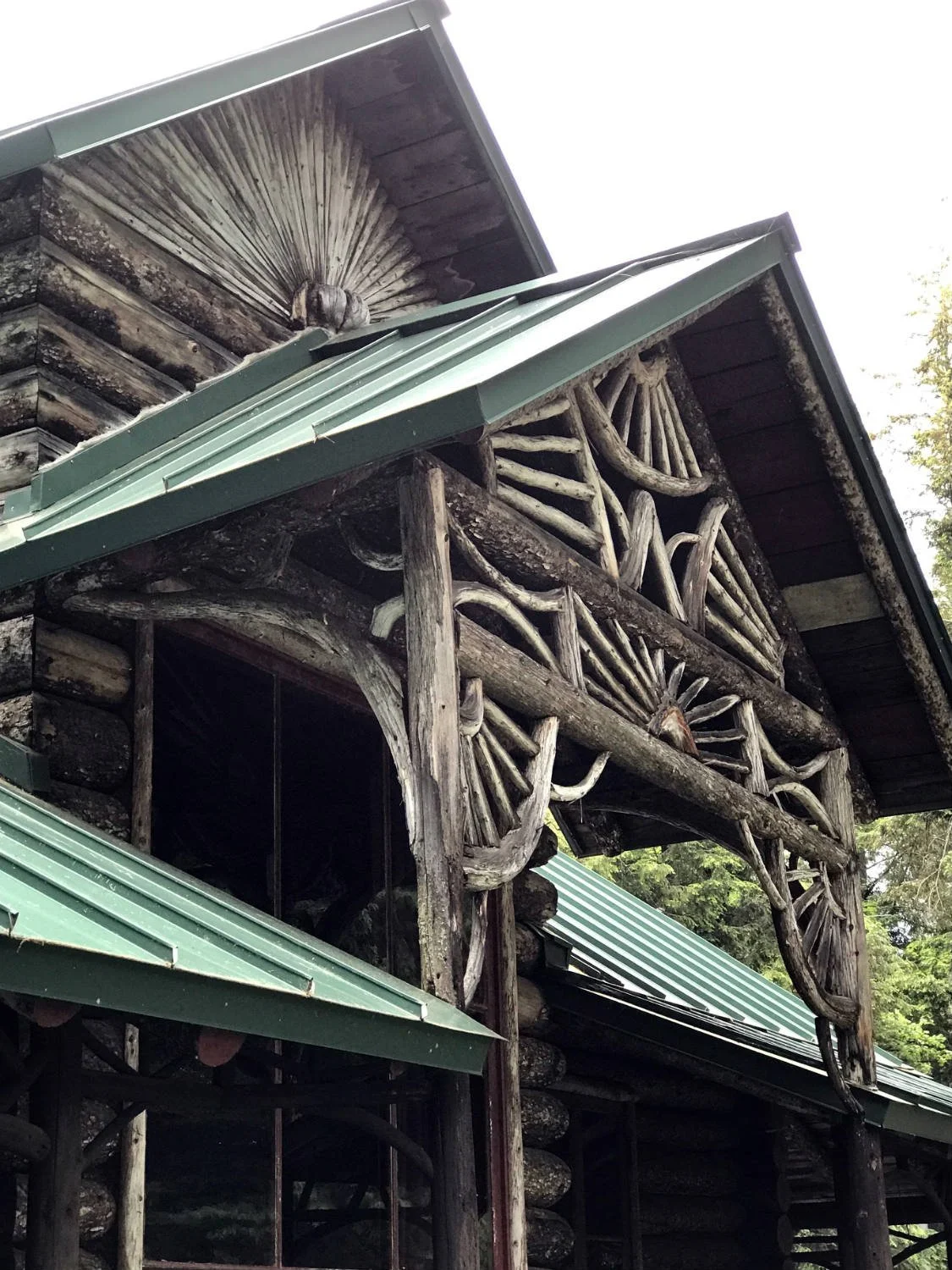
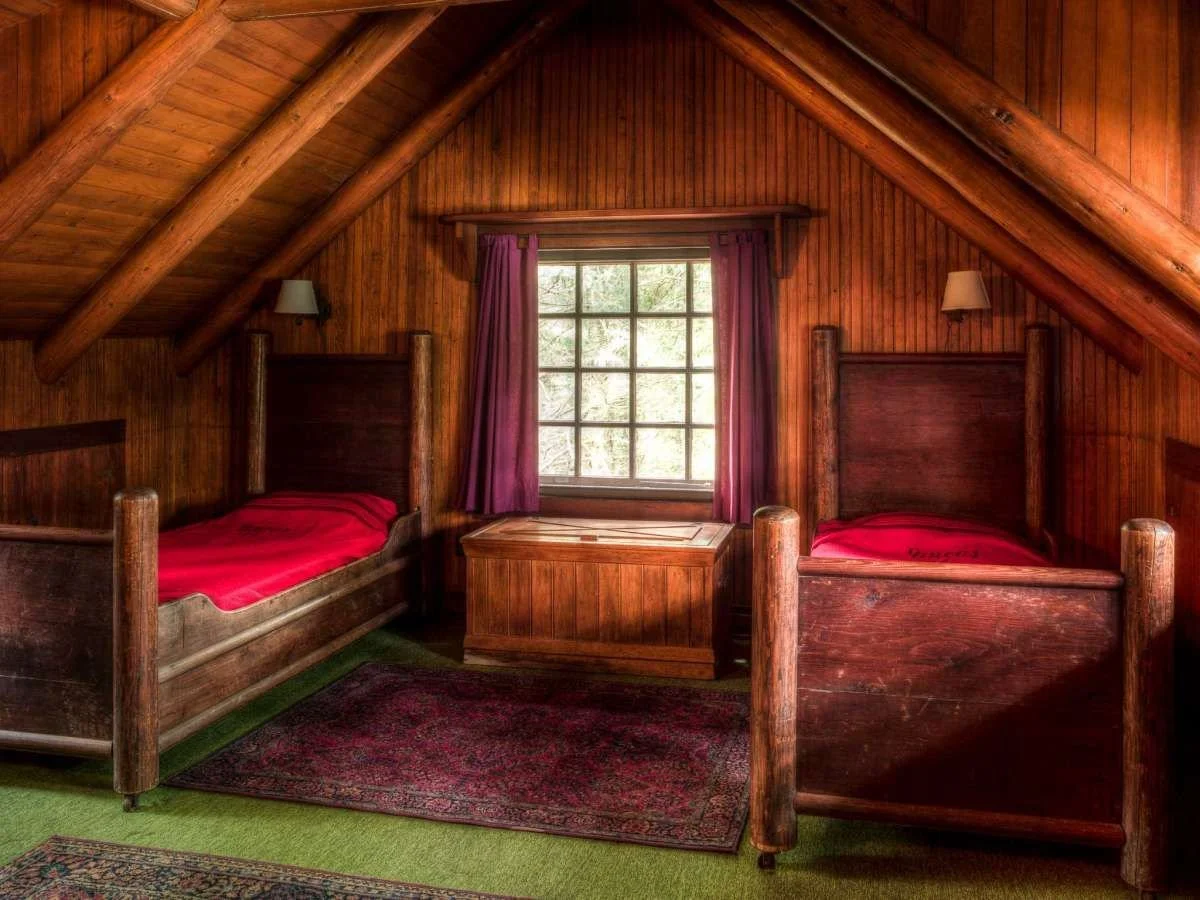
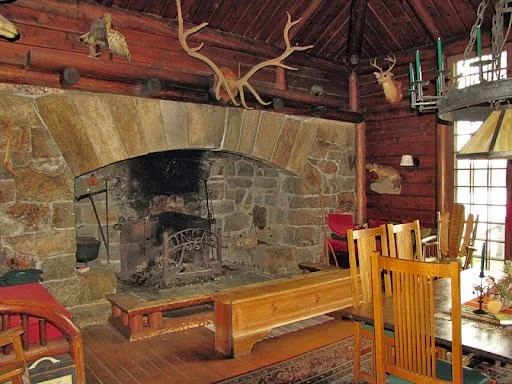
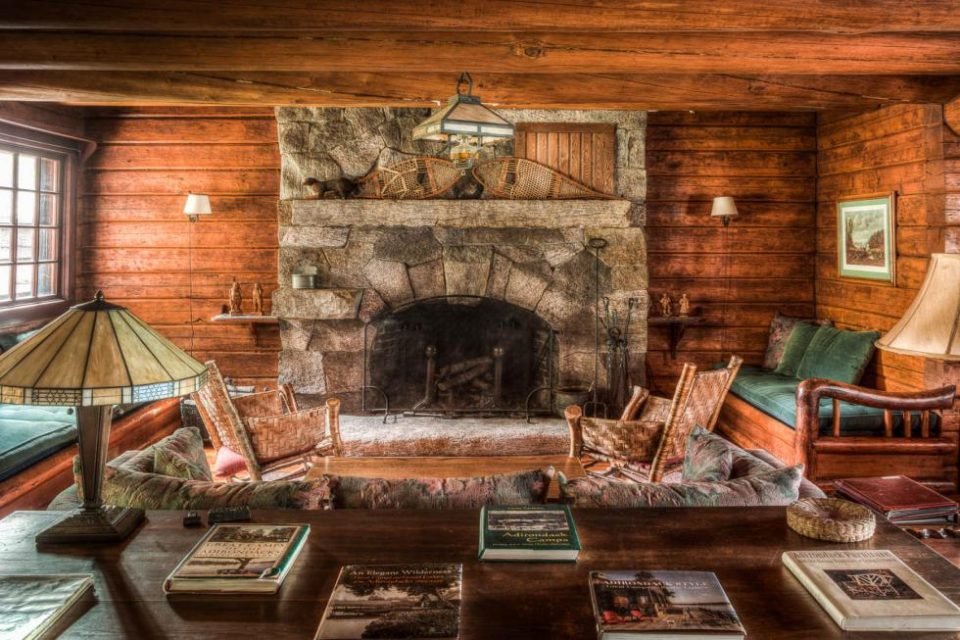
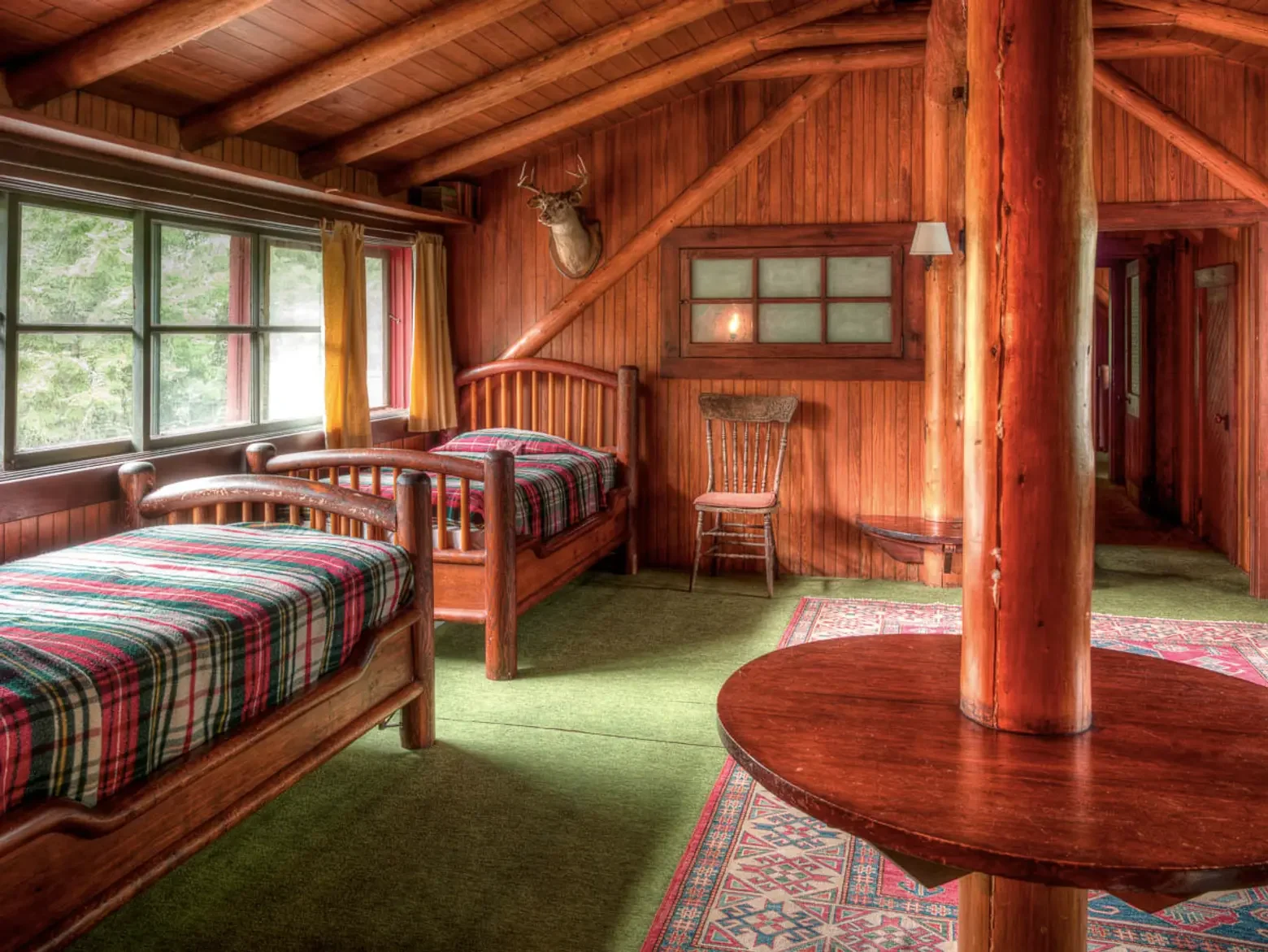
Camp Uncas, sold to J.P. Morgan in 1896, was a study in contained opulence: massive stone fireplaces, hand-peeled log columns, twig mosaics on every door. As you can see, we’re really far from weekend cabins. They were country estates dressed in the language of the forest, and they established the central paradox of American luxury, namely that the deepest sophistication is often the one that pretends to be simple.
Architecture as Camouflage
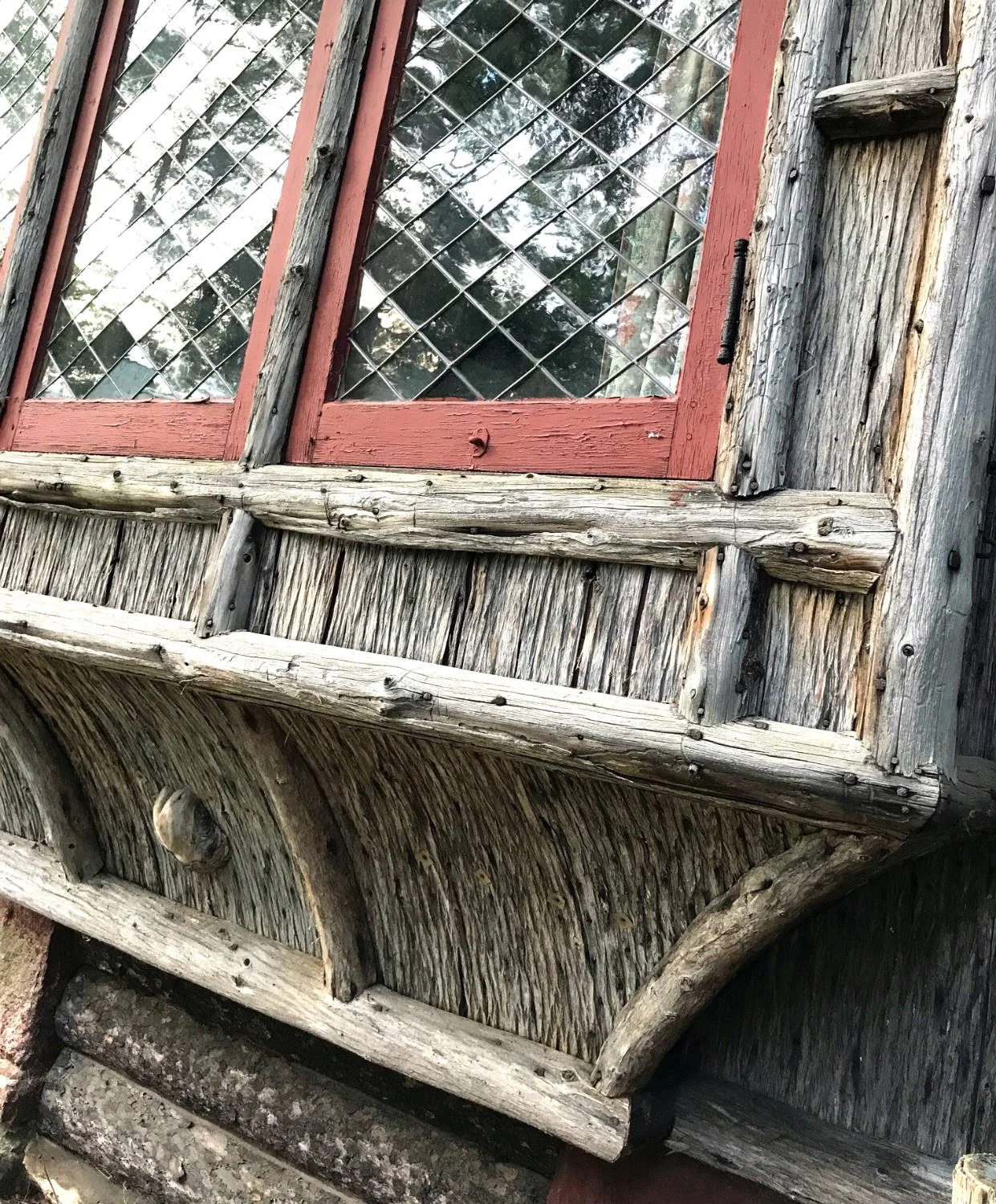
The architectural grammar of the Great Camp was built on three principles: locality, scale, and continuity with landscape. Walls were faced in bark or split logs, often left with the moss intact. Roofs were steep, wide-eaved, and shingled in cedar. Foundations were raw fieldstone, hauled from glacial moraines and stacked without mortar where possible. Inside, ceilings were beamed in spruce, hearths were room-sized, and windows framed the lake the way a museum frames a Hudson River School painting. (The parallel is not accidental. Frederic Edwin Church and Thomas Cole had spent decades teaching wealthy Americans to see the wilderness as sublime, and the Great Camp was that gaze made habitable.)
What separates Adirondack architecture from European rustic precedents is its commitment to indigenous materials and the visible hand of the maker. Twig work, where willow and yellow birch saplings are arranged into geometric mosaics across cabinetry and railings, became the signature flourish. Each panel was unique. Each stair newel was a sculpture. The aesthetic, in retrospect, prefigured the Arts and Crafts movement by a decade and shared its ideological core: a rejection of industrial uniformity in favor of handwork and honest materials.
The Furniture That Furnished America
If the architecture set the stage, the furniture wrote the script. Two names dominate the canon, and any interior aspiring to the Great Camp lineage still references them today.
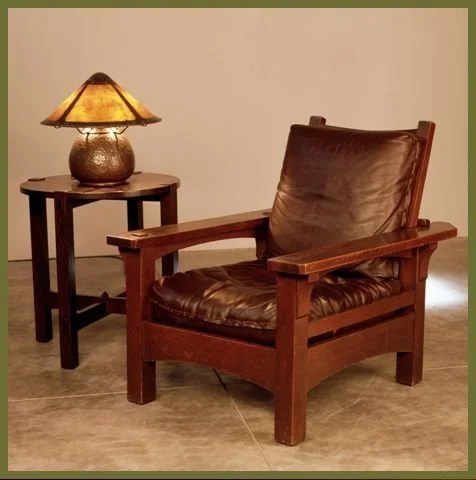
The first is Gustav Stickley. Stickley founded his Craftsman workshop in Eastwood, New York, in 1898, just as the Great Camps were reaching their stylistic peak. His Mission furniture, with its quartersawn white oak, exposed mortise-and-tenon joinery, and unornamented planes, became the natural complement to the Adirondack interior. Stickley's pieces were never carved, never veneered, never trying to be anything other than themselves. That ideological clarity made them the perfect inhabitants of rooms that worshipped the same values. A Stickley settle in front of a fieldstone fireplace, a hammered copper lamp on a Morris chair side table: this is the Great Camp interior in microcosm. (Stickley's furniture remains a heritage investment piece today, with original Mission settles regularly clearing $15,000 at Christie's and Skinner.)

Stickley furniture
The second is the Adirondack chair itself, an object so domesticated by suburbia that we forget it has a designer and a date of birth. In 1903, in Westport, New York, on the western shore of Lake Champlain, a man named Thomas Lee was looking for a chair that would sit comfortably on the steep slope of his summer property. He sketched eleven prototypes from rough hemlock planks before arriving at the wide, flat-armed, slanted-back form we now recognize. Lee gave the design to a carpenter friend, Harry Bunnell, who patented it in 1905 as the Westport Plank Chair.
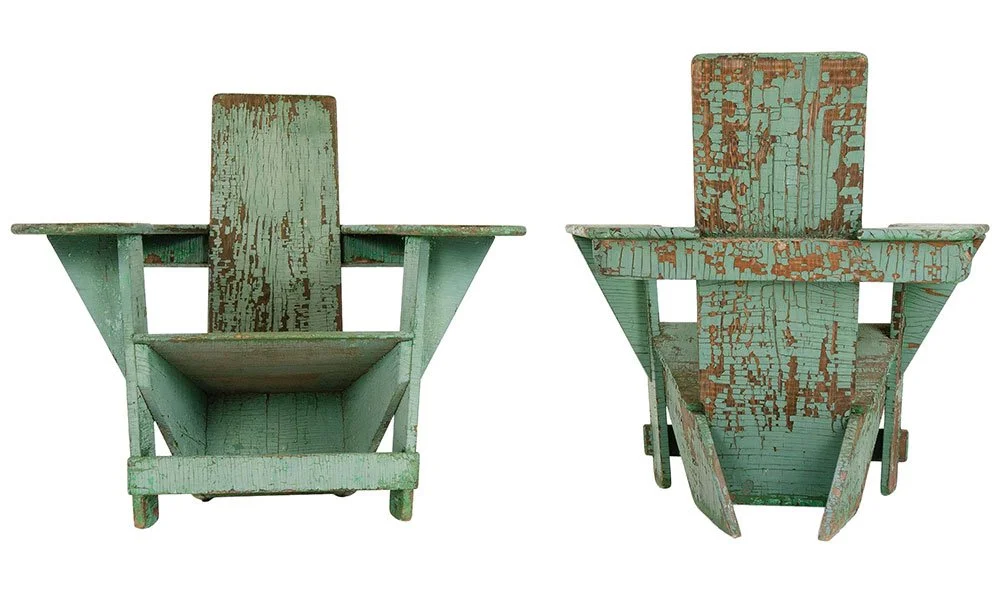
Original Harry Bunnell Adirondacks chairs
By the 1930s, the silhouette had migrated south, slimmed down, and become the universal Adirondack chair, manufactured everywhere from Maine to Australia. (The original Westport chair, with its single-plank seat and back, still has a cult following among collectors. Original Bunnell-stamped examples have sold for north of $40,000.)
Together, Stickley and the Adirondack chair gave the American home a vocabulary it could repeat anywhere: oak, hemlock, leather, copper, slate, wool. The Great Camp had become a kit.
The Textiles: Wool, Plaid, and the Hudson's Bay Stripe
No discussion of rustic cabin interior design is complete without the textile that has become its uniform. The Hudson's Bay point blanket, with its four iconic stripes (green, red, yellow, indigo) on a cream wool ground, was first traded by the Hudson's Bay Company in 1779. It was a transactional object before it was a decorative one, exchanged with Cree, Ojibwe, and other Indigenous nations for beaver pelts. The number of "points," the small woven indigo bars along the edge, indicated the blanket's size and approximate trade value, not the number of pelts as the romantic legend often claims.
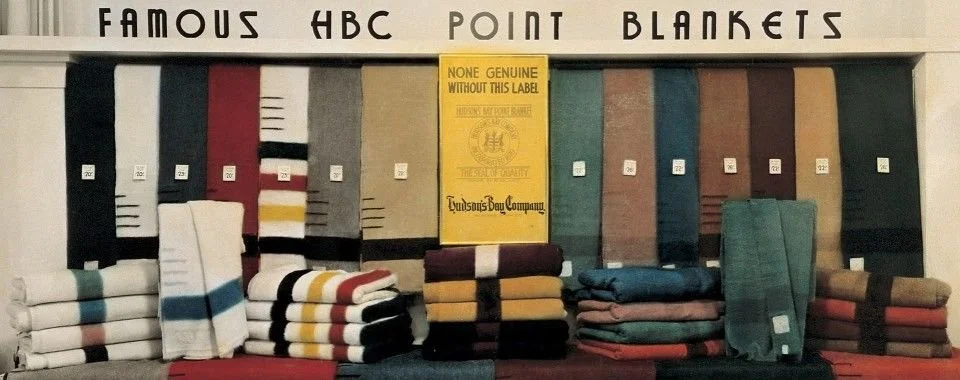
By the early twentieth century, as the Great Camp aesthetic matured, the Hudson's Bay blanket migrated from utility to status object. Folded across the foot of a four-poster, draped over a Stickley settle, layered on a canoe trip, it became shorthand for the heritage interior. Pendleton, founded in Oregon in 1909, soon offered the American counterpart with its jacquard-woven trade blankets inspired by Native Plains designs. (The relationship between these textiles and the Indigenous communities they referenced is complicated and deserves its own essay, which we will publish later this season under our Heritage & Provenance vertical.) For the purposes of design history, the point blanket and the Pendleton wool throw remain the two textiles that signal "cabin" faster than any other object in a room.
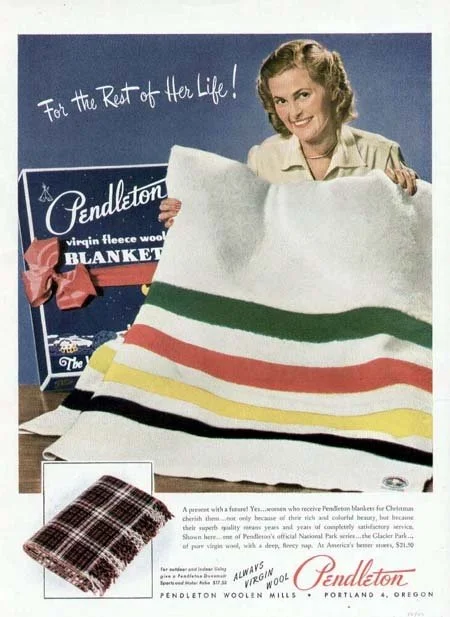
Beyond blankets, the Great Camp interior leaned on dense, tactile wools: tartans on club chairs, ticking stripes on mattresses, hooked rugs underfoot, often made by local women in regional patterns that have since been collected by the Adirondack Experience museum in Blue Mountain Lake.
The Light, the Walls, the Atmosphere
The other element that has aged remarkably well is the lighting. Great Camp interiors were lit by mica-shaded lamps, hammered copper sconces, and, increasingly after 1900, the wrought-iron chandeliers of designers like Dirk Van Erp. The light was always warm, low, and pooled rather than washed. Combined with the matte, slightly sooty finish of stained pine paneling and the mineral grey of fieldstone, the result was an interior that felt held together by firelight even at noon.
Wrought-Iron chandelier by Dirk Van Erp
Walls were paneled in horizontal shiplap or vertical board-and-batten, never painted, always oiled or waxed. Floors were wide-plank pine or oak, scattered with hooked rugs or, in the more theatrical camps, bear and moose hides whose presence today reads as historical artifact rather than aspirational décor.
Why the Great Camp Is Having a Moment Again
The Great Camp aesthetic has cycled in and out of fashion roughly every twenty years since the 1970s, but its current revival has a specific texture. After a decade of Scandinavian minimalism and the cool-grey palette that dominated the 2010s, design directors are reaching for warmth, texture, and provenance. The "quiet luxury" conversation, which began as a wardrobe discussion, has migrated into interiors, and the Great Camp is one of its most instructive references. It is luxurious without being shiny. It is layered without being maximalist. It is unmistakably American without being kitsch.
You can see its influence in the recent renovations of Auberge resorts, in the editorial direction of Cabana magazine, in the rise of dealers like Bunny Williams and the new wave of Brooklyn antique dealers selling 1910s Stickley alongside contemporary ceramics. You can also see it, more bluntly, in the resurgence of plaid flannel as a year-round shirting fabric, the fortunes of brands like Filson and Woolrich, and the auction prices of period twig furniture, which have doubled in the last five years according to Sotheby's Americana department.
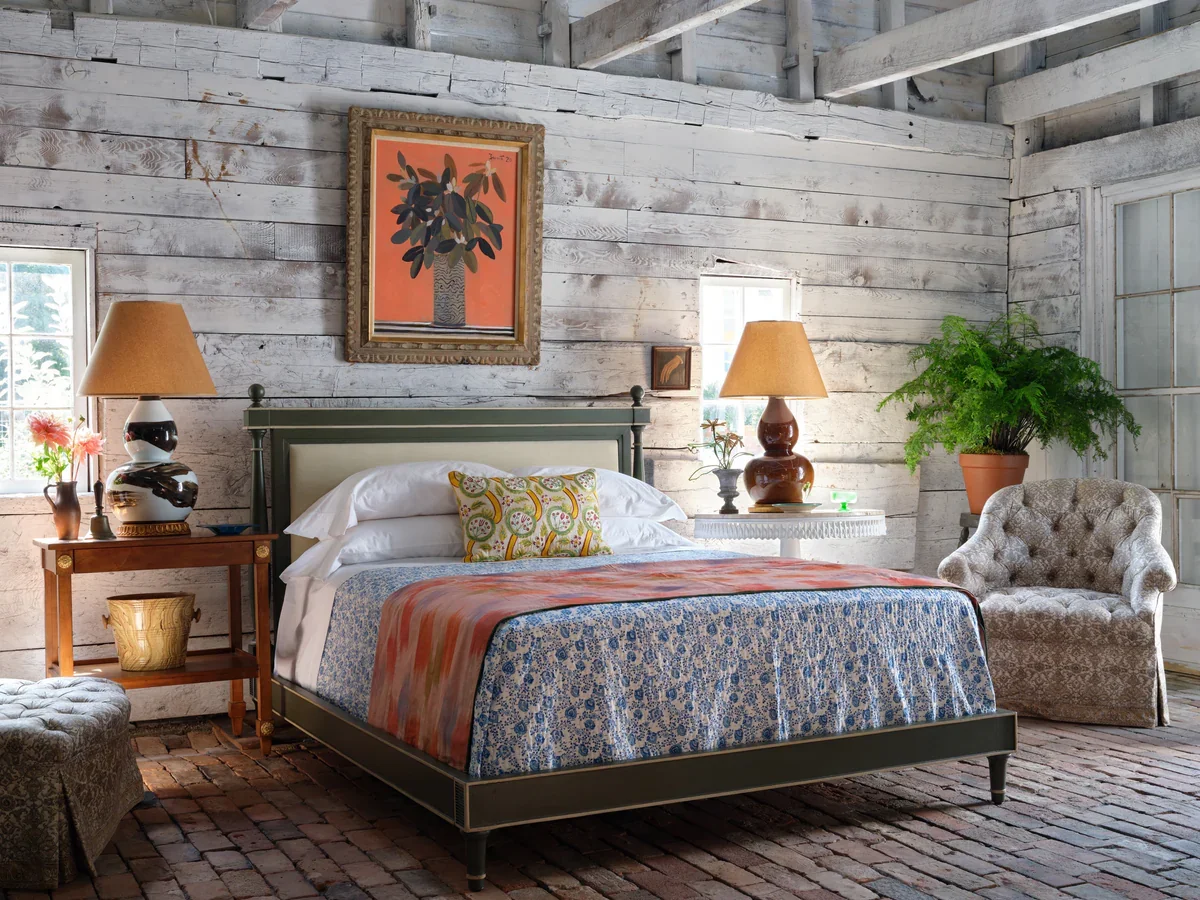
Bunny Williams
Building the Look Today: A Curator's Shortlist
For readers who want to build a Great Camp register into their own interior, the rule is restraint over accumulation. A single Stickley chair, a single Hudson's Bay blanket, a single hand-forged iron sconce will do more work than ten generic "cabin-style" pieces. The most underrated investment, however, remains the textile. A vintage point blanket, properly cared for, will outlive any sofa it lives on. A handwoven Pendleton throw, draped with intent, will anchor an entire room. Begin there. Build outward.
The Larger Lesson
What the Adirondack Great Camp ultimately bequeathed to American design was a permission slip. It granted the country the right to build interiors that were rooted in their geography, made by their craftspeople, and unbothered by European hierarchies of refinement. Every contemporary designer working in the heritage register, from Steven Gambrel to Roman and Williams, owes the Great Camp a quiet debt. It was the first American interior to look in the mirror and see something worth keeping.
In an era when so much of what we call "design" is rendered in a software window before it is ever made by a hand, the Great Camp sticks around because it remembers what hands can do. That is reason enough to look at it again.