
Cory Piehowicz: Hunting 1891 Levi’s and the Passion Behind Vintage Workwear
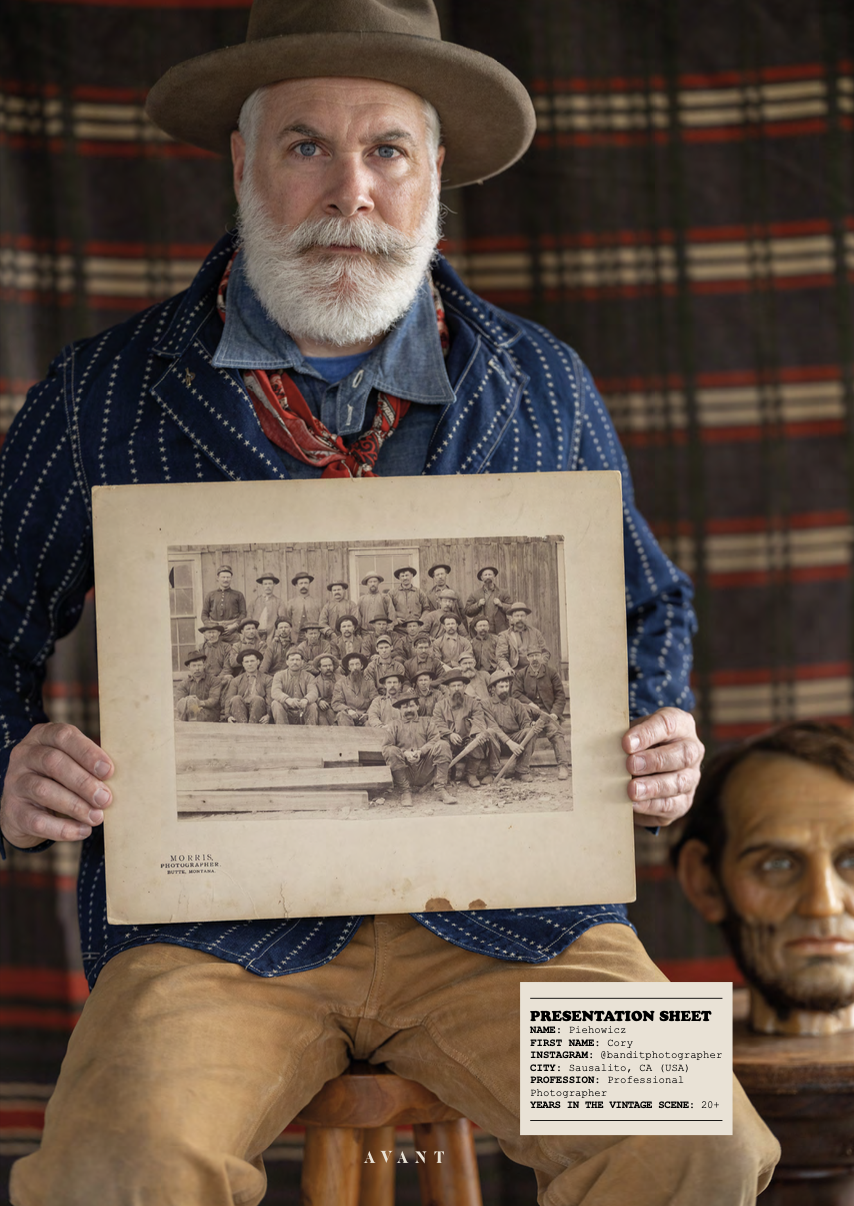
Few collectors embody the spirit of vintage workwear hunting quite like Cory Piehowicz.
Known for his deep knowledge of early American workwear and his relentless field hunts for rare garments, Cory has become a respected figure among collectors of early Levi’s, Stronghold denim, and pre-1920s workwear.
In recent years, he released the photography book “Workers”, a beautifully produced volume documenting vintage workwear garments and the people who preserve them today.
Long before that book was published, Cory shared his story with AVANT in our book The Voices Behind Vintage Clothing , a series of interviews with the collectors, historians, and enthusiasts shaping today’s vintage scene.
In this interview, Cory talks about:
discovering vintage through old photographs
hunting rare Levi’s in abandoned mines
the thrill of finding forgotten workwear
and the collectors who inspired him

The book that introduces you to the world of vintage clothing.
What you’ll find inside:
50+ interviews with collectors, dealers and historians
Perspectives from across Europe, the US and Japan
Personal approaches to vintage, collecting and clothing
A broad view of contemporary vintage culture
For those who want to understand vintage beyond aesthetics..
Details
Softcover
170 × 240 mm
Full color
Language: English
Shipping: Worldwide

A second deep dive into the most collectible American workwear ever made. The kind of details only true obsessives notice.
Inside you’ll discover
Chinese immigration during the Gold Rush — a forgotten chapter of American history
The true story behind rare Levi’s jeans from 1880, discovered in a California mine
Collector details decoded: chinstrap, vent holes, and other workwear “tells”
Interviews with legends: Lynn Downey (Levi’s historian), Rin Tanaka, Larry McKaughan, Akira Tsuchida, Michael Harris
A unique cover painting Three Horse Power by Greg Newbold, created exclusively for AVANT
Specs
Softcover
170 × 240 mm
Full color
Language: English
Shipping: Worldwide
How did you discover your passion for vintage clothing?
My passion for collecting vintage started with old photographs of workers. There was always something about those images that I couldn’t quite explain, a feeling that stuck with me.
That curiosity led me to look closer at what these guys were wearing and whether any of it had survived over time.
Vintage clothing was actually made stronger and with better labor — less chemical treatments and pollution. Vintage clothing was colorful, unique, and had so many functions.
While researching all this, I came across an online forum called Old Jeans of the Old West — and the rest is history.
So, I suppose you particularly like these Jeans of the Old West…
Oh yes. I specialize in pre-1920s workwear.
I like some pieces from later periods, but the pre-’20s are what I’m really passionate about.
Levi’s, Greenbaum, Boss of the Road, Stronghold, Stifel, etc.
How did your passion for antique photography influence your own work?
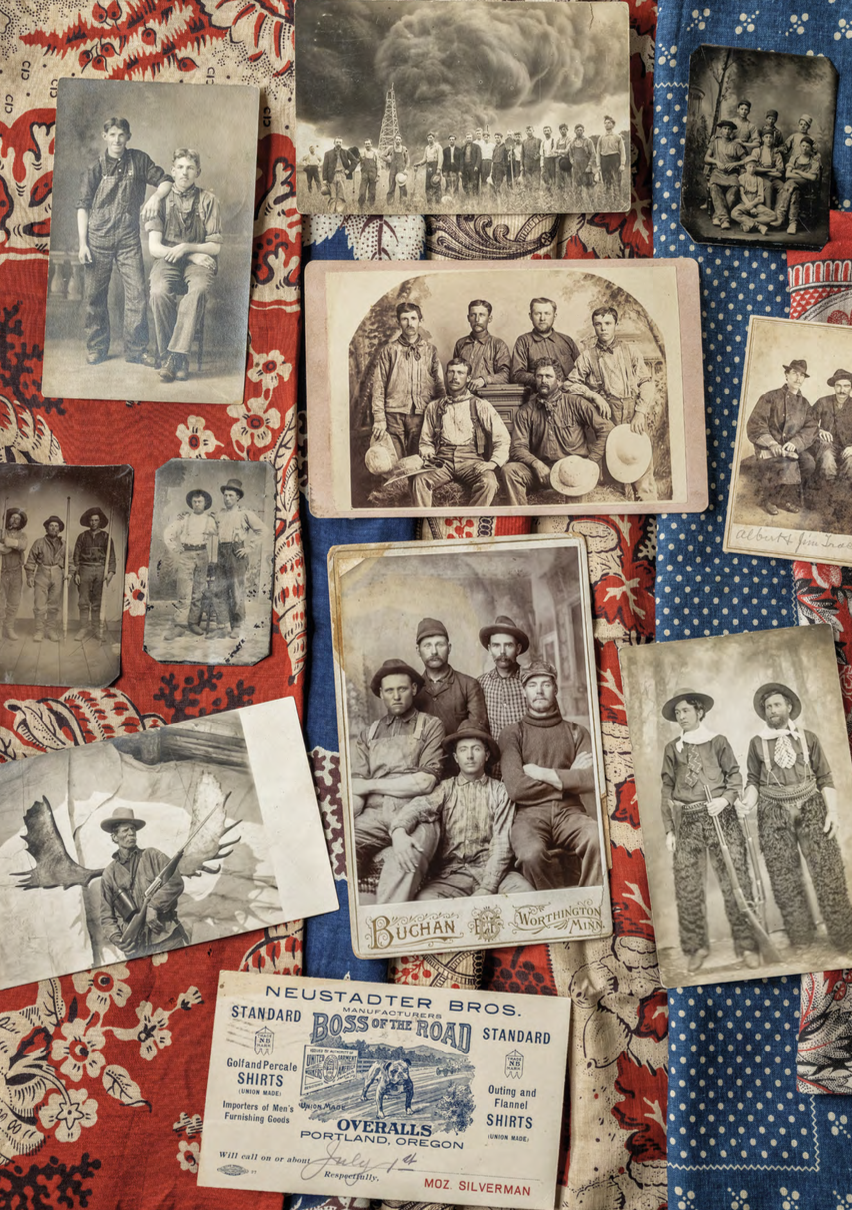
Antique photos from Cory’s collection.
My passion for antique photos comes from my love of photography.
Vintage photos have influenced so much of my life. In my own photography, I try to capture that vintage look and lighting you see in old images.
I use them as references, sometimes even recreating clothing styles and poses.
I think you can really see that influence in my work.
Which players in the vintage clothing world have particularly inspired you?
I think I was inspired by a few people in the vintage scene, but what influenced me the most was seeing the clothing and collections first-hand.
Learning about the history of these brands and hunting for the rarer ones also played a big role.
My good buddy Viktor Fredbäck probably inspired me the most. He would travel all the way from Sweden to go on clothing expeditions, and seeing his passion for vintage really motivated me.
I think you, Eric, have done the same.
Christophe Loiron, aka Mister Freedom, also had a huge influence on me. He was creating collections inspired by vintage clothing, and he was the first person I bought incredibly well-made pieces from — pieces that are still part of my collection today and will be for the rest of my life.
The vintage clothing world is small, and when you find like-minded collectors, you truly appreciate those connections.
It’s great to be able to share a newly discovered piece or photo with someone who genuinely understands and gets excited about it.
The clothes you're talking about, pre-1920 workwear, are particularly difficult to find. How do you proceed?
Most of my pieces come from going into the field and finding them — whether on old farms or mining areas.
The desert is my favorite place to explore.
There’s something about the atmosphere and the feeling of being out there that’s impossible to put into words — it’s just breathtaking.
Actually, one of the craziest experiences I’ve had was going on my first-ever mining trip with some friends and finding a pair of 1891 Levi’s within the first hour.
That moment lit the spark for me — I was hooked.
There’s no feeling quite like discovering an incredible piece of workwear.
From that day on, I guess I’ve had a bit of a lucky streak.
Can you describe this feeling more precisely?
The feeling of finding something rare or new is what all treasure hunters get — and one reason they do it.
Sometimes that feeling outweighs the danger of the hunt.
When I find a certain identifiable piece in a photo, I get a similar feeling.
For example, if I find a photo and I can see a dart stitch on the jacket or pants and it’s clear, I think that is super cool.
Which is the favorite piece in your collection?
I have quite a few special pieces in my collection.
One of the most meaningful is the 1891 Levi’s from my first hunt.
Another standout is a beautiful photograph of a Native American wearing two pairs of jeans.
I also have a pair of Stronghold jeans and overalls featuring the arcuate stitching on the back pocket.
Based on some garments from your collection, you did a few collaborations with the brand Blue Blanket.
Yes, I’ve done a few collaborations with Blue Blanket.
Antonio DiBattista is an incredible collector, designer, and friend.
Our first collaboration was a pair of 1870s-inspired waist overalls, based on a duck fabric pair with dart-stitched construction and a bone-shaped buckle-back — possibly Levi’s Grizzlys — that I found a few years ago.
The original pair had no back pocket, so we took inspiration from a similar pair of 1870s waist overalls.
I also worked on a Wabash overall and a duck work pant inspired by old hunting vests and pants.
And there’s another jacket collaboration in the works — stay tuned.
That piece has since been released as a very limited run of 10 jackets, and it will be exclusively sold during Inspiration Show 2026 in Los Angeles.
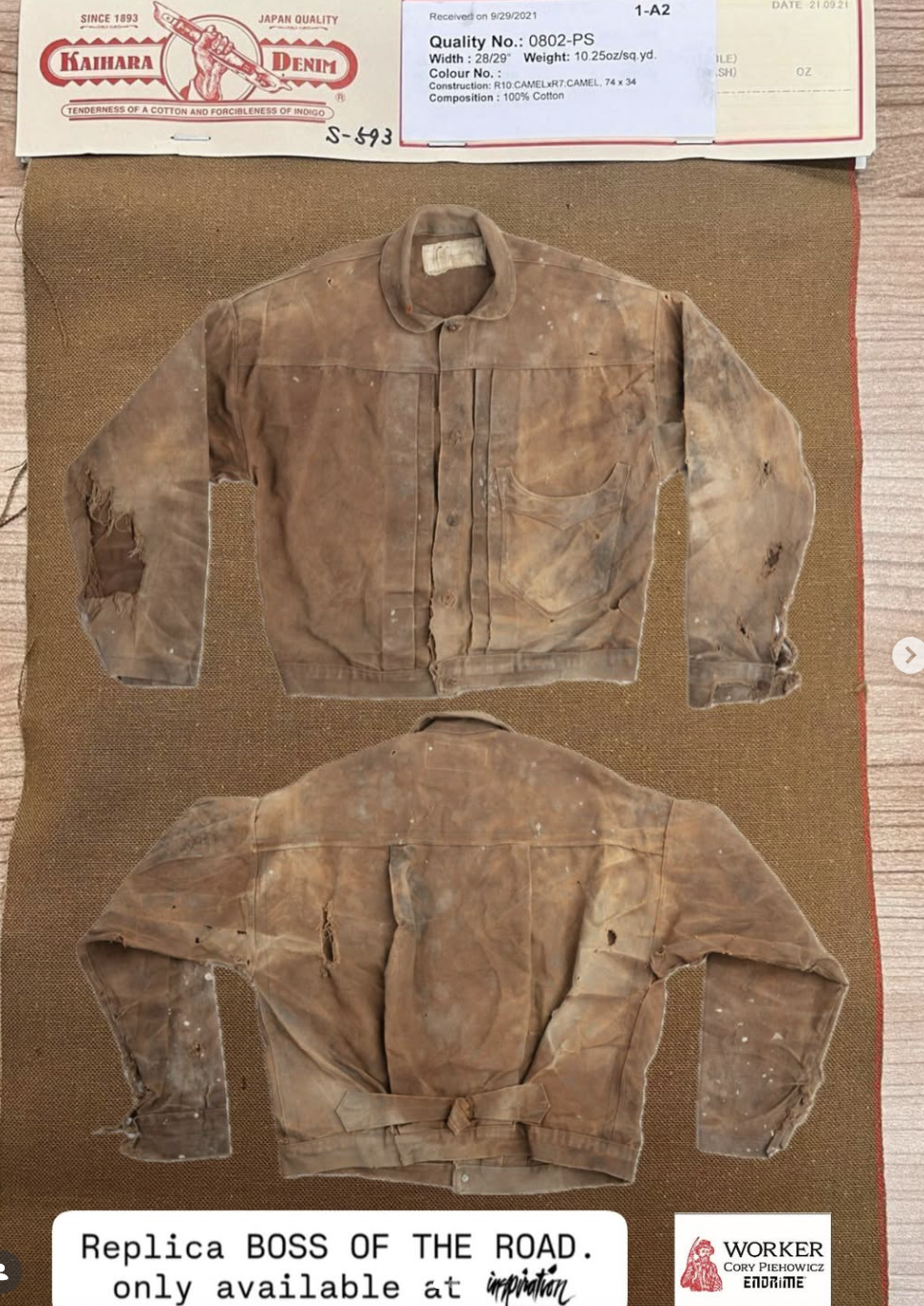
Replica Boss of the Road by Cory Piehowicz x Endrime sold at the Inspiration LA in 2026
What do you like the most about collecting?
Probably uncovering the history behind these pieces and filling the gaps in worker’s unknown past.
It’s fascinating to see the little modifications workers made to make their clothing more functional.
The vintage workwear scene is still relatively small but growing fast.
I used to have no problem finding certain pieces, but now there’s a whole new generation of collectors — which is a great thing.
I’m glad to see this passion being carried forward and these pieces being preserved.
Also, one of the best things about the vintage clothing world is the friendships you make.
Some of my closest friends came into my life through vintage.
I met your brother Mark Maggiori because of our shared love for vintage clothing, the West, and Stifel.
It’s inspiring to see how these vintage pieces show up in both of our artistic works — it’s a beautiful thing.
I also owe Mark a lot for helping me out and bringing me along on a few of his shoots, where I had the chance to style models with my vintage pieces and create some really special photographs.
You once told me that it drives you crazy when there are historical inconsistencies in clothing in period films.
Oh yes.
Watching some of these recent films and TV shows really drives me crazy because so many historically inaccurate clothing choices.
There was this movie on Netflix called 1922, and yet the guy on the poster was wearing a pair of 1950s overalls.
Such a shame.
He would have looked a hundred times better in a proper pair of 1920s overalls.
(Laughs.)
Most people won’t notice details like this, but with the kind of money they pour into these productions, they should really get it right.
You are now considered an old hand in the world of vintage clothing. What advice would you give to a newcomer?
If someone new to vintage collecting wants to build an incredible collection, my advice would be to invest in a few truly amazing pieces rather than buying 50 mediocre ones.
It’s better to own five rare, incredible items than a bunch of “just okay” pieces.
That’s just my opinion, but I wasted so much money on average finds, and now I just want to get rid of them.
I think most long-time collectors would agree.
I believe you are working on a magnificent book… Can you tell us more?
Yes, I’m currently trying to finish my book, which I’ve been working on for 15 years now.
It’s called Workers and will be a beautiful coffee table book featuring unique photographs of workers alongside related artifacts.
I’m also working on a photography project inspired by historical images.
The Book: Workers
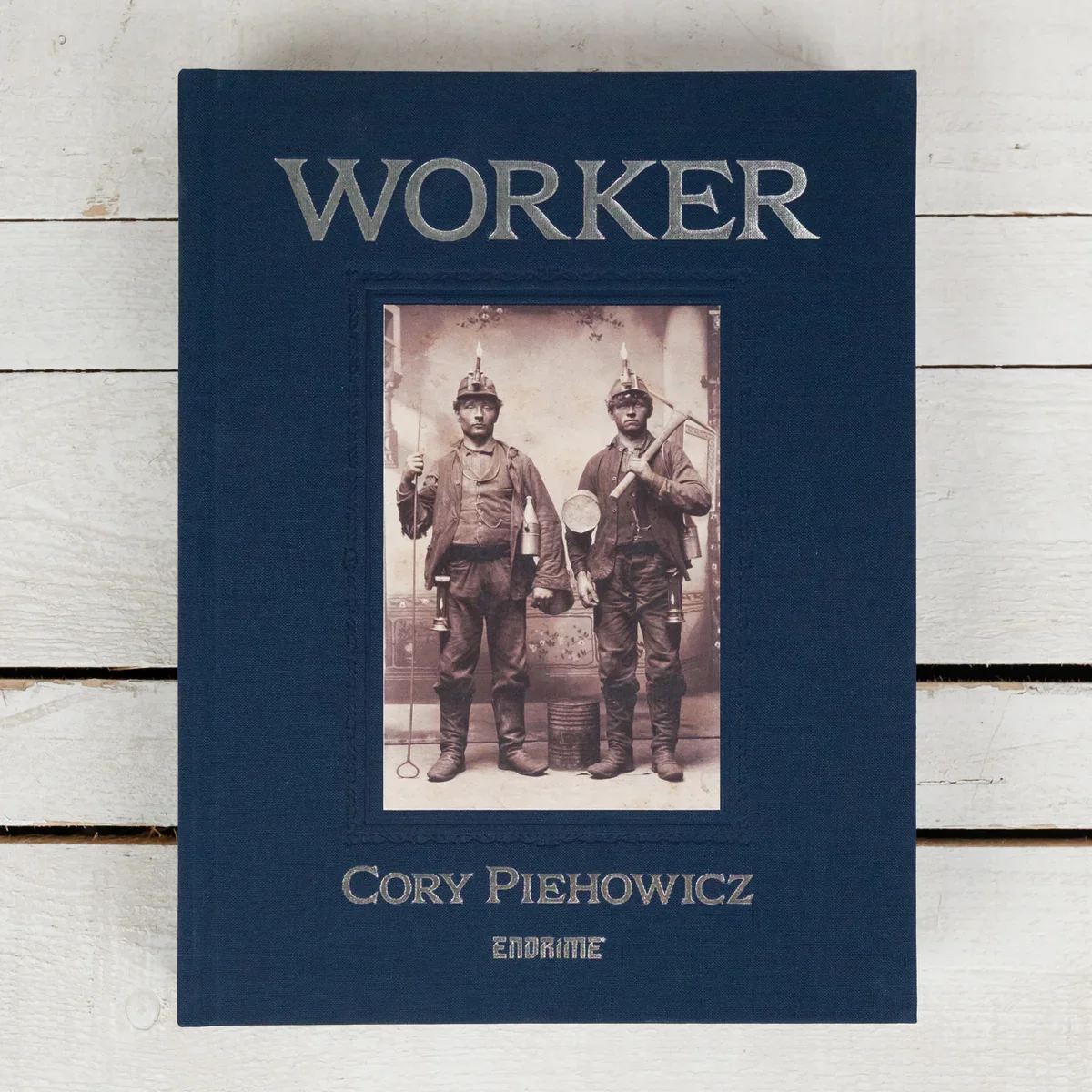
Cory’s long-awaited book Workers is a monumental photographic tribute to vintage workwear.
The book documents rare garments, historical references, and the culture surrounding early American work clothing.
Printed in a limited edition (100 copies) and sold around 400$, it has quickly become a collector’s item in the vintage community.
Cory Piehowicz — Top of the Pops
Favorite Vintage Stores
Mister Freedom
Stock Vintage NYC
Whitefeather Mfg.
Favorite Vintage Events
Rose Bowl Flea Market
Inspiration Show
Springfield Flea Market (Ohio)
Favorite Pieces I Own or Have Owned
1887 one-pocket Levi’s blouse jacket (co-owned with Mike Harris)
1873–74 Levi’s shorts with the first readable Levi’s tag (co-owned with Eric Baxter and Jeff Johnson)
Favorite Books About Vintage Clothing
True Fit
AVANT
Heller’s Cafe Books
Favorite Brands
Mister Freedom
Blue Blanket
Whitefeather
Viktors Voice
Runabout Goods
Many of the collectors, designers, and brands Cory mentions in this list have also appeared in AVANT Magazine and our book The Voices Behind Vintage Clothing — documenting the people shaping the global vintage community.
The book that introduces you to the world of vintage clothing.
What you’ll find inside:
50+ interviews with collectors, dealers and historians
Perspectives from across Europe, the US and Japan
Personal approaches to vintage, collecting and clothing
A broad view of contemporary vintage culture
For those who want to understand vintage beyond aesthetics..
Details
Softcover
170 × 240 mm
Full color
Language: English
Shipping: Worldwide