Flat, Wide, and Unapologetically American: Meet The Ranch House
There is something distinctly American about the horizon line. Not the skyline of glass towers or the density of old-world cities but a house that stretches rather than rises. That settles into the land instead of standing above it. The ranch house is that gesture, defining an era, a culture, and an entire American mythology.
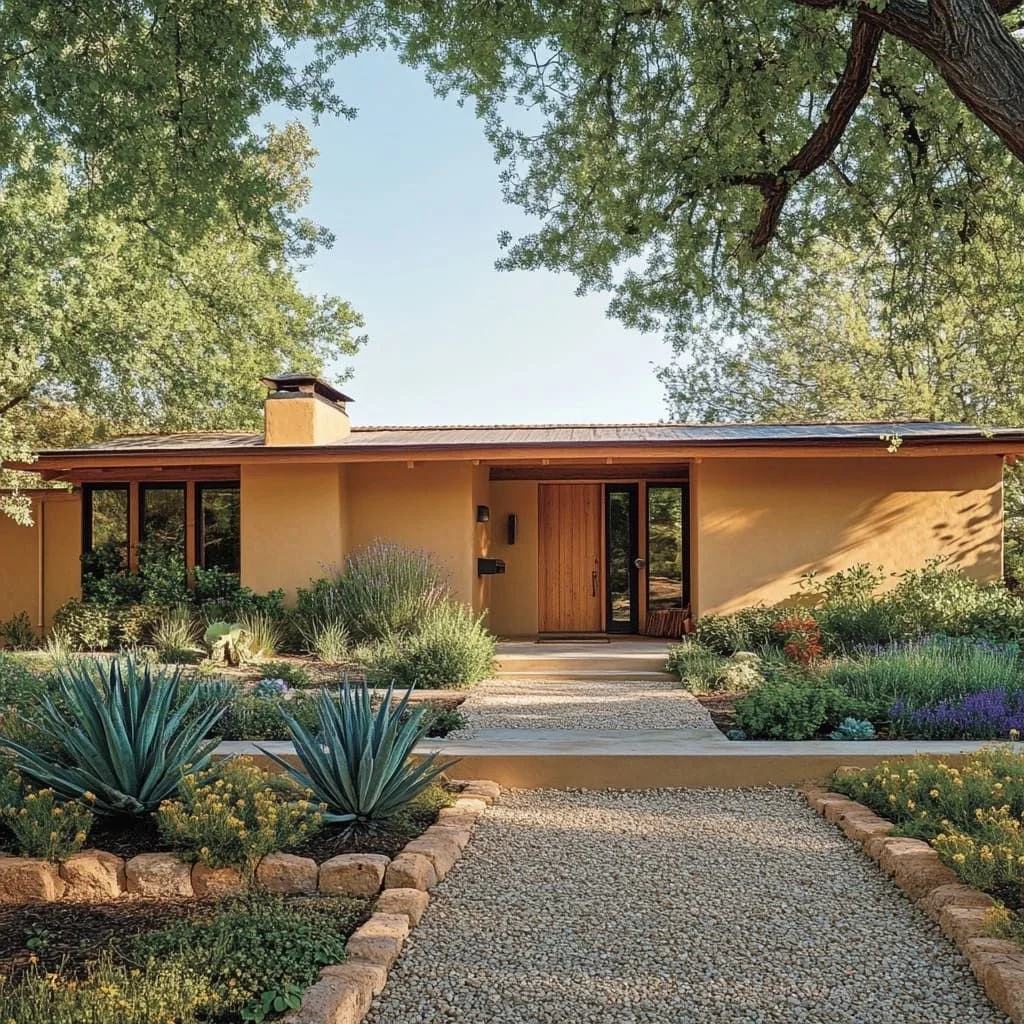
The Roots of Ranch House Design: Where the West Began Indoors
Before postwar housing tracts and architectural trend cycles, before Architectural Forum declared it the most influential house type in American history, the ranch house was simply the architecture of survival on western land.
It borrowed from Spanish colonial haciendas: the whitewashed adobe structures that Spanish settlers and later Mexican rancheros built across California, New Mexico, and Texas from the 17th century onward. Thick walls, shaded courtyards, interior-facing rooms. Architecture shaped by climate, an inward dignity that left the exterior almost blank, reserving beauty for those who lived inside.
This is the detail that changes everything about how we read ranch house design today.
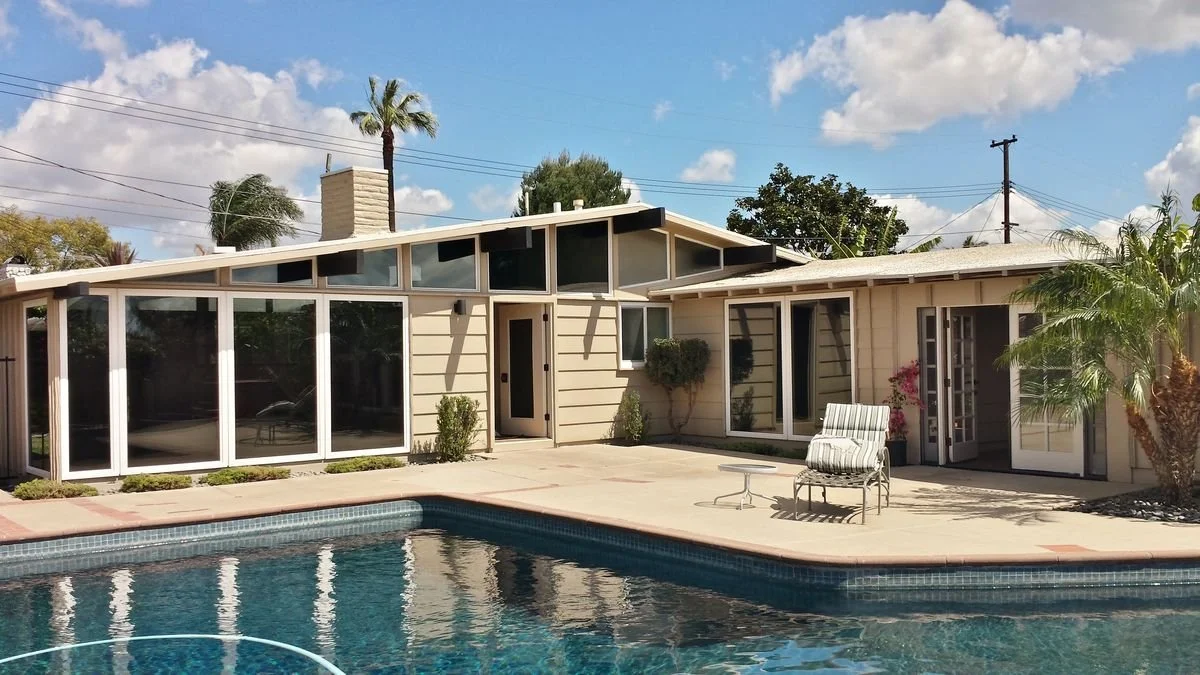
Midcentury Ranch House by Cliff May
The man who translated this vernacular into the 20th century was Cliff May, a sixth-generation Californian, descendant of San Diego's founding families, saxophone player turned furniture designer turned architect. May built his first hacienda-style residence in San Diego in 1932. Over the following four decades, he would design or influence more than 18,000 homes across the United States, earning him the title Father of the Ranch House.
Cliff May understood that Californians, and by extension postwar Americans, wanted to live differently with a home that connected them to the landscape rather than separating them from it.
Mid-Century Ranch Architecture: When Modernism Finally Relaxed
By the 1940s and 1950s, mid-century ranch architecture had absorbed a new influence: European modernism. Open plans, clean materials, the elimination of ornament. But where the International Style remained austere and ideological, the American ranch softened modernism into something livable.
The result was a house defined by three principles that still feel radical today:
Horizontality. The ranch house doesn't rise. It extends. A single story pressed against the earth, with a roofline that mirrors the landscape behind it. In an era of vertical ambition, the ranch chose groundedness.
Openness. The formal parlor, the separate dining room, the closed kitchen: all dissolved. Ranch floor plans introduced what we now call open-plan living, with cooking, gathering, and resting flowing into each other without hierarchy. In 1950, this was genuinely countercultural.
Connection to the outdoors. Large sliding glass doors, wraparound patios, and carports that blurred the threshold between inside and out. The American landscape wasn't something to look at through a window. It was something to step into.
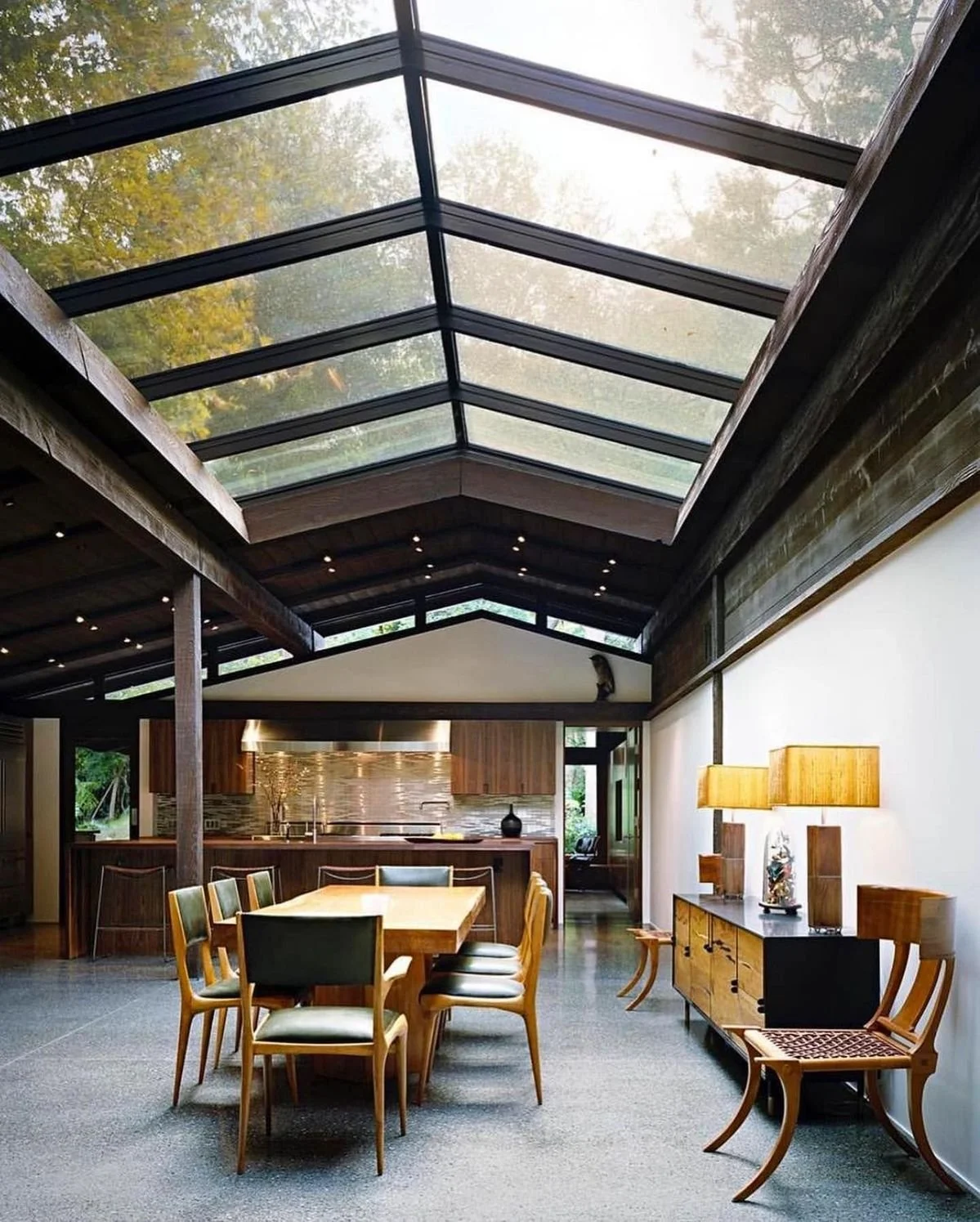
Cliff May’s Experimental Ranch
In 1949, Architectural Forum declared that "never before in the history of U.S. buildings had one house type made such an impact on the industry in so short a time." By 1970, roughly 70 percent of all new American homes built were ranch-style.
The American Dream, Built to Scale
To understand the ranch house purely as architecture is to miss the point.
It was the physical form of an idea. The postwar American Dream: democratized, earthbound, informal. A home that said you don't need to perform prosperity. You need to live it.
Unlike the Georgian colonials and Tudor revivals that preceded it, the ranch house carried no European debt. It looked west, not east. Its references were the wide open territories, the working ranchos, the frontier homesteads. Americana, in its most architectural expression.
This is why the ranch house became so deeply embedded in American cultural identity, not just as a housing type but as a symbol. Materials shown for what they were. Wood as wood. Stone as stone. No pretense, no ornament for ornament's sake.
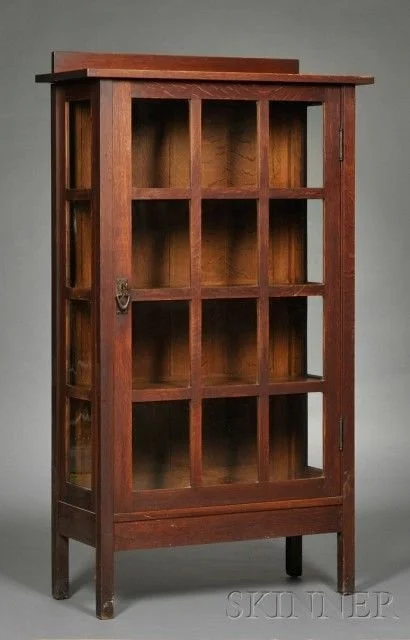
Gustav Stickley wooden cabinetry, courtesy of Skinner.
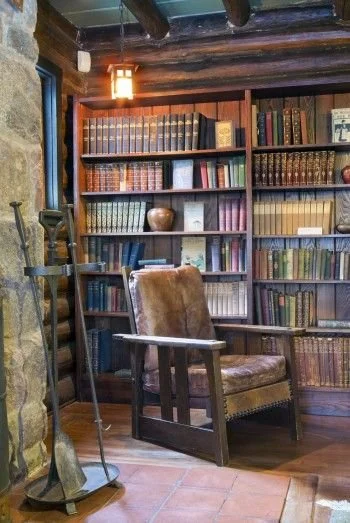
Flat-arm, Sling-seat Morris Chair - Gustav Stickley.
Gustav Stickley understood this decades earlier with his Arts and Crafts philosophy: that beauty lives in the quality of craft and the integrity of materials. His influence, visible in built-in cabinetry, exposed wood joinery, and the tactile intelligence of ranch interiors, runs like a current beneath mid-century ranch design.
Herman Miller's furniture arrived at the same conclusion from another direction: democratic, human-centered modernism. A chair designed for how a body actually sits. A table designed for how a family actually lives. The ranch house was the room these objects were always meant to inhabit.
Heritage, Americana, and the Ranch Interior: A Shared Language
Here is what often goes unsaid about the ranch house: it didn't just contain Americana. It was Americana. A physical archive of the American West's mythology and craft traditions.
Walk into a well-curated ranch interior and you're reading a story told in objects. Worn saddle leather, Blankets with geometric patterns drawn from Southwestern tribal traditions, raw denim, aged hardware. Wood that shows its years.
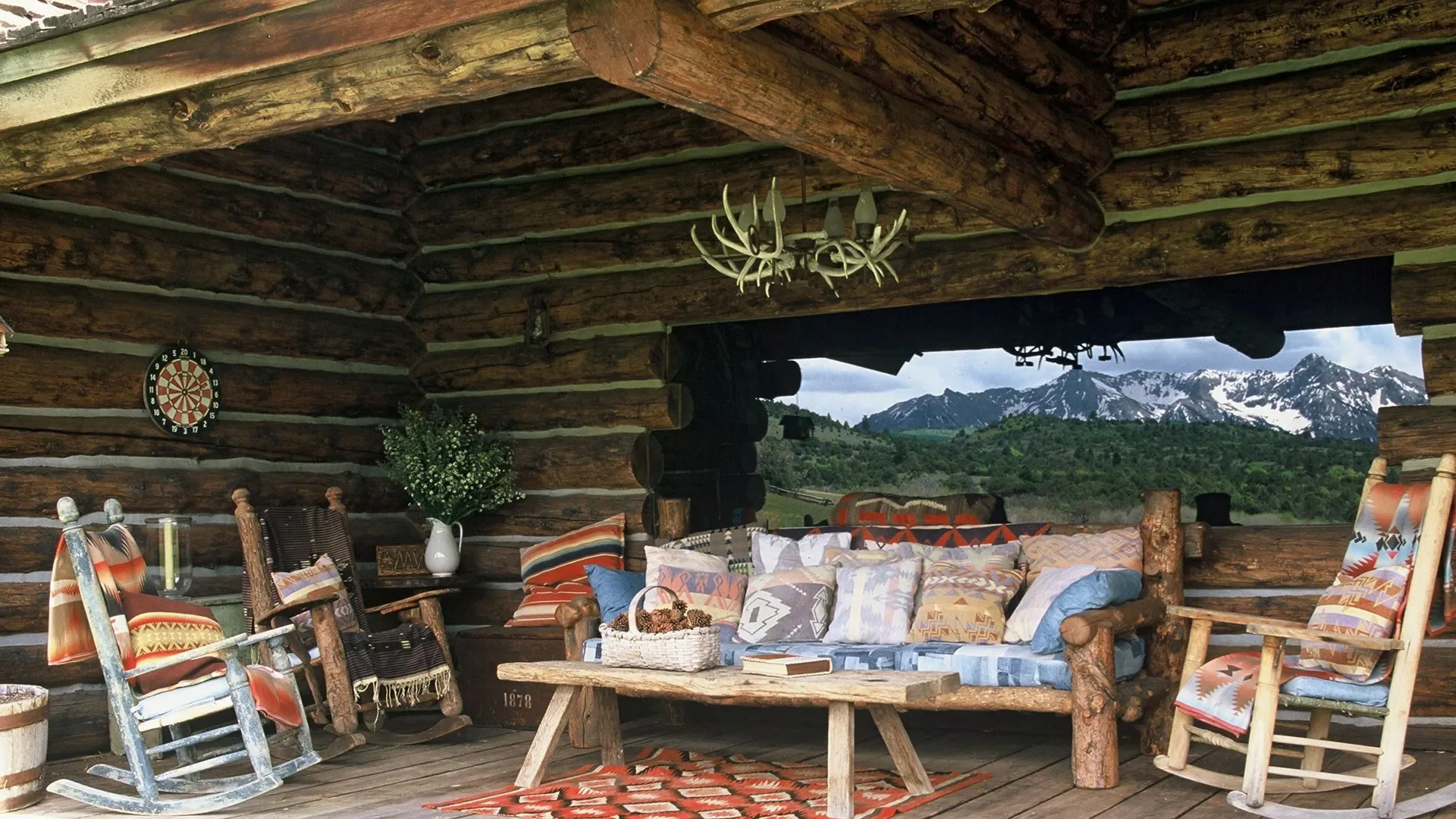
Ricky and Ralph Lauren’s ranch in Colorado
This is the same vocabulary that drives heritage fashion culture. RRL (Double RL), Ralph Lauren's workwear line, built an entire universe around these exact touchstones: the cowboy's worn Levi's, the rancher's shearling coat, the rodeo rider's broken-in boots. These aren't just clothes. They're artifacts of a specific American life.
The ranch house is their natural habitat, because it operates by the same logic: authenticity over trend, patina over perfection, utility as the highest form of beauty.
Pendleton Woolen Mills, whose blankets have woven Southwestern geometric patterns into American domestic life since the early 20th century, are perhaps the most visible thread in this connection. Founded in Pendleton, Oregon, the mill began producing wool blankets for Indigenous communities of the Columbia Plateau, drawing design language from Navajo chief blankets, Pueblo geometric traditions, and the broader visual culture of the American Southwest. In a ranch interior, a Pendleton throw isn't décor. It's a document.
This is the distinction between a styled interior and a collected one. Heritage Americana enthusiasts understand this intuitively. A ranch house interior built over time, through estate sales, road trips, family inheritance, and considered acquisition, becomes something more than a home. It becomes a coherent world.
Where architecture, furniture, clothing, and lifestyle all speak the same language. All say the same thing: I know where I come from.
The Quiet Revival with the Ranch House Design
Today, ranch house design is finding its way back.
The data bears this out. In 2024 and 2025, ranch homes have seen a measurable resurgence in demand across the American South, Southwest, and Mountain West, driven in part by millennials prioritizing single-level living, flexible space, and proximity to nature. Accio's 2025 housing trend report notes that this revival is "not a passing fad but a reflection of changing demographics and lifestyle preferences."
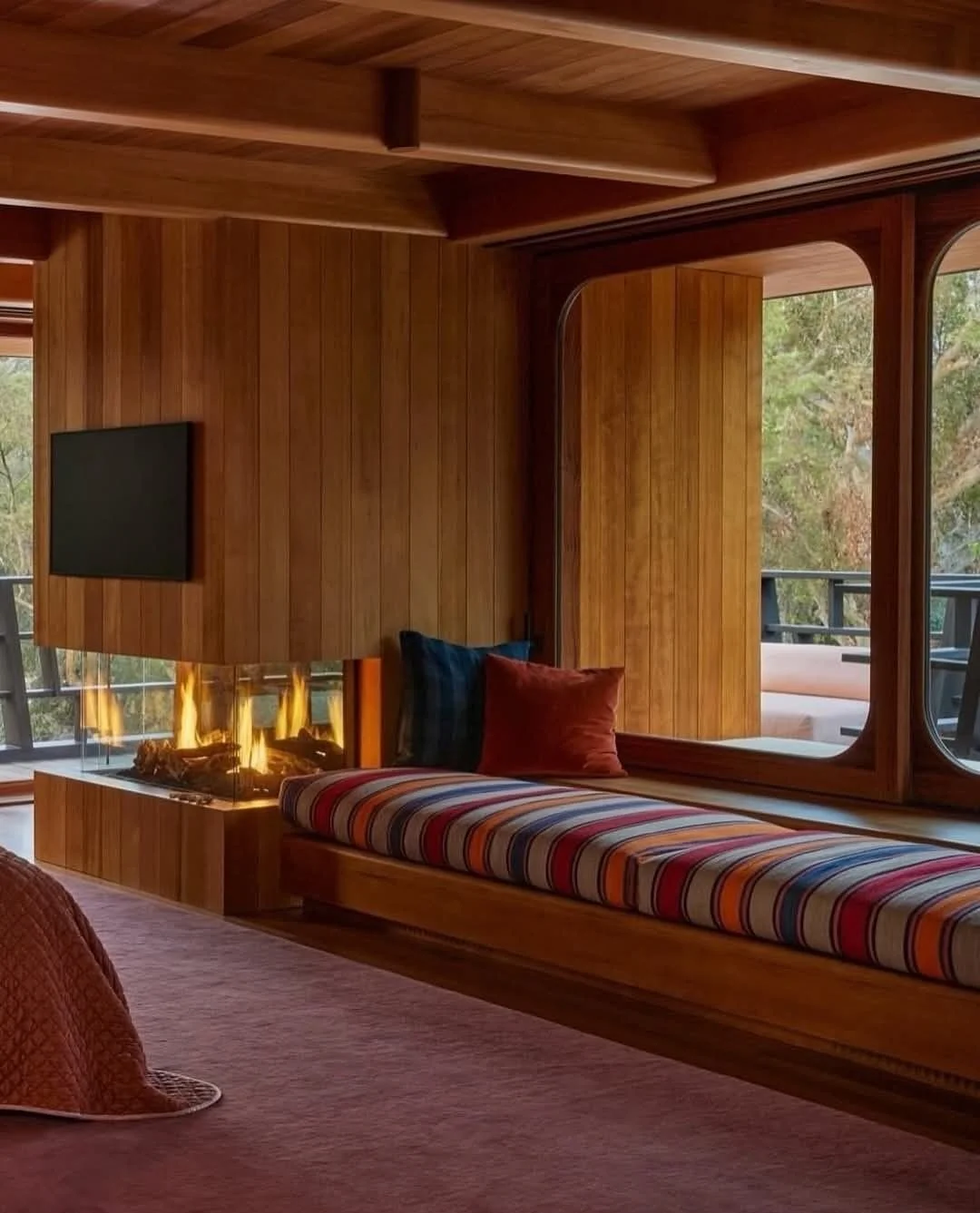
Inspiration of a modern ranch house
But the revival is also cultural. In a world saturated with vertical living, curated digital aesthetics, and architectural performance anxiety, the ranch house stands for something genuinely counter-cultural:
Simplicity with integrity. Connection with intention. Space designed for real life.
It aligns with the broader movement toward intentional living: a desire to slow down, to occupy space more fully, to surround oneself with things that have meaning rather than things that make an impression.
And in that gesture, it captured something essential about American life. Not ambition, but freedom. Not spectacle, but experience. A house that asks nothing from the street and gives everything to the life inside.