How Jeans Become a Personal Archive
There are materials that decorate a life, and there are materials that record one. Denim is the latter. No other garment in the American wardrobe has this particular quality and this willingness to carry the evidence of use so visibly, so precisely, so without editorial comment. A pair of raw denim jeans will tell you what a man does, how he moves, how long he has been at it. It will not flatter. It will not simplify. It will show you exactly what happened, in the order that it happened, on the surface of a fabric that was designed, from the very beginning, to take it.
It is a material property. And understanding it changes the way you look at every pair of jeans you have ever owned, and every pair you will buy next.
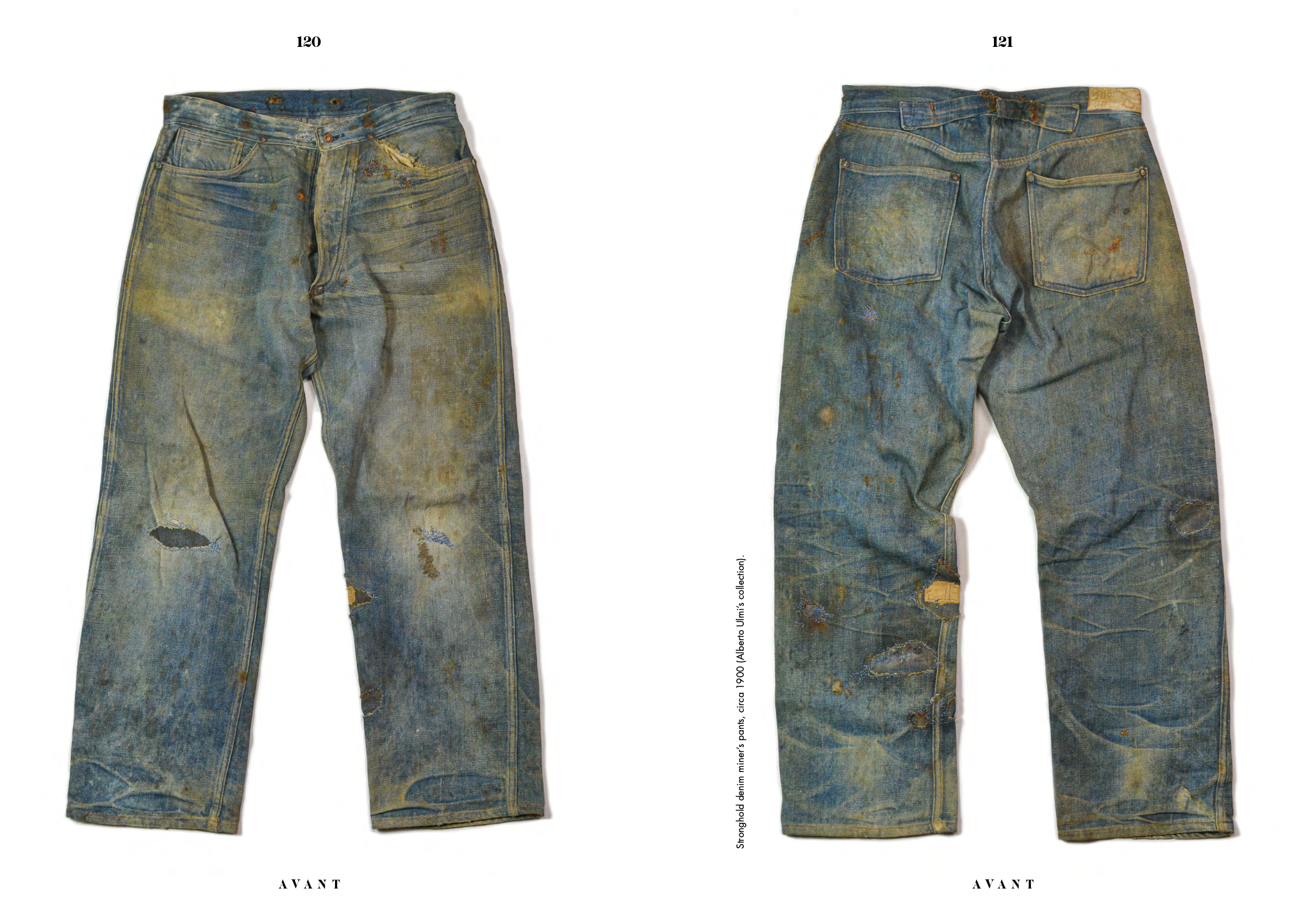
Stronghold denim miner’s pants, from Alberto Ulmi’s collection, published in An Anthology of American Workwear II.
A garment born from constraint
As most of workwear garments, denim did not come from fashion. It came from necessity.
In the second half of the 19th century, the expanding American West required clothing capable of absorbing punishment that ordinary fabric could not survive. Mining camps in California and Nevada, railroad construction across the Sierra Nevada, agricultural labor in the Central Valley… these environments destroyed ordinary trousers in weeks. The men who worked them needed something built for a different order of duration.
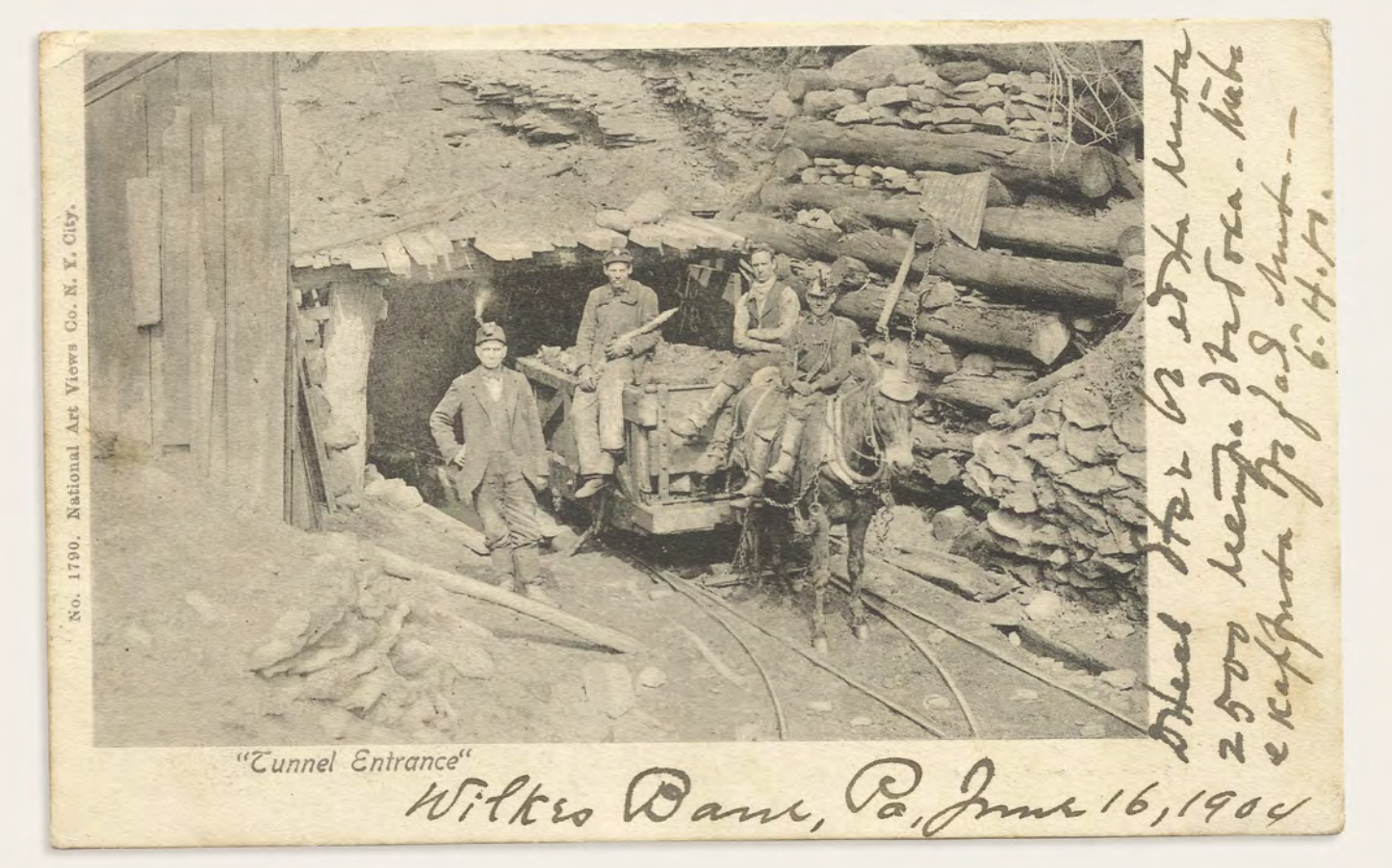
Courtesy of Brian Kahtava, published in An Anthology of American Workwear I
Levi Strauss & Co. provided it. In 1873, Levi Strauss and tailor Jacob Davis received U.S. Patent No. 139,121 for riveted work trousers copper-reinforced at the points most likely to fail, cut from heavyweight cotton denim, dyed deep with indigo. The design had a simple purpose : It was intended to last. The rivet at the base of the watch pocket. The chain-stitched seams. The selvage edge that prevented fraying where the loom's warp began and ended. These were engineering decisions made in response to specific conditions of use.
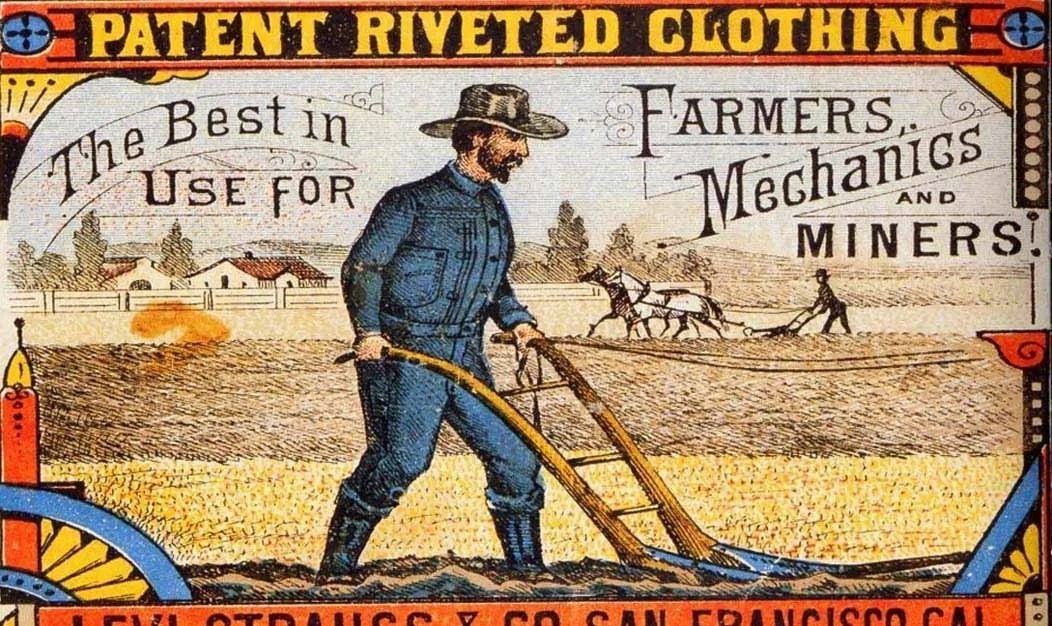
What is significant is not the innovation itself, but its intention. Denim was designed to resist the forces it would encounter. That resistance is precisely what allows it to become a record of those forces over time.
A garment made to survive work inevitably carries the evidence of it. That logic was built in from the first stitch.
Indigo dye reveals instead of conceals
Most dyes are permanent. They bond chemically to the fiber and remain. Indigo does not work this way.
Indigo adheres to the surface of cotton rather than penetrating the yarn. It sits on the outside of each fiber in a thin molecular layer, adhering, not absorbing (such as Stifel fabric). The consequence of this surface-level bond is that the dye can be removed through friction, exposure to sunlight, and repeated washing. Not all at once, and not uniformly, but gradually, in exact correspondence to where and how the fabric is used.
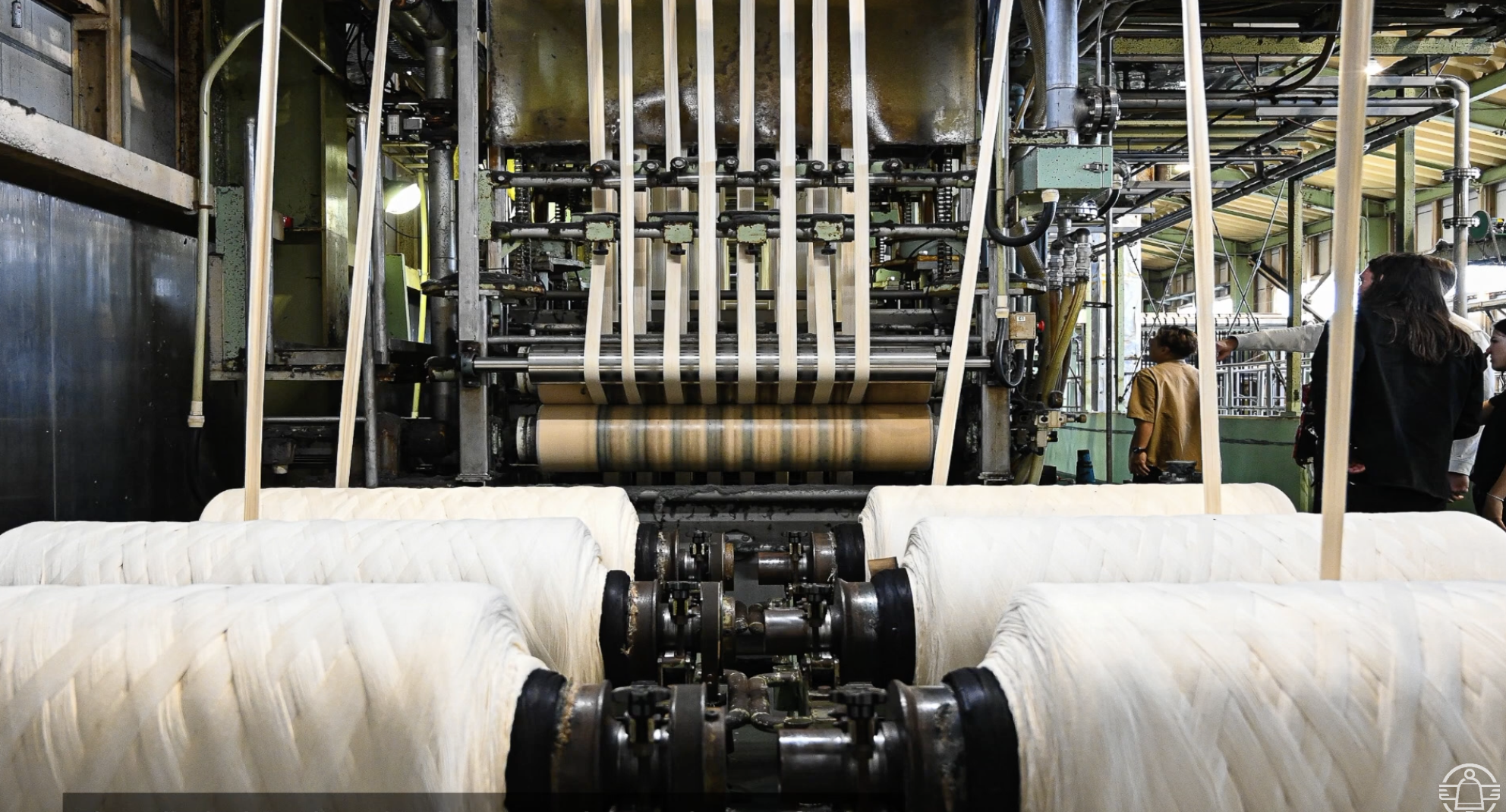
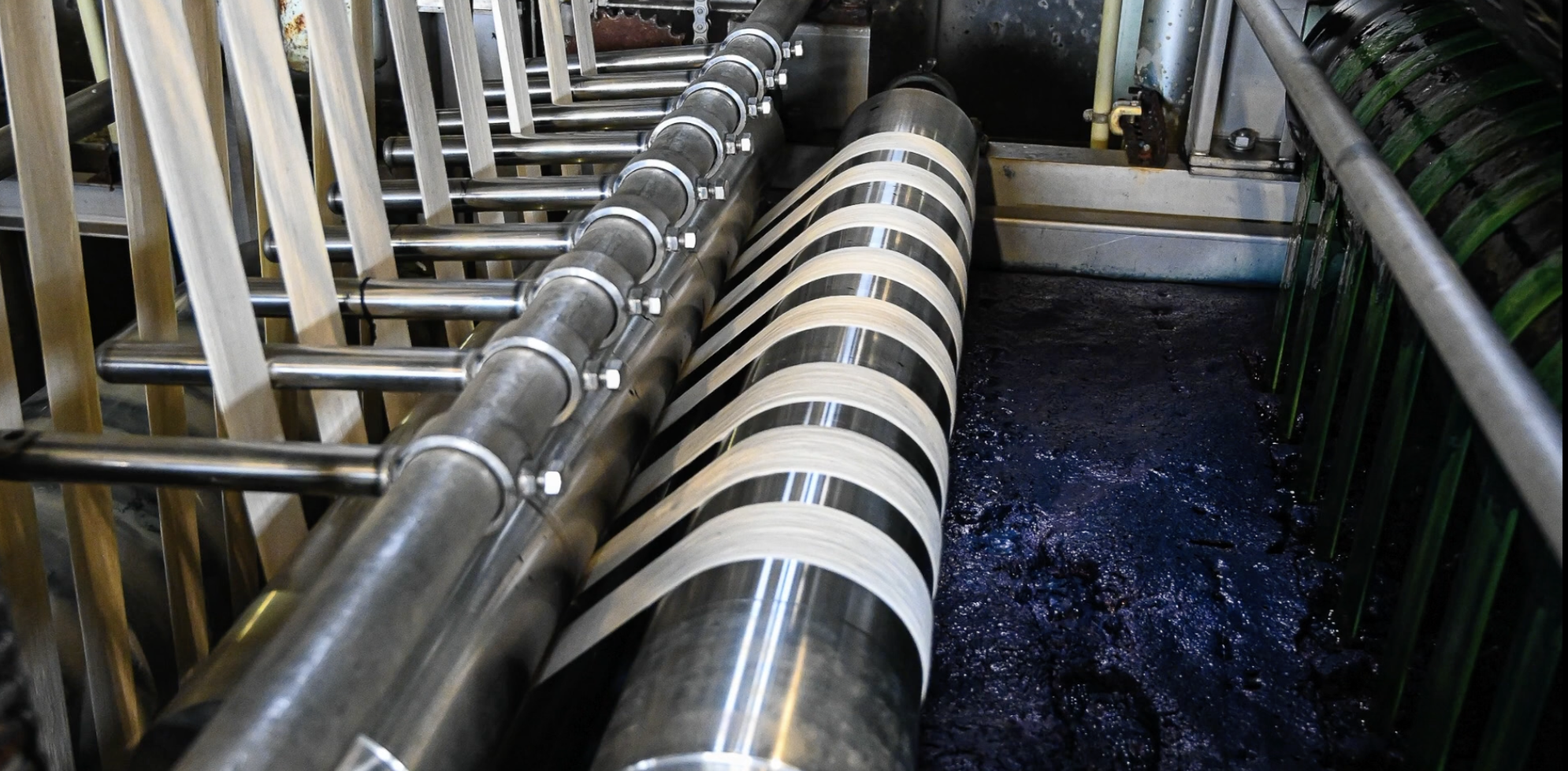
Iron Heart Indigo Dye Process, with a full video of how they make denim.
Areas under sustained tension retain their color longest. Areas of frequent movement lose it first. Over months and years, a topographic map of use emerges on the surface of the cloth, lighter where the wearer sits, darker at the back of the leg; faded at the thighs where the fabric creases with each step, deep indigo at the inseam where movement has not reached.
This process is called fading, but that word undersells it. Erosion is more precise. Revelation, more honest.
A naturally faded pair of raw denim jeans is a garment that has been incrementally decoded by the life spent inside it. The indigo was always going to leave. The question was only where, and that depended entirely on the wearer.
The fabric as evidence
Before denim became a cultural symbol, it functioned as documentation.
A working man's jeans in the 19th and early 20th centuries were not merely clothing. They were, if you knew how to read them, a precise record of occupation. The patterns of wear were not random. They were the direct consequence of specific, repeated physical conditions.
Miners working in confined underground passages developed characteristic abrasion at the thighs and knees : sharp, irregular, corresponding to friction against stone and tool handles.
Farmers, exposed to hours of open sun and lateral movement, faded diffusely and evenly across the full face of the fabric, the indigo breaking down in broad, soft gradients.
Carpenters and railroad workers left more localized traces: tool-shaped impressions inside pockets, fraying concentrated at hemlines worn against boot leather, a faint rectangular ghost where a folded document or measuring strip lived in the same spot for years.
Each fade line, each stress mark, each asymmetric wear pattern is the result of a specific load applied to a specific point of fabric across a specific duration. The jeans did not choose this. They recorded it.
What makes this remarkable is that no other garment in the American wardrobe operates quite this way. A wool coat ages generally. A leather jacket patinas at its surface. But denim maps the body that wore it, its habits, its gestures, its particular way of moving through the world. It is the only cloth that functions, effectively, as a negative imprint of an individual life.
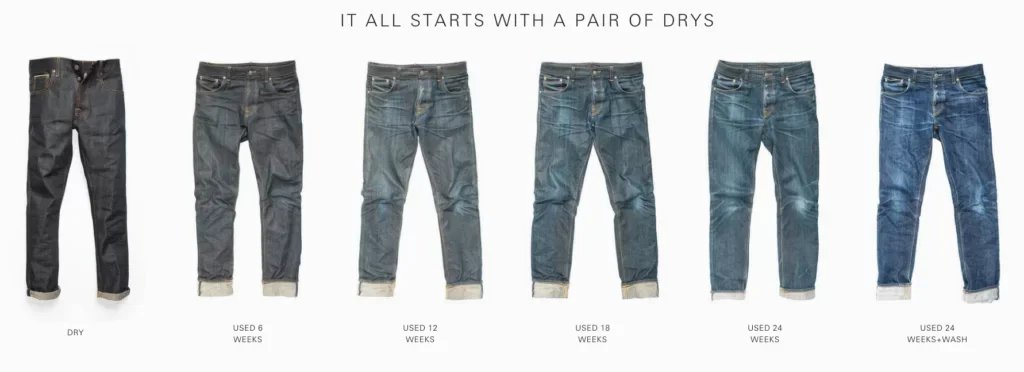
Wear and Tear contest by The Nudie Jeans x Robin Denim
How to read a pair of jeans
The vocabulary of denim wear patterns has been catalogued with remarkable precision, largely by Japanese collectors and raw denim enthusiasts such as Long John whose attention to the material rivals that of any scholarly discipline.
Whiskers: the radiating fade lines at the hip and crotch , record the compression and release of the fabric each time the wearer bends at the waist. Deep, sharp whiskers indicate a wearer who sits frequently in a fixed position: a driver, a craftsman, a man at a desk. Softer, more diffuse whiskers suggest more varied movement.
Honeycombs : the stacked horizontal creases behind the knee are produced by the repeated flexion of walking. Their density and depth reflect both the intensity of the activity and the stiffness of the original fabric. A thick, 21-ounce raw denim like those produced by Iron Heart will develop pronounced, architectural honeycombs over years of walking. A lighter fabric will produce softer, more compressed ones.
Vertical stacking at the ankle accumulates where excess hem length folds against the boot. It is the mark of a man who wears his jeans long, a detail that sounds minor until you notice how precisely it captures a posture, a preference, a silhouette.
Train tracks : the twin raised lines along the outseam, produced by chain-stitched seams pulling as the fabric shrinks are among the most distinctive marks of genuine raw denim construction. They cannot be manufactured or replicated. They require a specific method of stitching and a specific sequence of washing to appear.
A pair of jeans worn for two years by a man who rides motorcycles in the California hills will look entirely different from a pair worn by a man who walks to work in Tokyo. Same fabric. Same cut. But completely different archive!
From the mines to the mythology
By the middle of the 20th century, denim had begun its migration away from labor.
The shift was gradual, a slow transfer of meaning accelerated by specific cultural moments. Marlon Brando in The Wild One (1953). James Dean in Rebel Without a Cause (1955). Jack Kerouac crossing the country in the same pair of jeans he'd written On the Road in, the fabric worn thin at the thighs by miles of highway and motel-room sitting. In each case, the garment carried its original associations with physical reality, with effort, endurance, the body under pressure but now that physicality was reframed as freedom rather than obligation.
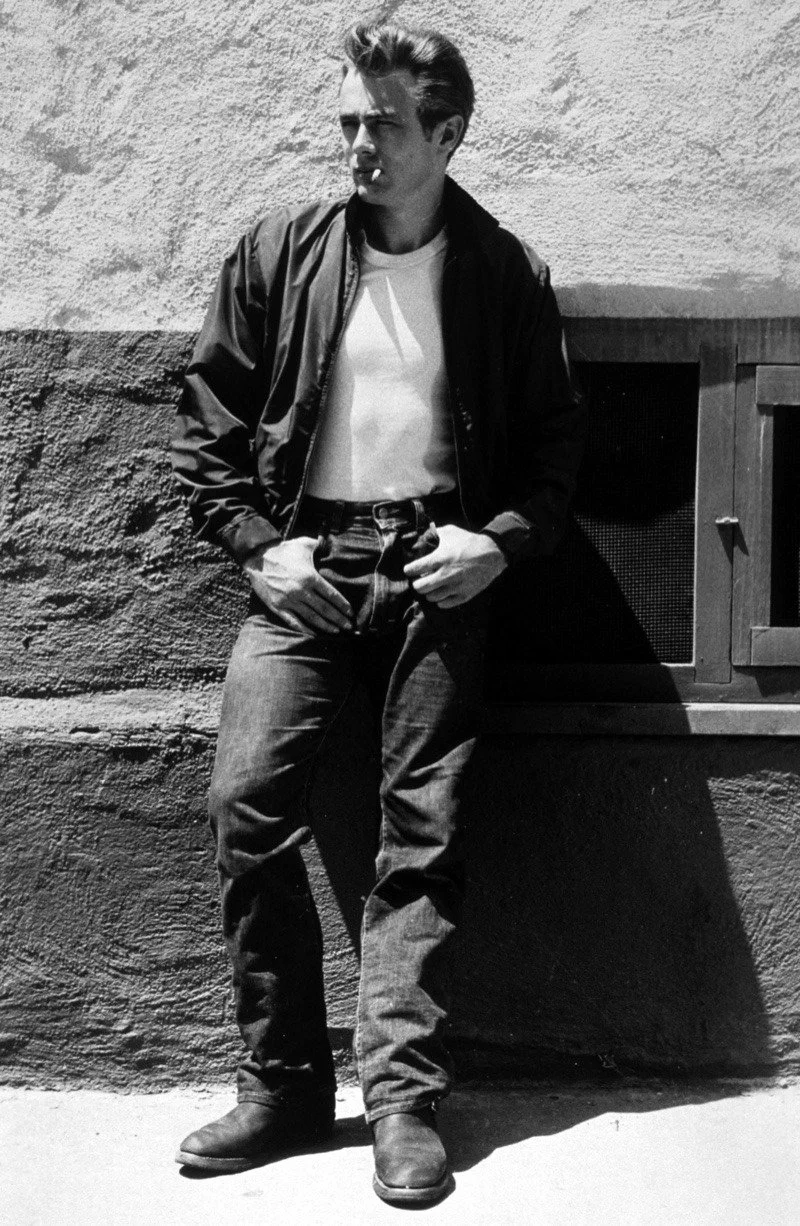
James Dean, Rebel Without a Cause.
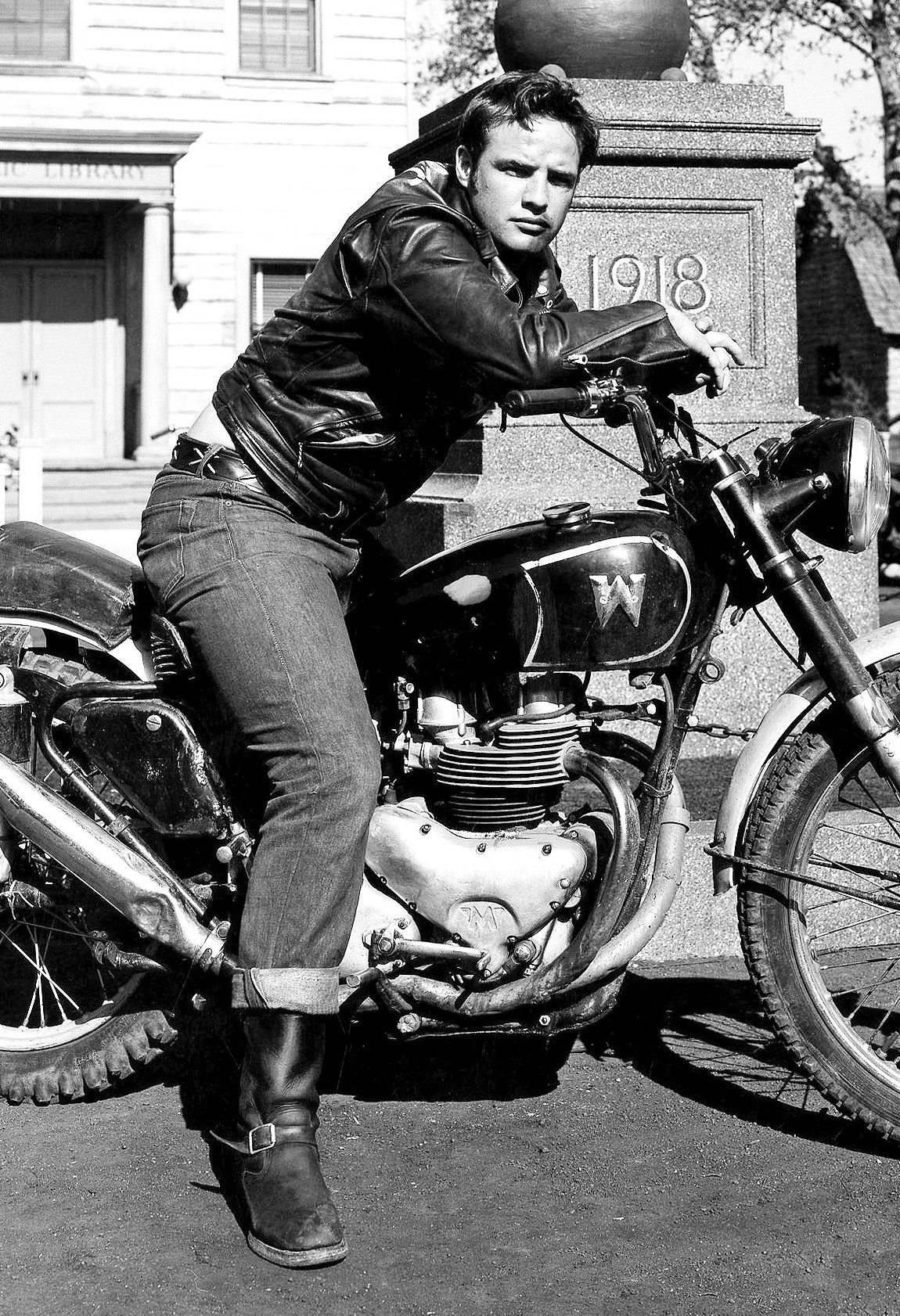
Marlon Brando, The Wild One
Denim became a symbol of independence because it had been, before anything else, a symbol of work. The rebellion it represented was not against labor itself but against the denial of labor's dignity. To wear jeans was to insist that physical reality was not something to be hidden beneath wool and polyester. It was something to be worn.
Hollywood accelerated this. So did the postwar youth culture, the counterculture of the 1960s, and eventually every subculture that followed. Punk, hip-hop, grunge… each adopting denim on its own terms while benefiting from the weight of what it had always carried.
Japan and the return to intention
In the 1980s, as American denim production industrialized at scale and the distinctive material properties of pre-war selvedge denim began to disappear from mass-market jeans, something unexpected happened on the other side of the Pacific.
Japanese collectors and manufacturers had been studying vintage American denim with a precision that bordered on archaeological. They analyzed fabric weights, loom construction, weaving techniques, dye methods, and hardware specifications from original Levi's from the 1930s, 1940s, and 1950s, the era before sanforization and synthetic dye had standardized production into uniformity. They understood what had been lost, and they set about reconstructing it.
Brands such as Evisu, Studio D'Artisan, The Strike Gold, Full Count, and later Iron Heart and Oni Denim reintroduced shuttle-loom weaving, natural indigo dyeing, and slow production methods that had been economically inconvenient for American manufacturers since the 1960s. The goal was restoration: the recovery of specific material conditions that allowed denim to age the way the original garments had aged.
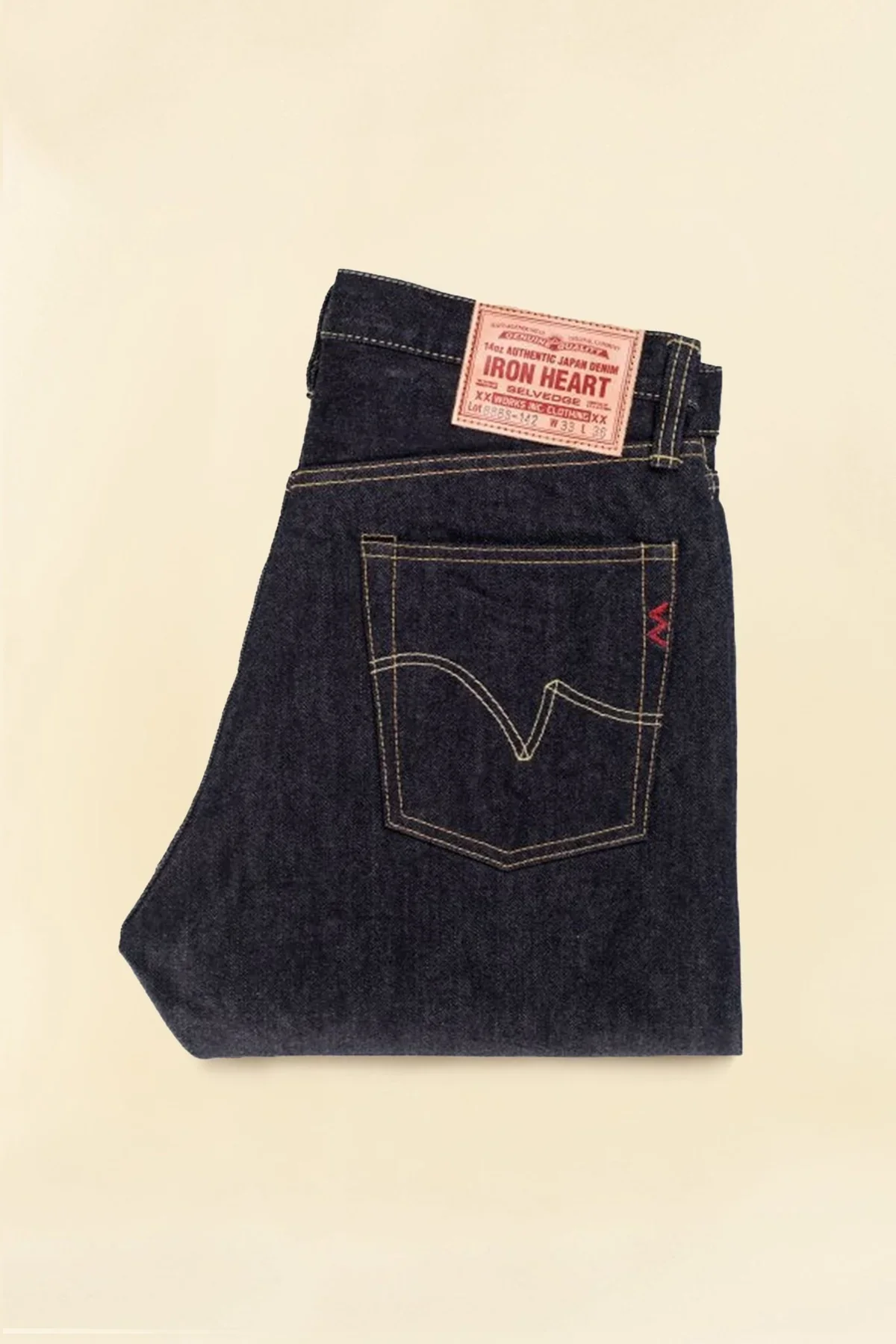
Iron Heart Denim
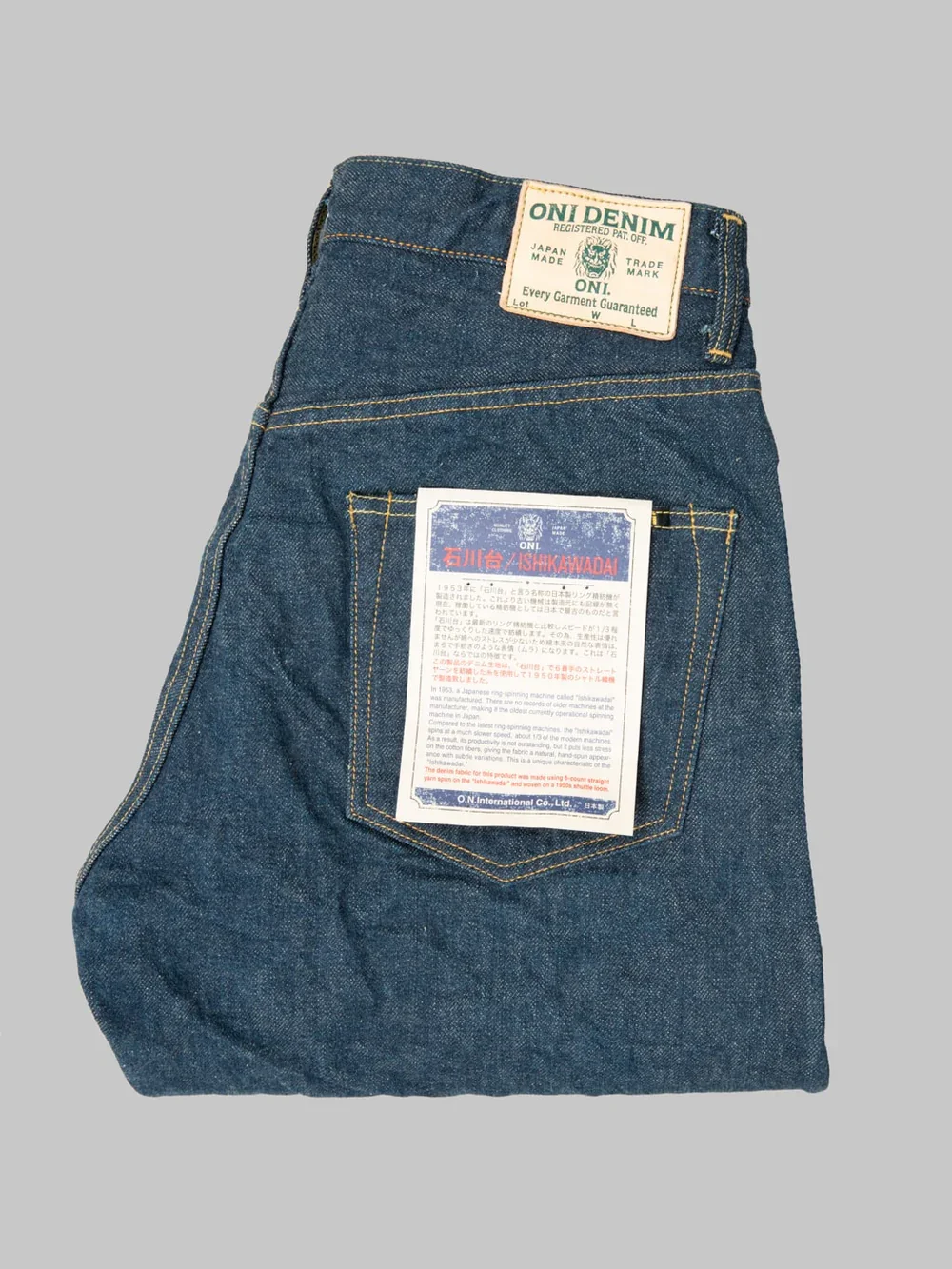
Oni Denim
The insight these makers were recovering was simple but radical: denim is not defined at the moment of purchase. It is defined over time. A pair of raw selvedge jeans in the first weeks of wear is almost indistinguishable from a stiff, dark-blue rectangle. What it becomes, what it records, is entirely a function of the life it encounters. Japanese denim culture understood this more clearly than Western manufacturers at that moment, and built an industry around honoring it.
Today, a pair of Japanese raw selvedge jeans from Iron Heart, Oni Denim, or The Strike Gold will cost between $200 and $500. Collectors and enthusiasts who have worn their pairs for five, ten, or fifteen years understand exactly what they paid for: not a garment, but the beginning of one.
Where denim sits in the wardrobe today
The cultural conditions for raw denim's continued relevance have rarely been stronger.
A generation of men increasingly attentive to material honesty, garment provenance, and the slow accumulation of a personal wardrobe has returned to raw and selvedge denim as something more than a trend. The market reflects it.
Self Edge, the specialist retailer that introduced Japanese raw selvedge denim to American audiences in 2006, continues to operate stores in New York, San Francisco, Chicago, and Phoenix, with a waitlist culture that mirrors what sneaker resale was a decade ago.
Japanese producers are shipping globally. Levi's Vintage Clothing, the brand's heritage line, has reissued the 1947, 1954, and 1966 models with period-correct construction as a direct response to this renewed appetite.
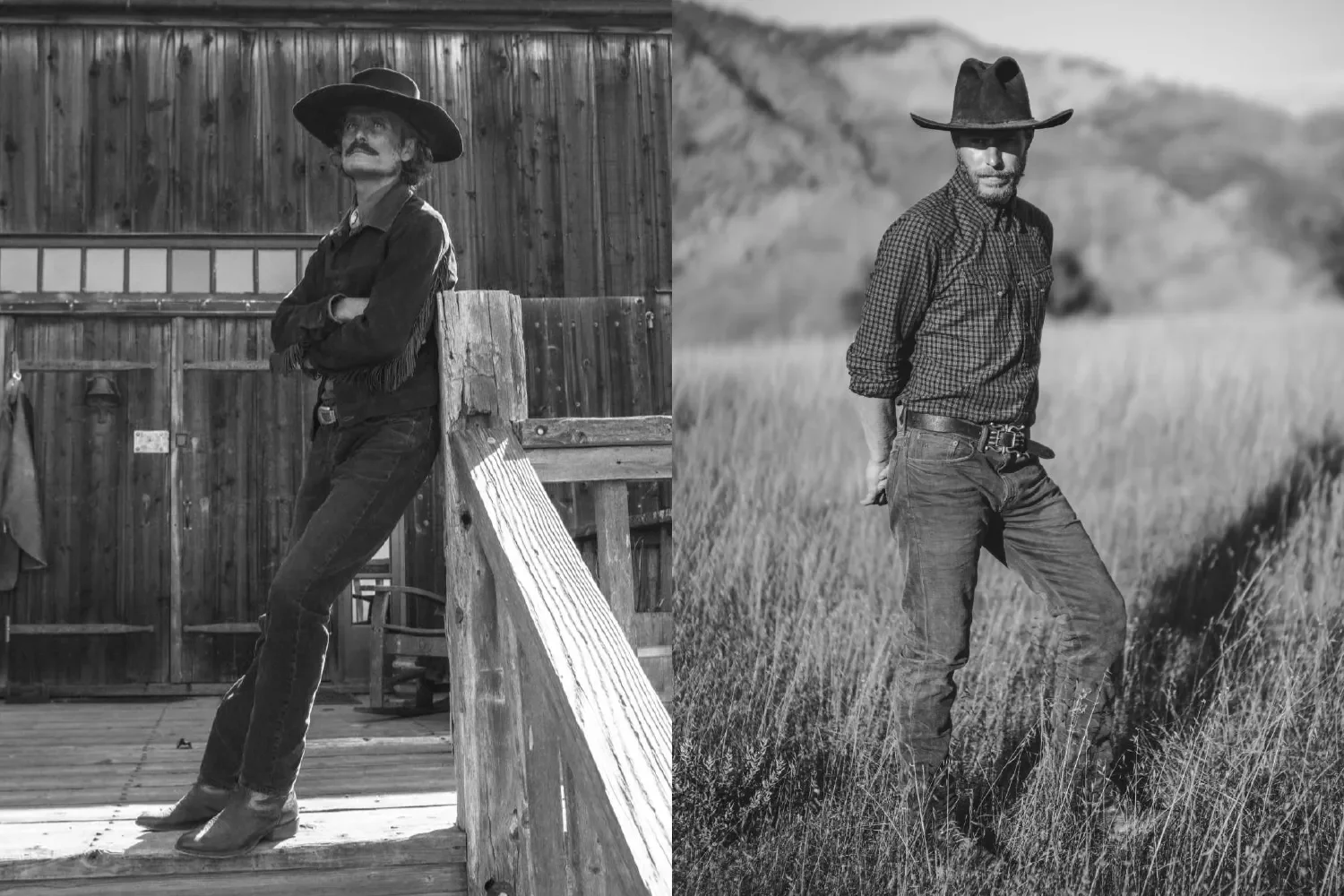
Double RL S/S 2026
The styling logic for the contemporary man is uncomplicated. A pair of raw selvedge jeans in the first year of wear, dark, stiff, worn with a heavy leather belt and a clean white Oxford, reads as a deliberate choice, not an oversight. After two years, broken in and fading at exactly the points where the body has asked the most of the fabric, they read as something else entirely: a garment with a biography.
By year five, worn in long enough to carry a fully legible record of use, they are, in the most literal sense, irreplaceable.
You cannot buy that. You can only wear toward it.
A material that records
Denim was created to endure work. Over time, it became capable of recording it.
It registers movement, environment, and habit with a precision that no other fabric matches. It transforms duration into visible form. It connects the individual wearer to a broader historical framework, to the miners and railroad workers and farmers whose labor defined the garment's original terms, and to every subsequent wearer who understood, even if only intuitively, that the cloth they were wearing was paying attention.
This is what places denim within Americana, and keeps it there regardless of trend or context.
Not symbolism. Not nostalgia. Not the borrowed authority of a heritage brand's archival reissue. Continuity.
Each pair of jeans begins as a uniform, generic object. What it becomes depends entirely on the life it encounters. And once that transformation has taken place, once the indigo has been worn away in the exact pattern of a specific person's specific gestures across a specific number of years, it cannot be replicated. It can only be continued.
The pair you are wearing right now is already beginning to record. The question is whether you are paying enough attention to read it later.
This is the third installment of Americana Codes, AVANT's ongoing editorial series on the garments that carry American history in their construction. Read the first two: Workwear and the Persistence of Labor and Ralph Lauren and the Rise of Family in Fashion.
Further Reading
The denim is a huge part of Workwear Clothing. You can discover it in An Anthology of Workwear and An Anthology of Workwear II.
Long John is a trusted source on denim if you want to learn more about brands, processes and trends.
We’ve written a great article called Denim and United Stated Armed Forces that is a great introduction to the topic between denim and Militaria. It’s been published on An Anthology of American Militaria and it’s also available on e-book version.