Take Ivy: the accidental manifesto that preserved Ivy Style
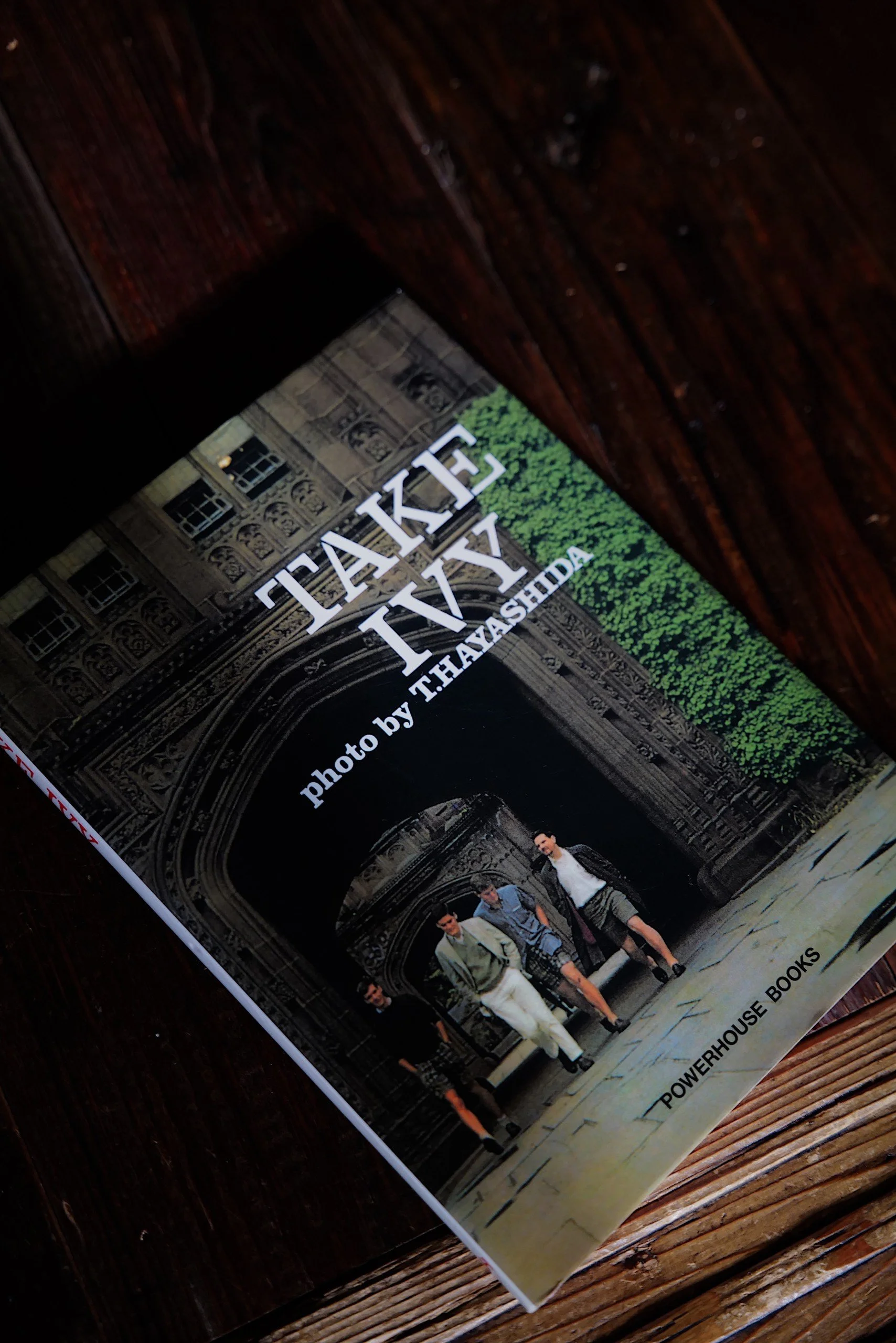
Picture by Mononcle.jp
Ivy Style is one of the most influential languages in menswear. Its vocabulary (think about button-down Oxford shirts, relaxed tailoring, penny loafers, chinos) continues to shape designers and brands today, from American heritage houses to contemporary lifestyle labels.
By the mid-1960s, however, Ivy Style was no longer at the center of American fashion culture. Having peaked in the 1950s and early 1960s, it began to lose its mainstream dominance as youth culture shifted. Counterculture movements, new music scenes, and looser attitudes toward dress reshaped how young Americans defined style. Ivy did not disappear, but it increasingly carried connotations of conservatism and institutional order.
One of the great paradoxes of fashion history followed: the most important book ever published on Ivy Style was not created by an American, but by a Japanese photographer.
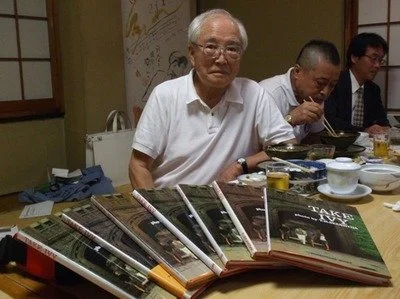
Teruyoshi Hayashida via Pinterest

Take Ivy Powerhouse Books editions
Like workwear and Western wear, and more generally Americana, Ivy Style became an object of deep fascination in post–World War II Japan. American clothing was not simply adopted; it was studied, archived, and approached as a cultural system. Japanese creatives treated these garments with near-academic seriousness, valuing accuracy, context, and preservation.
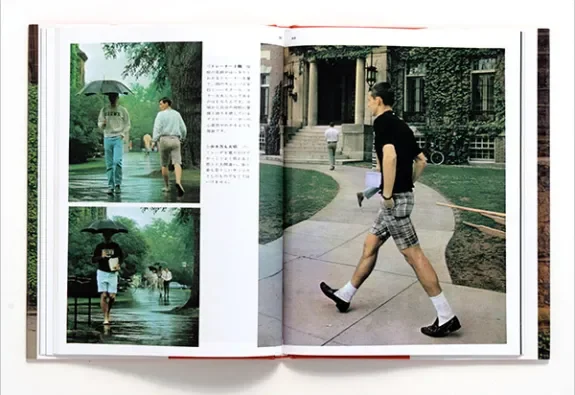
Published in Japan in 1965, Take Ivy, photographed by Teruyoshi Hayashida, was originally intended as a straightforward documentary project. It was not conceived as a guide, a manifesto, or a commercial fashion statement. There were no instructions, no hierarchy, and no attempt to define taste.
Most of the photographs in Take Ivy were shot in June, which meant students were captured in lighter layers and simpler combinations, far from the layered, full-season Ivy looks we idealize today. The book itself wasn’t an instant success: it was originally issued as a small companion to a documentary film that ultimately never saw the light of day, and only gained traction much later, especially in the United States. What began as a modest visual bonus quietly became one of the most referenced archives of collegiate style.
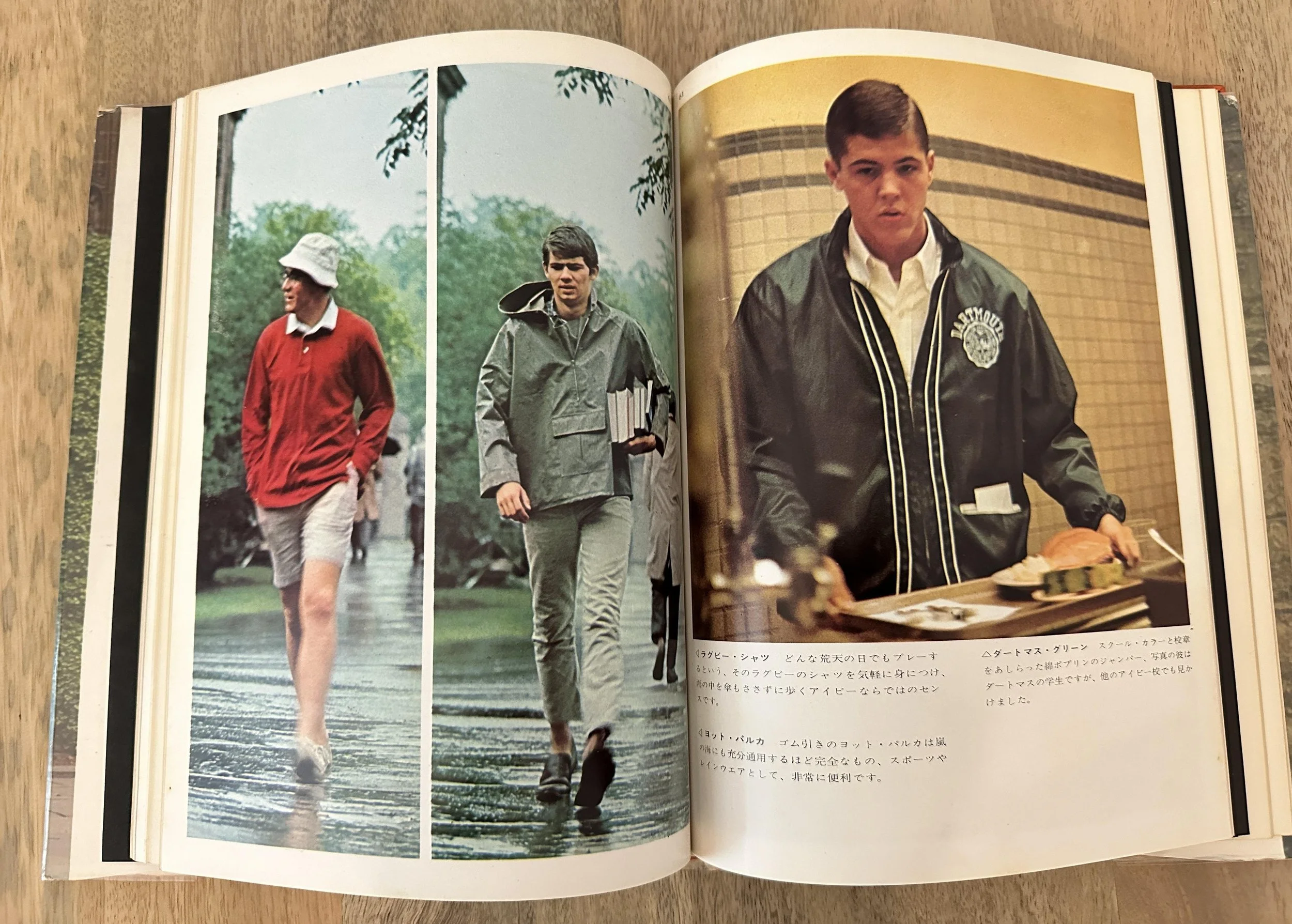
Take Ivy’s first edition via Pinterest
Precisely because it appeared as Ivy Style was beginning to recede in its country of origin, Take Ivy became something far more significant. Six decades later, it stands as one of the most studied books in menswear history, not because it invented Ivy Style, but because it preserved it at the moment it stopped being the dominant American look, leaving behind a visual archive that continues to influence designers and brands today.
A quiet book that reshaped global menswear
By the early 1960s, Ivy Style in the United States was already losing momentum. Youth culture was changing, formality was being questioned, and dress codes were loosening. Japan, however, was paying close attention.
Commissioned by Men’s Club magazine and supported by VAN Jacket, Take Ivy set out to document how Ivy League students actually dressed. Not models or ideals, but young men moving naturally through their campuses. What emerged from this project was not nostalgia, but preservation.
Teruyoshi Hayashida: the eye behind Ivy’s most honest images
Teruyoshi Hayashida was not a fashion photographer in the conventional sense. He did not style outfits, intervene, or direct his subjects.
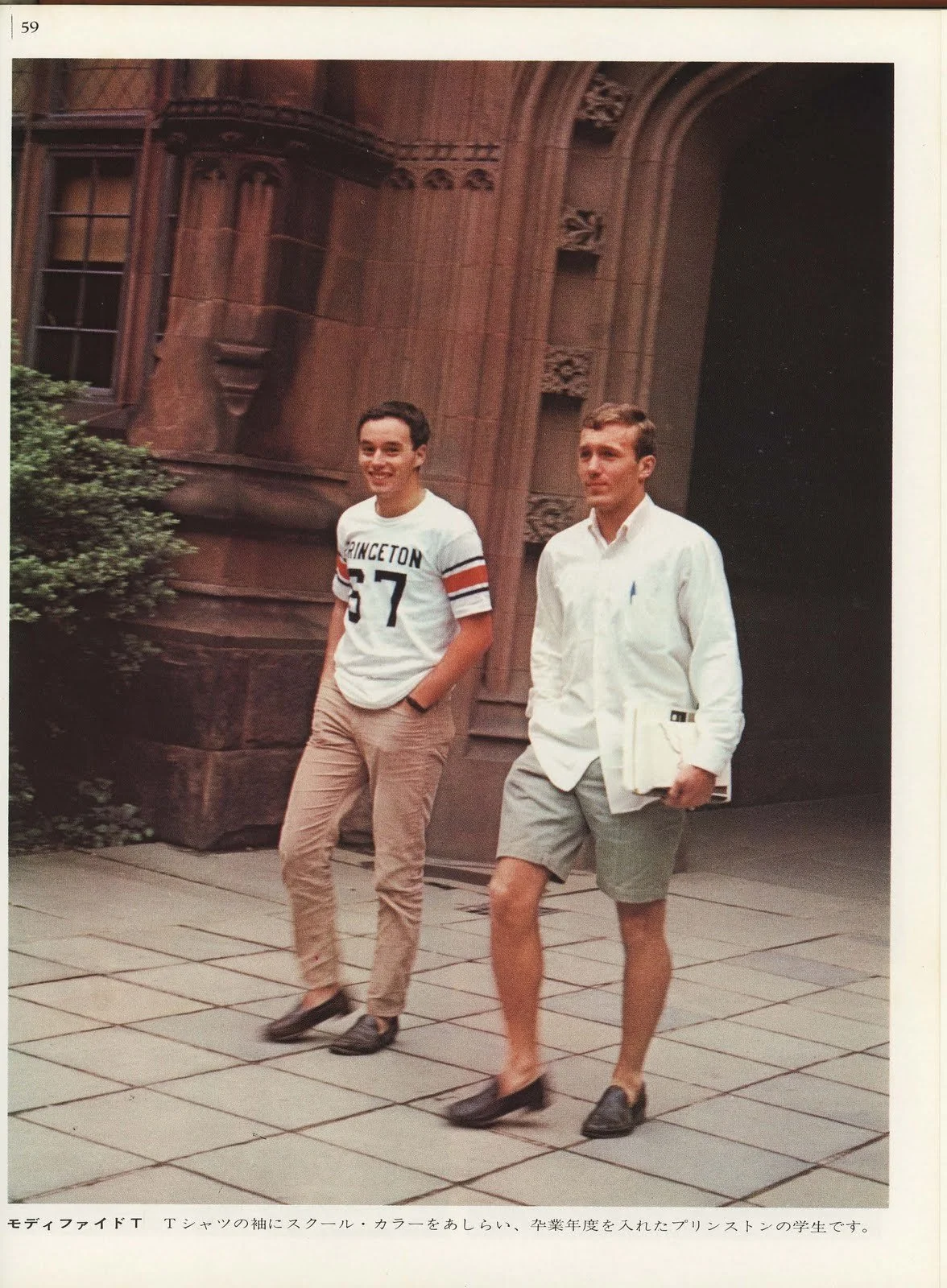
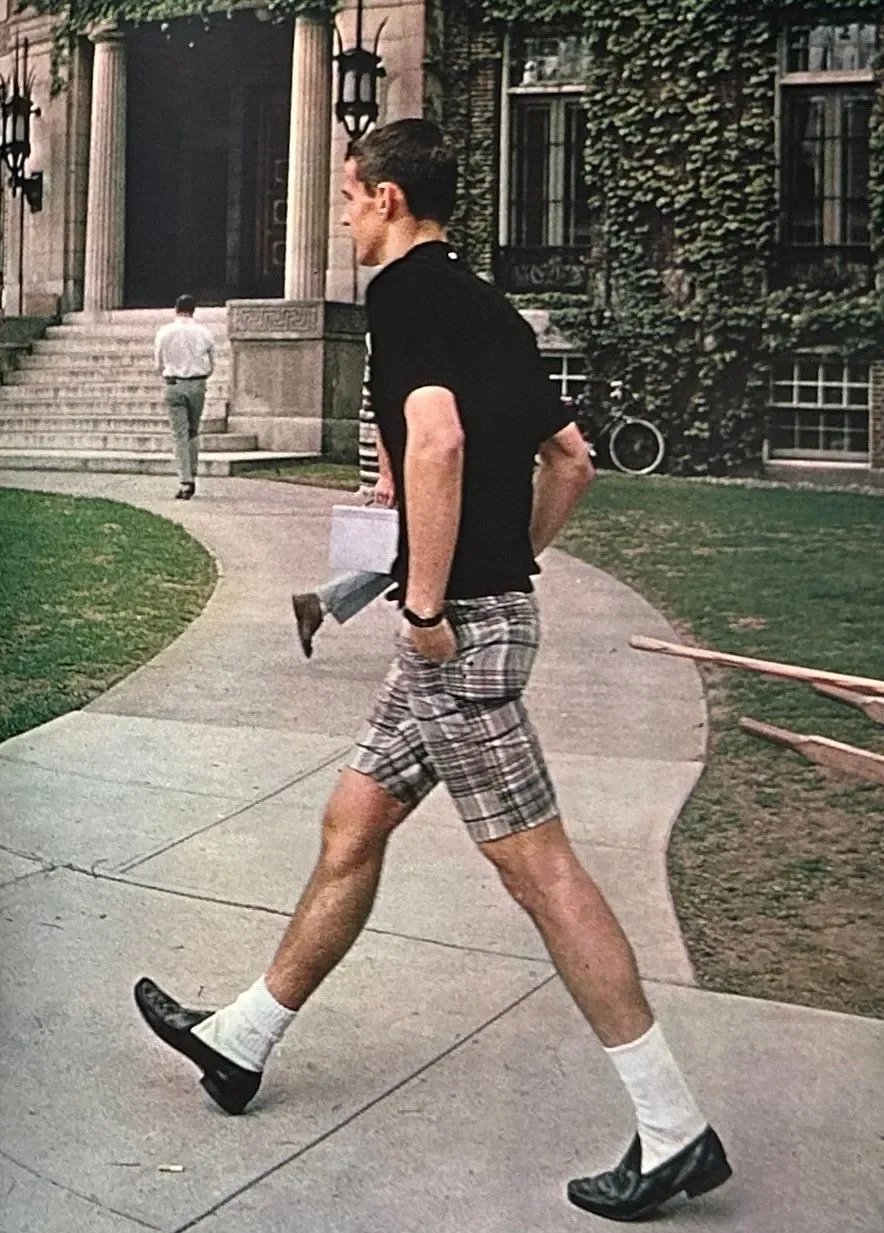
His approach was documentary, closer to street photography or anthropology than editorial fashion. In later interviews, Hayashida repeatedly explained that he refused to ask students to pose. If the moment was not right, he waited sometimes for hours, sometimes longer.
This discipline is central to the book’s power. The clothes in Take Ivy are not pristine. You can see creased jackets, worn shoes, imperfectly tucked shirts. Style appears not as performance, but as habit.
Ivy Style as a design language
If you think Ivy Style is trend, you’re wrong. It’s a system of dress built on balance, ease, and repetition rather than display or novelty. Its influence runs through decades of menswear and continues to shape how men dress today.
From the structured casualness of Ralph Lauren to the standardized elegance of Banana Republic and later lifestyle-driven interpretations, Ivy remains the invisible architecture of modern menswear.
What Take Ivy captured was not innovation, but the last moment of unconscious authenticity, before Ivy became something to quote, revive, or market.
No poses, no instructions, no myth-making
One of the reasons Take Ivy continues to resonate is its refusal to explain itself. There are no captions instructing the reader how to dress, no diagrams, and no aspirational language. The book trusts the reader to observe and understand.
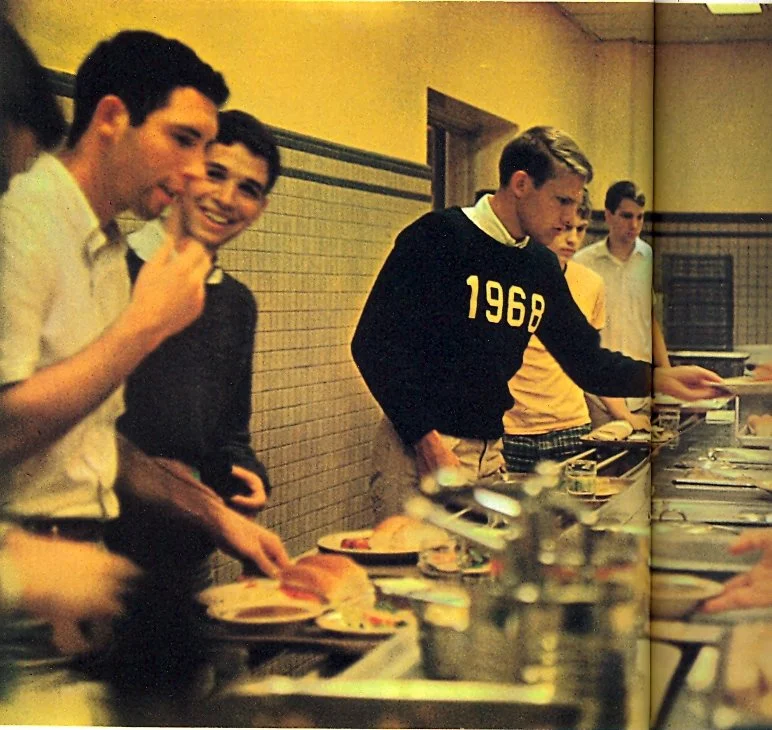
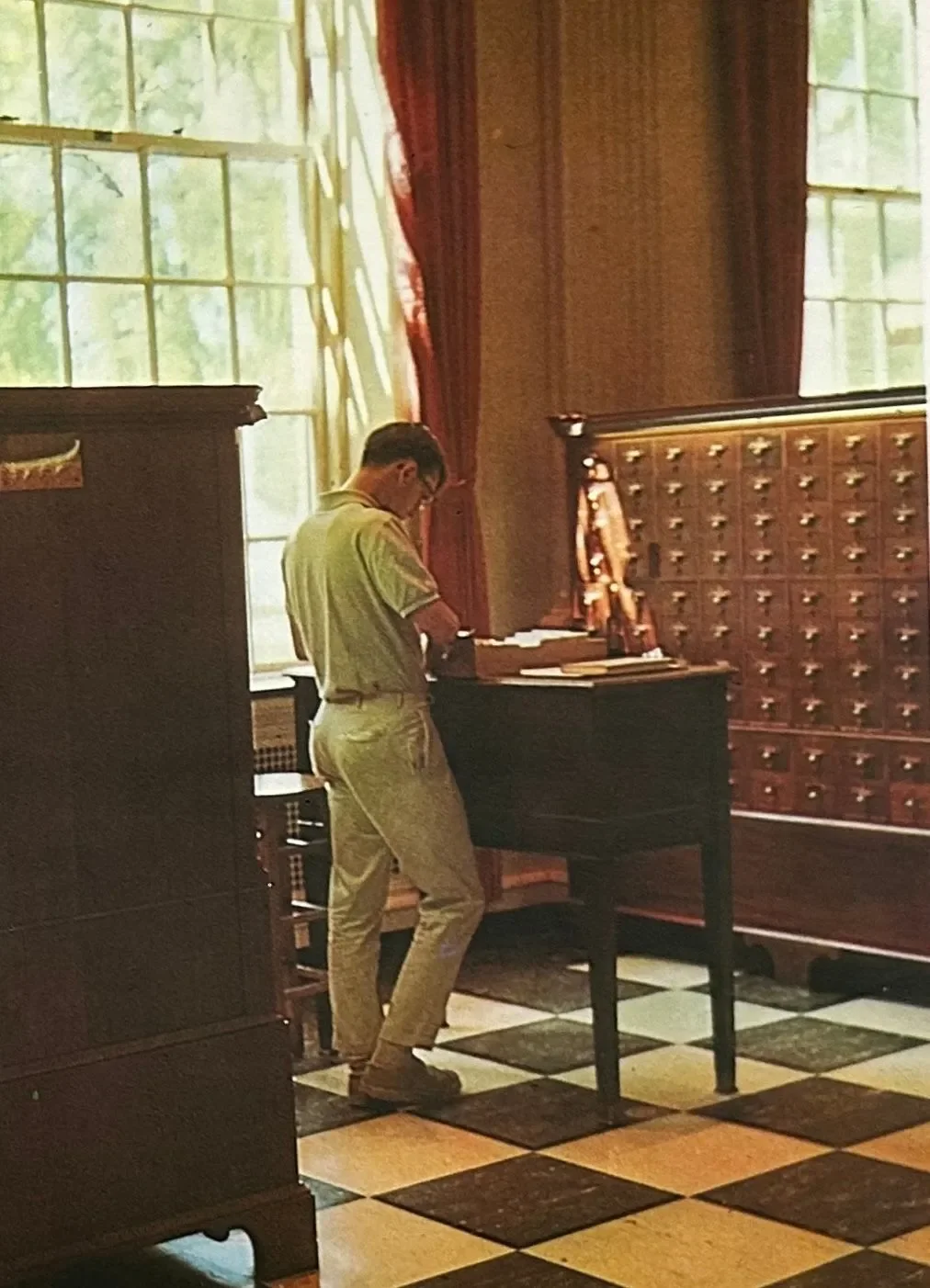
This restraint separates Take Ivy from later Ivy revivals. It does not romanticize the style; it records it before nostalgia could distort it.
Teruyoshi Hayashida, in his own words
Selected interview excerpts
The interviews conducted with Hayashida later in his life provide essential context. The following excerpts from The Trad reveal the philosophy behind Take Ivy.
On posing and authenticity
Q: Did you ever ask students to pose for your photographs?
A: No. I never asked them to model. If you do that, it stops being real. I wanted to photograph them as they were.
On patience and timing
Q: How did you know when to take the photograph?
A: I waited. Sometimes a very long time. If the moment does not come, you should not force it.
On fashion versus atmosphere
Q: Were you thinking about fashion when you took these photos?
A: No. I was thinking about atmosphere, about place and time. Fashion was not the goal.
On photographing in the United States
A: Everything was unfamiliar, the language, the scale, the campuses. We had limited money and equipment. But that distance was also useful. I could observe more carefully.
On photographing America as an outsider
Q: What was most challenging about working in the United States?
A: Everything was unfamiliar. The language, the scale, the campuses. That distance helped me observe more carefully.
On legacy
Q: Did you imagine Take Ivy would become so influential?
A: No. At the time, it was just work. I never thought about its future.
(For the complete interviews, readers are directed to The Trad’s three-part series.)
When style stops chasing relevance
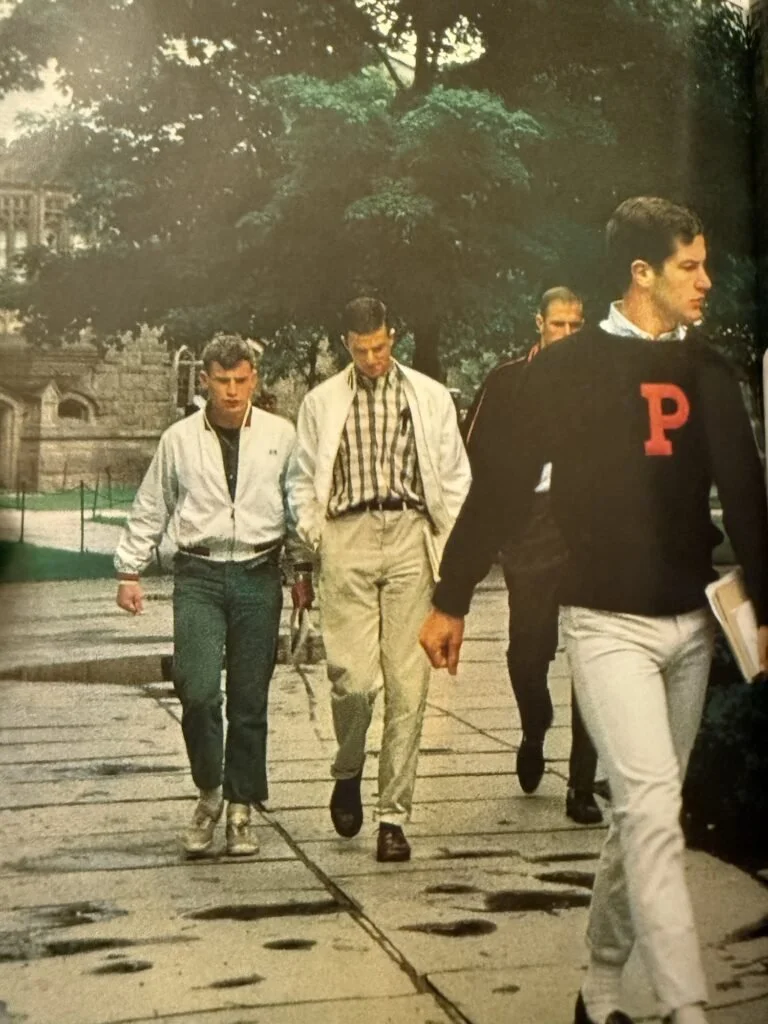
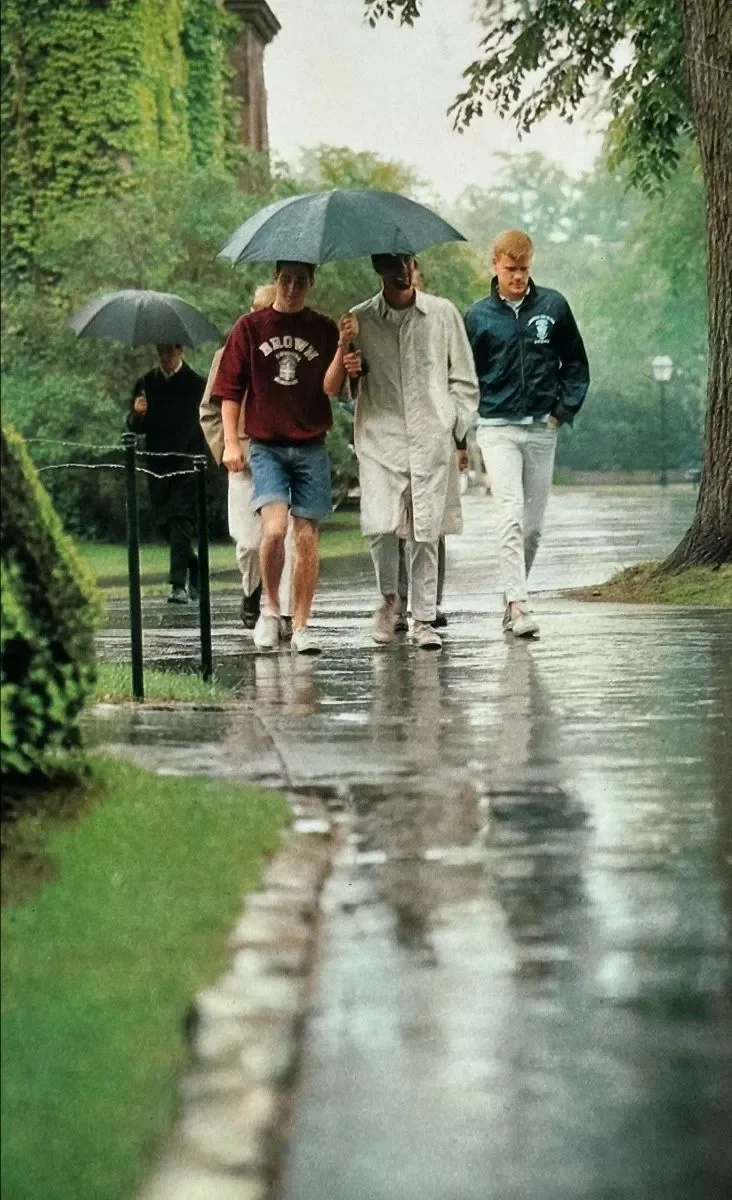
Take Ivy is not a book to replicate. And it won’t certainly be the case with AVANT. It is a book to study. It reminds us that style is built through repetition, clothing gains meaning through use, and the most influential fashion are often created unintentionally (think about Workwear, Western wear or even Militaria !).
Sources and editorial disclaimer
This article is based on verified historical sources and first-hand interviews, including:
Ivy-Style.com Take Ivy Photographer Teruyoshi Hayashida (1930–2013)
The Trad (Blogspot) Interview with Teruyoshi Hayashida, Parts I–III (2010)
Publisher archives related to the original 1965 Japanese publication of Take Ivy and its subsequent reissues
All analysis and interpretation are original and written for editorial, educational, and cultural purposes.