Before leather, there was wool: Harley-Davidson’s first racing jerseys
In the early decades of the 20th century, few things were as daring or as defining as motorcycle racing. And at the heart of that era, long before heritage fashion, lifestyle branding, and collector culture, was a humble garment that helped shape the identity of Harley-Davidson: the wool racing jersey.
Unlike the fashion replicas and retro-inspired gear of today, these jerseys weren’t born of nostalgia. They were born of necessity : a clothing item that would serve alongside mechanical ingenuity on the fastest, roughest stages America had to offer.
When racing meant proof, not promotion
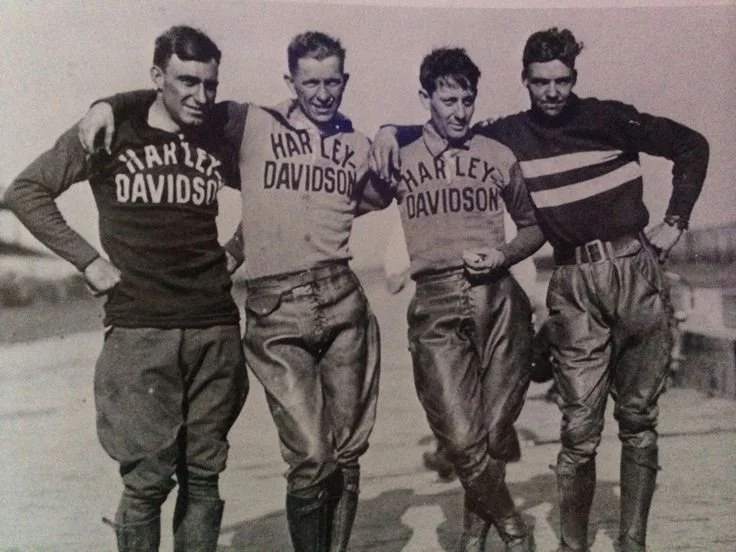
In an era when motorcycles were still a new idea, quality and reliability couldn’t be claimed. They had to be proven in motion. For a young Harley-Davidson, racing wasn’t a marketing afterthought: it was a way to demonstrate confidence in its own machines.
In 1912, Harley-Davidson offered its first racing jerseys : wool garments emblazoned with bold lettering. In the company accessories catalog for just $1.50, alongside nuts, screws, and spare parts. The decision to sell these jerseys deliberately not for profit, but to create visibility on and off the track, speaks volumes about how early company leadership thought about its brand and its community.
These weren’t merchandising items; they were working gear with brand visibility built in.
Board tracks, speed & survival
To understand the true meaning of a racing jersey, you have to picture America’s early board tracks: steep, oval circuits made of wooden planks, built in towns from Minneapolis to Milwaukee and beyond. These tracks, dubbed “murderdromes” by contemporary press, pushed riders to the limits.
There were no modern protective leathers, no advanced helmets, no synthetics. Riders wore practical garments such as heavy wool jerseys, goggles, caps, and held on. Wool provided insulation from wind and chill, absorbed moisture, and stretched with movement. It was a natural choice long before modern synthetics existed.
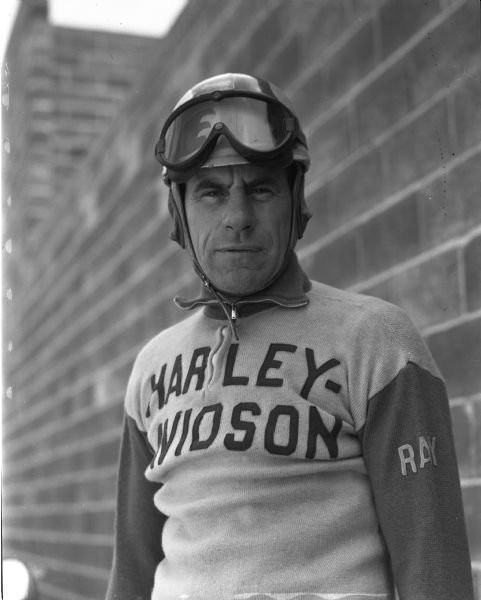

And on these boards, riders jockeyed motorcycles hard enough to exceed 100 mph, with boards humming beneath them and crowds cheering above. The jersey’s role was pragmatic: comfort, grip, warmth. But it was also symbolic : it marked a rider as part of a team and a shared purpose. Victory wasn’t just personal; it was brand affirmation.
A garment in good company: football wool jerseys
You could see parallels elsewhere in early American sport. At the same time motorcycle racers wore wool on the track, American football players wore wool jerseys on the gridiron. In the early 1900s, before the widespread use of synthetics, football uniforms were heavy wool flannels, chosen for durability in cold, rough contact. Like motorcycle racing gear, they were functional first, performance second.
This shared fabric language shows how early athletic culture helped shape functional garments in America. Both disciplines valued the same material qualities: resilience, warmth, and ease of repair. Yet while football jerseys were tied to a team on the field, Harley-Davidson jerseys were tied to identity on the road and at speed, a distinction that helped these garments transcend utility and become cultural symbols.
How Harley made apparel a story of identity
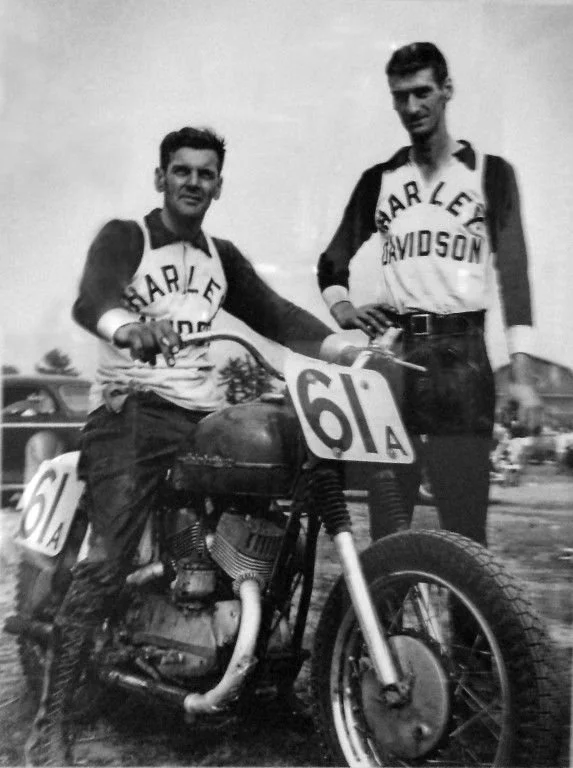

By the 1920s, Harley-Davidson’s racing jerseys appeared regularly in company catalogs and dealer communications. They became more than gear: they became icons. Photographs from the era show riders celebrating wins with their jerseys on full display in fire-bird colors, rich green heathers, accented with contrasting lettering.
The racing jersey helped lay the foundation for Harley-Davidson’s entire apparel line, which over the decades would grow into one of the most recognizable lifestyle collections in the world. What began as a wool knit with sewn-on letters became a story that tied performance and heritage together, thread by thread, race by race.
Legacy in fabric and culture
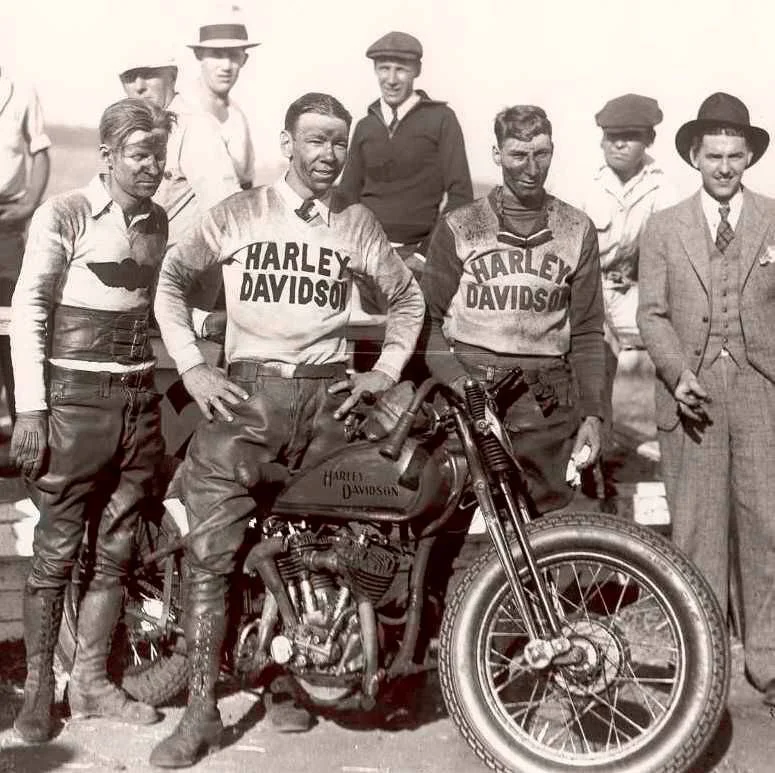
Today’s vintage Harley-Davidson racing jerseys command attention not just for rarity, but for meaning. They are physical documents of an era when brand identity was literally worn in public at speed.
Like the wool jerseys worn on football fields at the same time, Harley’s jerseys remind us that function created form, and that early athletic and racing cultures were deeply interwoven in America’s fabric. But where the gridiron jersey told spectators "this is my team," the Harley-Davidson racing jersey told the world, “this machine, and the name on my chest, has been tested.”
They are garments of endurance, innovation, and early Americana spirit : a heritage that still reverberates through Harley’s Apparel today.
Dig into the roots of Heritage clothing and Americana with our collection of books that infuse your brain with culture while looking good on a coffee table.

The first book ever AVANT published on Stifel, the legendary American maker of calico and Wabash fabrics that collectors call the Holy Grail of workwear.
Inside you’ll discover
The Stifel family story and how the famous boot became an icon
How Wabash fabric was made (indigo, printing, multi-step process)
Why Stifel garments became so rare — and so valuable
Specs
Softcover
170 × 240 mm
196 pages
Full color
Language: English
Shipping: Worldwide

From blue-denim uniforms to painted A-2 jackets, this is the visual language of American military clothing and how it shaped menswear forever.
Inside you’ll discover
U.S. military clothing with a focus on the Great Wars of the 20th century
Collector knowledge: how to decode labels and identify key details
The impact of social media on the vintage market (with 8 expert perspectives)
A look at the ethical boundaries of collecting militaria
The West Coast collectors show in Pomona — a must for militaria fans
Details
Softcover
170 × 240 mm
Full color
Language: English
Shipping: Worldwide