The Shakers: The Americans Who Made Simplicity Beautiful
Long before Scandinavian minimalism became the universal language of good taste, America had already produced its very own version in a series of self-sufficient villages scattered across New England and the American frontier.
The people who lived there were called The Shakers, and although they never intended to become designers (really not), they ended up creating one of the most influential visual languages in American history.
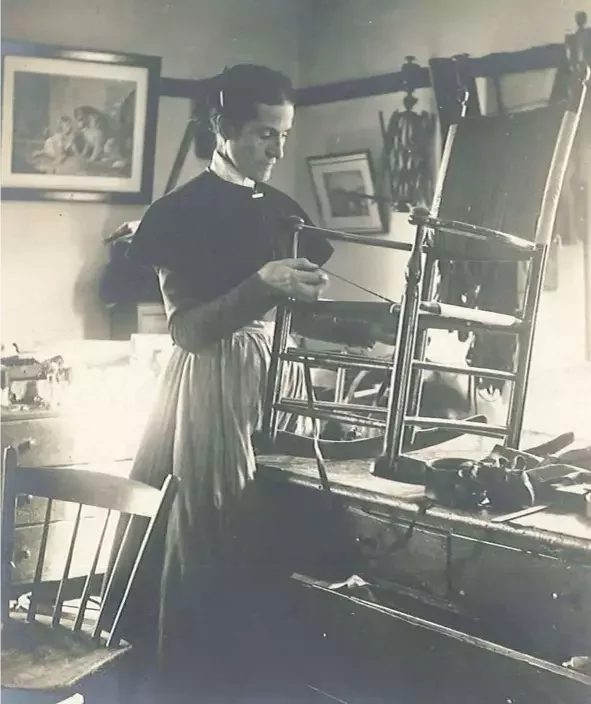
The Shakers building a chair, courtesy of The Shaker Museum
Walk through a contemporary gallery in Copenhagen, a boutique hotel in Brooklyn, or the home of almost any collector obsessed with craftsmanship and restraint, and chances are you'll encounter ideas first explored by the Shakers nearly two centuries ago.
Clean lines, honest materials and objects stripped of unnecessary decoration are part of their trademark.
The Shakers did not invent simplicity: they invented the idea that simplicity itself could be beautiful.
The First American Minimalists
The Shakers arrived in America in 1774 under the leadership of Mother Ann Lee, an English religious visionary who believed that spiritual purity could be achieved through communal living, hard work, and discipline. Their official name “the United Society of Believers in Christ's Second Appearing” never quite caught on. The public preferred "Shakers," a reference to the ecstatic movements that accompanied their worship services.

Shaker’s Ecstatic Danse
At their peak during the nineteenth century, Shaker communities stretched from Maine to Kentucky.
They shared property, lived collectively and practiced celibacy.
And they viewed work as a form of prayer.This last principle would prove far more influential than any sermon.
Because if labor was sacred, then every object produced by human hands had to be worthy of that effort.
A Design Language Born From Conviction
Unlike the Arts & Crafts movement that emerged later, the Shakers were not reacting against industrialization.
They simply believed that unnecessary decoration distracted from what truly “mattered”.
As a result, their furniture developed a visual clarity that still feels remarkably contemporary. Cabinets featured flat surfaces and precise joinery. Chairs relied on elegant proportions rather than ornament. Rooms remained uncluttered and organized, often with continuous peg rails running around the walls so that chairs, hats, baskets, and tools could be hung when not in use.
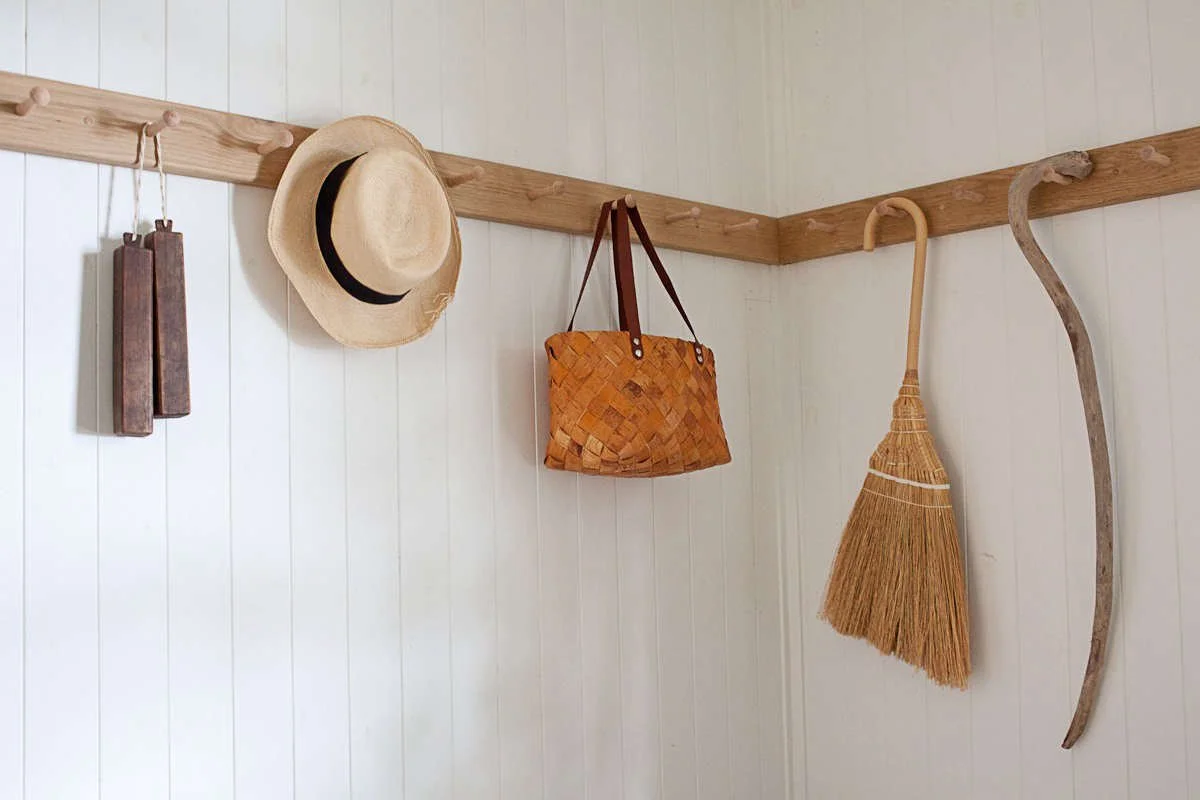
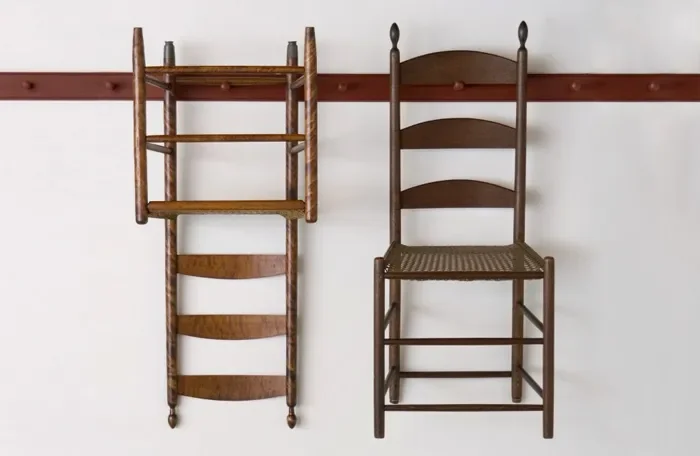
Examples of Peg Rails in The Shakers designs
The result was an environment that looked radically different from the heavy Victorian interiors that would dominate much of the nineteenth century.
Where others accumulated, The Shakers reduced.
Where others decorated, the Shakers refined.
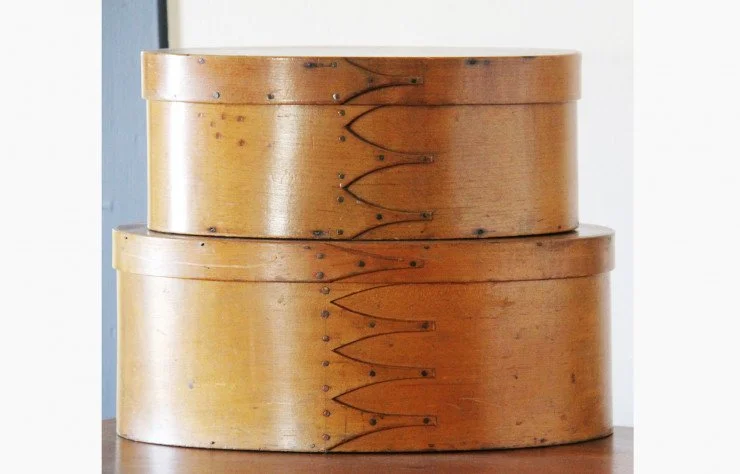
The Shaker box
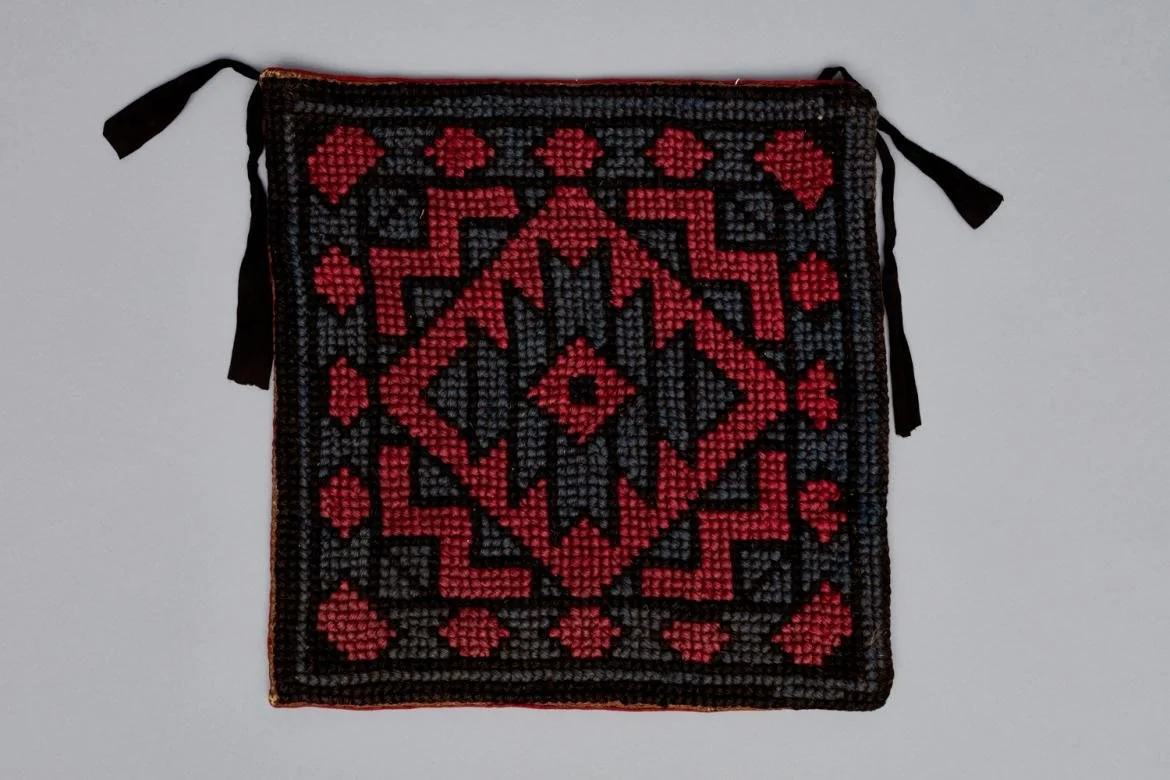
Chair Cushion
Today we call it minimalism but for them, it was simply common sense.
The Chair That Changed American Furniture
Every design movement has its icon. For the Shakers, it was the ladder-back chair.
Lightweight, strong, and visually restrained, the chair became a perfect expression of the community's values. It could be produced efficiently, repaired easily, and moved effortlessly.
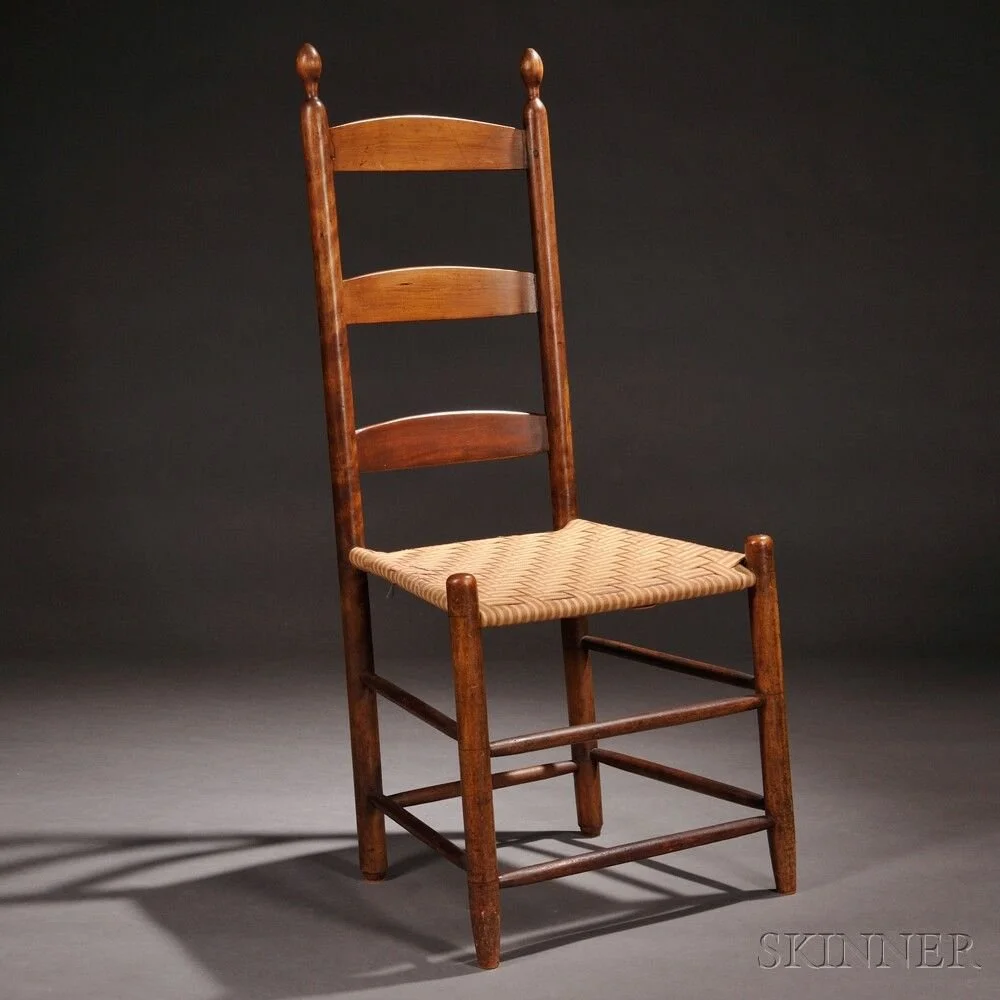
Shaker Chair sold on auction
This principle would echo throughout American design history, influencing everyone from Gustav Stickley to twentieth-century modernists and contemporary furniture makers searching for authenticity in an increasingly digital world.
Like the Adirondack chair a century later, the Shaker chair became more than a piece of furniture: it became a philosophy made tangible.
The Original Quiet Luxury
Much has been written recently about "quiet luxury”, the idea that true quality speaks softly rather than loudly.
The Shakers understood this long before luxury became a marketing category.
Their workshops produced oval bentwood boxes, cupboards, baskets, tables, and textiles of extraordinary quality. Yet nothing announced itself as precious. The craftsmanship revealed itself slowly, through perfect proportions, clever construction, and materials selected for durability rather than prestige.
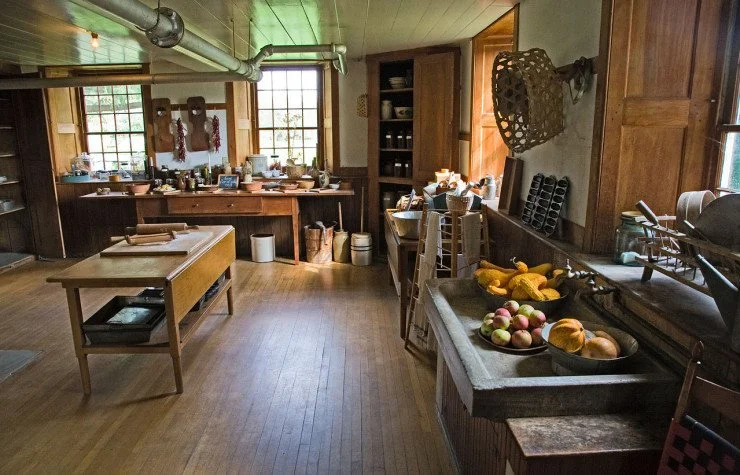
Reproduction of a Shaker village at Hancock, Massachusetts.
In many ways, the Shakers created the opposite of conspicuous consumption.
Their objects were not designed to display wealth such as Gilded Age or Victorian Interiors.
They were designed to serve. Ironically, that is precisely why collectors now treasure them.
Why Designers are still inspired by The Shakers
The Shaker story has resurfaced repeatedly over the last century.
The Arts & Crafts movement admired their integrity. Modernists admired their restraint. Contemporary designers admire their timelessness.
Each generation discovers the same lesson because when an object is reduced to its essential purpose, it rarely goes out of style.
That explains why a Shaker chair feels more contemporary today than much of the furniture produced a hundred years after it.
The forms are simple enough to transcend fashion and the materials are honest enough to age gracefully.
That’s why we like craftsmanship: it remains visible long after trends disappear.
The Legacy of The Shakers Far beyond Furniture
The Shakers helped establish a distinctly American idea: that beauty does not need ornament, luxury does not require excess, and craftsmanship is often most powerful when it is invisible.
Two centuries later, those ideas continue to shape how we think about interiors, objects, and even clothing.
The irony is that the Shakers never set out to influence design history. They were trying to build a better society with their own principles.
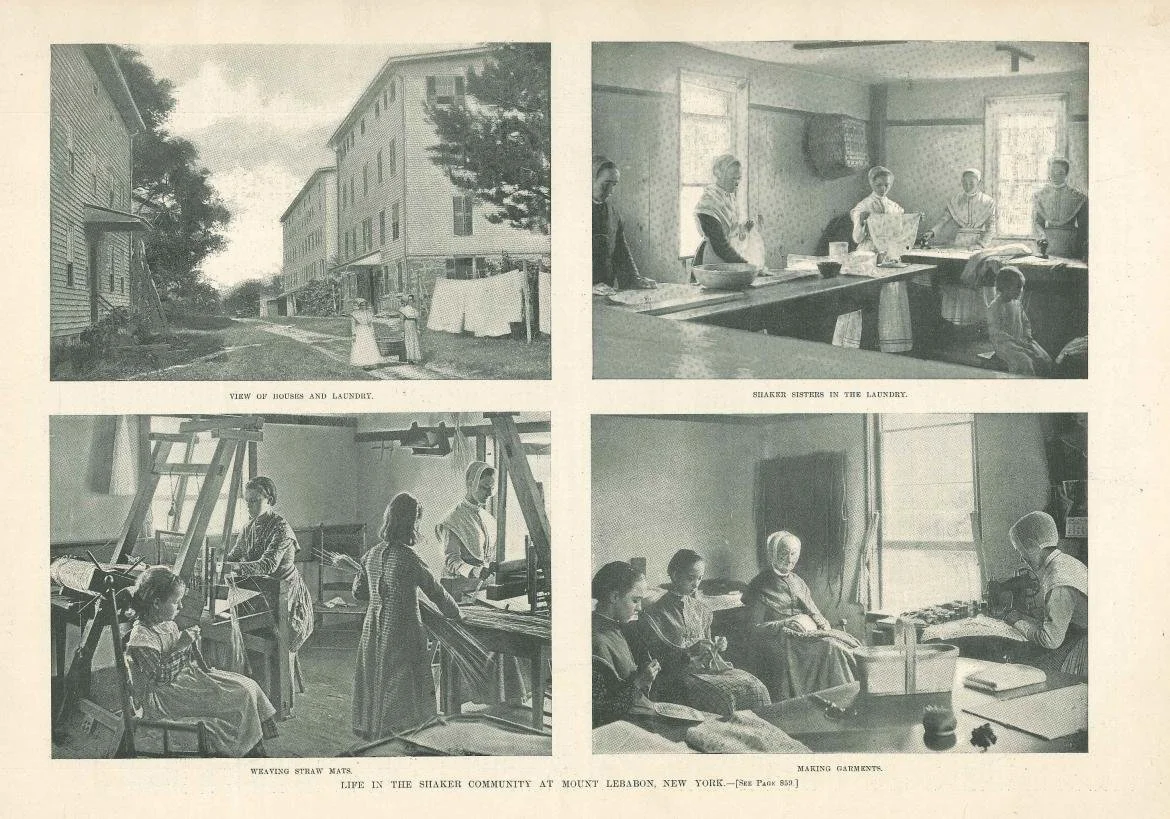
Life in the Shaker Community at Mount Lebanon, New York, October 27, 1894, Shaker Museum
The furniture simply survived as evidence of their movement. And perhaps that is why it still feels so relevant today.
Because unlike most design movements, it was never chasing a style.
It was chasing a way of life.
Check the Shaker Museum for more information, exhibition and to program a visit: https://www.shakermuseum.us/