Tinted lenses and the rise of filtered reality
There is something almost imperceptible happening in menswear.
Aquiet recurrence, subtle, persistent. A shift you notice only if you pay attention to details: a soft amber lens against a navy blazer, a pale green tint under the grey light of a Paris afternoon, a washed blue cutting through a silhouette otherwise rooted in tradition.
Tinted lenses are back. But they never really left.

Michael B. Jordan wearing Oliver People tinted sunglasses during Oscar 2026.
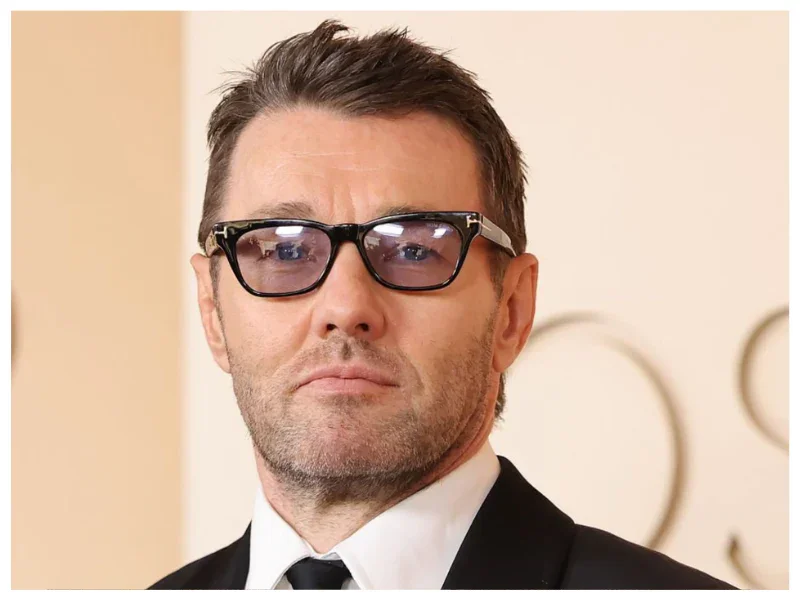
Joel Edgerton wearing Tom Ford tinted sunglasses for the 98th Academy Awards
The lens before style
Long before they became objects of desire, tinted lenses were instruments.
In the 18th century, early experiments in optical science introduced lightly colored lenses to reduce visual discomfort. Blue and green hues were prescribed not for aesthetic pleasure, but to correct the relationship between the eye and light.
By the 1930s, this logic became industrial. When Ray-Ban developed aviator sunglasses for U.S. Air Force pilots, the now-iconic green lenses were engineered to reduce glare while preserving color fidelity. Vision had to remain precise. The sky, after all, allowed no approximation.
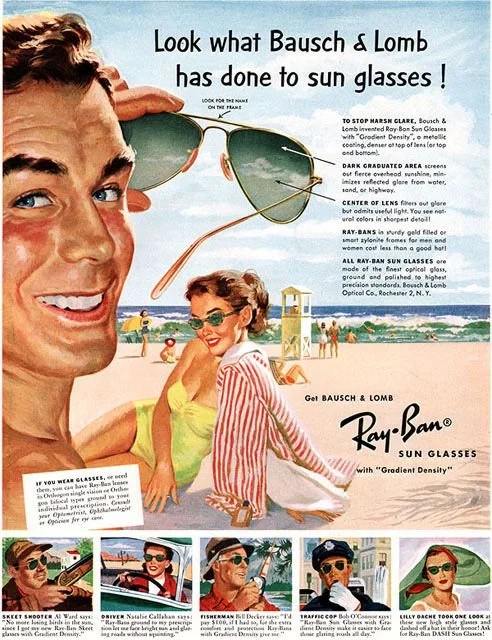
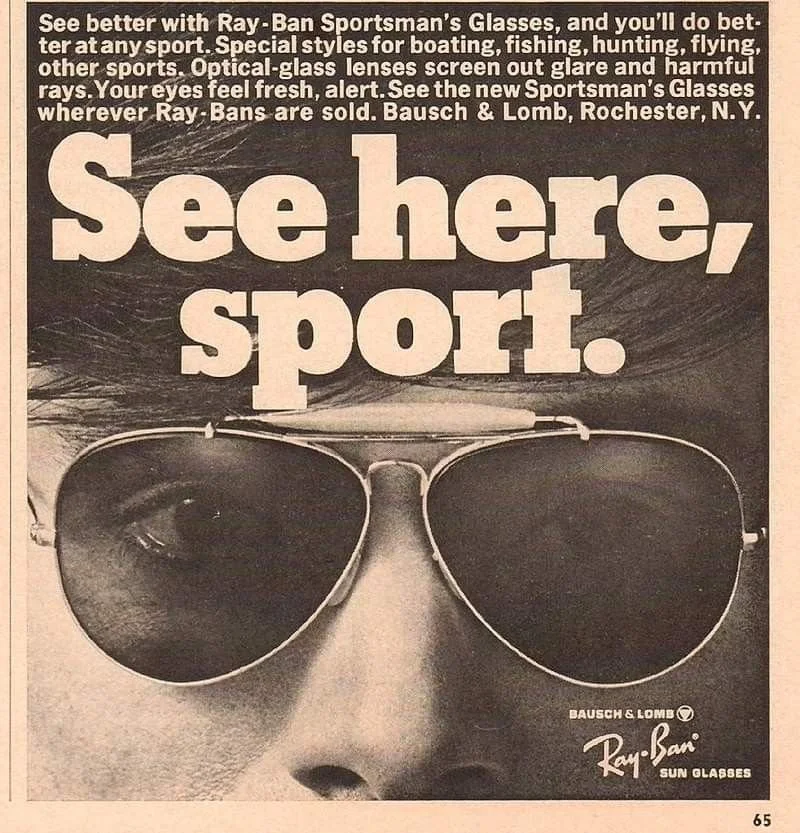
Elsewhere, yellow lenses enhanced contrast for shooters. Smoke lenses softened brightness in open environments. Each tint was a response to a specific condition. It was a tool to mediate reality.
Before it shaped identity, it shaped perception
When utility became attitude
Somewhere between the post-war years and the cultural upheaval of the 1970s, something shifted. Objects of function became objects of meaning.
Menswear has seen this shift before: denim worn beyond the workshop, military boots stepping into the city, the ribbed undershirt emerging from beneath to become visible. Each time, function gave way to meaning.
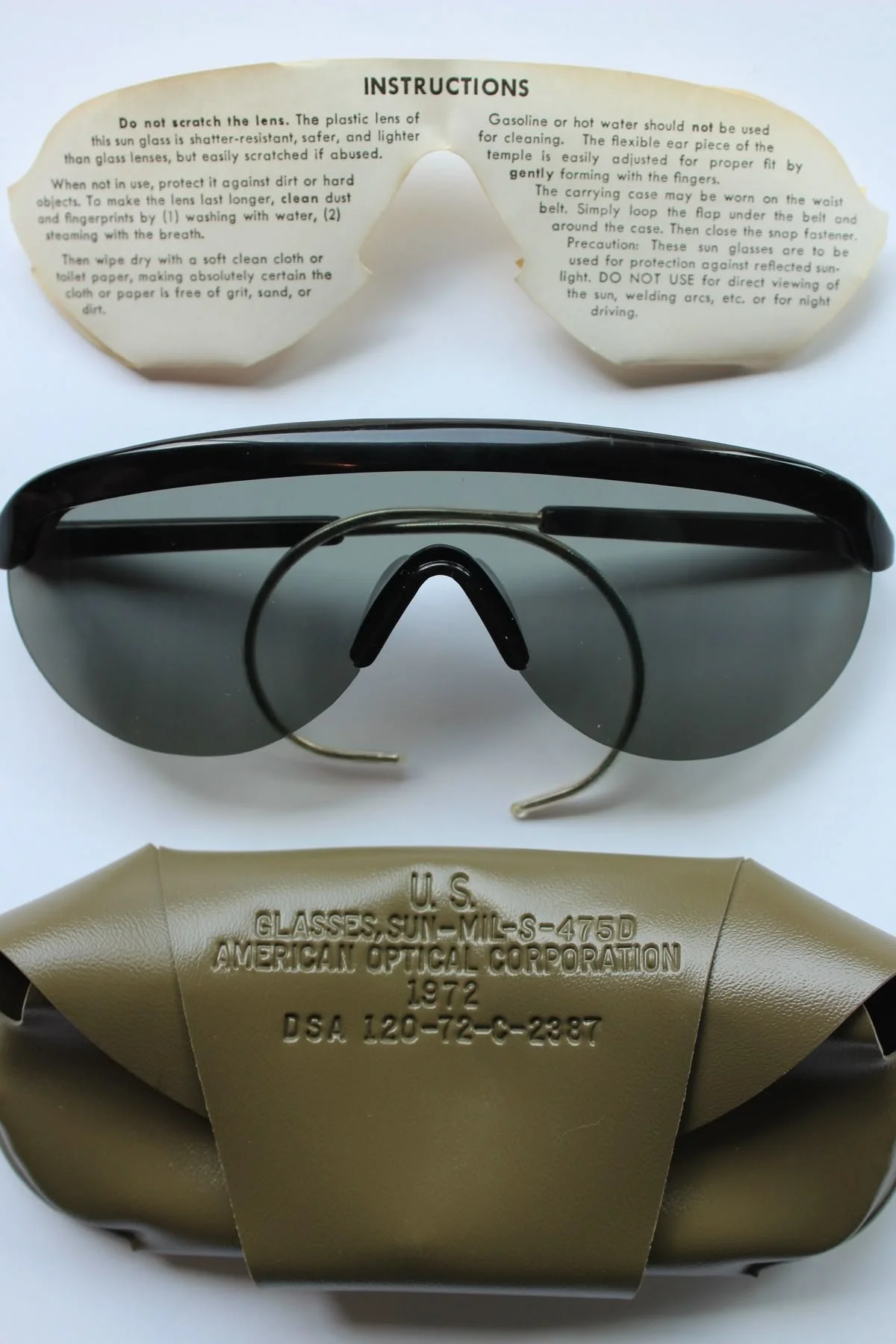
Deadstock US Army sunglasses, late Vietnam War era (1972) @Pinterest
Figures like Steve McQueen wore Persol sunglasses not as statements, but as extensions of a certain masculine ideal. Practical, understated, precise. At the same time, John Lennon reduced the lens to its purest form: small, round, lightly tinted. The lens had crossed a threshold.
It no longer served only to see better. It began to say something about the one who wears it.
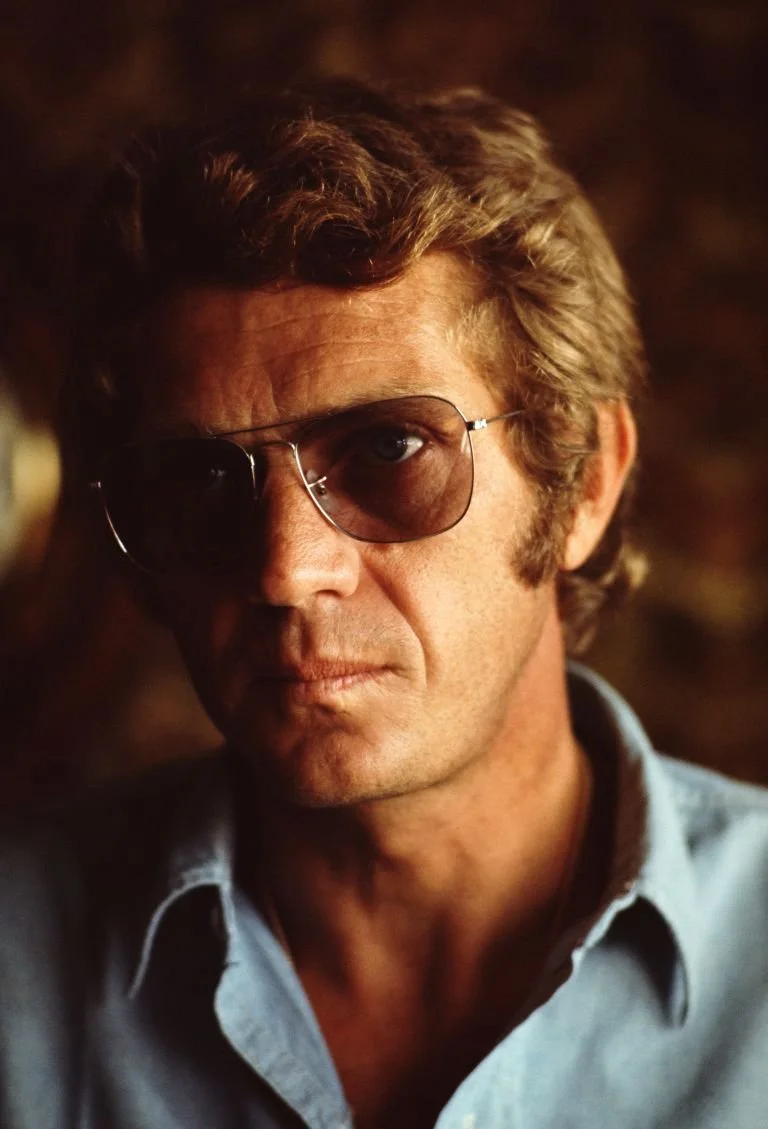
Steve McQueen wearing tinted lenses @Pinterest
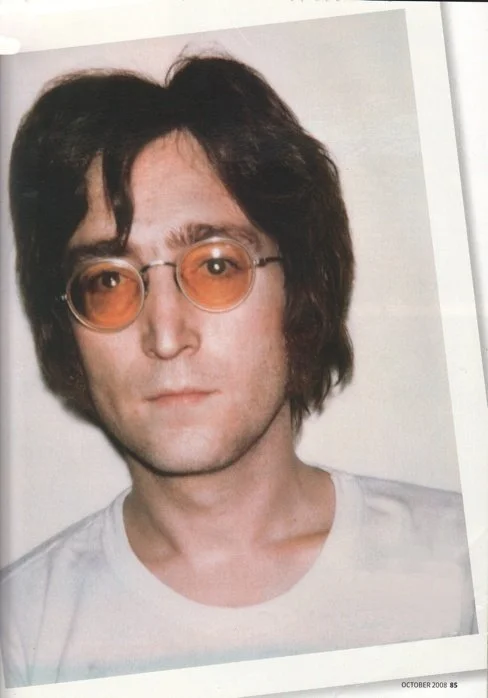
Polaroid of John Lennon wearing tinted lense by Andy Warhol @ Pinterest
The disappearance of the eye
For a time, that dialogue paused.
The late 1990s and early 2000s favored opacity. Black lenses, reflective surfaces, total concealment. Sunglasses became shields, tools of distance, anonymity, sometimes even withdrawal. To wear dark lenses was to disappear. To remove oneself from the gaze.
But culture does not stand still.
A world too visible
Today, the problem is overexposure.
We live in an era of continuous image production. Faces, outfits, interiors, meals, moments…Everything is documented. Visibility is no longer rare. It is constant.
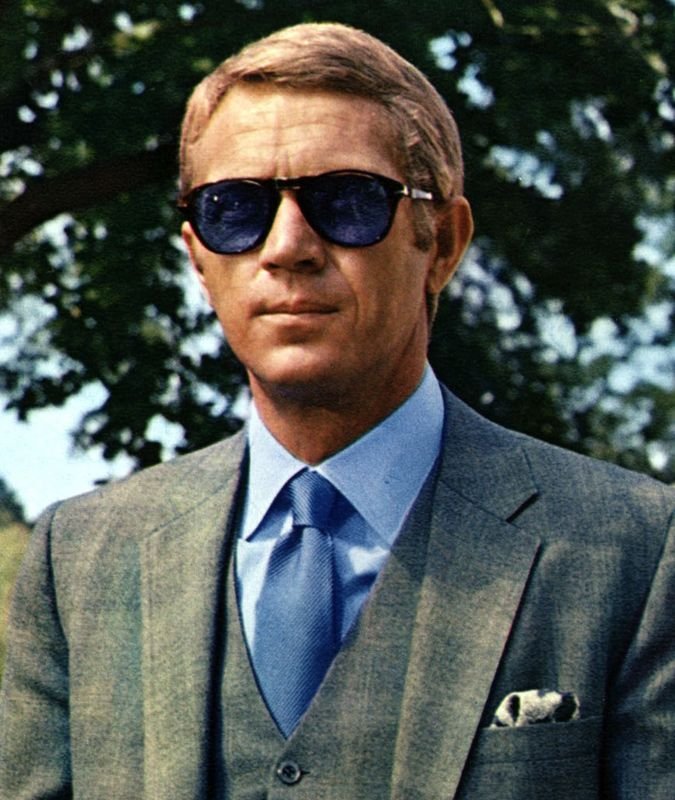
Steve McQueen wearing Persol tintend lenses
And so, a new need emerges: not to disappear, but to modulate presence. And tinted lenses respond precisely to this.
They do not hide the eye completely. But they do not fully reveal it either. They introduce a filter, a slight opacity, a controlled distance.
Not absence. Not exposure. Something in between.
The age of filtered reality
To understand why tinted lenses resonate today, one must look beyond fashion, into the way we perceive the world itself.
Over the past decade, reality has become something we rarely accept as it is.
Social media have normalized filters as a default. Images are warmed, softened, desaturated. Even the iPhone embeds color grading into everyday photography.
We have learned almost unconsciously to prefer softer contrast, warmer tones and, let’s be honest, a certain form of visual gentleness.
Raw reality, in comparison, can feel almost harsh.
This is not anecdotal. It echoes broader ideas explored in The Filter Bubble, where perception is increasingly mediated, selected, optimized. Media theorists like Marshall McLuhan and Jean Baudrillard anticipated this condition: reality is no longer simply experienced, it is constructed.
Tinted lenses bring this logic into the physical world.
They are, quite literally, filters for reality.
Amber warms the environment. Green stabilizes it. Smoke softens it.
The filter is no longer applied to the image.
It is applied to the eye.
Seeing as feeling
There is also something more intimate at play.
Tinted lenses do not only change how we are seen.They change how we feel.
Color affects perception and perception affects mood.
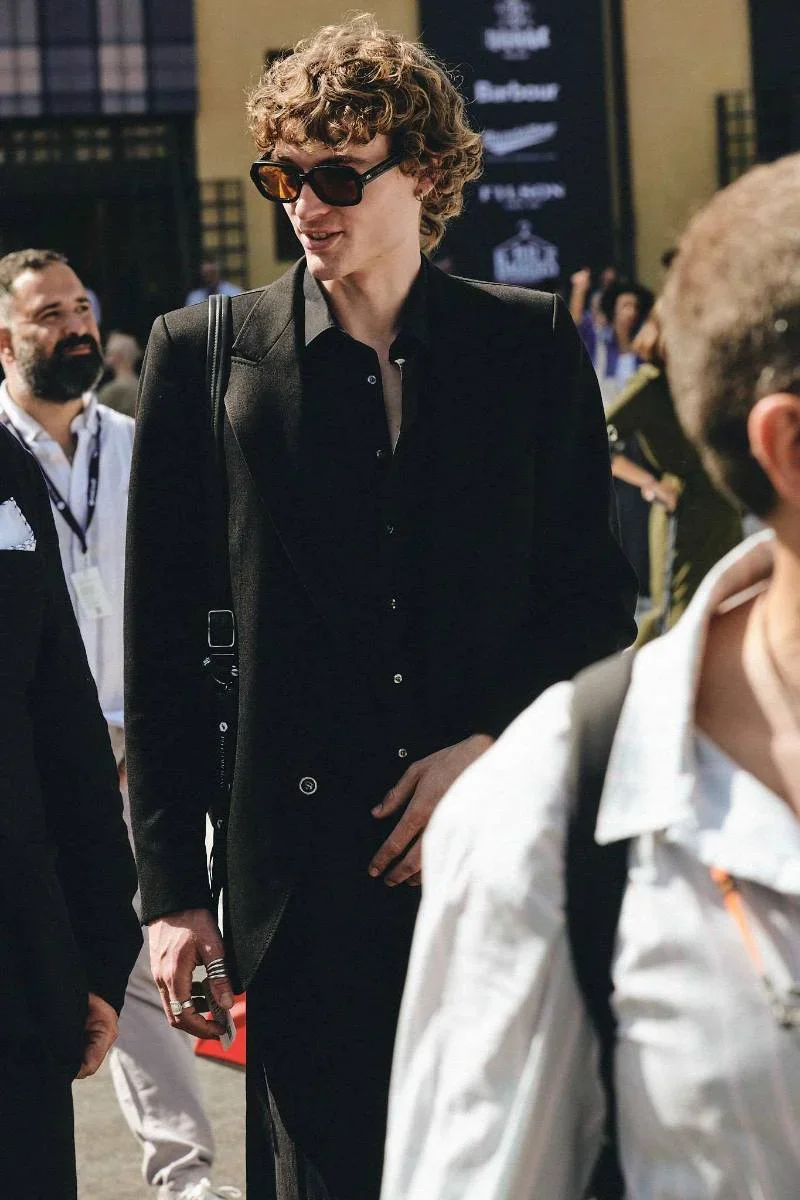
Credit: Enrico Labriola; Courtesy of Pitti Immagine Uomo
An amber lens in late afternoon light creates warmth.
A green lens introduces calm.
A blue tint cools the atmosphere.
In a world saturated with stimuli, this becomes a form of regulation, a way to adjust the emotional tone of reality.
A minimal gesture, a maximal effect
Menswear today operates within precision.
After years of reduction (fewer colors, fewer details, fewer statements) the system has reached a point where even the smallest variation carries weight.
Tinted lenses do not alter an outfit. They alter its reading.
A navy suit remains a navy suit.
A denim jacket remains a denim jacket.
And yet, through a lightly colored lens, everything shifts. Slightly warmer, slightly softer, slightly more intentional.
This is the new language of style: not transformation, but modulation.
The future of perception
What tinted lenses reveal goes beyond eyewear.
They belong to a broader movement:
environments designed through light and texture
spaces curated for emotional response (Alfredo Paredes is a master of it)
objects created to soften, filter, regulate
We are moving toward a world where perception itself becomes designed. Not just what we wear.
Not just where we go. But how we see.
Tinted lenses endure because they answer a contemporary tension: the desire to be present, without being fully exposed.
They offer control, over light, over mood, over perception.
And perhaps, in a world increasingly defined by visibility,
that control becomes the ultimate form of elegance. To see differently
is, ultimately, to exist differently.
Go Further
Understand deeper this societal shift with The Filter Bubble
Learn more about the history of Eyewear with Fashion Spectacles, Spectacular Fashion
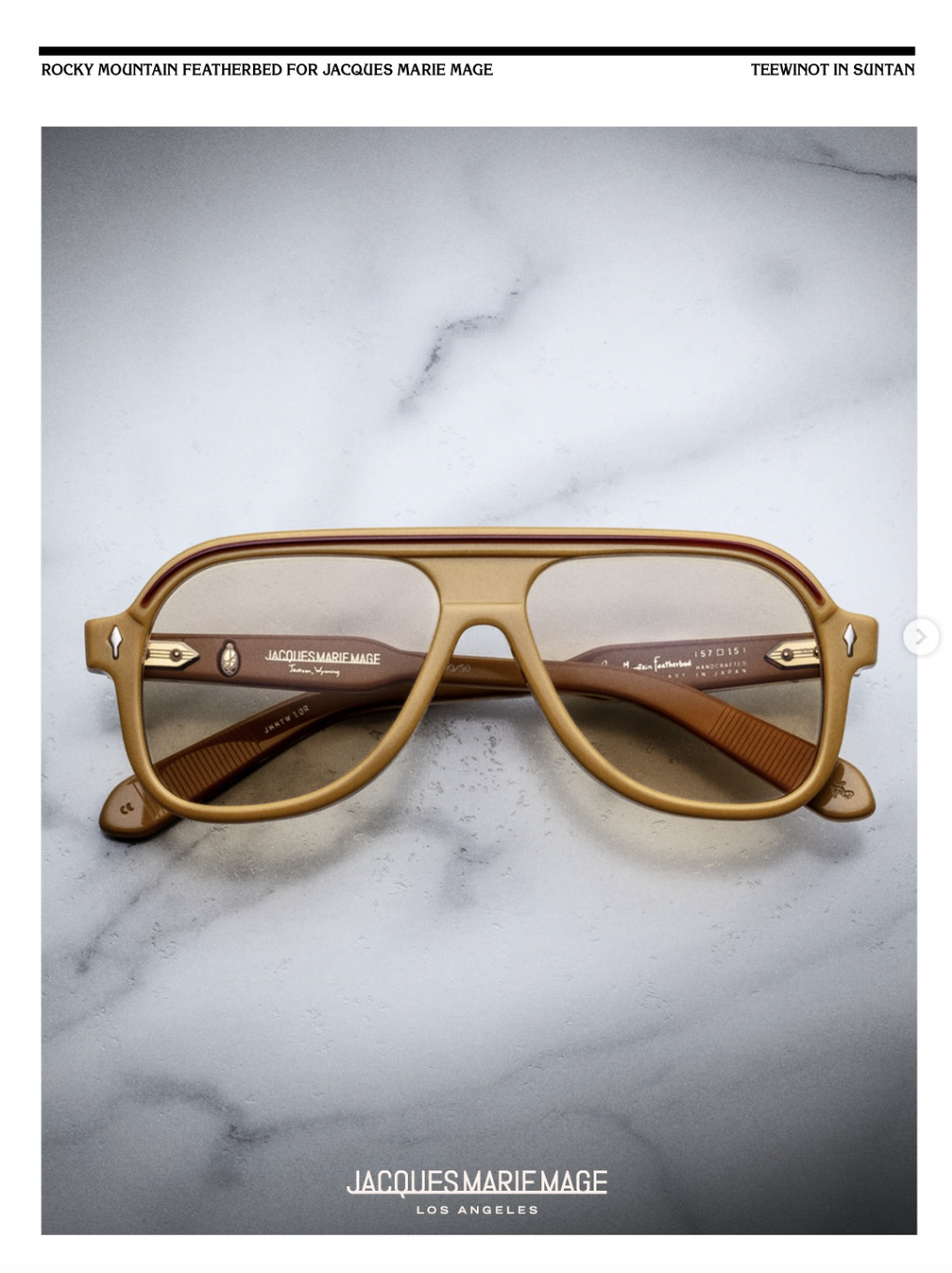
Discover Jacques Marie Mage, the master of contemporary tinted lenses in limited production, deep tints and a strong identity
Rely solely on Persol, Ray-Ban and American Optical for heritage style that blends history and function.
Our book An Anthology of American Militaria is an interesting study on vintage military clothing and accessories that are shaping current menswear.

From blue-denim uniforms to painted A-2 jackets, this is the visual language of American military clothing and how it shaped menswear forever.
Inside you’ll discover
U.S. military clothing with a focus on the Great Wars of the 20th century
Collector knowledge: how to decode labels and identify key details
The impact of social media on the vintage market (with 8 expert perspectives)
A look at the ethical boundaries of collecting militaria
The West Coast collectors show in Pomona — a must for militaria fans
Details
Softcover
170 × 240 mm
Full color
Language: English
Shipping: Worldwide