Why the Ribbed Undershirt Is a Modern Essential
There are garments designed to be seen, and garments designed to serve.
The ribbed undershirt known in Italy as the maglia della salute, in France as the marcel, and in the Anglo-American world as the A-shirt was never meant for display. It was conceived as protection: a washable barrier between the body and the outer world.
And yet, over the course of a century, this modest base layer would migrate from military systems and factory floors to cinema screens and cultural mythology. An incredible move from invisibility to icon, without ever changing its essential structure.
To understand the ribbed undershirt is to understand the logic of modern masculine dress itself.
The Logic of the Underlayer
Long before ribbed cotton knit entered industrial production, men relied on underlayers. Roman soldiers wore tunics beneath armor; medieval men wore linen chemises beneath wool. The principle was not aesthetic. We were only chasing practical at this stage. The inner garment absorbed sweat, preserved expensive outer layers, and provided thermal regulation. Mission accomplished.
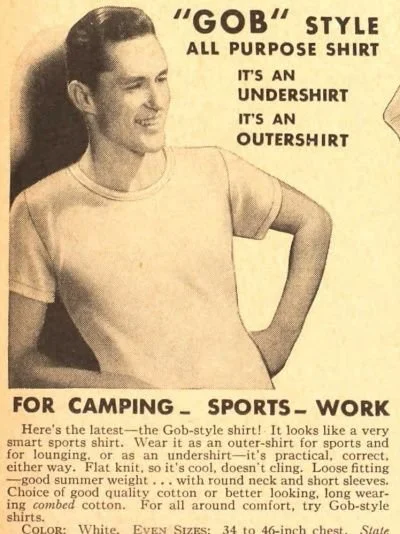
1930s advertising of an undershirt.
With the rise of industrial knitting in the late nineteenth century, this principle became more efficient. Ribbed knit cotton (elastic without elastane) allowed a garment to conform to the torso while maintaining shape. The vertical rib construction created subtle air pockets, improving insulation without weight. It stretched naturally with movement, making it ideal beneath structured clothing.
In Italy, the term maglia della salute which translate as “health shirt”, captured its purpose with almost medical clarity. The garment preserved warmth at the body’s core and extended the life of shirts and jackets. It existed in several variations: sleeveless for mobility and heat, short-sleeved for modesty under tailoring, heavier cotton or cotton-wool blends for colder climates.

Schostal Vintage Half-Sleeve Cotton Ribbed T-Shirt
The defining element was never the sleeve. It was the ribbed knit : engineered, disciplined, resilient.
Military Foundations: Hygiene and Discipline
The modern ribbed undershirt owes much of its durability to military systems.
Armies across Europe and North America in the late nineteenth and early twentieth centuries faced logistical realities. Wool tunics and uniforms were costly and difficult to clean in field conditions. A washable cotton base layer preserved issued garments and maintained hygiene among troops living in close quarters.
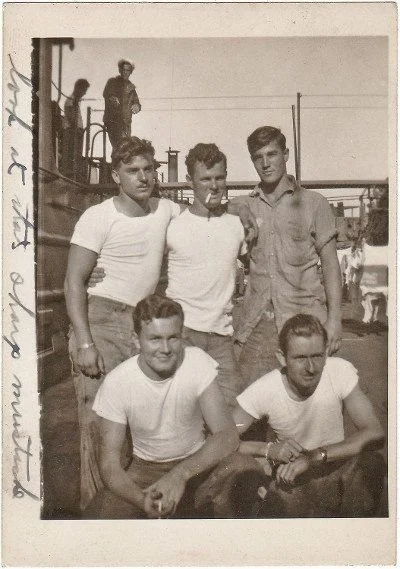
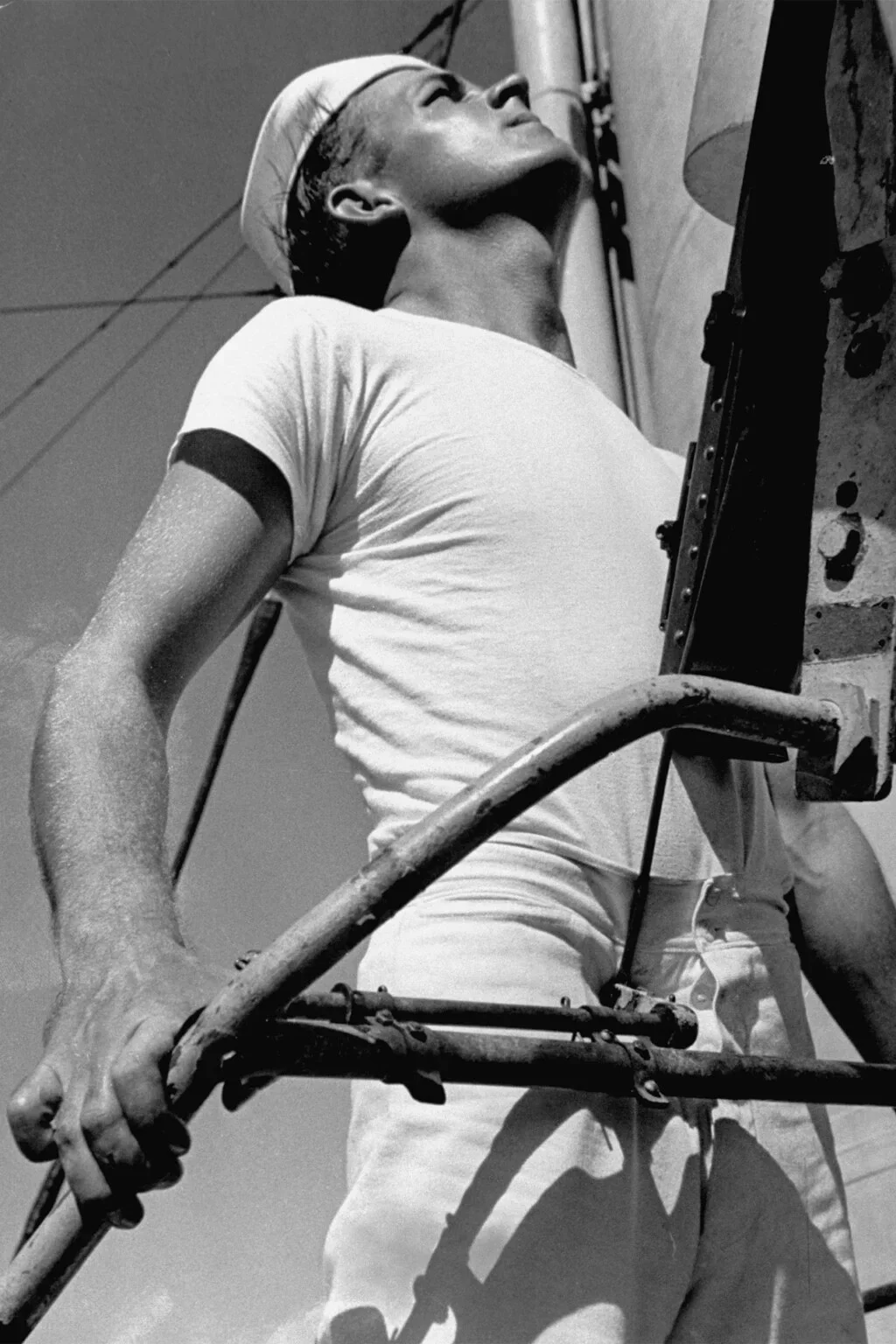
In colder regiments, wool-blend versions added insulation beneath heavy coats. In warmer climates, lighter ribbed cotton absorbed perspiration beneath tunics and field jackets. The close fit prevented bunching under belts and equipment straps. Sleeveless cuts allowed full shoulder movement. Short sleeves reduced abrasion.
Military garments survive because they function. The ribbed undershirt remained standard issue in various forms because it worked.
Labor and the Architecture of Workwear
When soldiers returned to civilian life, the logic of layering followed them.
The ribbed undershirt became foundational to early twentieth-century labor wardrobes. Beneath chore coats, denim jackets, and heavy wool overshirts, it absorbed sweat in factories and rail yards. It prevented irritation during long shifts. It allowed mobility without tailoring.
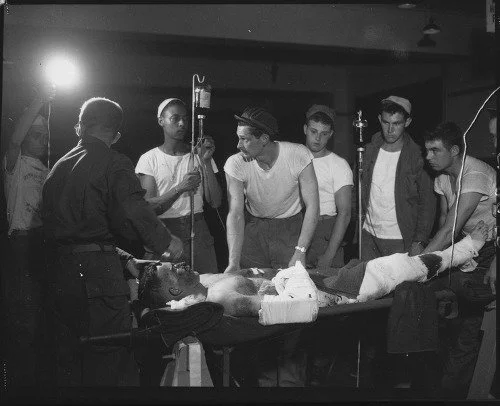
Soldiers wearing undershirts.
In Southern Europe, particularly in Italy, the sleeveless white ribbed version became synonymous with domestic pragmatism and working-class resilience. In colder regions, heavier knit versions (100% wool) persisted under industrial uniforms.
Early Motorcycling: Function Before Myth
Before leather jackets became symbols of rebellion, motorcyclists layered with practicality as we’ve seen in our previous article on Harley Davidson Wool shirts.
In the 1910s and 1920s, riders often wore a ribbed undershirt against the skin, followed by a woven shirt or wool sweater, then a heavy coat or early leather outerwear. The base layer absorbed sweat generated by physical exertion and engine heat, provided light insulation against wind, and reduced friction beneath coarse fabrics.
When the Invisible Became Iconic
For decades, the ribbed undershirt remained precisely what it was intended to be: unseen. Its migration into visibility came not through design innovation, but through storytelling.
When Marlon Brando appeared in A Streetcar Named Desire, wearing a tight ribbed white undershirt, the garment crossed a threshold. Under harsh lighting, the knit clung to the body, absorbing sweat, revealing physical tension.
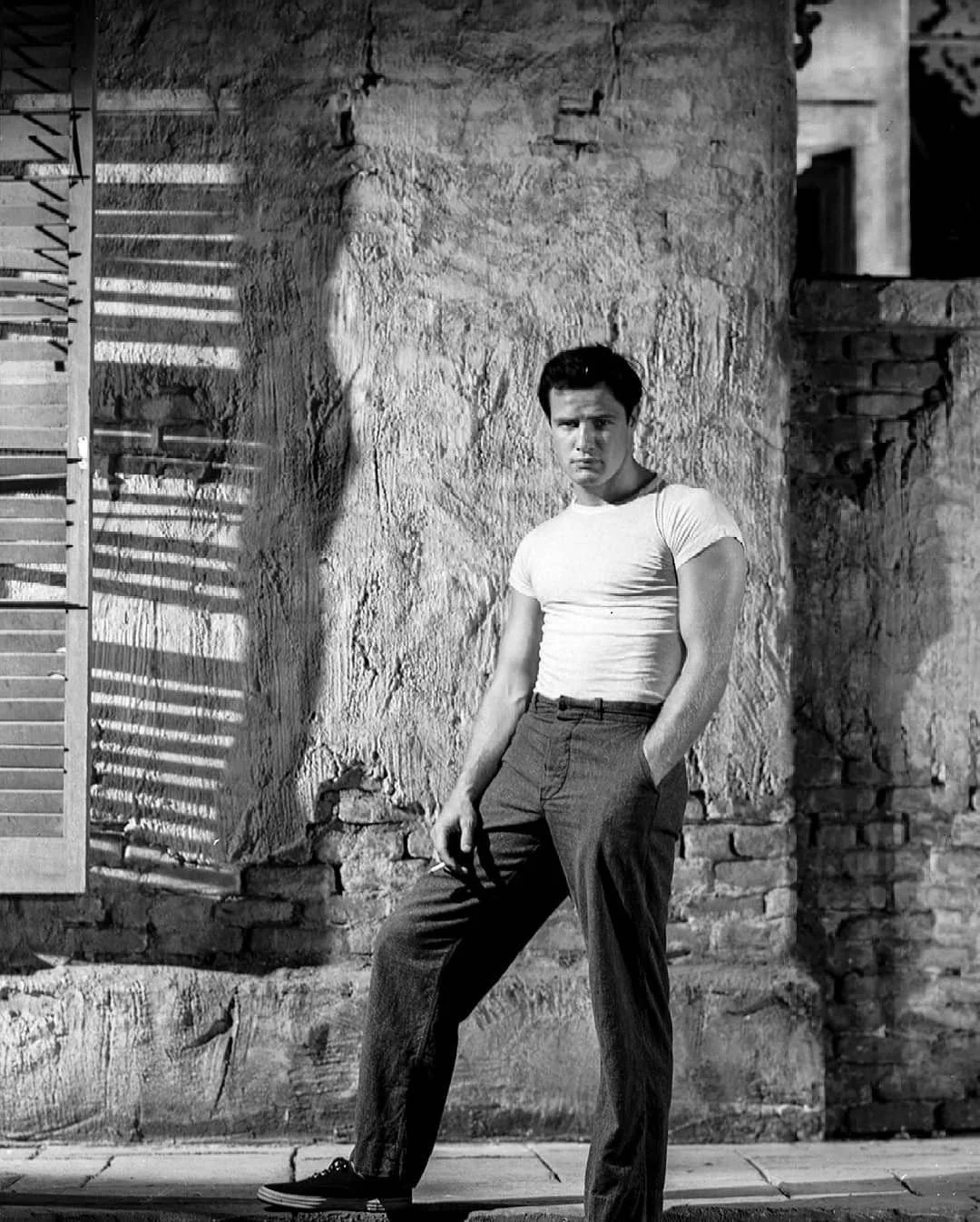
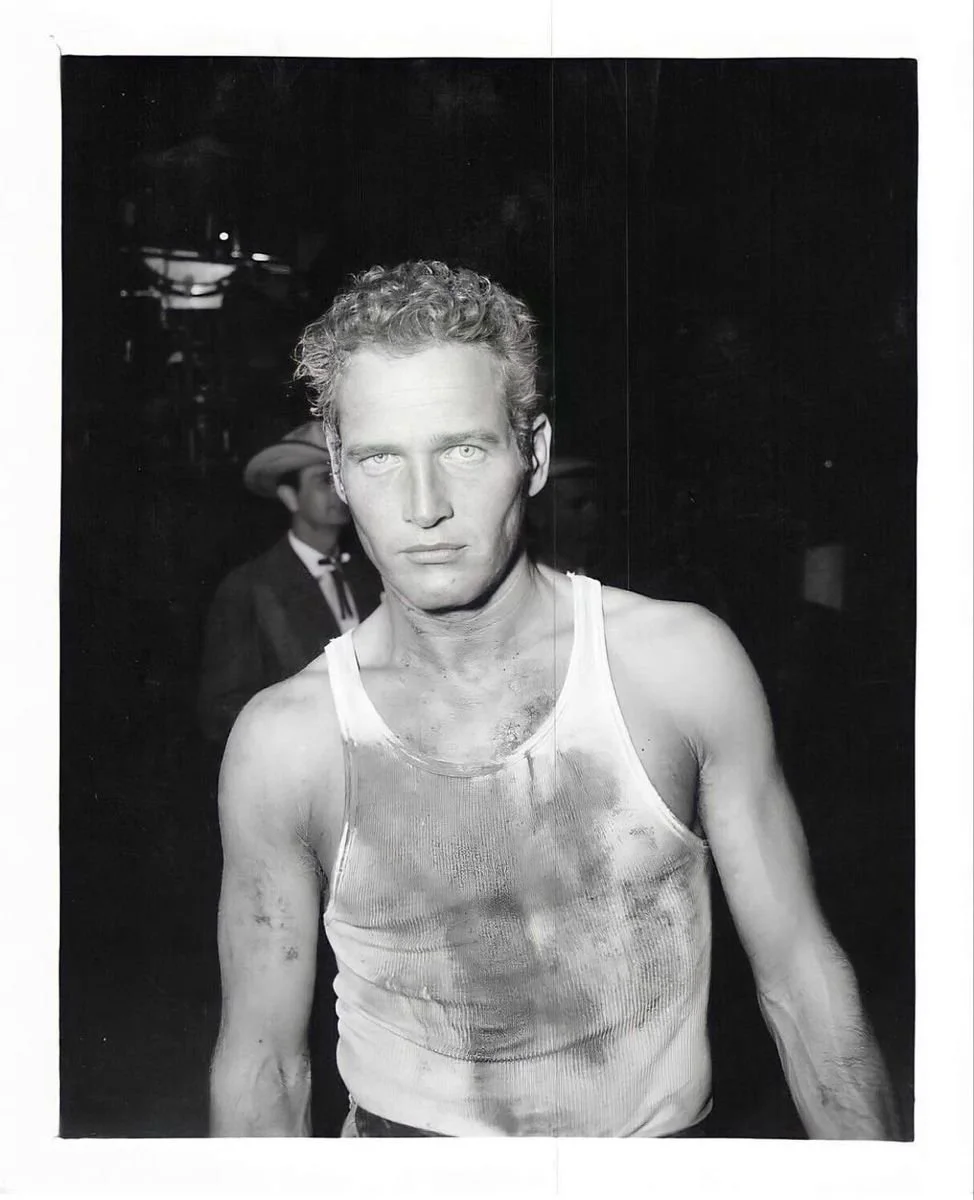
Brando’s performance reframed the undershirt as an emblem of working-class masculinity. It felt unstyled, unfiltered, immediate.
Paul Newman offered a different interpretation. Photographed off-duty in ribbed undershirts, Newman embodied ease rather than intensity. The garment suggested athletic restraint, a Mediterranean lightness rather than theatrical force.
By the late twentieth century, the transformation was complete. In Die Hard, Bruce Willis wore a sleeveless athletic variation that became synonymous with endurance. Torn, dirtied, sweat-soaked, the once-invisible underlayer functioned almost as armor.
What had once protected uniforms now symbolized survival. The garment itself had not changed. The context had.
The Modern Interpretation: Texture and Restraint
Today, the ribbed undershirt occupies a delicate space between underwear and outerwear. Worn alone, it can easily slip into cliché. Layered thoughtfully, it regains its heritage dignity.

Eric Maggiori wearing an undershirt by Schostal under an Italian costume jacket and Red Rabbit Trading Co Necklace
Under a spring field jacket, it offers subtle texture beneath structure. Beneath a chore coat, it creates visual depth without noise. Its ribbing catches light differently than flat jersey; its neckline frames the collarbone without spectacle.
Its elegance lies in restraint, in remembering that it was designed to support, not to dominate.
The Heritage Makers
Several contemporary brands continue to produce ribbed undershirts rooted in this lineage.
Schostal preserves the Roman tradition of the canottiera and short-sleeve ribbed health shirts in pure cotton.
Merz b. Schwanen draws on early European knitting traditions and structured cotton rib.
Sunspel refines the classic undershirt with precision cuts and long-staple cotton.
Zimmerli of Switzerland elevates fine-rib base layers into discreet luxury craftsmanship.
Each respects the same principle: durability, structure, integrity.
Go Further
Brands such as Merz b. Schwanen still produce proper ribbed undershirts rooted in workwear tradition.
Book like Ametora help us to understand how Japanese designers preserved and elevated American workwear traditions, including garments like the ribbed undershirt.