
Ivy Without Borders: Tom Hoy on Japan, Heritage and Personal Style
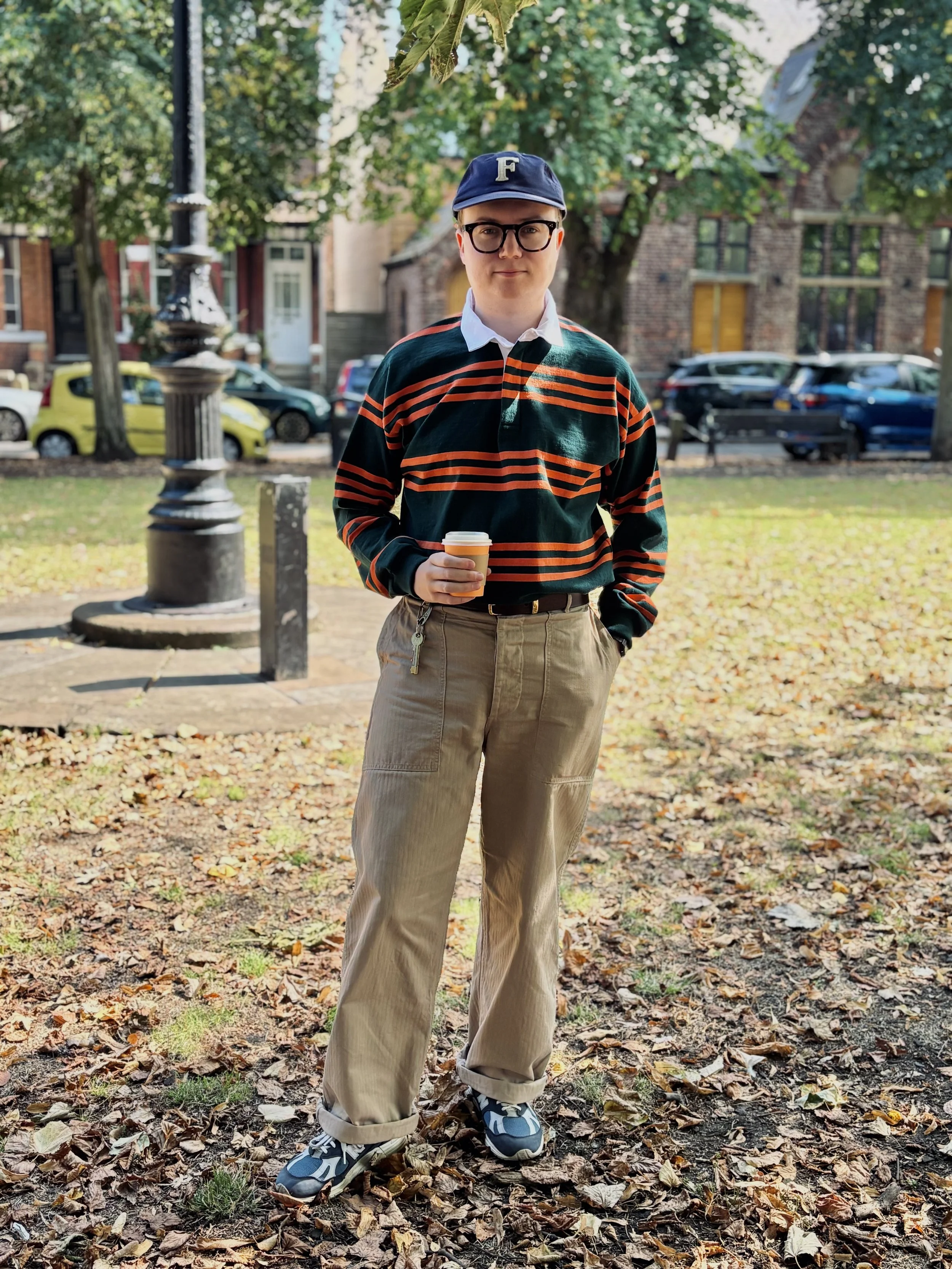
Tom Hoy is a British menswear enthusiast and the writer behind Easy on the Ivy, a successful Substack dedicated to Ivy style, heritage clothing and the people who keep these traditions alive. With Ivy’s roots firmly planted in Britain, Tom’s fascination with the style has taken him far beyond its origins, most recently to Japan, where he documented a culture that has embraced, reinterpreted and made Ivy its own.
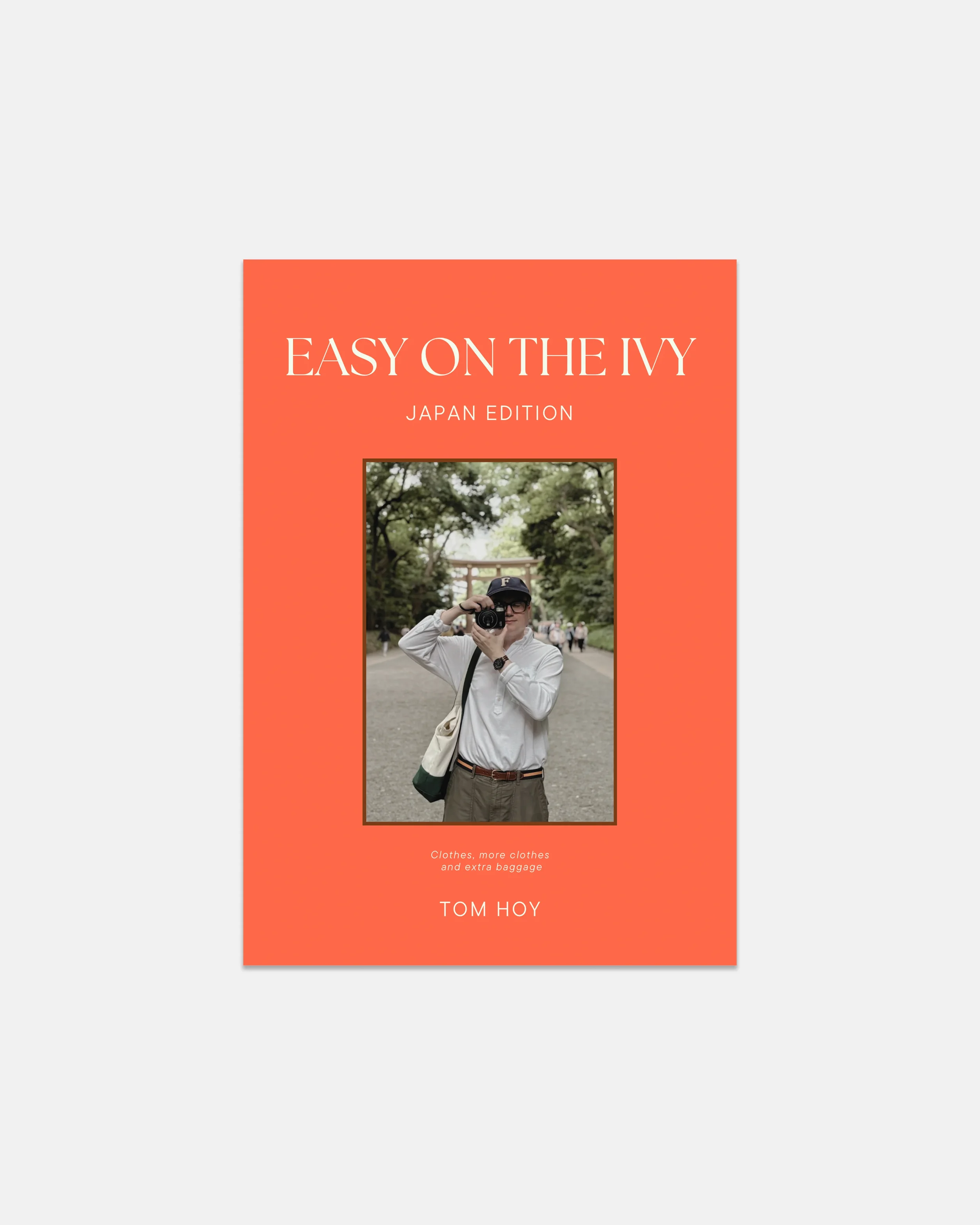
What began as a weekly newsletter eventually became a physical book, Easy on the Ivy: Japan Edition. Today, that book sits on the shelves of J. Press, one of the most respected names in Ivy clothing. A fitting home for a project born out of a genuine love for the style.
We spoke to Tom about Japan, the evolution of Ivy, the danger of turning clothing into a set of rules, and why nobody really owns Ivy.
Easy on the Ivy started as a Substack before it became a physical book: at what point did you realize this needed to exist on paper, in your hands, and not just on a screen?
It’s always been a personal ambition of mine to have something physical, whether it be a book or magazine. I’ve contributed to quite a few different books and magazines over the years, whether that be short interviews or just my thoughts on something. The idea of doing something from start to finish myself has always appealed to me.
I’m also a collector. I collect a lot of different things, such as jazz records, Japanese fashion magazines and even baseball cards. Physical, tangible media is always better. I love surrounding myself with the things I love, as grand as that sounds. I write the blog at least once a week, so there’s always a new issue, at least one new issue every week. I like the idea that if it’s on your shelf, as opposed to on a website, you can just step into it when you want.
You might be having a boring day at home and thinking what to do, and then you might just decide to reach out for it while you enjoy your cup of coffee, and I love the idea of that.
Why Tokyo specifically for the first physical edition, rather than New Haven, or somewhere more obviously “Ivy”?
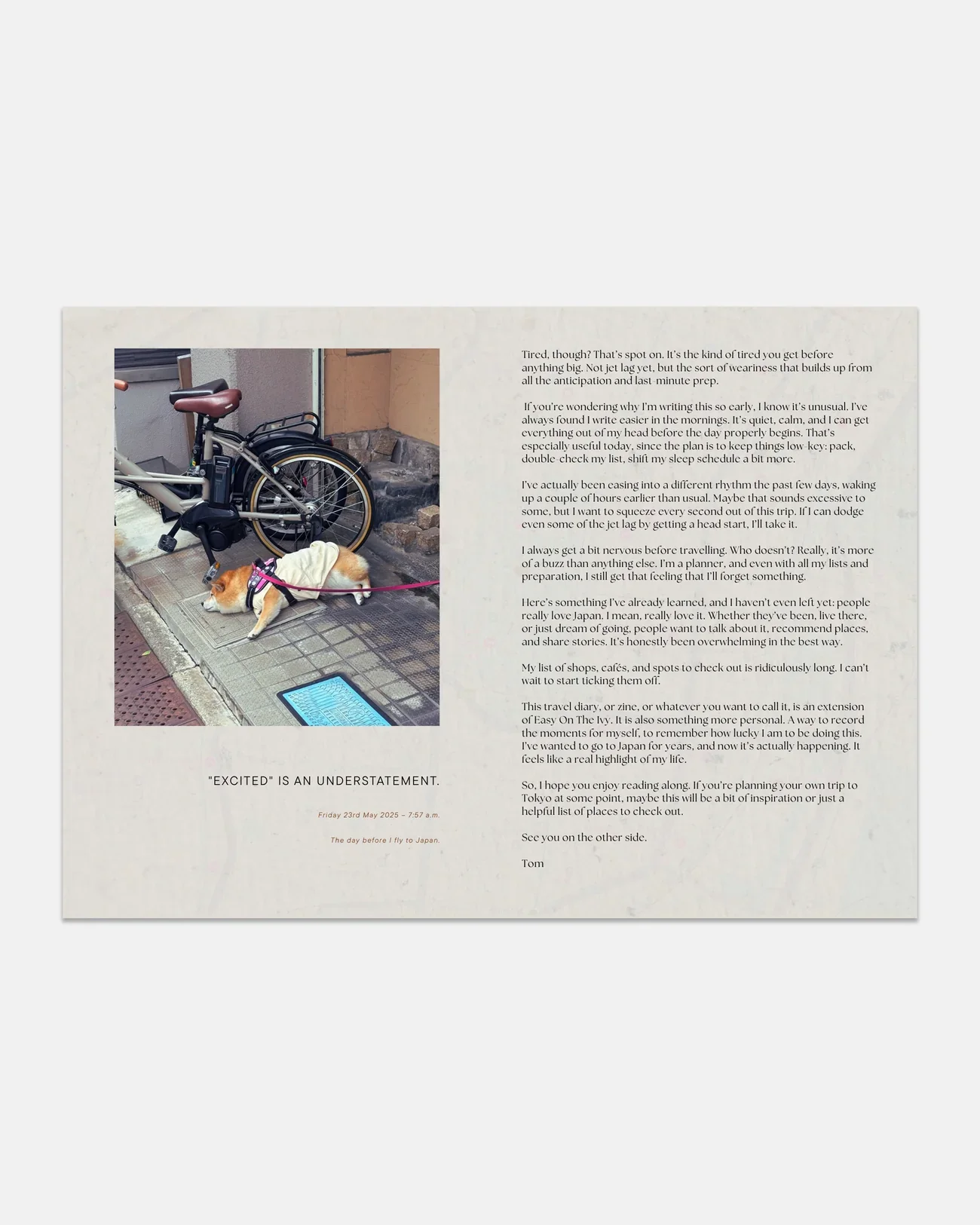
There’s a number of answers, really, I suppose. I was heading to Japan for the first time and, me being me, couldn’t just leave it as a holiday. I wanted to document it. I knew it was going to be special for me. As far as I’m concerned, it’s the menswear capital of the world. And if you’re into a niche, chances are, so is Japan.
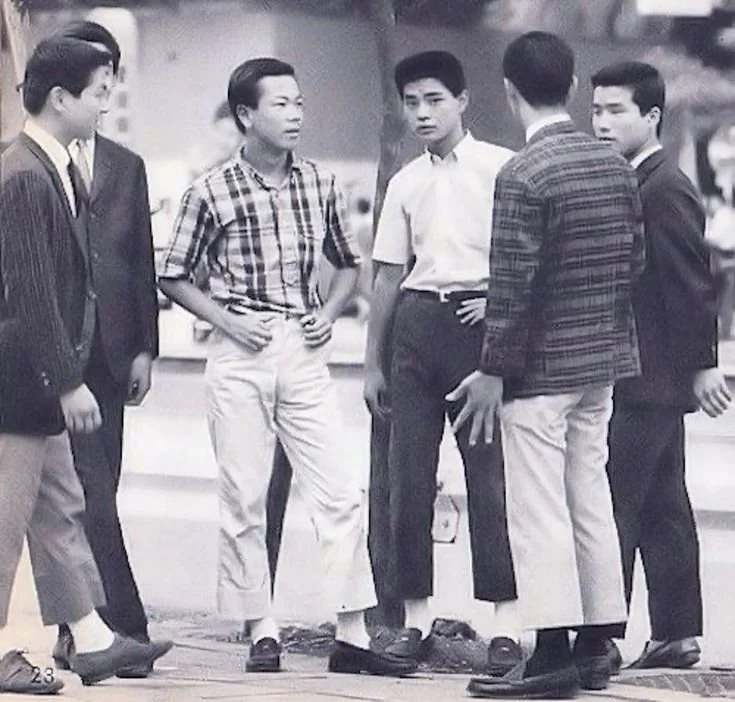
Japan has always fascinated me for a lot of reasons and, when you look at their relationship with fashion, Ivy is actually partly responsible for a lot of how menswear has grown in Japan. I love the stories that you hear of young men dressing Ivy and it seeming so ridiculous to the Japanese authorities and public that they were being rounded up and arrested in order to clean up Tokyo for the 1964 Olympics.
There’s also the relationship, of course, with denim. Japan has acquired a lot of the old machinery that American mills used to produce denim for brands like Levi’s, and is now able to produce some of the best denim in the world. The same goes for loopwheel machines and making sweatshirts, for example.
Japan has taken Ivy and made it their own through all their passion for creation, design and preservation. To some degree, they’ve moulded it into something new and everyone wears it differently there. It is a very welcoming atmosphere there, as I found. It’s a community of people that are very encouraging of one another.
There’s a lot of people dressing incredibly well and making things incredibly well, and I had to document it.
“Nobody owns Ivy” is a strong line: who do you think currently acts like they do, and what’s the cost of that?
What I mean by “nobody owns Ivy” is that I’m kind of referencing how much it’s evolved over the years. And I don’t think people sometimes appreciate, or at least understand, just how quickly it evolved.
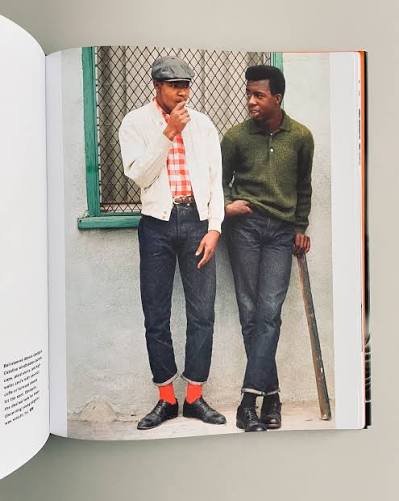
It started, of course, as something on the campuses. And then when we look at the Black jazz musicians picking it up, it had already changed. And then you had the actors on the West Coast kind of nodding to the style. They changed it. Before long, the whole world followed. The thing is with Ivy style, a lot of people might dress that way without even realising. To them, it’s just normal everyday wear. I certainly found this in Japan. The more that people wear it, the more it evolves.
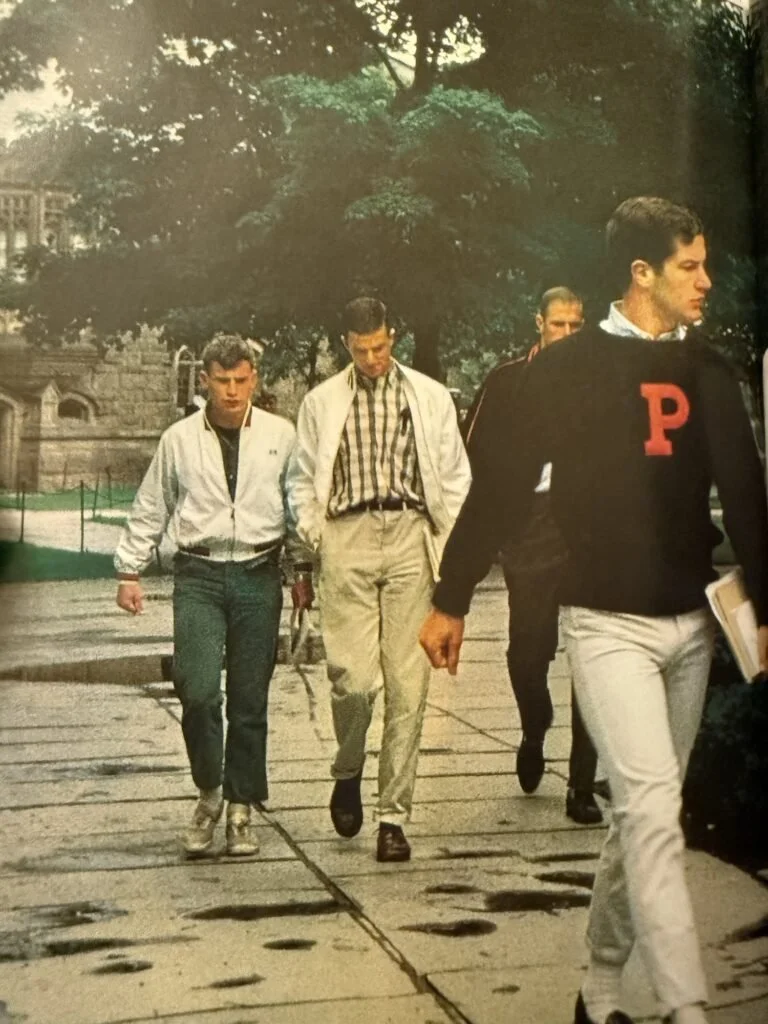
And the actual interesting thing is when Kensuke Ishizu and the team went and shot all those images for Take Ivy back in the day, even they got it wrong. They thought everyone was dressing a certain way. When they got there, they weren’t, so they actually had to stage some of the photographs. So the book is kind of fabricated to some degree.
Ivy is, at its core, about rule-breaking. Jason Jules and Graham Marsh’s Black Ivy: A Revolt in Style looks at how Black men, including jazz musicians, took the Ivy look and made it their own. When they were seen as a minority who shouldn’t necessarily be dressing that way, they were doing it their own way, and I think that’s still how it’s happening today. It’s never going to be original to it. It’s cool, but it shouldn’t be. I think if you’d stuck a load of rules on how to dress Ivy that had to be followed, the style would have died out years ago. It wouldn’t have gone much further than the book Take Ivy.
There are other people, of course, that do follow strictly and just wear vintage clothing, and that’s fine if they enjoy that. I’m all for it, but it isn’t for me.
Where’s the line, for you, between evolving a look and diluting it? Is there a version of “Ivy” you’d say has gone too far?
It’s a funny one for me because I don’t like to put rules on anything. I like to let it breathe. People find their own way and do it their own way. Wear what makes you feel comfortable. Wear what makes you happy. Wear something that in two years’ time you’ll look back on and think, “Why did I dress that way?” But we’ve all done that, and that’s the only way we learn what we do and don’t like, or how things should fit and not fit, for example.
So I think when you put the rules on something, that’s what dilutes it. That’s the thing that makes you stay so linear that you can’t deviate.
The Ivy that’s gone too far is what I think is almost what I’d say the purists go for. Because they are purists, yes, but the purists are going for one particular look. It makes them so particularabout the details. They’re seeing Ivy style as a single year rather than this whole look that has lasted generations.
What does Japan understand about Ivy style that the US, in your experience, has largely forgotten or never fully absorbed?
It’s a really interesting ecosystem that fascinates me. Because at its core, it is an American style. But now I think it’s turned into this thing where it’s an American style that influenced Japanese men, and now Americans are being influenced by the Japanese. And it’s not like it just stops there. It keeps going on and on and on.
And of course, it’s not just involving America and Japan. Everyone is influencing each other. And I’m talking way before social media. Magazines, lookbooks. This was happening way before we were doomscrolling. It’s just amplified now.
I think for a lot of people now, we understand Ivy as something that can evolve and be interpreted rather than be a fixed thing. If we use Japan as an example, I think their appreciation of the history and the details of the garments, paired with them using their own textile history, for example, if we looked at something like boro patchwork and incorporated that into Ivy, two worlds have come together to create something really special.
An interesting one is when I visited J. Press in Japan. You don’t go in there expecting to see the same stuff that you find in the New York store, for example. They have the classics in there, of course, but they’re having a lot of fun with it. They’re pushing boundaries in a way, not that I mean that they’re testing how much they can annoy people, quite the opposite. They’re having fun with Ivy in a way that the Japanese just do so well.
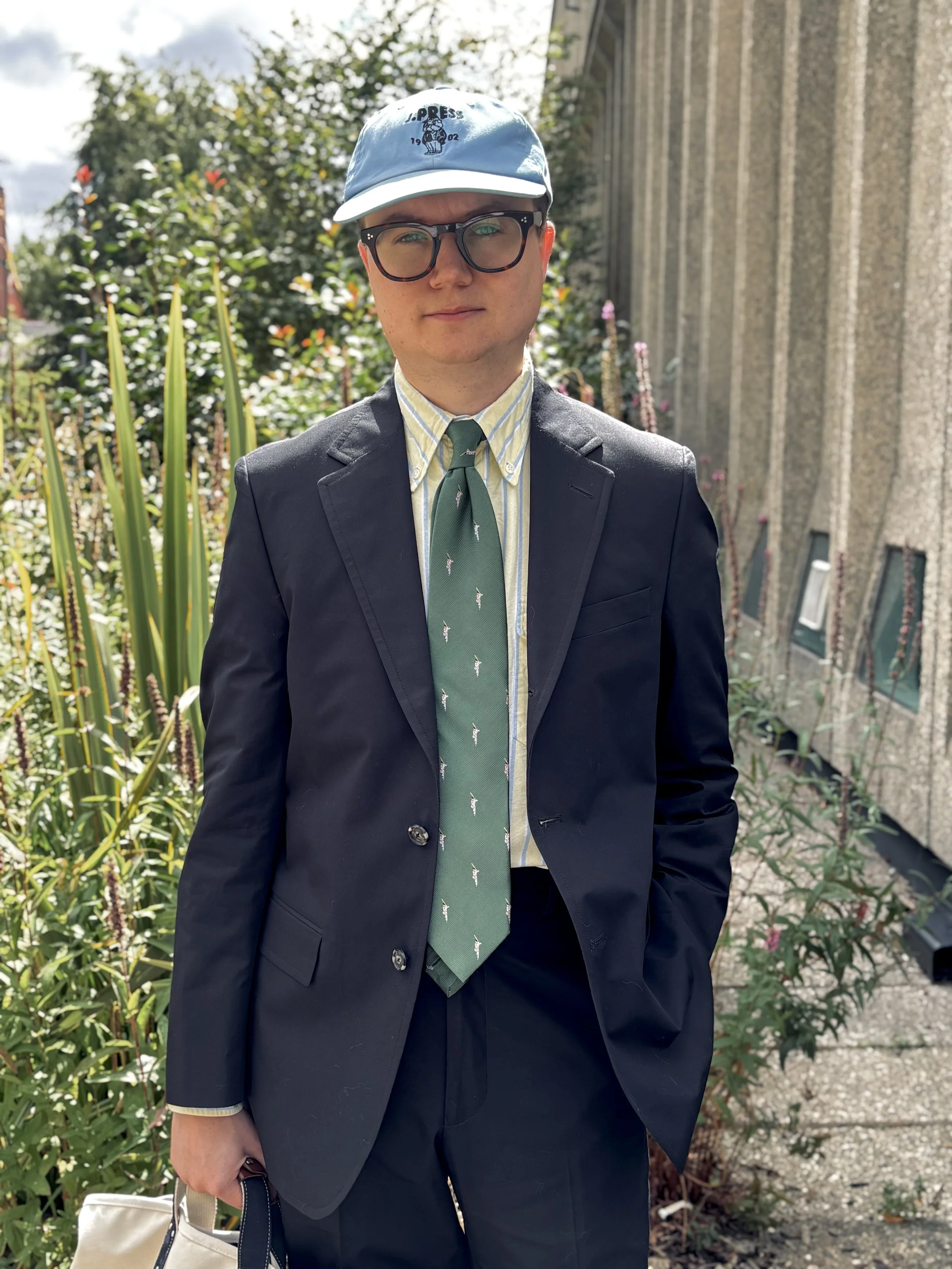
Take Ivy still gets treated as gospel by a lot of menswear writers. You’ve asked “why bother” with it: what do you think it’s still useful for, and where does it fail people now?
Don’t get me wrong. It’s one of many gospels for me. And as I said before, when I say “why bother”, it’s not in a way of me saying ignore it. It’s me reinforcing why we should still look at it, but perhaps challenging the idea of what way we should look at it.
I’ve talked about rules a lot, and I don’t think Take Ivy was ever made to say,“This is how we’re doing it from now on.” I think to some degree it was, but it was perhaps a little bigger in its idea than that. It was capturing a moment in time, showing how these American students were challenging how their parents were dressing and were dressing their own way. We forget, but the people in this book were actually dressed very casually for their time, and that was mind-blowing for not just the Japanese, but for the whole world.
It was done in such a nonchalant way that fascinated everyone, and it was the spirit of that that was captured then and people, whether they be designers, industry professionals, or just people like you and I today, are still trying to capture.
Is there a shop, person, or moment from your time reporting the Japan Edition that changed how you saw Ivy style, something that didn’t make it into the book?
I’m not sure if there was a moment that I didn’t write about. Nothing really comes to mind because I suppose I wanted to write about everything, and I found it hard not to document something if it happened.
But I’ll tell you something I did learn. As a British person, we’re so worried about getting embarrassed all the time, or upsetting someone, or not conforming, or acting in a way people think we should. While the Japanese do do that too, we have that quite in common. People aren’t afraid to wear their interests on their sleeve, in this case, I suppose quite literally.
And that’s something I really took from Japan. When they’re into something, they’re fully dedicated, and that’s something that I really respect them for. I’ve tried to kind of envision part of that into my everyday style.
You’ve interviewed J. Press’s Robert Squillaro yourself, and now your own book is sold in their flagship. How did that relationship come about, and did it change how you write about heritage brands, knowing you might end up on their shelf?
So over the last couple of years, I’ve made quite a good relationship with the guys at J. Press, which, as a fanboy like me, is mind-blowing. I mean, I’m still a fan, and I love what they’re currently doing.
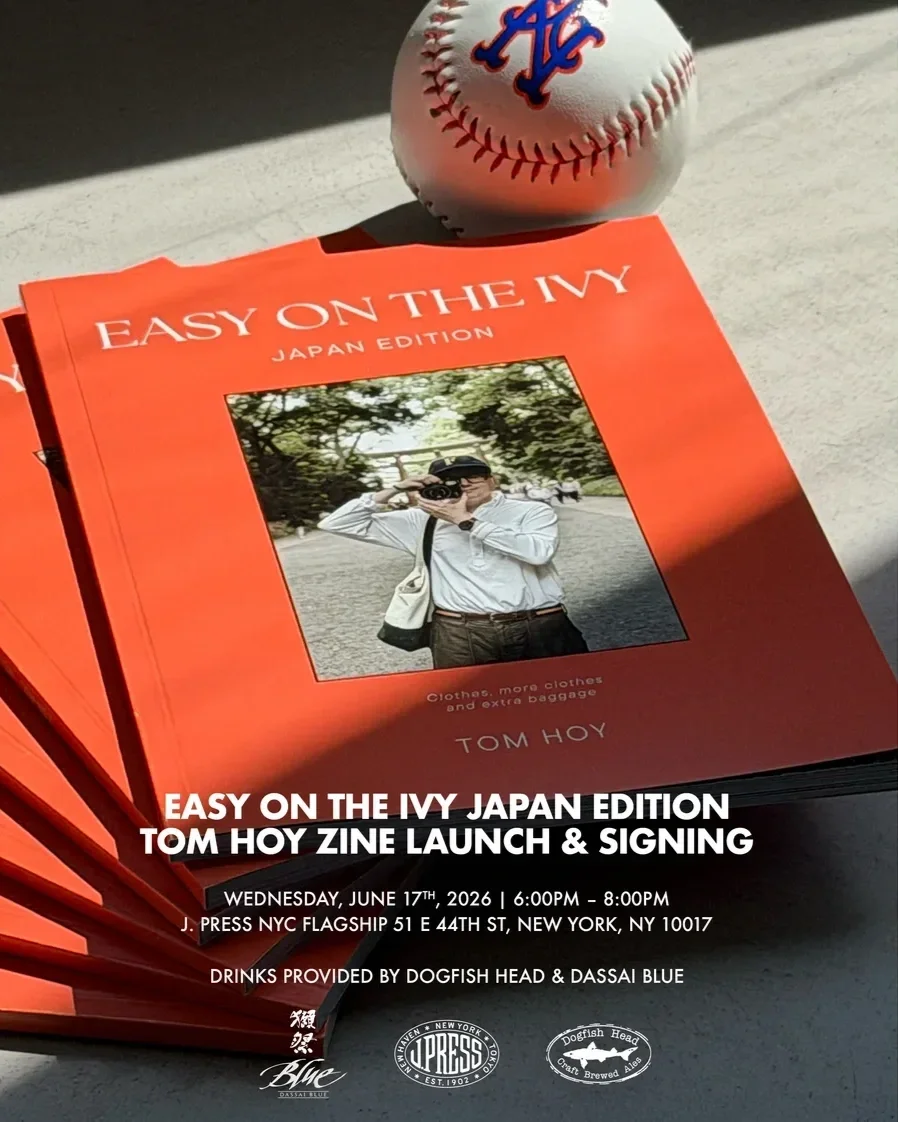
I remember when I brought out the zine, I was advertising it, and Jack Carlson just messaged me and said, “We need this in the store.” Go forward, I don’t know, maybe six months later, I’d just launched the zine in Clutch Cafe in London, and J. Press invited me to New York to launch it there. I still can’t quite believe that happened, because I am just a clothing nerd at the end of the day.
I like to think I don’t change how I write based on whether I think it would be stocked somewhere. I’d like to think people are reading what I write because it’s in my voice. I think the moment I start writing because I’m being either paid to write a certain way, or writing a certain way in order to get on a shelf somewhere, I’d expect people to see straight through that, and I wouldn’t expect people to buy what I’m writing if I was doing that.
J. Press’s current creative direction (fuller cuts, more color, historical proportions brought back) you’ve called that thoughtful evolution rather than reinvention. How do you tell the difference, watching a heritage house update itself, between honoring the archive and just doing nostalgia?
I heard Jack Carlson describe himself as the custodian of the brand, and he has a real archaeological approach.I think one of the things he’s doing really well, which perhaps hasn’t been mentioned too much, is that he’s focusing on all these core classics, but he’s doing collaborations with people that just make sense. I think he’s taking a leaf out of the book of what the Japanese are doing as well.
Jack is keeping the classics classic, but then he’s having fun with it where we can. It’s Ivy to its core. He’s visiting the factories where J. Press has always made its stuff but never really spoken about. He’s actually going out there and meeting the people, and I’ve always respected him for that.
He’s doing a lot of things that I’ve always banged on about that heritage brands should be doing, but aren’t. I think with him, you can tell he’s a natural fan of the brand, but he just so happens to be the president and creative director. He’s had his criticism for what he’s doing, and that’s going to happen. The best brands don’t exist without upsetting a couple of people along the way. I’m not one of them, either way.
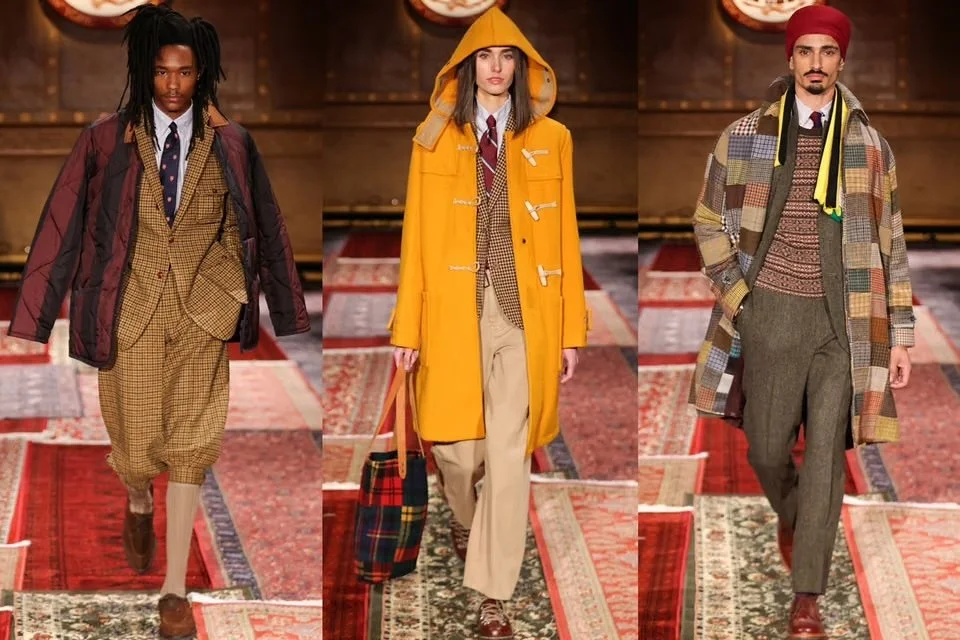
J. PRESS S/S 2027
Beyond J. Press, is there another heritage house (American, European, or Japanese) you think is getting this balance right?
There’s so many for me. There’s the obvious ones and less obvious ones.
All Blues Co in Leeds is one of my favourite shops in the UK. They’re making their own stuff based on the owner’s own archive, and I’ve picked up lots of stuff from them over the years, from mountain parkas, down vests, cricket sweaters and more.
Ivy Ellis is growing by the day, and they make some fantastic socks inspired by classic American sportswear. Kamakura Shirts, in my opinion, make some of the best shirts money can buy.
Drake’s range and lookbooks continue to pave the way for an aspirational style that influences and actually makes you want to be the people in the pictures. And one for me that isn’t an Ivy label per se is Aimé Leon Dore. Not everything there is for me, but I love what they’re doing. It’s a really fun brand, very much one with a collegiate sports influence, Americana, with a bit of streetwear in there too.
A current favourite is Allevol, again, not necessarily an Ivy brand. The owner is Takashi Okabe, and they make some incredible stuff, all designed in London, and then they make a lot of the stuff in Japan. I’ve picked up quite a few pieces from them over the years. It’s very much part ofthe Japanese idea of Amekaji, which means American casual.
As cliché as it sounds, it’s a really exciting time to be into all this kind of stuff. There’s no better time to be into it.
If someone under 25 today wanted to get into Ivy style honestly, not as a costume, where would you tell them to start and where would you tell them not to start?
Keep that idea of it not being a costume at the core, and try not to listen to how people should tell you how to do it. Cue me telling you how I should do it here (laughs).
Maybe find what you like about Ivy style and build on it from there. What do you already have in your wardrobe? How would it work for you? How can you build on that? What TV do you like? What films do you like? What music do you like? And how can it influence what you wear?
I think it’s truly then when you’ll find your own way. And don’t try to look cool. Don’t worry about that. What does that even mean anyway?

What’s next for Easy on the Ivy: more physical editions, other cities, something else entirely?
I’m currently writing the next physical edition for another city, which I’ll reveal very soon. I want to write some more books that aren’t city guides, but are just about things in general. In what capacity, just yet, I’m not sure.
And I just want to travel and keep meeting more people. It still blows my mind people even read the thing, and meeting people face-to-face I always love. I love it when people come over and say hello. That’s what it’s all about.
The podcast will also be returning. I’ve been asked about that a lot, and that will finally be returning more frequently, which is good.
Interview by Sarah Maggiori for AVANT
Follow Tom Hoy on Instagram & Substack for smart and interesting content on Ivy Style.