
You've seen people collecting jackets, boots, accessories. Trousers rarely get a story of their own. That's a mistake. The duck canvas chore pant is one of the few garments in the American wardrobe whose entire design was dictated by a job rather than a look, and the fact that it has ended up as a look anyway, on runways, on Instagram, among Japan's dedicated workwear collectors, is the more interesting story for it.
For readers wanting to go deeper, the Workwear Pack brings together three volumes that chart this entire trajectory, from railroad yards to New York runways, through the French ateliers that reinterpreted these codes. It's the ideal format for understanding how a work garment transforms into a collector's object.
The Fabric Before the Garment: What "Duck" Actually Means
Before there was a chore pant, there was duck. The word has nothing to do with waterfowl and everything to do with the Dutch: it comes from doek, meaning linen canvas, and it originally described a plain-woven sailcloth used for the white trousers and outerwear of sailors. "Cotton duck" entered the vocabulary later, as a way of distinguishing the modern cotton version from the old linen kind.
The weave itself is what makes duck useful for anything harder than a boat sail. It is built with two yarns run together in the warp and a single yarn in the weft, a construction that gives the finished cloth real density without turning it stiff as board. The result resists wind, resists tearing, takes a spark without catching easily, and has a smooth enough face that it does not snag on the rough edges of a job site. It also does the one thing every workwear fabric has to do eventually: it gets more comfortable the more it is worn, not less.
That maritime-to-industrial migration, sailcloth to railroad yard, is the real origin story of the chore pant. Nobody sat down and invented the ideal work trouser. A shipbuilding fabric got handed to garment makers who needed something a rivet could grip and a knee could kneel on for a decade, and it turned out to be exactly right.
Not to Be Confused With Its Cousin, the Chore Coat
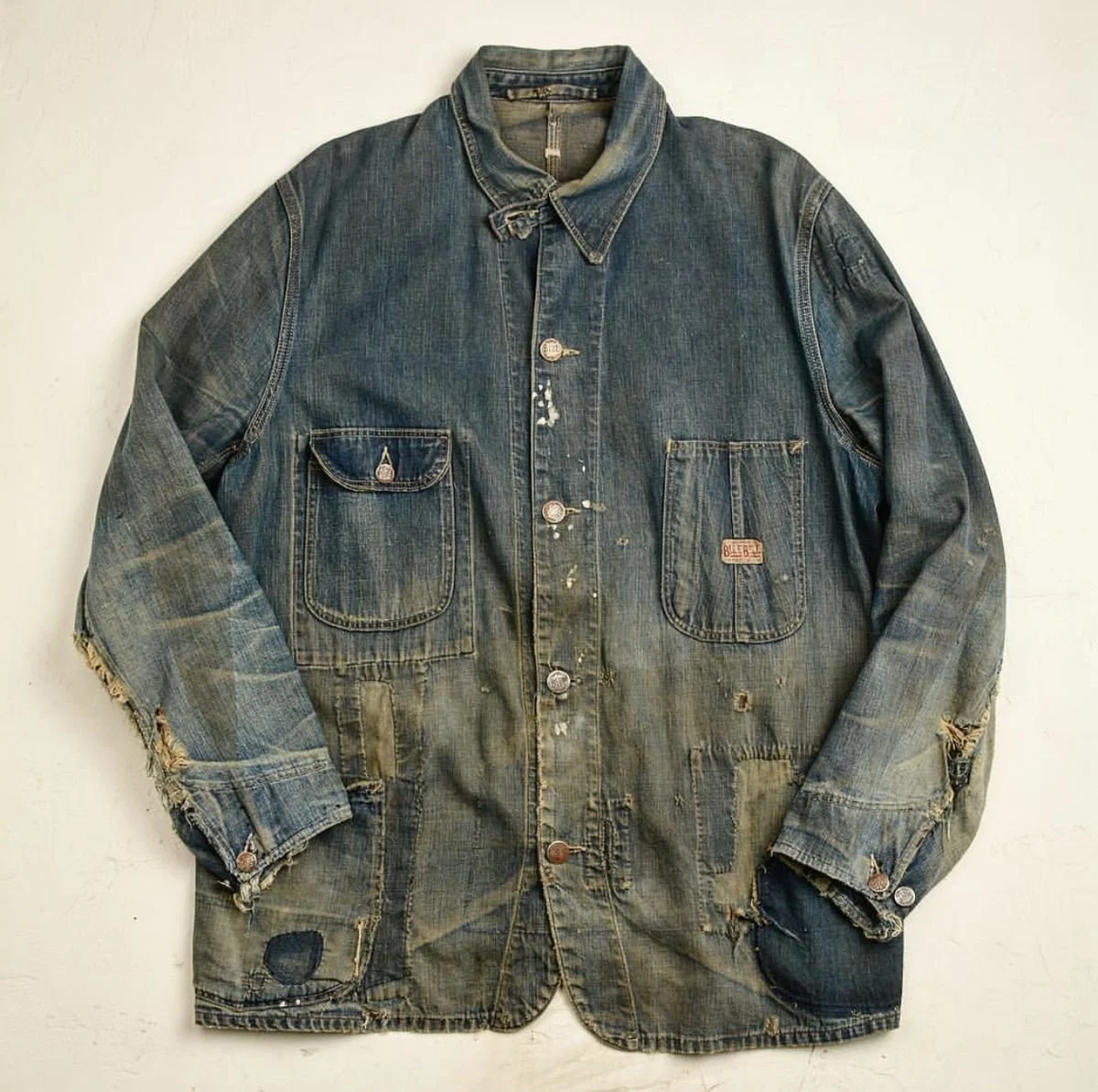
It is worth separating the chore pant from the garment it is most often filed next to on a moodboard: the chore coat. AVANT has told that story elsewhere, and it is a different one, a French garment, born of a different fabric tradition, that crossed the Atlantic and was reinterpreted by American eyes. The duck canvas chore pant is not a French import reinterpreted; it is a homegrown American answer to an American problem, built out of a maritime cloth that happened to be manufactured domestically in quantity, and shaped almost entirely by the demands of railroad and farm labor rather than by any European workwear lineage. The two garments end up in the same wardrobe today, but they did not start in the same place.
Hamilton Carhartt and the Railroad Bargain
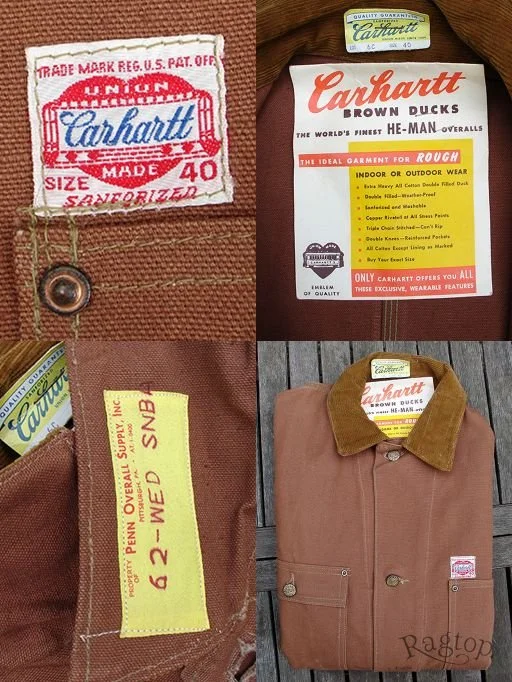
No single company did more to turn duck canvas into a trouser than Carhartt, and the company's founding story is smaller and stranger than its current scale suggests. Hamilton Carhartt, born in 1855 in Macedon Lock, New York, started the business in Detroit in 1889 with two sewing machines and five employees. The company's first products were, in its own words, "made exclusively of denim and duck canvas," sold under the plain promise of "honest value for an honest dollar." The original logo paired a train car with a heart, a small visual pun, Car plus Heart, that also happened to name the company's first customer base.
By the 1890s, Carhartt had pivoted specifically toward railroad workers, and the collaboration went both directions: the company worked with the men actually wearing the bib overalls to refine the cut and construction around what the job demanded, rather than designing in isolation and hoping it held up. That is a small detail, but it is the actual mechanism by which "workwear" earns the word. The company itself changed shape twice in the following decades, renamed Hamilton Carhartt Manufacturer, Inc. in 1905 and then Hamilton Carhartt Cotton Mills in 1910, and within two decades of its founding it had expanded well beyond Michigan, with plants operating in Liverpool, Vancouver, and Paris by the 1910s and 1920s.
Reinforced for Work: Rivets, Triple Stitching, and the Double Knee
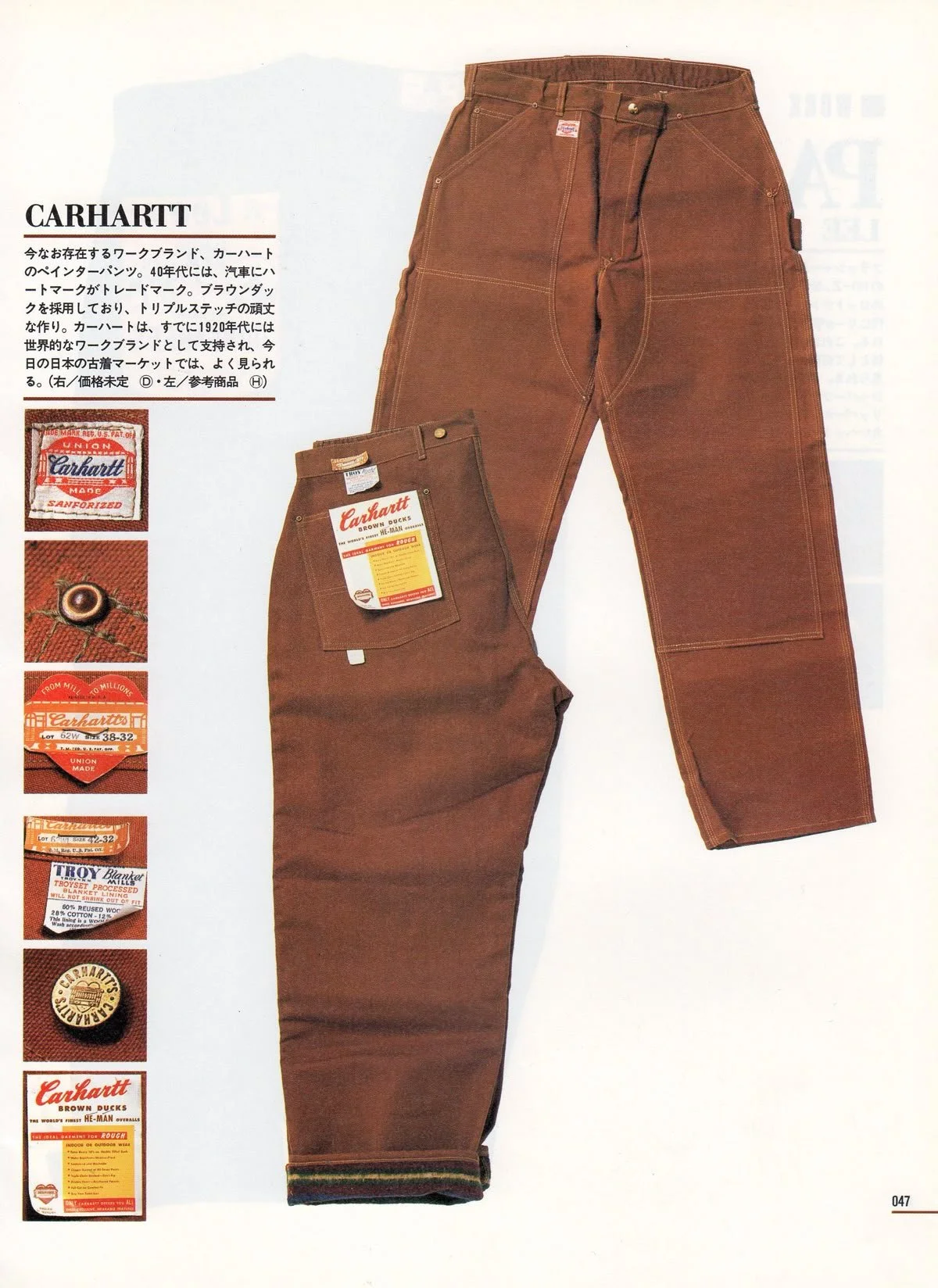
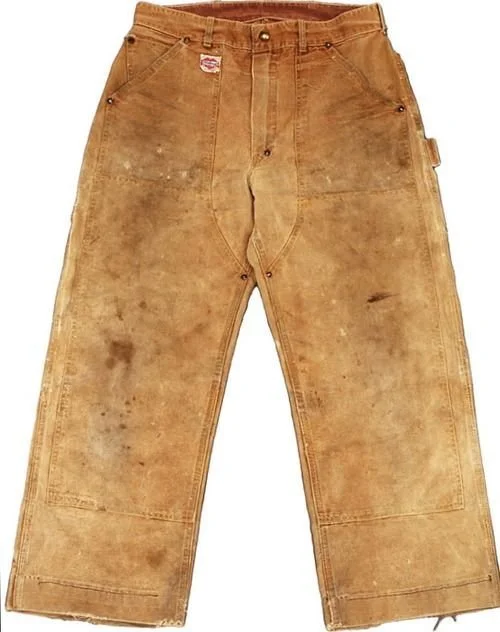
The engineering of a duck canvas chore pant is not incidental to its appeal; it is the appeal. Carhartt's signature construction runs on 12-ounce cotton duck, triple-stitched at the seams, with reinforcing rivets placed at the exact points where a work trouser fails first: pocket corners, the base of the fly, anywhere a tool or a knee puts repeated stress. The same logic that shaped the original railroad bib carries through to the line's modern flagship, the B01 loose-fit firm duck double-front dungaree, where a second layer of canvas is built directly into the knee and thigh, the two places a laboring trouser wears out before anything else does.
This is worth dwelling on for anyone shopping the category today, whether the goal is a genuine work pant or a considered wardrobe piece: the double-knee construction, the bar-tacked stress points, the un-sanded, slightly stiff hand of raw duck canvas that softens over months rather than one wash, are not aesthetic choices. They are load-bearing decisions that happen to look good, which is a different and more durable kind of appeal than a pant designed to look good first.
Depression, War, and the Back-to-the-Land Years
Carhartt's history is not a straight line upward. The Great Depression forced real downsizing, and the company's response, a "Back to the Land" campaign aimed squarely at farmers and ranch workers rather than the railroad crews it had started with, was as much a survival strategy as a marketing one. World War II brought a resurgence, as it did for most American workwear manufacturers supplying a labor force that had shifted into wartime industry. The company has stayed family-owned through all of it: 135 years on, it remains a family business into its fifth generation.
From Job Site to Runway
The chore pant's second life began quietly and then all at once. Carhartt's sales in Japan started in 1987, well before most American workwear brands had any real awareness of the Japanese collector market that would go on to obsess over American duck canvas, denim, and military surplus. The company made its first New York fashion show appearance in 1991. In 1994, Carhartt licensed its Work In Progress line, Carhartt WIP, to the Swiss designers Edwin and Salomée Faeh, a decision that effectively split the brand into two parallel tracks: the original workwear house still outfitting people who kneel on concrete for a living (BtoB), and a European-run streetwear label building on the same silhouette for people who do not (BtoC).
Both tracks are, in the end, selling the same fundamental object: a trouser built from sailcloth, reinforced like a tool, and toughened by the very labor it was designed to survive. That duality, useful object first, cultural object second, is the throughline of nearly everything AVANT covers under the workwear banner, and the chore pant may be the cleanest single example of it in the American wardrobe.
What to Look For, and What to Read Next
For anyone building a chore pant into a considered wardrobe rather than buying it as a costume, a few things are worth checking before anything else. The duck weight matters most: heavier canvas, generally 12-ounce and up, holds its structure and develops the deep creasing and fade patterns collectors look for, where a lighter duck goes soft and shapeless faster than it develops character. Whether the knee is reinforced with a genuine double layer of canvas rather than a printed panel is the next thing to check, since that is the difference between a pant built to be worked in and one built to look like it. Rivets and bar tacks should sit at real stress points, the base of the fly, the corners of the pockets, rather than scattered decoratively across the garment. And raw, unwashed duck canvas will feel stiff and slightly cardboard-like at first; that is correct, not a flaw, and the fabric only becomes what it is meant to be after months of the exact abuse it was engineered to survive. Vintage Carhartt from the pre-WIP era, and comparable duck canvas trousers from Dickies and Engineered Garments, reward the same checklist.
AVANT's own Anthology of American Workwear traces this same lineage in more depth, from the Gold Rush-era origins of American work clothing through to the copper rivet's invention, and the shorter Untold Stories of Rare Workwear Brands e-book is a lower-priced companion for readers who want the deeper cuts. Read alongside our earlier piece on Carhartt's broader history, this is the trouser that did the work while denim got the credit.
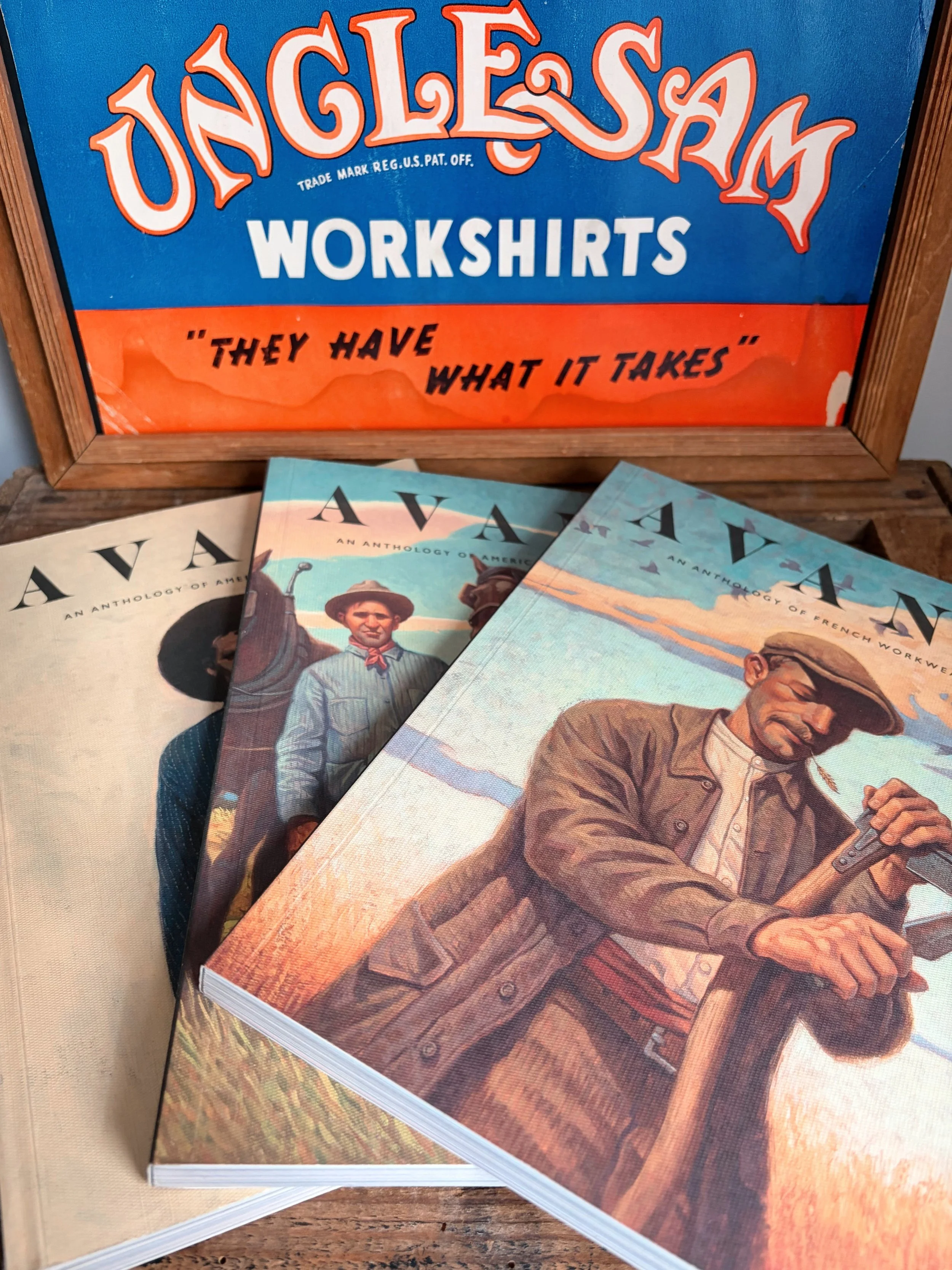
From American railroads to French ateliers.
A focused exploration of workwear through three volumes, tracing its origins, function, and lasting influence on modern style.
$147 → $109
Bundle price, save 38$.
What’s inside:
1. An Anthology of American Workwear
The foundations: garments built for labor, durability, and purpose.
A deeper dive into the evolution of workwear and its influence across cultures and generations.
3. An Anthology of French Workwear
An exploration of workers, farmers, and peasants during the 19th and 20th In France.
Product details (per book):
Softcover
196 pages
170 × 240 mm
Full color
Language: English
Shipping: Worldwide