
The Rush to the Great Outdoors
What comes to mind when you think of America? The smell of burgers on a grill? Cowboys riding across the screen? Or perhaps an open road, stretching towards mountains you have yet to see. For many, the country’s appeal lies in that sense of possibility: vast distances, unfamiliar landscapes, and national parks worth crossing the country to experience.
The American road trip begins with a departure. You load the car, pack sturdy boots and a jacket for uncertain weather, and leave the familiar arrangements of home behind. Like setting sail, there is pleasure in the preparation and in knowing that, for a while, your days will follow a different course.
But how did this become a way to spend a holiday? What persuaded Americans to trade their beds for tents, cook outdoors, and travel miles to spend time in the mountains? This is the story of what drew them to the national parks, what they hoped to find there, and what they carried along.
When the mountains changed the summer plans
Picture a summer on the New England coast: handsome houses overlooking the water, afternoons by the ocean, lobster rolls eaten in the salty air. Think of the world in a Kiel James Patrick photograph, where even a leisurely day at the seaside seems to call for a well-chosen outfit.
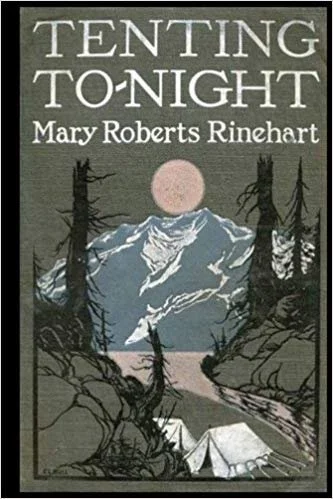
Tenting To-Night by Mary-Roberts Rinehart
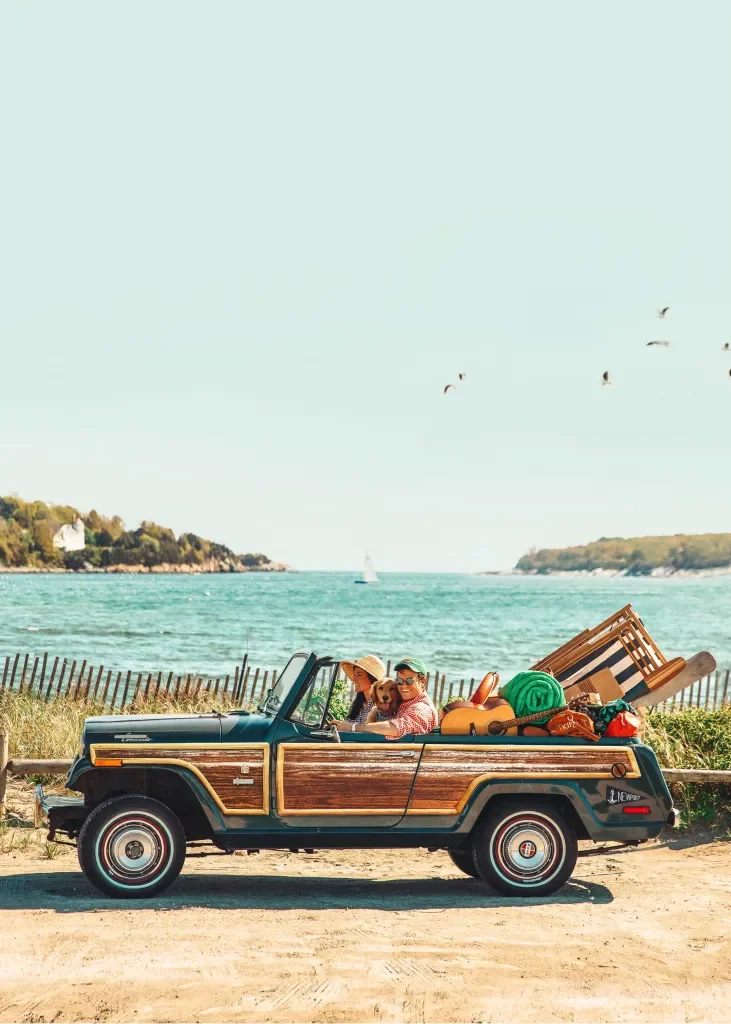
Kiel James Patrick, her wife and dog on a roadtrip in New England.
A rented house on that coast was precisely what American novelist Mary Roberts Rinehart had in mind for her summer. In her 1918 travel memoir Tenting To-night, she describes making comfortable holiday plans only to find herself drawn back to the family’s fishing tackle, sweaters and worn riding boots as June approached. Forget about the seaside rental. Evenings were soon spent poring over maps and packing lists for a camping expedition in the mountains.
What’s interesting in her novel is the fact she’s capturing the anticipation of the outdoor holiday before the journey has even begun. Boots are gathered, equipment inspected, routes discussed. A family accustomed to domestic comforts is preparing for days on horseback and nights in camp. By the time they leave, the expedition has already occupied the house.
The mountains seen as a remedy for city life
By the beginning of the twentieth century, advocates of outdoor life were offering a clear reason to leave.
In Our National Parks, published in 1901, John Muir described “tired, nerve-shaken, over-civilized people” discovering that “going to the mountains is going home.” He addressed readers whose work and duties left them only a few weeks to get away, presenting the mountains as a place to recover from the demands of everyday life.
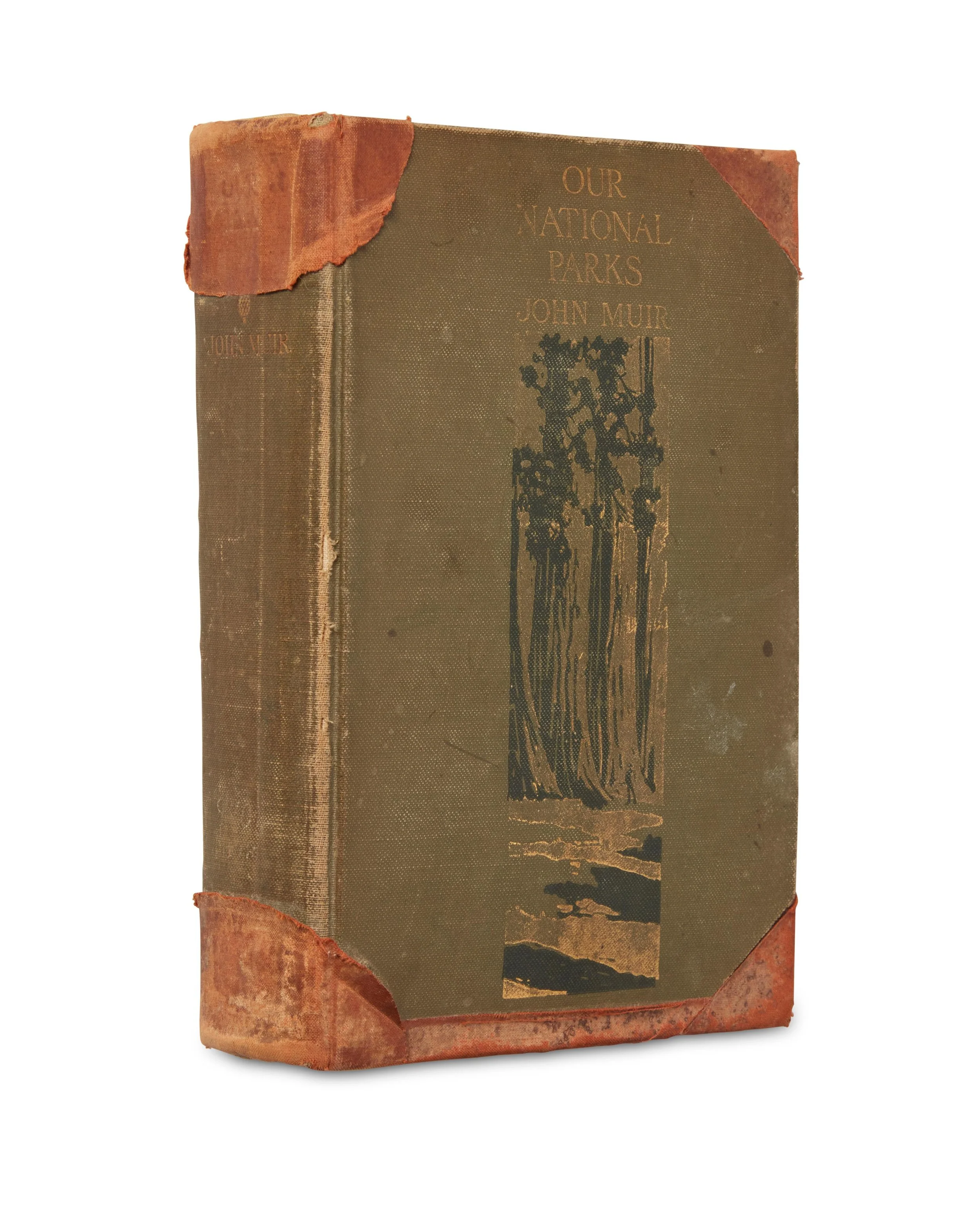
“Our National Parks” written by John Muir.
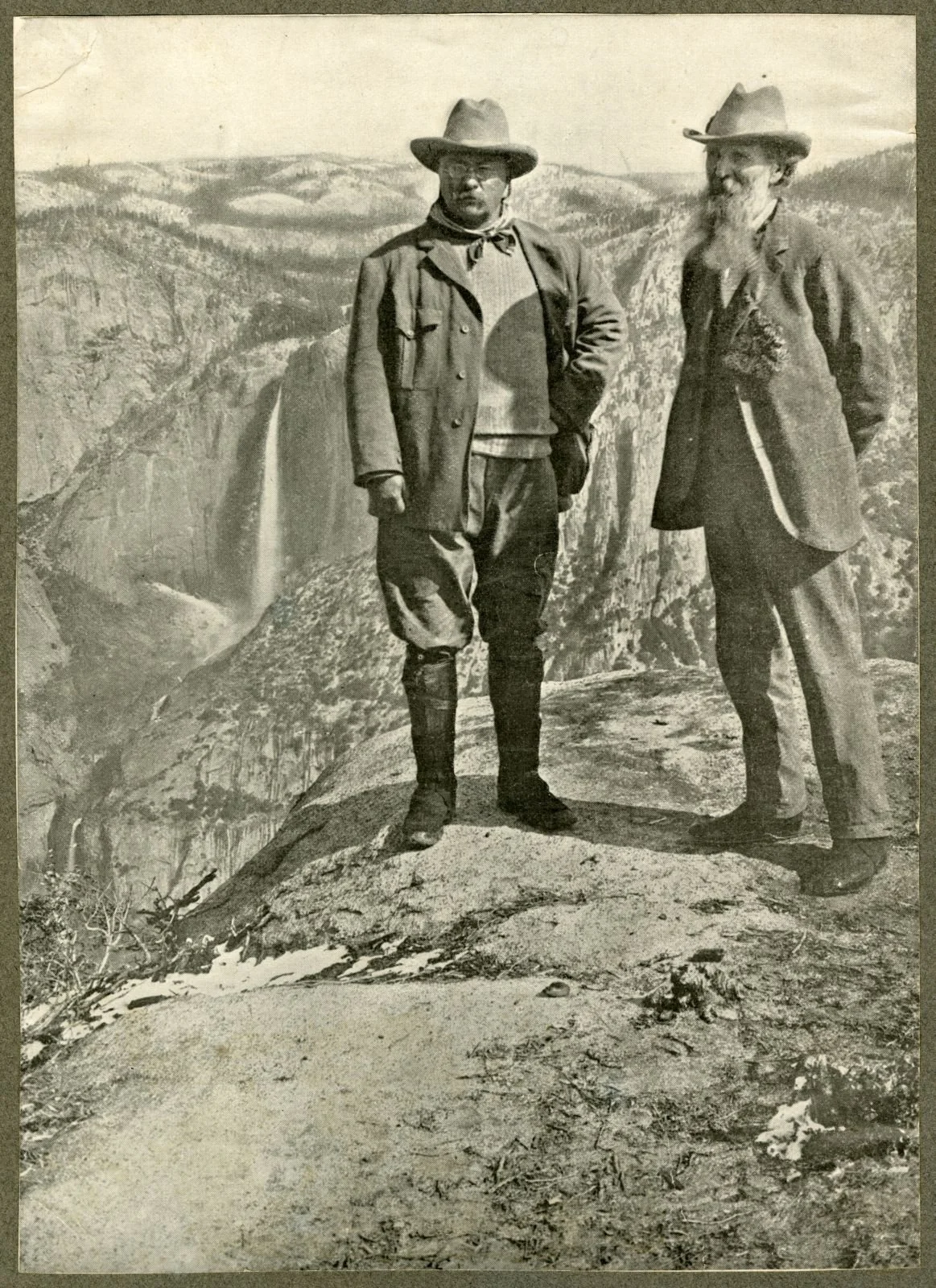
President Roosevelt and John Muir. [1903.] Theodore Roosevelt Birthplace National Historic Site. Theodore Roosevelt Digital Library. Dickinson State University.
Read in 2026, his words feel almost written for our own time. The vocabulary of exhaustion has changed, but the feeling is familiar: crowded days, constant availability, the difficulty of finding a moment that belongs to you. For a reader worn down by city life, Muir’s invitation still holds its appeal. A few days in the mountains promise room to breathe, distance from familiar obligations, and a pace shaped by daylight rather than appointments.
There is a physical dimension to that invitation, too. A working day can leave us exhausted after barely moving from a chair. The problem extends well beyond the office: estimates published by the World Health Organization in 2024 found that almost a third of adults worldwide did not meet recommended physical activity levels.
An outdoor holiday creates opportunities to put movement back into the day. Walking to a lake, climbing a trail, carrying equipment and pitching a tent give physical effort an immediate purpose. The distance to cover and the work of making camp become part of the experience.
For those choosing an active stay, leaving home can mean exchanging one kind of tiredness for another: hours spent walking, legs that have carried you somewhere, an appetite at the end of the day. The landscape offers a destination, and getting there asks something of the body.
A home in the woods or a home carried along ?
Slightly earlier, in the Adirondacks, the desire to leave the city had already acquired an architectural form.
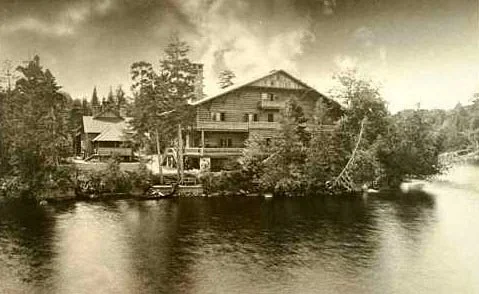
Sagamore Lodge
From the late nineteenth century, wealthy urban families commissioned seasonal retreats beside the region’s lakes. As we explored in The Adirondack Great Camp: America’s First Heritage Interior, these retreats gave outdoor life a domestic setting. Guests could spend their days beside the water and return to furnished rooms.
At Sagamore, successive improvements included central heating, hot and cold running water, and eventually electricity. The forest lay beyond the door; considerable effort went into making life comfortable on its other side.
The national park camper faced a similar practical question with a different set of resources: what would make a stay outdoors possible, and how much comfort could come along?
No car, no problem
One thing is clear and it doesn’t sound obvious for all: the automobile did not invent the national park vacation.
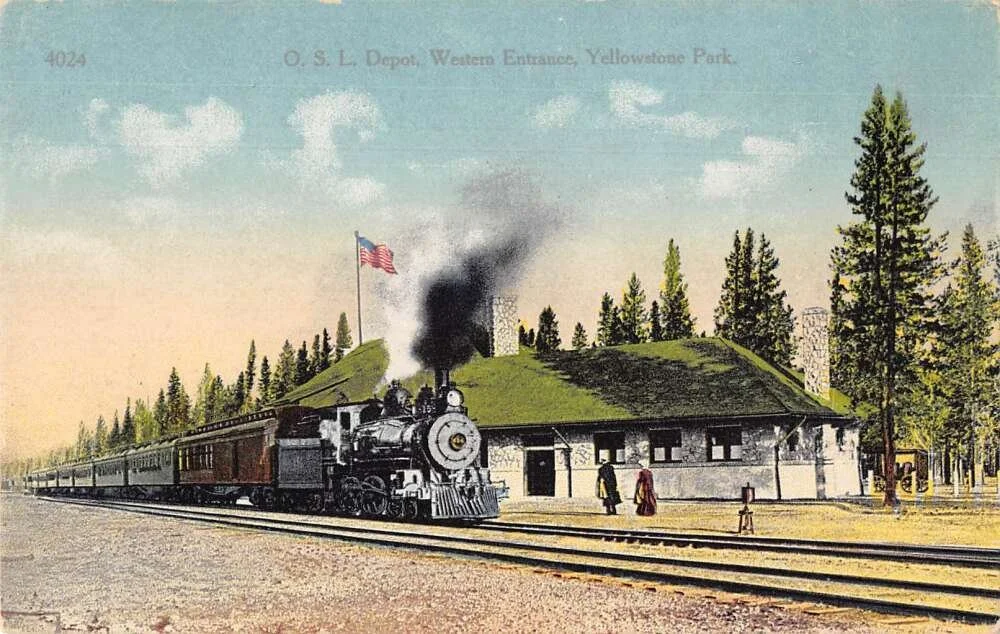
OSL Depot, Yellowstone Park.
Early Yellowstone visitors were not allowed to come with their car. Therefore, they arrived by train at gateways such as Gardiner and West Yellowstone, then travelled through the park by stagecoach, wagon or horseback. Those who could afford them stayed in hotels at Mammoth, Lake, Canyon and Old Faithful.
From here, visitors gathered to watch geyser eruptions and travelled to the canyon and waterfalls.
Camping offered another arrangement. In the late nineteenth and early twentieth centuries, the Wylie Permanent Camping Company and the Shaw and Powell Camping Company operated tent camps in Yellowstone. Their guests travelled between sites in company coaches and stayed in established tent communities. The National Park Service describes these as more affordable alternatives to the park’s hotels and stage lines.
A visitor could therefore sleep under canvas without organizing an independent expedition. Transport and accommodation were supplied. The outdoor holiday already offered degrees of comfort, expense and assistance.
That aspect matters when asking why people left home because camping could express a desire for outdoor life, but it could also make a journey financially possible.
When the family could drive itself
Yellowstone officially admitted automobiles in 1915, following many years of resistance. Its wagon roads proved difficult for early cars, but services developed around the new traffic. A Few years later, visitors could obtain gasoline and repairs at several locations inside the park. In 1920, more than half its approximately 80,000 visitors arrived by private automobile.
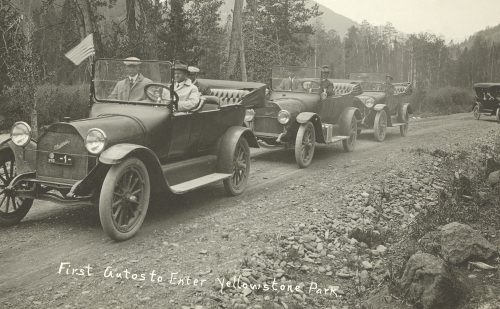
Dignitaries in a White Motor Company car lead the official automobile entourage in Yellowstone Park on August 1, 1915. Courtesy of M.Miller.
The car allowed visitors to carry their own supplies and follow their own itinerary.
Free public automobile camps were being developed, with water, firewood, cooking grates and sanitation facilities.
The journey could increasingly be organized around a household’s own possessions. Shelter and bedding travelled with the visitors, packed and unpacked as they moved. The park supplied some of the infrastructure; the family brought the rest.
The Library of Congress identifies the autocamping craze of the 1920s as an important stage in the popularization of the American road trip, associated with freedom and contact with nature. After the Second World War, the family vacation by car reached a broader public.
What went into the luggage?
Surviving accounts give us a more precise answer than a modern reconstruction of a “heritage” camping wardrobe.
Rinehart’s family sorted sweaters, riding breeches, puttees, ponchos, boots, felt hats and fishing equipment. Her own riding clothes were worn and patched. In Through Glacier Park published in 1916, she also mentions a camera, a blanket, spare boots, toiletries and sunburn lotion among the things carried on the journey.
Yellowstone’s official advice in 1920 recommended substantial clothing, sturdy footwear and a raincoat or another serviceable outer layer. Dusters and heavy coats could be rented for park trips which would provide an economical solution as those outerwear garments were often expensive and not worn everyday back in town.
In a nutshell, what we expect from outerwear is the following : The clothing answered the conditions. Visitors needed to manage rain, rough ground and hours spent travelling outdoors.
American outfitters were serving related needs, although their products came from different pursuits. L.L.Bean promoted its hunting footwear through mailers to out-of-state sportsmen in 1912 and introduced its Field Coat in 1924, originally calling it the Maine Duck Hunting Coat. Filson’s Cruiser, patented in 1914, was developed for timber cruisers surveying forest stands. These were hunting and working garments with documented purposes, rather than a uniform invented for national park visitors.
Beyond clothing, a growing market offered portable household equipment. A 1917 canvas-goods catalogue examined by Smithsonian Libraries advertised an automobile camping trailer and a folding sheet-iron camp stove. Its products provided ways to carry shelter and cooking equipment on the road.
The packing list had to account for several days of living: somewhere to sleep, something to cook with, protection from the weather, and equipment for the activities that had made the journey worth taking.
How much comfort could come along?
Outdoor equipment could be elaborate.
Around 1926, friends gave Stephen Mather, the first director of the National Park Service, a camping outfit whose surviving contents include a down sleeping bag, wool blankets, a pillow and a collapsible water bucket. It was an expensive personal outfit, rather than a standard family kit, but it shows the comfort available to a well-equipped traveller.
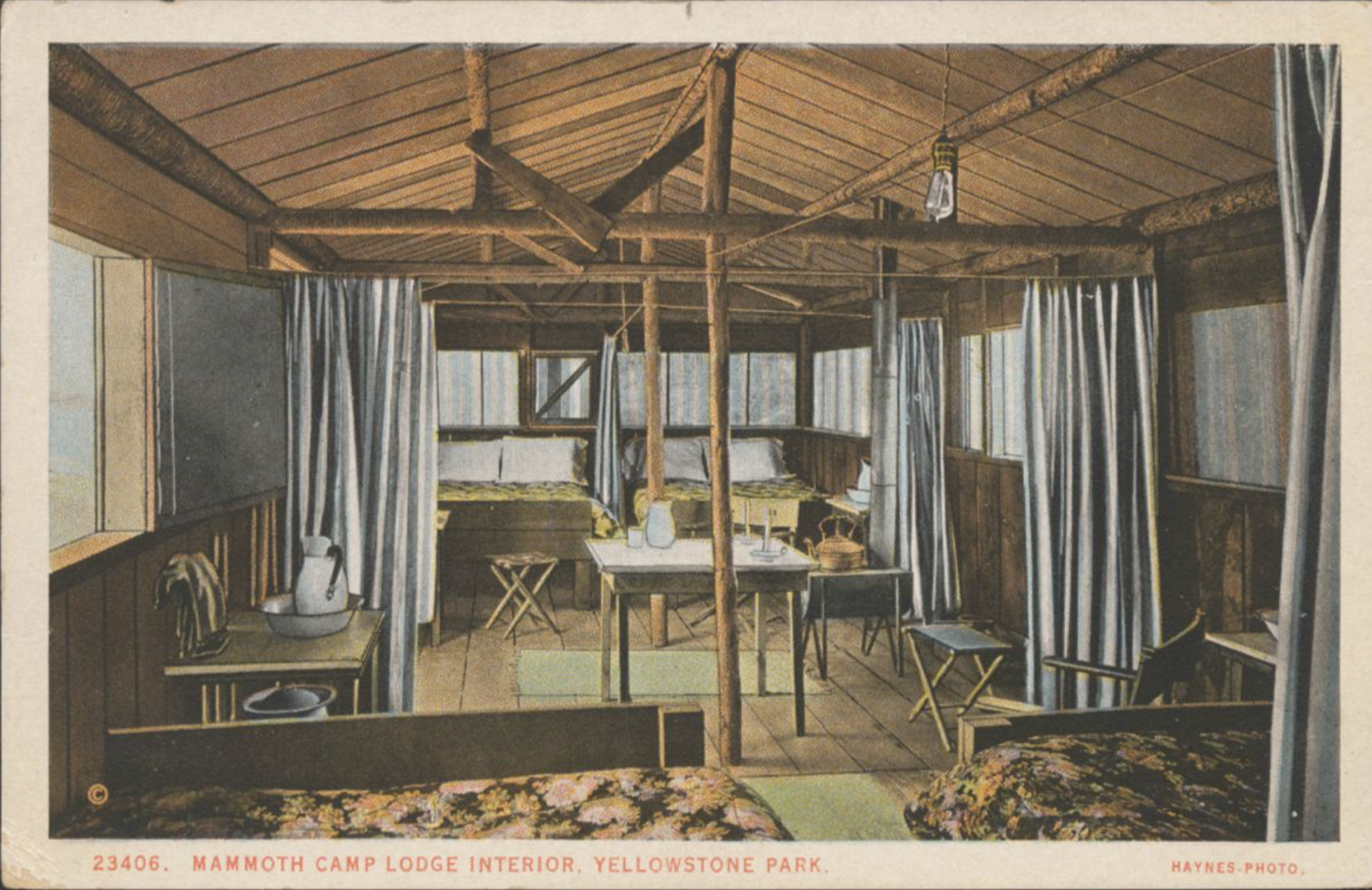
Mammoth Camp Lodge, Yellowstone Park. 1923.
Park accommodation offered its own comforts. Pendleton’s Glacier National Park blanket was first woven in 1916 for sale in the park’s historic lodges, a wool textile connected directly to the experience of a park stay.
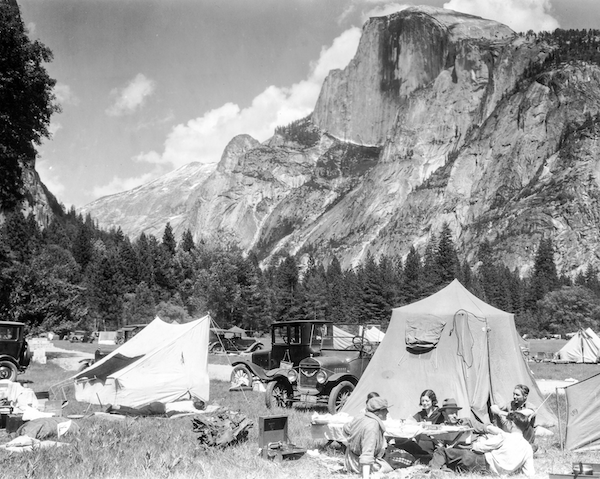
Overflow Crowd of Campers in Stoneman Meadow, Yosemite National Park, 1915. Bancroft Library, University of California, Berkeley.
Later trailers carried the arrangement further. The Smithsonian’s history of family camping describes 1930s trailers with folding beds, stoves and sinks, allowing families to travel while reducing expenditure on hotels and meals. Its account also identifies family companionship and relief from everyday pressures among the attractions of autocamping.
Travellers could choose how much inconvenience they accepted. A bed, a cooked breakfast and familiar company could all accompany a change of surroundings.
Adventure with somewhere to sleep
After the Second World War, affordable cars, rising incomes and improved roads brought more Americans into the national parks. Visits across the National Park System rose from 17 million in 1940 to 56 million in 1956. The Infrastructure program Mission 66, launched that year, expanded the facilities needed to welcome them. The family road trip was becoming an established way to spend a holiday.
For visitors following park roads and staying in equipped campgrounds, outdoor travel could offer adventure within manageable arrangements. You could reach the landscape by car, find a place to sleep and prepare a meal. The practicalities were increasingly provided for, while the setting made familiar activities feel different.
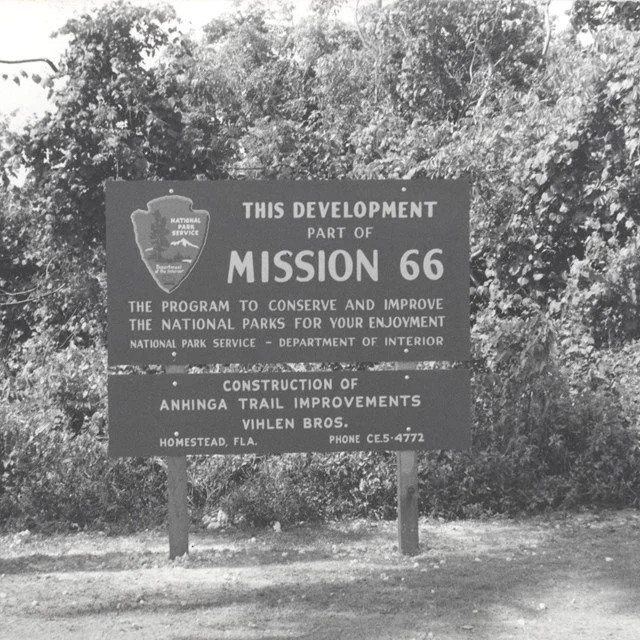
Mission 66 program
Cooking meant a stove beside the tent. Sleeping meant canvas overhead and a blanket pulled closer as the temperature dropped. Getting dressed meant checking the weather before choosing a jacket. Ordinary tasks required a little more attention, and that small adjustment became part of the pleasure.
This is the appeal of the outdoor holiday: enough unfamiliarity to interrupt routine, with enough comfort to enjoy the interruption. A little inconvenience gives the day its stories: the tent that takes longer to pitch than expected, the chilly morning, breakfast cooked outside. These rituals belong to the folklore of camping as much as the mountain view.
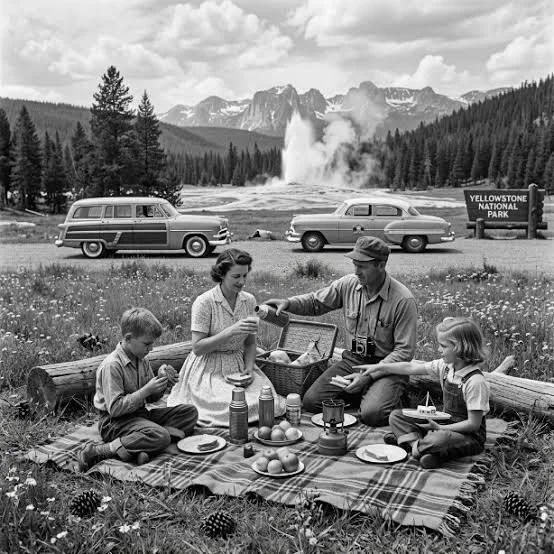
Family gathering in Yellowstone, 1950s.
The Adirondack Great Camp had offered its wealthy guests a furnished retreat in the woods. The equipped campsite approached the same practical question on a smaller, temporary scale: how to live comfortably somewhere that feels far removed from home.
The result is a kind of travel close to home that can still feel exotic. Within your own country, you can enter a landscape that changes how you eat, sleep and pass the hours. The comforts remain recognizable. The pleasure lies in experiencing them somewhere else, in a slightly different way.