The Western Bolero Jacket: Where Ranchwear Became Tailoring
Some jackets are made for weather, others are made for work. And then there are those made for Americana’s myth.
Without any surprise, the Western bolero jacket belongs to the last category.
Cropped at the waist, embroidered across the chest in looping florals or sharp arrow motifs, cut in fluid rayon gabardine that moves like stage curtains . More than ranchwear, it was California inventing its own version of the American West.

1950s Mac Murray of California Gabardine Jacket sold by Vintage Mushroom
The West, reinvented
By the 1940s, the real working cowboy had little use for embroidery. Denim, leather, canvas: these were garments of necessity. But California was not interested in necessity.
Hollywood had already begun rewriting the frontier. Theatrical rodeos, country musicians migrating west…And tailors, particularly in Los Angeles and North Hollywood, saw an opportunity.
Among the most influential was H Bar C, a brand that transformed Western dress into something sharper, cleaner, and unmistakably modern.
They refined the silhouette:
Cropped waist-length cut
Sculpted shoulders
Smile-shaped yokes
Chain-stitch embroidery
Snap closures that caught the light
Goodbye ranch jacket. Hello Western tailoring!
The Cropped Silhouette
The word bolero suggests Spanish lineage. A short, waist-length jacket historically associated with matadors. In California, that proportion was adopted and reinterpreted.
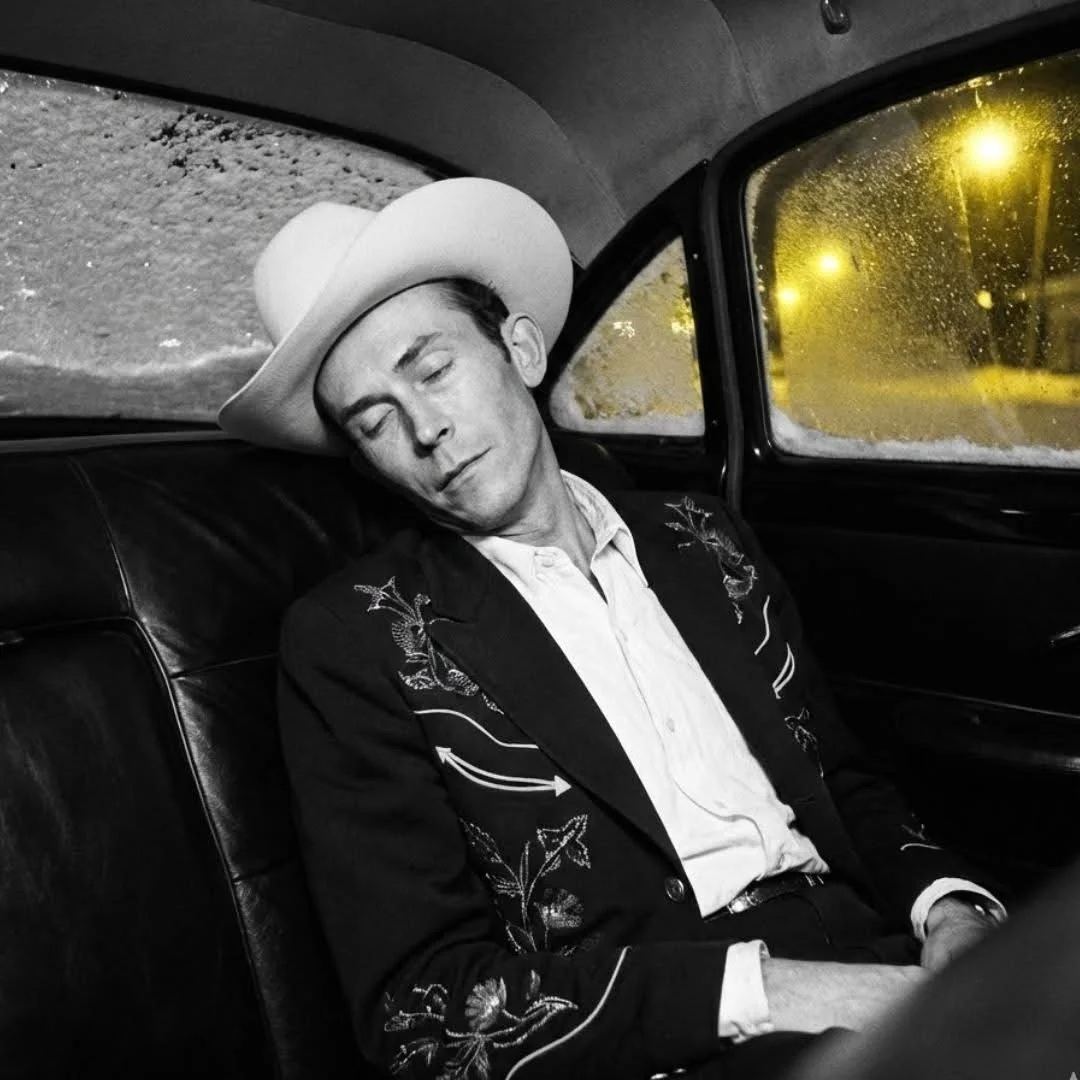
Hank Williams sleeping in his car
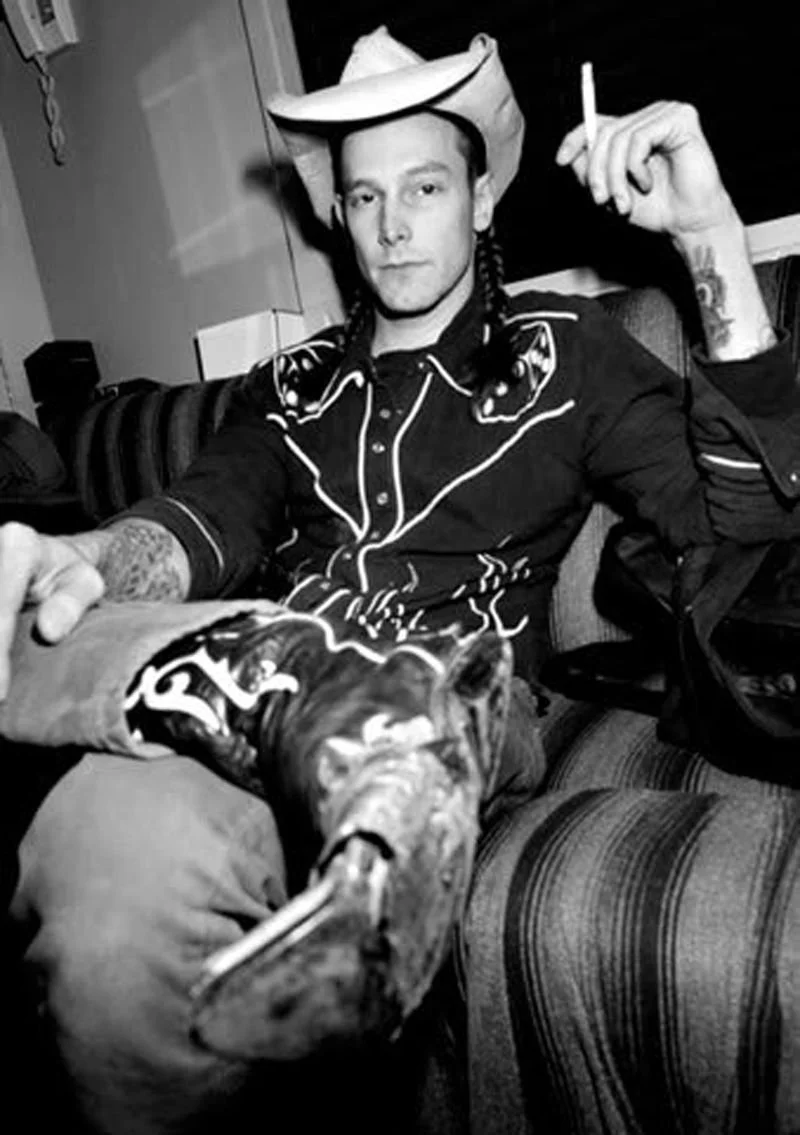
Hank Williams III, grand-son of Hank Williams, wearing the same Gabardine Jacket
Why cropped?
Because high-waisted trousers dominated the 1940s and 50s. A shorter jacket elongated the leg and emphasized the torso. On stage, it sharpened posture. Under studio lights, it defined the body.
The result was architectural.
The Western bolero jacket became a uniform for country performers and early rock musicians. Artists like Hank Williams wore embroidered Western jackets before rhinestones overtook Nashville.
Later, Gram Parsons would treat Western tailoring as cultural commentary blending tradition, psychedelia, and Americana into something both reverent and ironic.
But even Parsons’ flamboyance had roots in this earlier, more restrained gabardine era.
Gabardine: The Fabric of Movement
Rayon gabardine is central to understanding the jacket’s allure. Unlike stiff denim or heavy wool, gabardine drapes. It swings slightly when walking. It catches air on a stage. It moves.
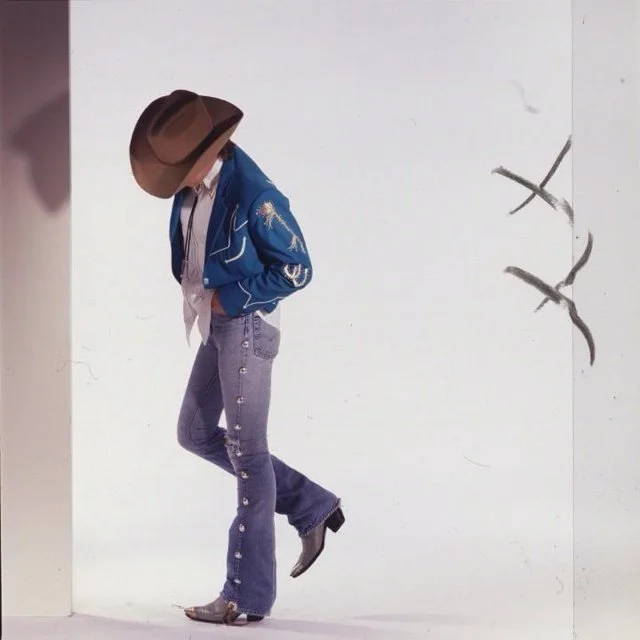
Dwight Yoakam
The fabric choice reveals the jacket’s true purpose: visibility.
These jackets were made for:
Television
Rodeo arenas
Honky-tonk stages
Film sets
And California, with its studios and sunshine, was the ideal laboratory.
Hollywood and the Myth of the West
Post-war America consumed Westerns voraciously. The frontier became a national fantasy.
Actors like Robert Mitchum embodied a relaxed, masculine Western style both on and off screen. The embroidered jacket blurred the line between costume and personal wardrobe.
This was the genius of mid-century Western tailoring: it made performance wearable.
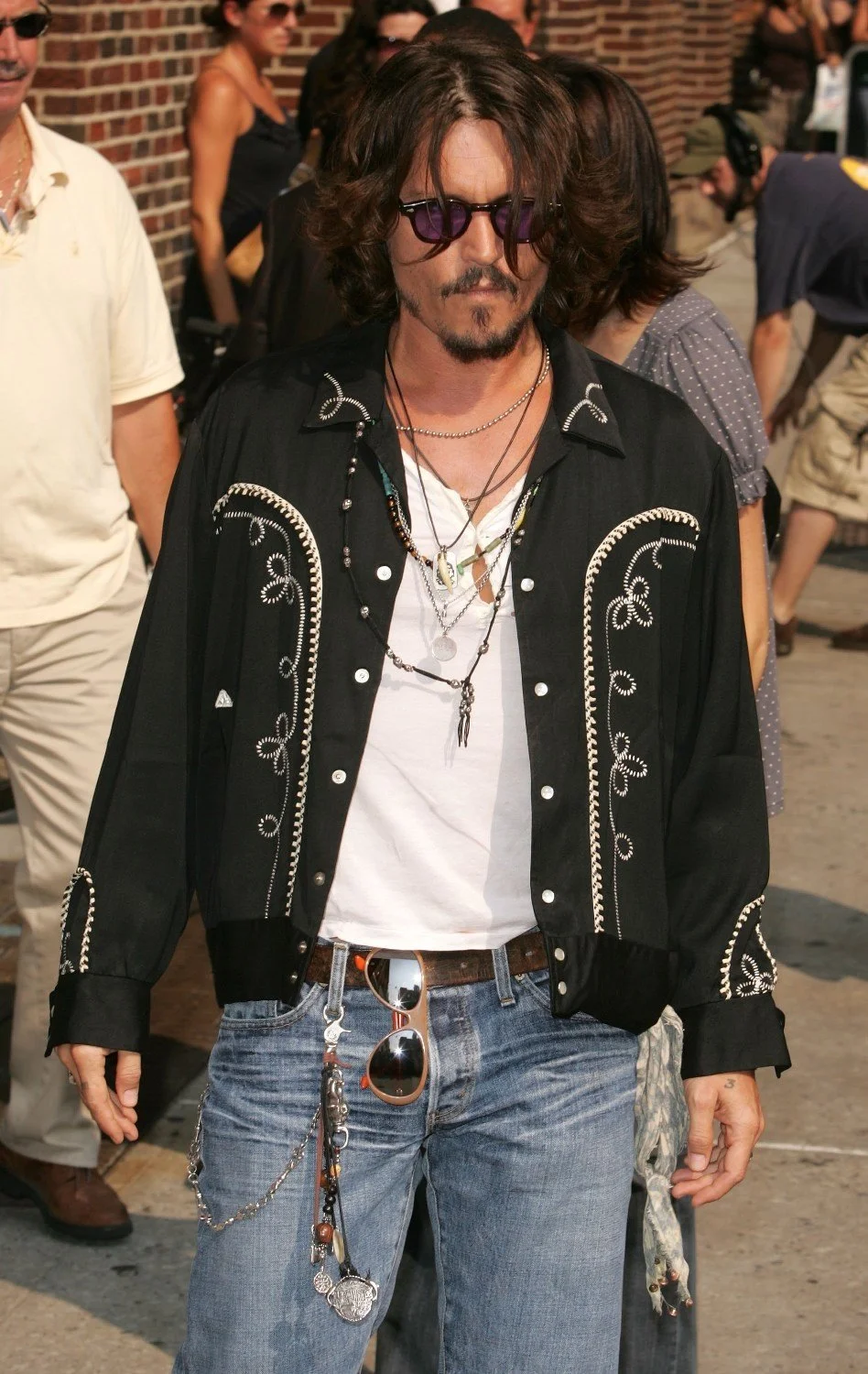
Johnny Depp wearing his Western Bolero jacket.
Decades later, figures like Johnny Depp would revive the black embroidered bolero jacket as an emblem of artistic nonchalance, proving its adaptability beyond the country stage.
From Ranchwear to
Rock ’n’ Roll
As rockabilly emerged in the 1950s, Western jackets migrated into youth culture.
The smile pockets, arrowhead accents, and chain stitching became part of a visual language of rebellion. One that was regional, not urban. It was West Coast cool.
By the 1980s, Dwight Yoakam would reintroduce the clean 1950s silhouette to a new generation, often wearing vintage or reproduction pieces from H Bar C.
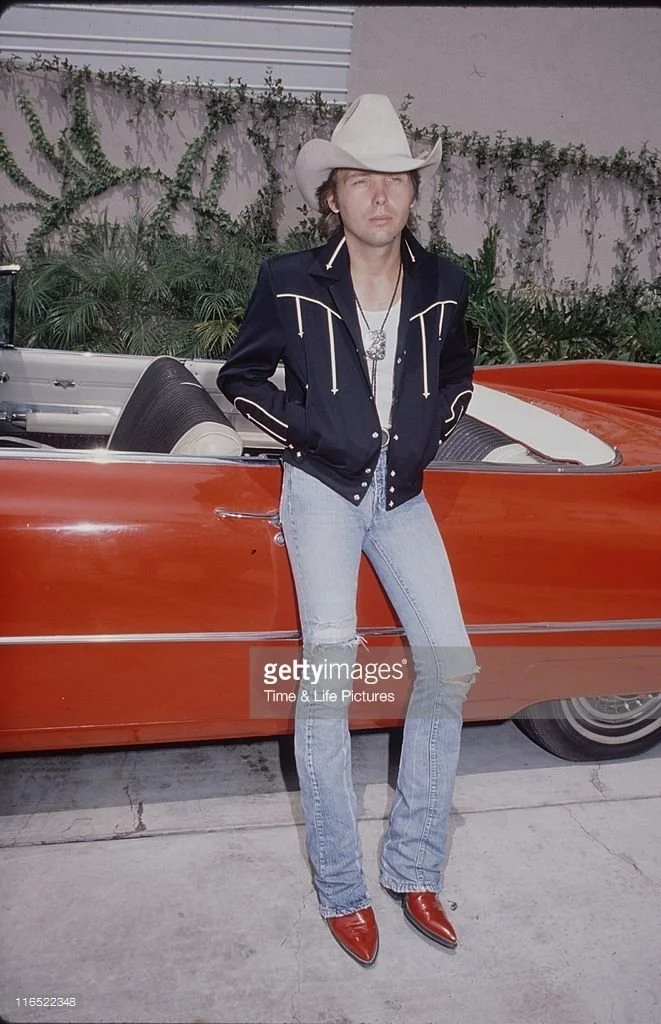
Dwight Yoakam, courtesy of Getty Images
The jacket had completed its cycle:
Workwear → Stagewear → Subculture → Heritage Icon.
AVANT Recommends: A Heritage investment in California’s Western Bolero Jacket
In today’s menswear landscape dominated by minimalism and technical fabrics, the Western bolero jacket feels radical.
It is unapologetically ornamental, carries regional specificity and refuses anonymity.
And perhaps most importantly, it reminds us that masculinity once embraced decoration without irony.
The jacket stands as a testament to a moment when California tailored its own mythology and exported it to the world.
When AVANT recommends a garment as a heritage investment, we are speaking about three things: construction, cultural permanence, and proportion. The Western bolero jacket satisfies all three.
First, construction. The originals, particularly those produced by mid-century California makers such as H Bar C, were cut in rayon gabardine with chain-stitch embroidery and sculpted yokes.
Second, cultural permanence. This jacket has crossed decades without losing its identity. It moved from ranch perimeters to television screens, from honky-tonk stages to rock venues, from mid-century California to global menswear collectors.
Third, proportion. The cropped cut is perhaps its most radical quality today. In a market flooded with elongated silhouettes and technical outerwear, the waist-length Western bolero restores balance when paired with high-rise denim or tailored trousers. It sharpens the torso. It honors the body’s architecture.
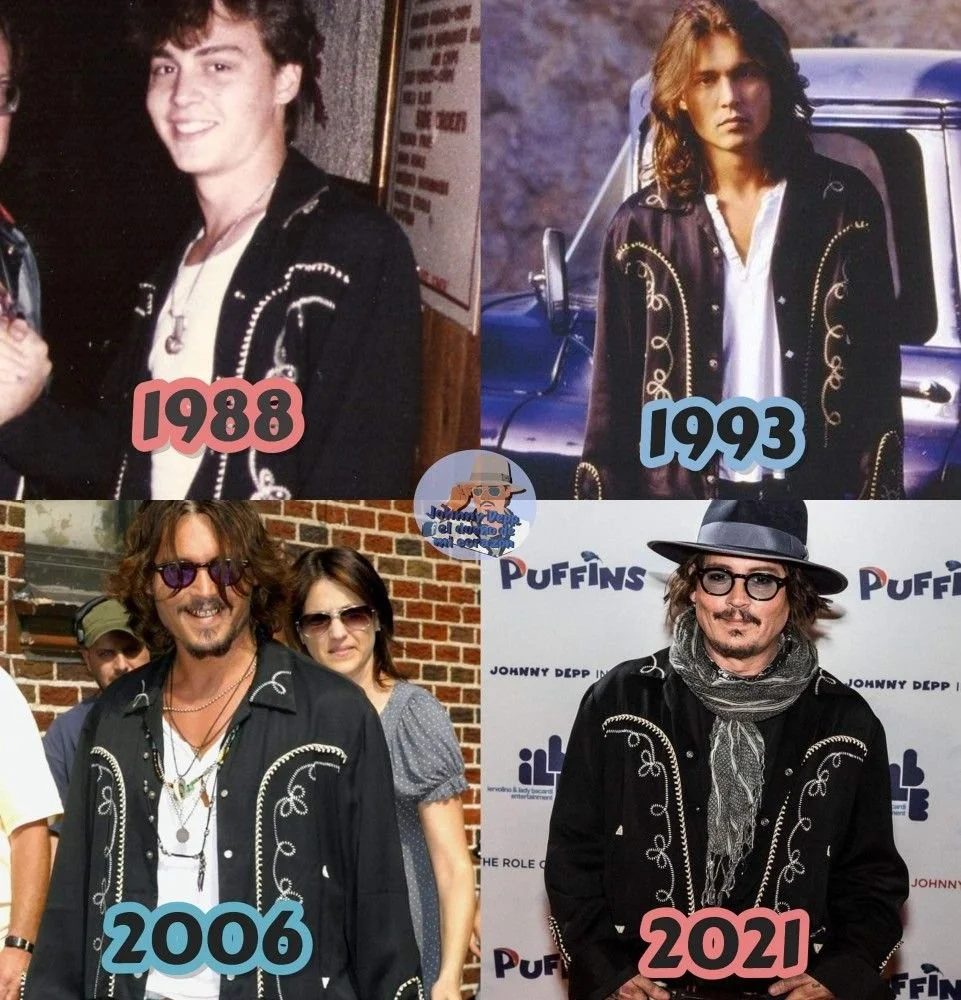
Bolero Gabardine Jacket worn by Johnny Depp, overtime.
To invest in a Western bolero jacket is to invest in narrative. It carries with it post-war optimism, California tailoring, and the romance of the American West not as fantasy, but as designed identity.
If you choose to acquire an original one, seek:
Rayon gabardine over polyester
Chain-stitch embroidery over flat machine satin
A slightly boxy mid-century cut over modern slim reinterpretations
Provenance, when possible
A heritage garment should age with you. The Western bolero jacket does exactly that quietly, structurally, and without compromise.
Otherwise, a few brands known for their high level of reproduction can match your expectations such as The Real McCoys or RRL.
Go Further
Books
An Anthology of Western Wear
A definitive overview of Western clothing history, including stagewear and mid-century tailoring.Nudie the Rodeo Tailor
Deep dive into Western stagewear and its evolution from ranch garments.
Archival & Institutional Sources
Autry Museum of the American West
Excellent archival material on Western clothing and performance wear.Smithsonian National Museum of American History
Houses Western stagewear and country music artifacts.Vintage H Bar C catalogs (1940s–60s)
Often available via collectors or online archives.