Mastering the Art of Americana Style: A Complete Guide for Men’s Fashion
Americana style doesn't start in a store. It starts in a factory, a field, a barracks. Denim, canvas, flannel, leather… All the clothes that define it weren't designed for fashion. They were built to last through hard labor, frontier winters, and military campaigns. What happened next is the story of how workwear became culture, and culture became the most copied aesthetic in modern menswear.
This guide breaks down the key elements, the styling logic, the icons who made it iconic, and points you toward the deeper references behind every garment.
IN THIS GUIDE
→ The Origins of Americana Style
→ Key Elements: The Essential Garments
→ The Fabrics Behind the Style
→ Styling Tips for the Americana Look
→ Americana Style Icons
→ Heritage Brands Worth Knowing
→ Build Your Americana Library
The Origins and Evolution of Americana Style
Americana style is rooted in the frontier expansion of the 19th century. Early pioneers, cowboys, ranchers, and industrial workers wore durable, functional clothing (denim, work boots, plaid shirts) out of necessity. These garments symbolized resilience and practicality, not fashion.
In the 1950s and 60s, that utility was recontextualized. Marlon Brando, James Dean, and Steve McQueen wore workwear-derived pieces as acts of rebellion. By the 1970s and 80s, the working-class aesthetic had been absorbed into mainstream culture. Today, Americana sits at the intersection of heritage craftsmanship and contemporary fashion, adopted by designers from Virgil Abloh to Raf Simons, referenced in every major menswear collection.
The thread running through all of it: garments that were built for a purpose, and lasted precisely because they were.
Key Elements of Americana Style
1. Denim: The Foundation

Denim, specifically blue jeans, is the cornerstone of Americana. Originally patented by Levi Strauss & Co. in 1873 as workwear for miners, the garment spent a century as labor clothing before the post-war youth culture made it a symbol of rebellion. Today denim appears in jeans, jackets, shirts, and accessories across every price point but the logic of selvedge construction, raw indigo, and honest aging remains the reference point for anyone serious about the category.
Key brands: Levi's (1873), Wrangler, Lee, Samurai Jeans, Oni Denim and for contemporary edge, A.P.C. and Acne Studios.
2. Plaid Flannel Shirts
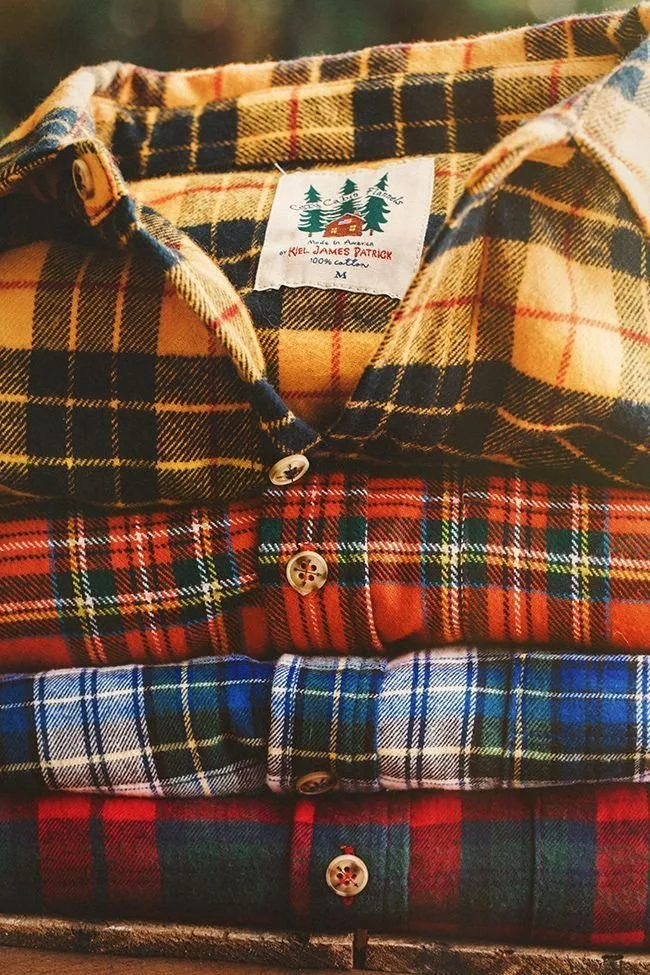
Flannel was the fabric of the American Northeast for loggers, mill workers, farmers. The buffalo check and tartan patterns weren't chosen for aesthetics; they simply showed up in the available wool stock of the late 1800s. Pendleton Woolen Mills, founded in 1909, standardized the patterns that are now synonymous with the look. A heavy flannel shirt remains one of the most versatile and enduring pieces in Americana, worn open as a light jacket, tucked into heavy denim, or layered over a henley.
3. Leather Jackets
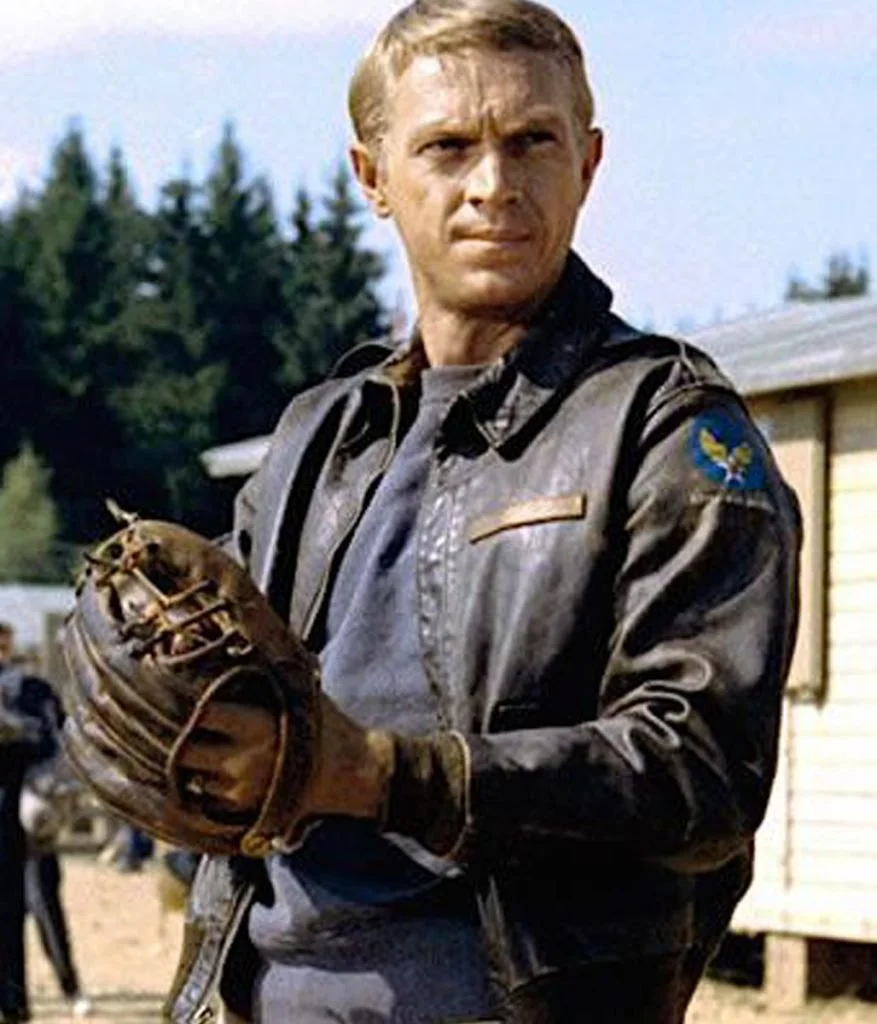
The leather jacket entered Americana via two routes: the military (A-2 flight jackets, M-422 deck jackets) and the motorcycle subculture (Schott NYC's Perfecto, 1928). Both origins are essential. When Marlon Brando wore a Perfecto in The Wild One (1953), it became a cultural object as much as a garment. Within years, British schools had banned it. A well-sourced leather piece, distressed, structured, earned, is one of the defining investments in a serious Americana wardrobe.
Key brands: Schott NYC, Aero Leather, Lewis Leathers, RRL.
4.Work Boots

American work boot construction ( Goodyear welt, full-grain leather, steel shank ) was engineered for decades of use, not seasons. Red Wing, founded in 1905 in Minnesota for ironworkers and miners, remains the reference. Wolverine 1000 Mile boots (originally for Michigan loggers) are another. The category has been extensively reinterpreted by Japanese heritage brands and European fashion houses, but the original American construction logic remains unmatched for longevity.
5. The Chore Coat
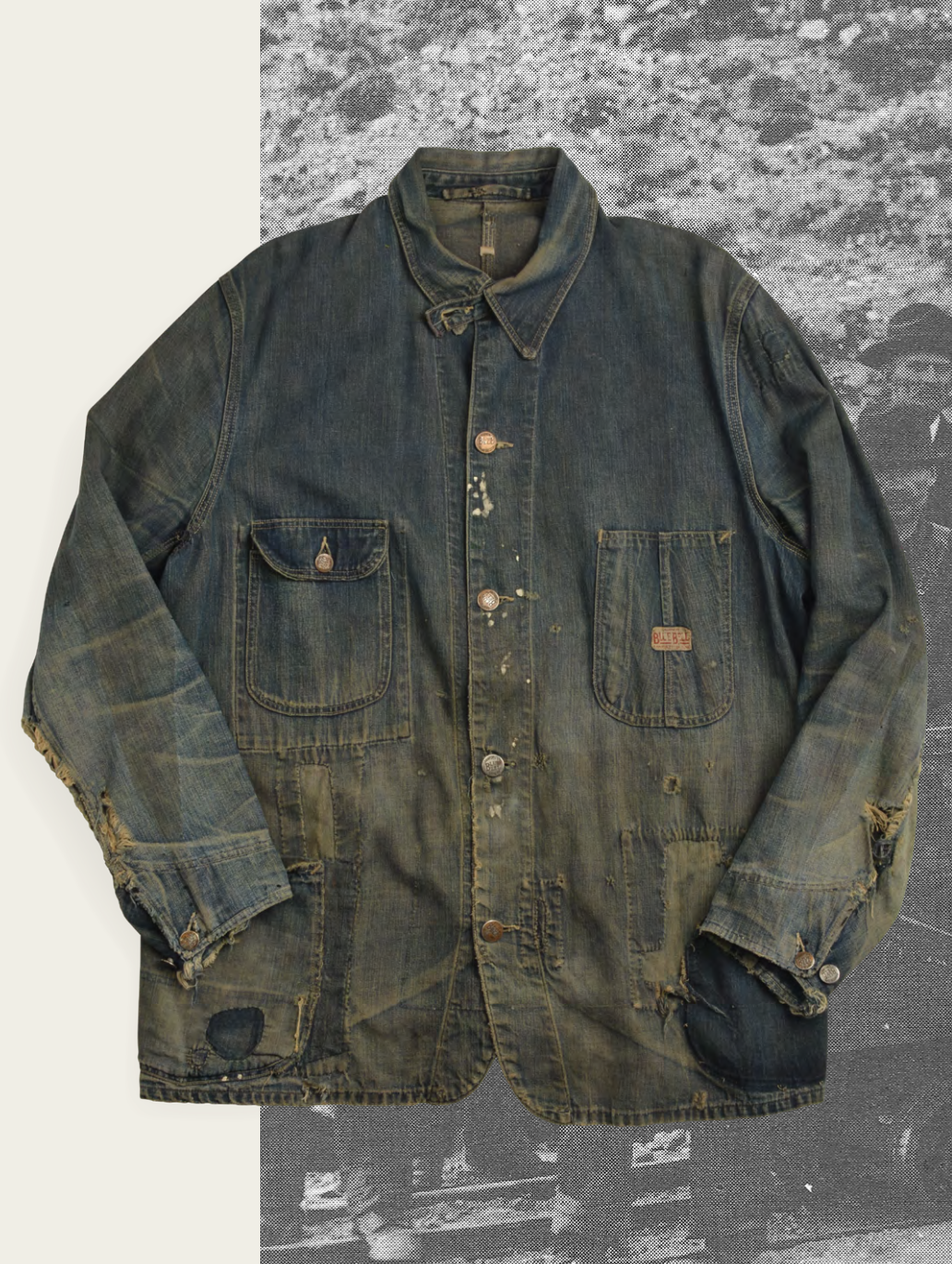
Arguably the most influential garment in the transmission of workwear into contemporary fashion. Originally designed for French and American factory workers in the late 19th century — heavy canvas or denim, boxy cut, chest pockets — the chore coat has been reinterpreted by Carhartt, Orslow, Engineered Garments, and nearly every menswear brand that has engaged with heritage. It is the garment that most directly connects utilitarian Americana to the runway.
The Fabrics Behind the Style
Understanding Americana style means understanding what things are made of. These aren't trend fabrics — they're engineering solutions that outlasted every trend that borrowed from them.
Selvedge denim: Woven on narrow shuttle looms, more durable, ages with wear rather than against it. The raw indigo fades along stress points to create a unique wear pattern. Non-selvedge denim cannot replicate this.
Duck canvas : The heaviest cotton weave, originally used for sails and military tents, adopted for work pants and chore coats in the mid-1800s. Carhartt's signature is duck canvas. It softens with washing but never loses structural integrity.
Flannel: Brushed wool or cotton that traps air and provides insulation without weight. The defining fabric of the American working class from Maine to the Pacific Northwest.
Waxed cotton: Developed for British fishermen, adopted by American ranchers and outdoorsmen. Water-resistant without synthetic treatment. Ages visibly and repairably. Filson and Barbour are the key references.
Leather: Full-grain is non-negotiable for serious pieces. The surface is unchanged from the original hide; it develops a patina with use rather than degrading. Corrected-grain or bonded leather is not heritage leather.
AVANT BOOKS — WORKWEAR
The history of workwear. In three volumes.
From railroad gangs to Raf Simons: Who built these garments, why they lasted, and how they shaped modern fashion.
Three AVANT volumes dedicated to this subject: the origins of duck canvas and denim work clothing, the makers behind the garments, and the cultural transmission into fashion, including the French workwear tradition that influenced American labor clothing.
588 pages. Archival references, rare photographs, collector interviews.
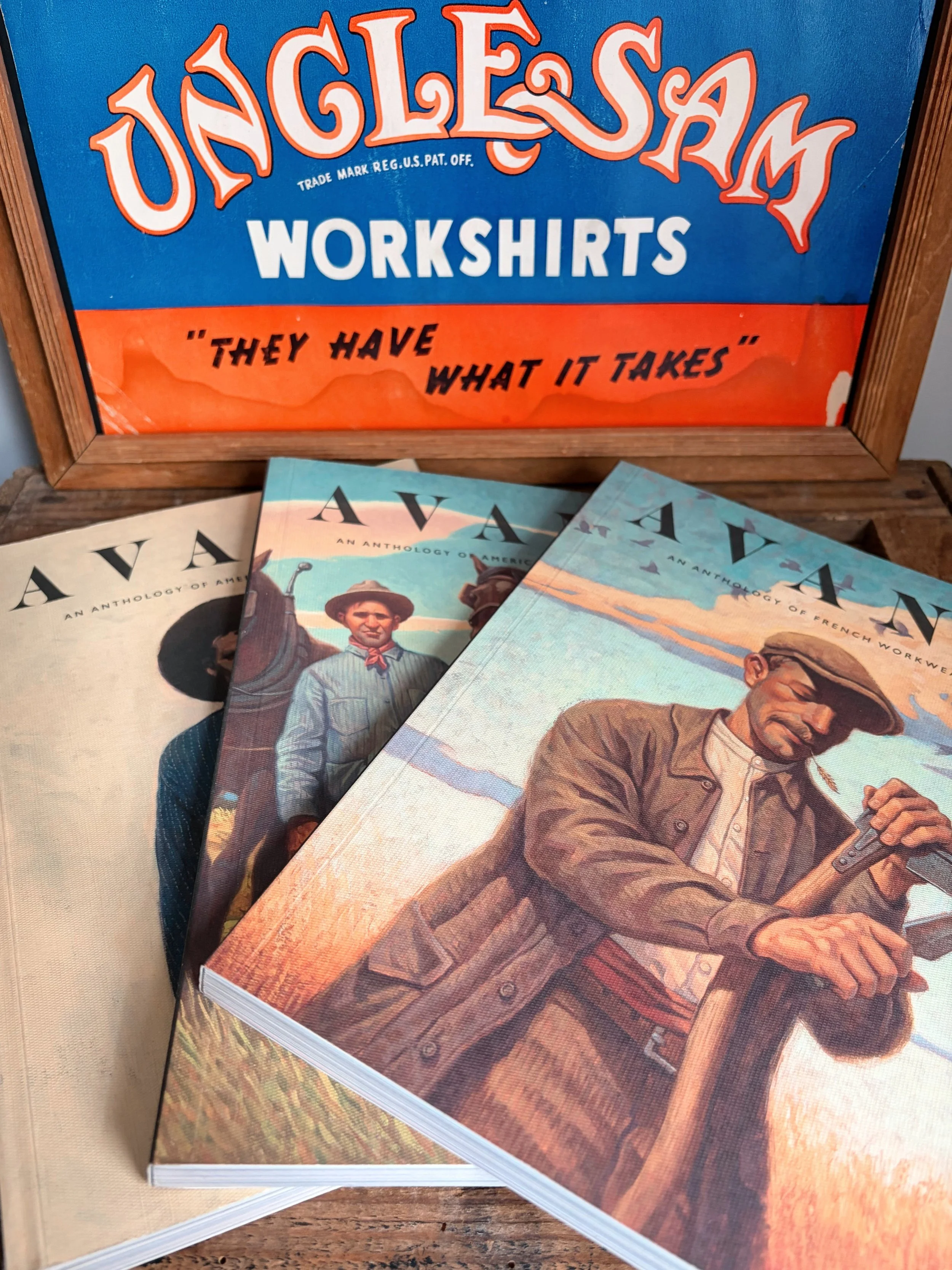
From American railroads to French ateliers.
A focused exploration of workwear through three volumes, tracing its origins, function, and lasting influence on modern style.
$147 → $109
Bundle price, save 38$.
What’s inside:
1. An Anthology of American Workwear
The foundations: garments built for labor, durability, and purpose.
A deeper dive into the evolution of workwear and its influence across cultures and generations.
3. An Anthology of French Workwear
An exploration of workers, farmers, and peasants during the 19th and 20th In France.
Product details (per book):
Softcover
196 pages
170 × 240 mm
Full color
Language: English
Shipping: Worldwide
→ An Anthology of American Workwear — Vol. I
→ An Anthology of American Workwear — Vol. II
→ An Anthology of French Workwear
→ Softcover · Full color · Worldwide shipping
Get the Workwear Pack — $109 →
Or get the full Americana trilogy — $109
Styling Tips for the Americana Look
1. Embrace Layering
Start with a simple base like a white henley or t-shirt and build on it with a plaid shirt and a denim jacket. Layering not only enhances the look but also adds versatility.
2. Mix Textures
One of the hallmarks of Americana style is the use of rugged textures. Pair denim with flannel, leather with cotton, and don’t shy away from adding tweed or corduroy for depth.
3. Accessorize Thoughtfully
Add a wide-brimmed hat like a cowboy hat or fedora for a touch of the American West. A leather belt and a canvas or leather messenger bag are ideal accessories to complete the look.
Iconic Americana Style Icons
Americana style has a logic. These pieces weren't originally worn together for aesthetic reasons — they were worn together because they worked together. That functional coherence is what gives the look its integrity.
Build on a Foundation Layer
Start with a white henley, a thermal undershirt, or a plain white t-shirt. This is not a detail — it's structural. The foundation layer is what shows at the collar when you layer a flannel or denim jacket over it. Americana layering works because each layer is visible and readable.
Master the Texture Stack
The defining hallmark of Americana is the use of contrasting rugged textures worn simultaneously. Denim over flannel. Leather over cotton. Canvas over wool. The key is weight and structure — each layer should have enough substance to read as a distinct element. Avoid anything too lightweight or synthetic; it collapses the visual logic of the stack.
Accessorize with Purpose
Every accessory in a serious Americana wardrobe has a functional origin. A leather belt is structural. A canvas messenger bag was a tool. A wide-brimmed hat has weather logic. Keep accessories within the heritage vocabulary — leather, canvas, wool, brass hardware — and let them be worn-in rather than pristine.
Fit Logic: Straight, Not Slim
Americana workwear was cut for movement and layering, not for fitted silhouettes. Straight-leg denim, boxy chore coats, relaxed flannels — the proportions are inherently relaxed. Contemporary Americana can tighten this slightly, but the silhouette should never read as tailored. The garments carry weight; let them hang.
Wear It In
The most important styling advice for Americana is the hardest to shortcut: these garments improve with age and use. Raw denim that hasn't been broken in doesn't look authentic — it looks unworn. A leather jacket that's too pristine reads as costume. Buy well, buy once, and commit to the wear cycle.
Americana Style Icons
These figures didn't dress Americana deliberately. They wore what made sense for who they were — and the cultural weight of those choices shaped how we read these garments today.
1. James Dean

The definitive template: 501 jeans, white t-shirt, Perfecto leather jacket. In Rebel Without a Cause (1955), Dean's wardrobe was not a costume — it was a direct transcription of what working-class California youth actually wore. That alignment between character and clothing is why the look has never fully dated. His specific combination of garments remains the entry point for Americana menswear six decades later.
2.Steve McQueen
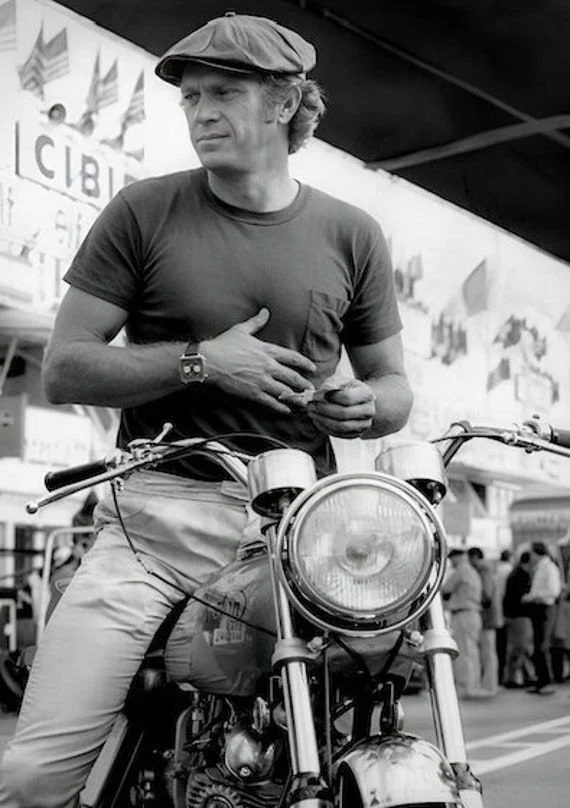
McQueen operated at the intersection of workwear and motorsport — two heritage categories with significant overlap in fabrication and function. His WWII-era military shirts, Levi's 501s, and Barbour International jackets were worn on and off set with the same indifference to occasion. The lesson: Americana credibility comes from living in the clothes, not curating them.
3. Bruce Springsteen
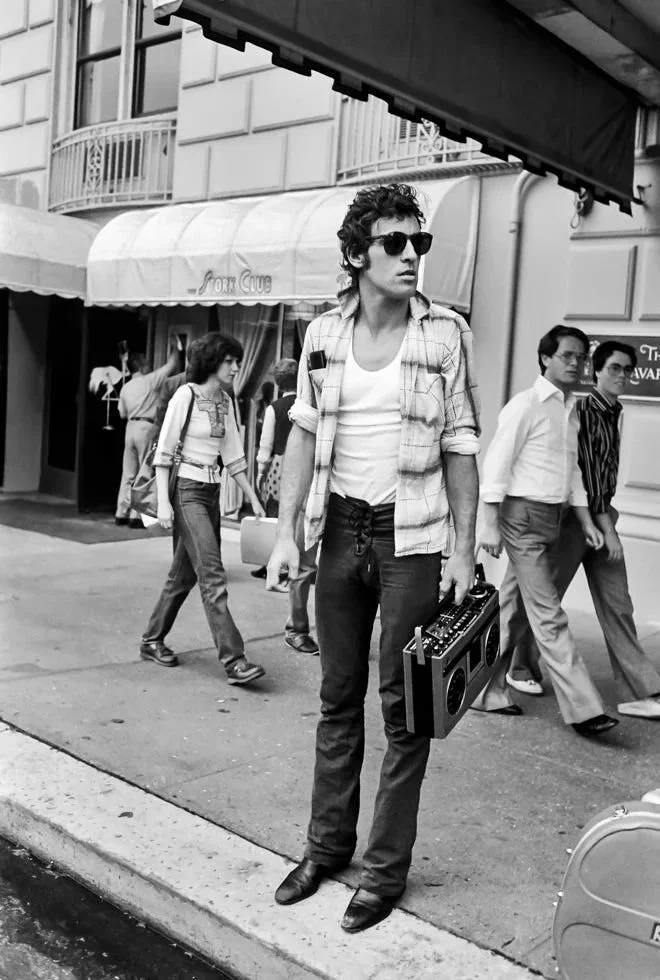
The cover of Born in the U.S.A. (1984) — 501s, a white t-shirt, a red cap — is one of the most circulated images in American cultural history, and it was assembled from the most basic possible Americana vocabulary. Springsteen's visual identity throughout the 1970s and 80s represents the working-class roots of the aesthetic: nothing aspirational, everything earned.
4. Marlon Brando in The Wild One (1953)
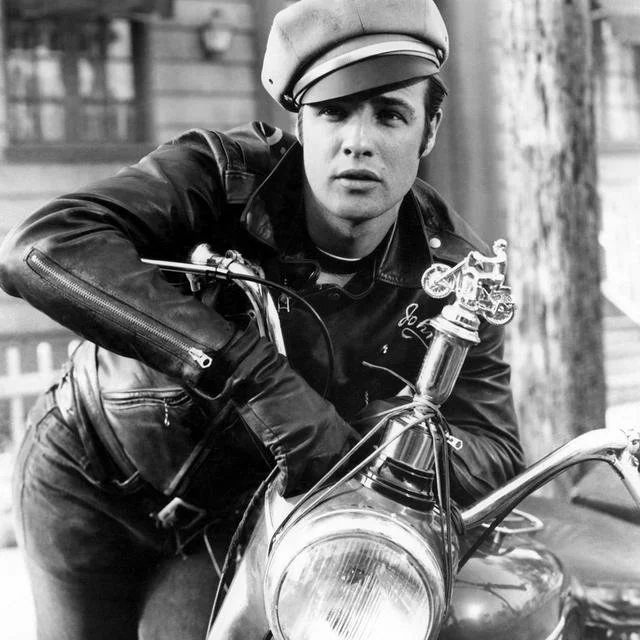
The black Schott Perfecto jacket Brando wore became the template for biker style globally. It was banned in British schools. It sold out everywhere. One garment, one film, one cultural shift. This is Americana at its most concentrated: a piece of functional clothing loaded with meaning it wasn't designed to carry.
Heritage Brands Worth Knowing
These are not trend recommendations. These are brands with documented histories in the categories that define Americana. Understanding what they built — and why — is part of understanding the style itself.
• Levi's — Founded 1853 in San Francisco. The 501 jean, patented 1873, remains the most replicated garment in fashion history. Their vintage pieces (501 XX, Big E) are extensively collected.
Red Wing Shoes — Founded 1905 in Red Wing, Minnesota. Originally manufactured for ironworkers and farmers. Their Goodyear-welted construction allows full resoling — a boot that can theoretically last decades with maintenance.
Pendleton Woolen Mills — Founded 1909 in Pendleton, Oregon. Their wool blankets and plaid shirts are woven on shuttle looms from merino wool. The patterns are Native American-influenced; the construction has remained largely unchanged for over a century.
Filson — Founded 1897 in Seattle to outfit Klondike Gold Rush prospectors. Their tin cloth (waxed canvas) jackets and Mackinaw wool shirts are virtually unchanged from the original designs. One of the rare brands where 'heritage' is not marketing — it's accurate.
Carhartt — Founded 1889 in Detroit. Duck canvas bib overalls and chore coats for railroad workers and construction laborers. The Work In Progress (WIP) line brought the brand into contemporary fashion without altering the core construction.
Schott NYC — Founded 1913 in New York. Makers of the Perfecto leather jacket since 1928 — the first leather jacket with a zipper. Still manufactured in the United States.
RRL (Ralph Lauren) — Ralph Lauren's heritage sub-label, drawing directly on 19th and early 20th century American workwear and western references. The most fashion-forward entry point into serious Americana.
Todd Snyder — Contemporary American menswear with explicit heritage references. A useful bridge between Americana workwear and modern tailoring for anyone building a wardrobe that needs to function across contexts.
AVANT BOOKS — THE COMPLETE AMERICANA TRILOGY
Western. Militaria. Workwear.
The three pillars of American style — in print.
Three volumes. 588 pages. Everything that shaped Americana menswear — the people who built the garments, the cultural transmission, the archival references you won't find online.
Interviews, rare photographs, collector accounts. A library, not a lookbook.
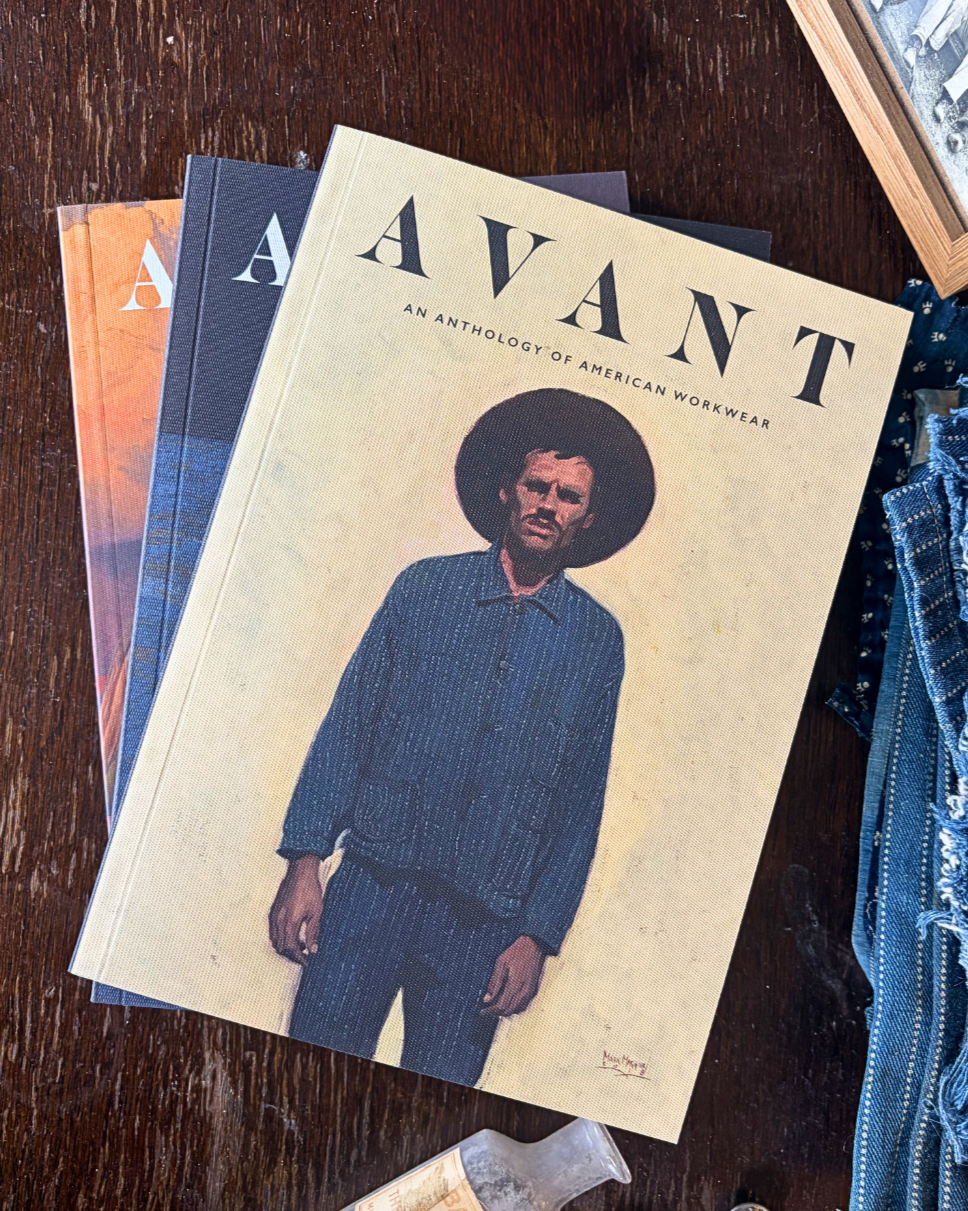
Western. Military. Workwear. The pillars of American style.
A curated trilogy exploring the roots of American heritage through three of AVANT’s most iconic volumes.
$147 → $109
Complete the set and save $38
What’s inside:
1. An Anthology of Western Wear
The mythology of the American West, from cowboys to cinematic icons, exploring the garments that shaped a legend.
2. An Anthology of American Militaria
A deep dive into military garments and their enduring influence on modern style.
3. An Anthology of American Workwear
The origins of rugged clothing built for labor, adopted by culture, and reinterpreted by fashion.
Product details (per book):
Softcover
196 pages
170 × 240 mm
Full color
Language: English
Shipping: Worldwide
→ An Anthology of Western Wear
→ An Anthology of American Militaria
→ An Anthology of American Workwear— Vol. I
→ Softcover · 196 pages each · Full color · Worldwide shipping
→ $147 separately — $109 as a pack. Save $38.
Get the Americana Pack — $109 →
Start with the Workwear Pack — $109 →
Embracing Americana Style
The best Americana wardrobe is the one you've been wearing for ten years.
Americana style is not a mood board. It's a set of principles — quality of construction, integrity of materials, functionality of design — applied to garments with documented histories. The brands that have endured in this space endured because they built things that lasted. The icons associated with this aesthetic are associated with it because they wore the clothes without self-consciousness.
The entry point is simpler than it looks: one good pair of jeans, one quality flannel, one pair of work boots that you'll actually wear in. Build from there. Resist the urge to buy everything at once. Americana accrues meaning through use — through the fades, the patina, the marks that make a garment yours.
Want to go deeper? The full AVANT guide to Americana menswear — with a dedicated shopping section — is available here: The Ultimate Guide to Americana Menswear →