Workwear and the persistence of labor
Turn your head: workwear is everywhere.
Not only in vintage stores or niche circles, but in the most ordinary settings. At a farmer’s market, a father in a chore jacket runs after his children. On catwalks, cargo pants and utilitarian boots are reinterpreted by luxury brands. On the street, denim has become almost invisible.
Workwear is no longer a category. It is a background.
Which makes it even more surprising: none of these garments were ever meant to be seen this way.
Denim, canvas, leather… these materials were not designed for stillness, nor for comfort in controlled environments. They belonged to movement, to effort, to constraint.
And yet, today, workwear has become one of the most widely adopted styles.
So the question is not aesthetic. It is structural.
Why do we continue to dress for work that no longer exists?
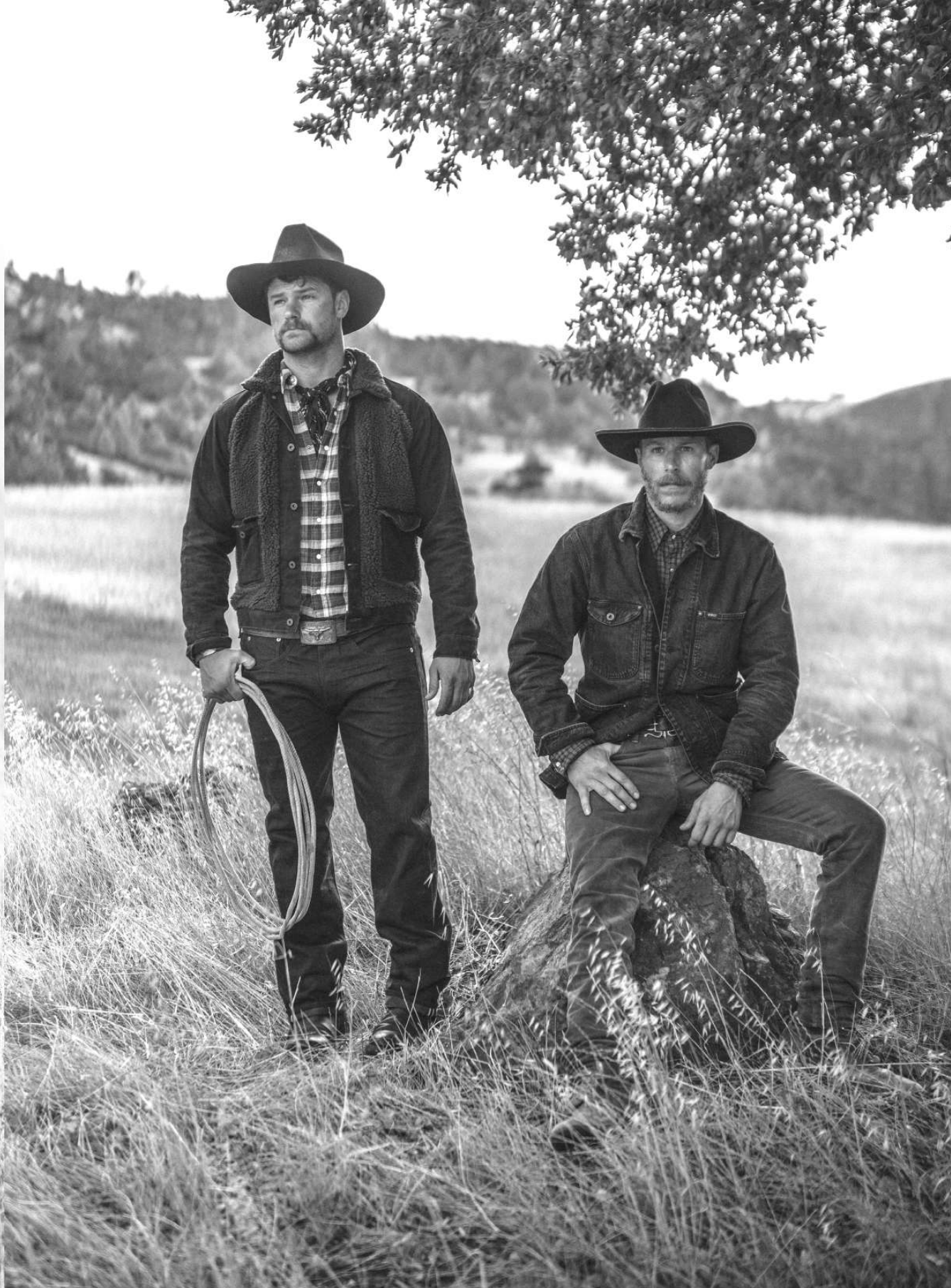
RRL Lookbook — 2026
When work left the body
There was a time when clothing was shaped by physical necessity.
Sneakers belonged to sport. Workwear belonged to labor. Each garment had a clear relationship to the body in motion, to effort, to function.
That relationship has largely disappeared.
Over decades, workers moved away from fields, factories, and railways. Work migrated into offices, then into screens. What sociologists describe as a Post-industrial society is not only an economic transformation. It is a shift in how the body participates in the world.
The gestures changed. The environments changed. The constraints disappeared.
And yet, the clothes remained.
The uniform without the function
Workwear did not fade with the world that produced it: It expanded.
Denim became universal and chore jackets moved into cities. Carpenter pants appeared far from any construction site. The garments detached from their original function, but not from their form.
This is where the tension lies.
We continue to wear the uniform of a reality that no longer structures our lives.
In this sense, workwear operates less as a tool than as what Jean Baudrillard would describe as a simulation: a sign of labor detached from its original reality.
From protection to projection
What changed is not the garment, but its meaning. Workwear was not redesigned. It was reinterpreted.
What once protected the body now projects something else: effort, honesty, a resistance to artificiality.
In a culture increasingly detached from physical production, these qualities are no longer experienced directly. They are suggested, evoked, almost reconstructed.
Workwear becomes less about what we do, and more about what we want to align with.
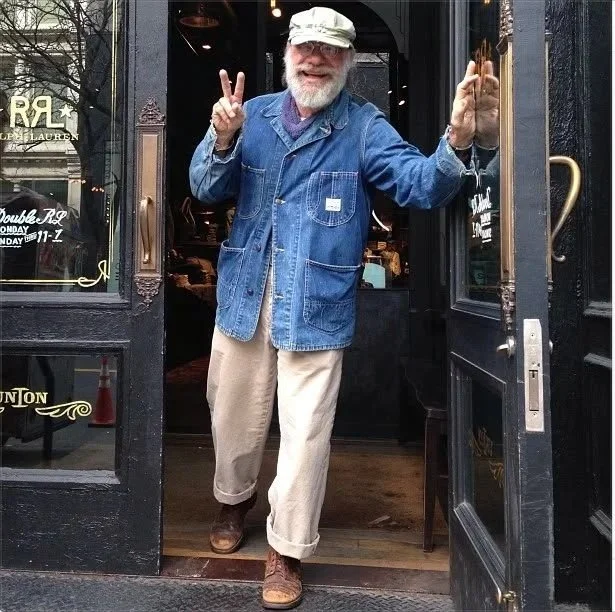
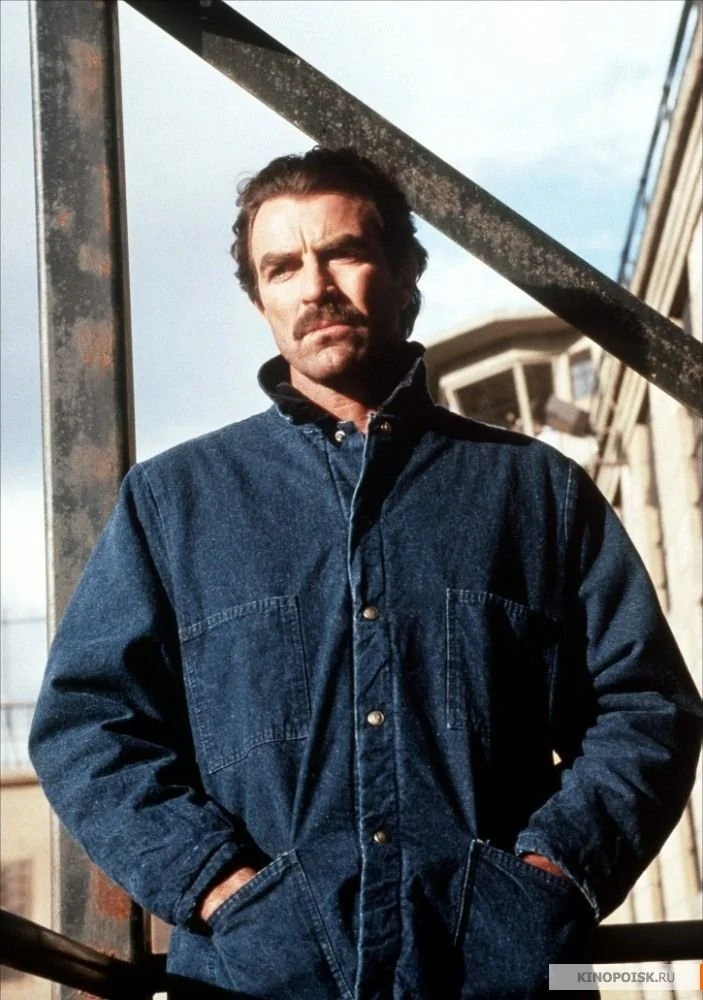

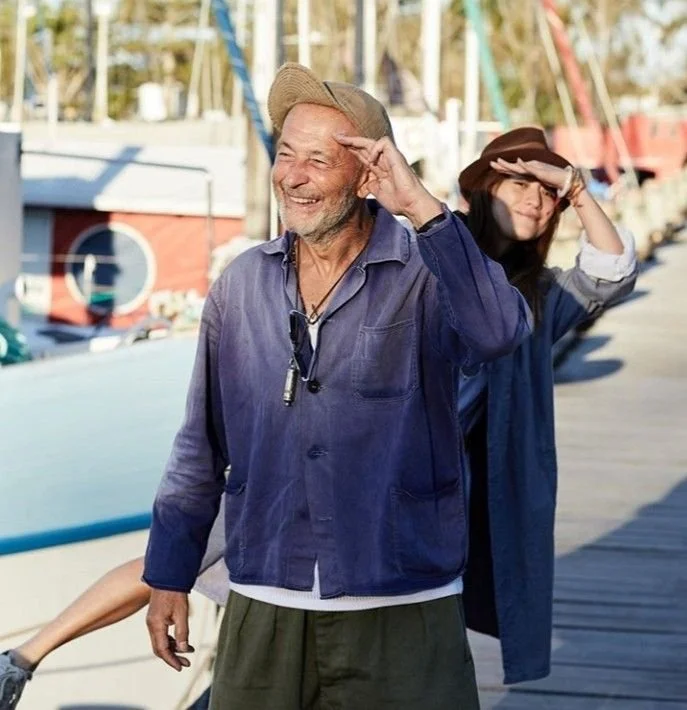
Like the garments analyzed by Roland Barthes, workwear functions today as a cultural language, one that speaks less of utility than of authenticity, effort, and identity.
Workwear also aligns with what trend forecasters such as WGSN describe as emotional durability , which is the idea that objects retain value not only through function, but through their ability to carry meaning over time.
Unlike contemporary fashion, designed for rotation and replacement, workwear was built to resist disappearance. It records time rather than erases it. Fading denim, worn canvas, visible repair… these are not flaws, but markers of continuity.
In this sense, workwear offers something increasingly rare: not just longevity, but legibility over time.
It allows the wearer to engage with durability symbolically, to access the idea of permanence, even in a context where ownership, labor, and identity have become fluid.
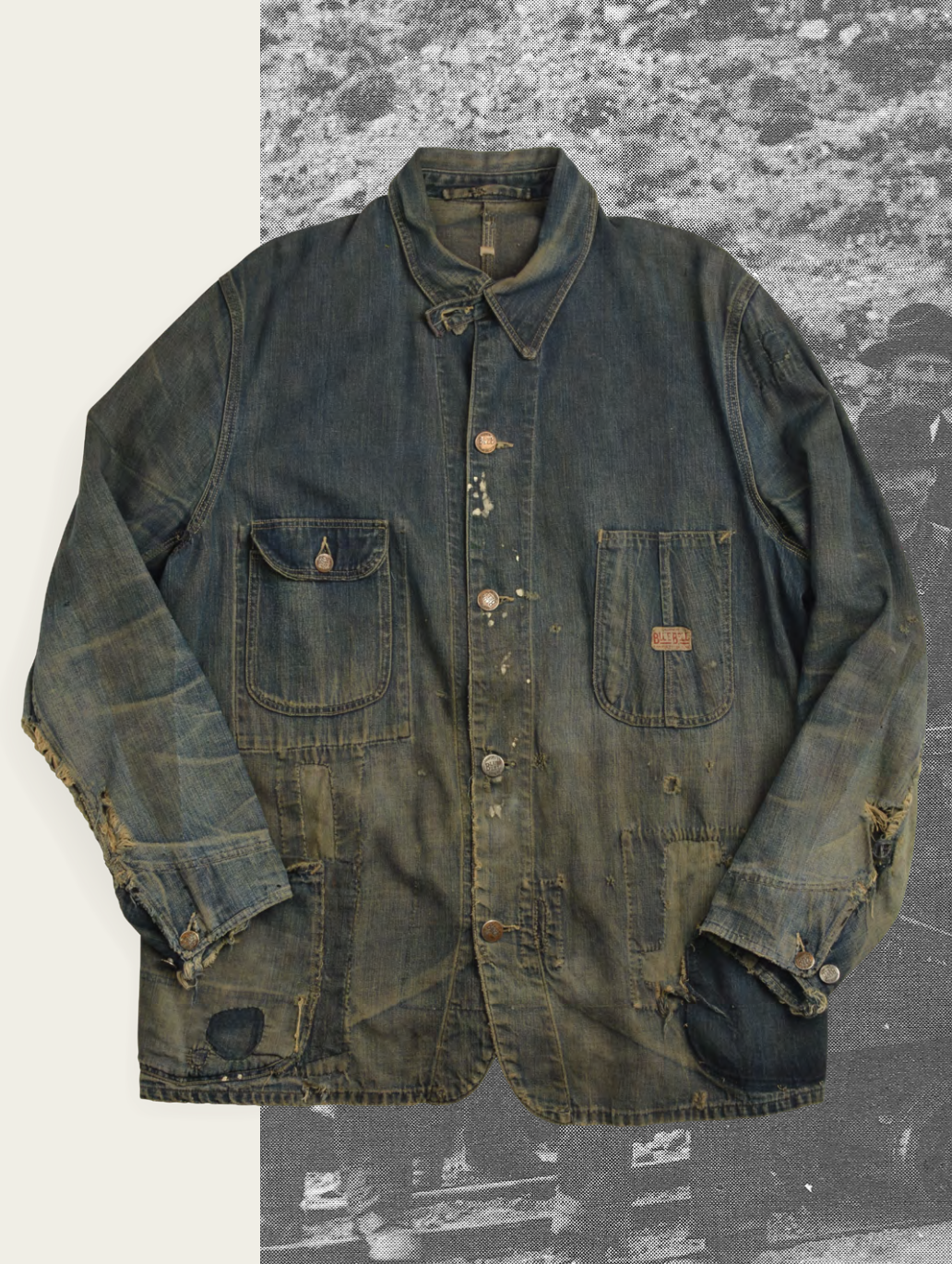
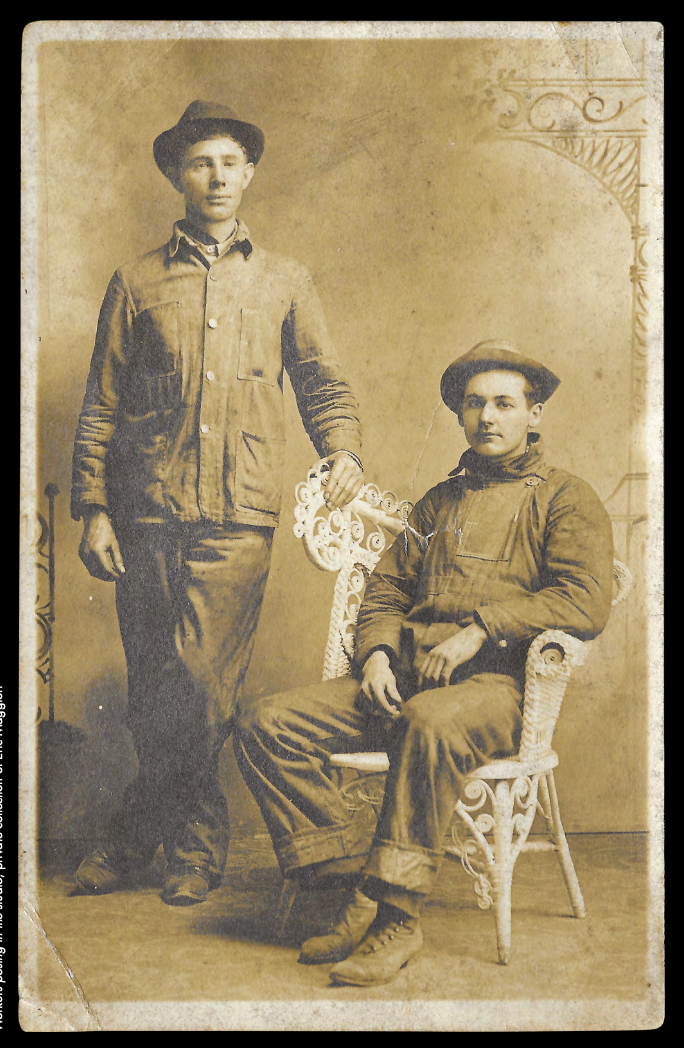
From Eric Maggiori’s Archive
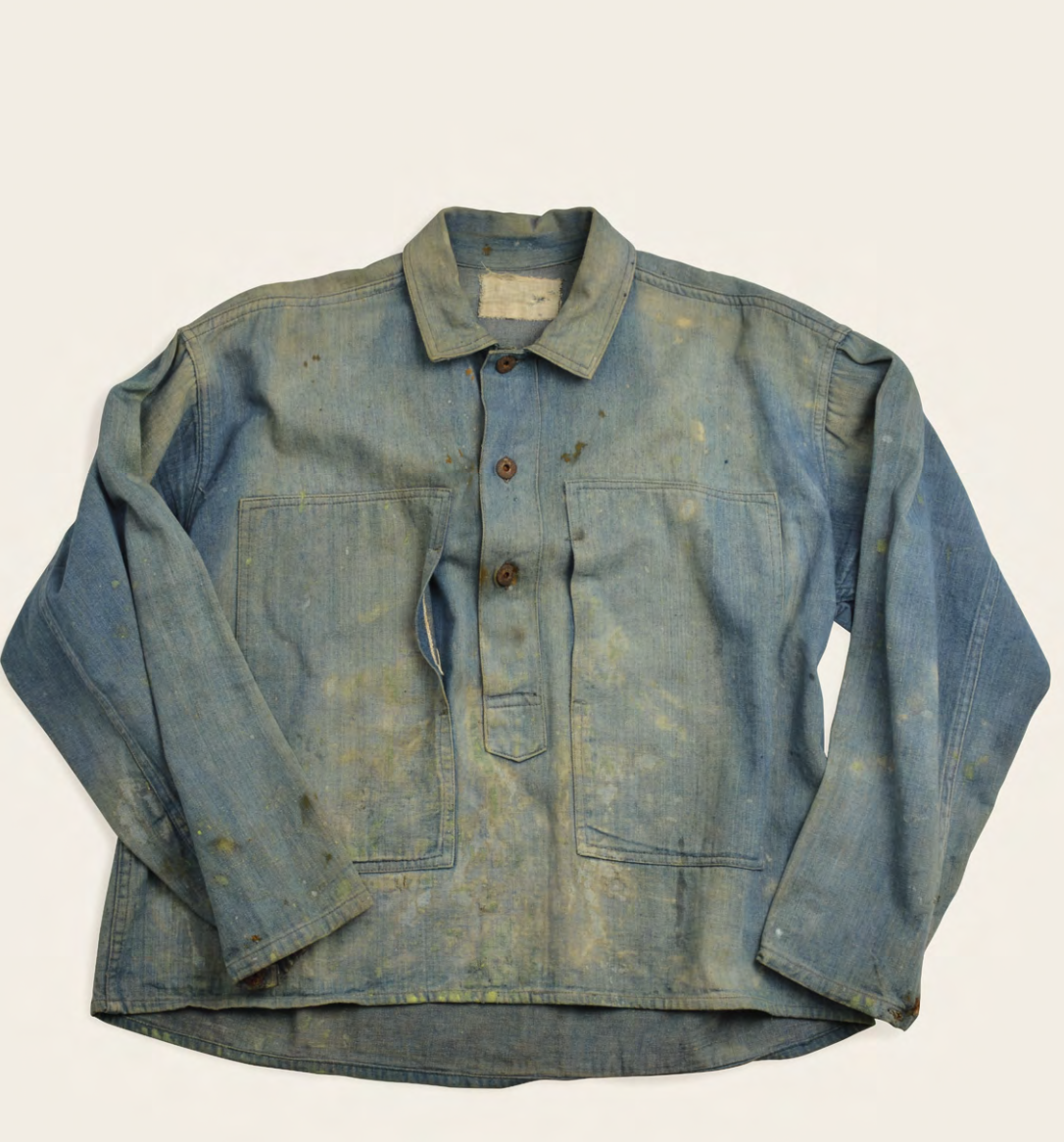
From Eric Maggiori’s Archive
Brands as translators of work
Carhartt
Few brands embody this shift as clearly as Carhartt.
Originally created for railroad workers, it now sits at the center of urban culture. The garments themselves have barely changed. Their weight, their resistance, their construction remain intact.
What has changed is everything around them.
The worker has disappeared from view, but his uniform persists, detached from labor, recontextualized as identity.
Carhartt no longer equips effort: It signifies it.
Levi Strauss & Co
Denim follows a similar trajectory, but on a global scale.
Originally developed for miners, it has become one of the most widespread garments in the world. The Levi's 501 has remained structurally consistent for over a century, resisting the logic of seasonal change.
It is not that denim adapted to fashion. Fashion adapted to denim.
What was once a necessity has become a constant, less a reference to work itself than to something more abstract: durability, permanence, a relationship to the real.
RRL
With RRL, this transformation becomes explicit.
Ralph Lauren does not reproduce workwear: he reconstructs its world. Every detail is preserved, but the context is displaced.
Labor is no longer present. Only its image remains.
RRL does not sell function.It sells a narrative in which function once mattered. What is being worn is not workwear itself, but the idea of it.
Wearing the idea of effort
What emerges is not a return to work, but a reconfiguration of its meaning.
We no longer engage with labor through the body, yet we continue to value what it represented.
Workwear becomes a way of maintaining proximity to that value, a material trace of effort in an increasingly immaterial world.
Clean hands, worn denim. Digital work, physical codes.
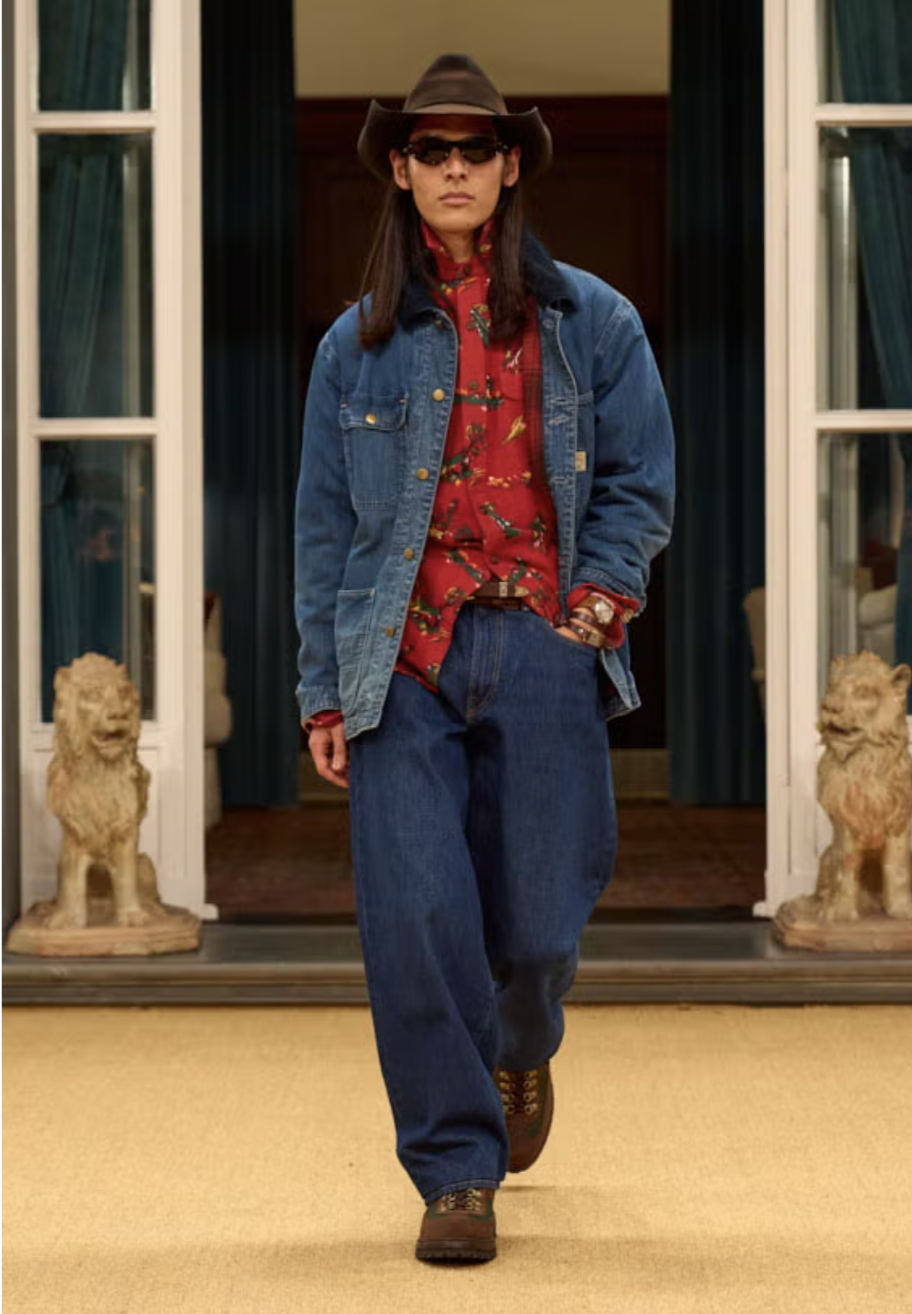
Polo Ralph Lauren Runway
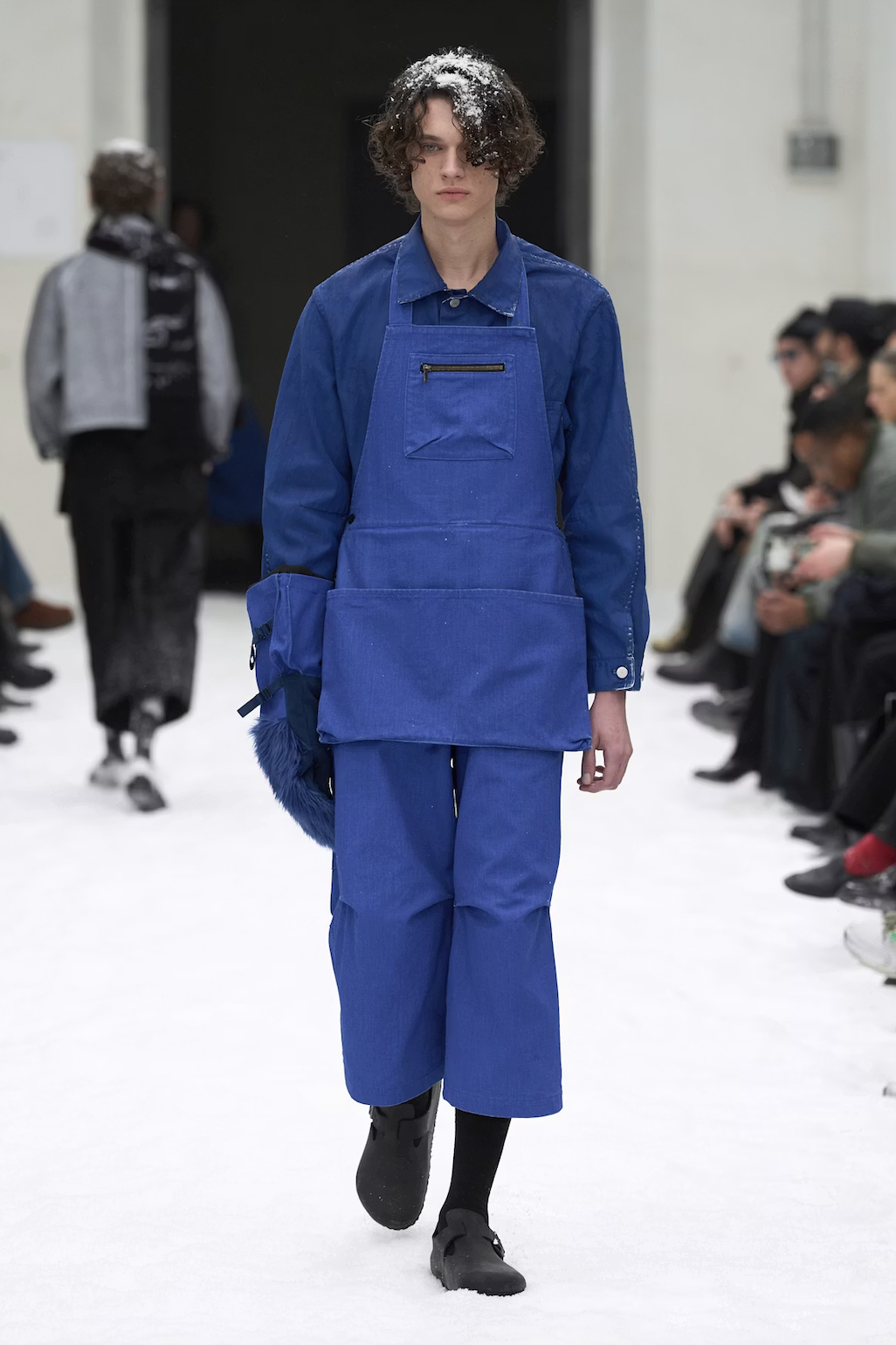
Shinyakozuka Runway
Durability as reassurance
The persistence of workwear is not accidental. It responds to a growing imbalance.
In a world defined by acceleration, disposability, and abstraction, durability becomes reassuring. Materials that resist, garments that age, textures that record time… these elements offer something increasingly rare: continuity.
Not because they are necessary, but because they stand for something that is.
In a world where, as Richard Sennett notes, the connection between hand and material is fading, workwear endures as one of the last visible traces of that relationship.
We wear it to maintain a connection, however distant, to effort, to materiality, to a form of reality that resists disappearance.
Sources and further readings
To support and deepen this perspective:
An Anthology of American Workwear I & II
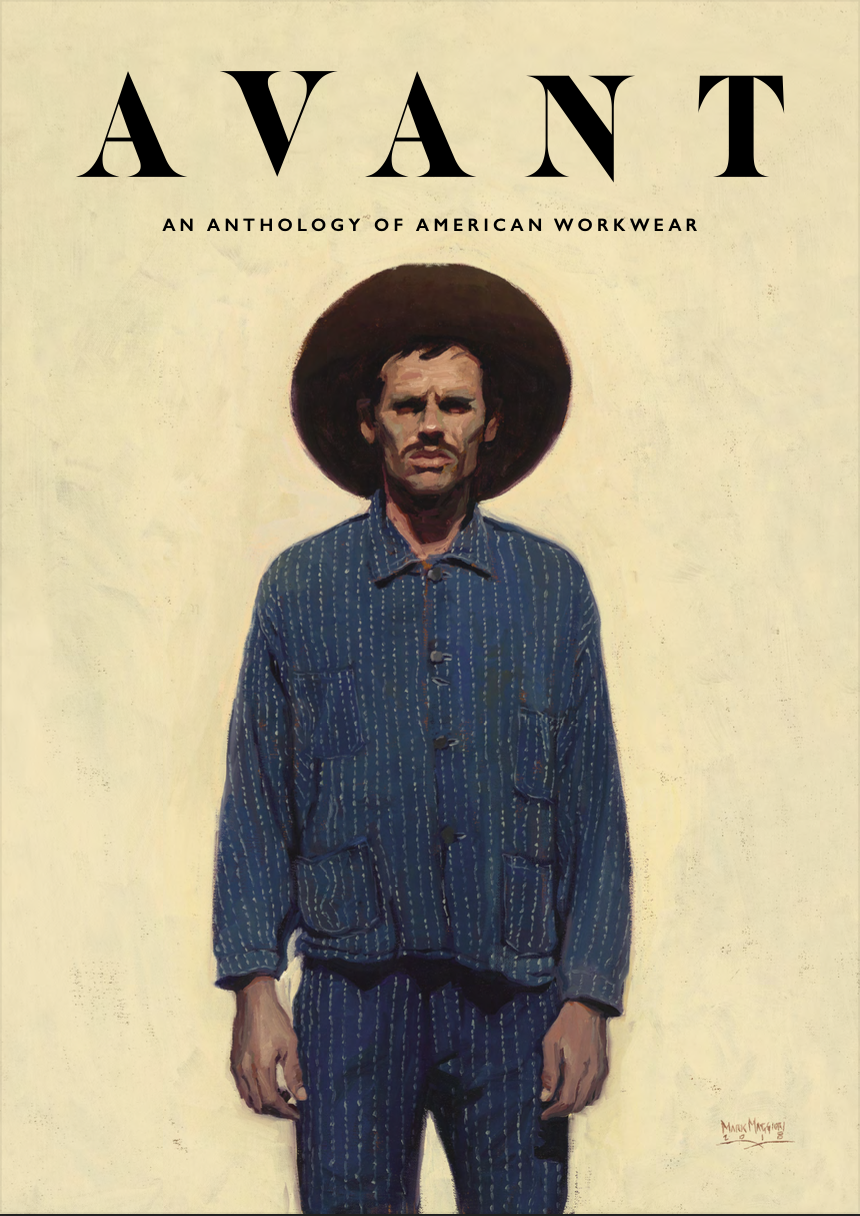
Inside, you’ll discover
• The origins of American workwear during the California Gold Rush and how practical garments shaped the identity of the American frontier.
• Conversations with denim archeologist Brit Eaton and Rin Tanaka, founder of The Inspiration Show, two key figures in the world of vintage workwear.
• A deep dive into denim hunting with collectors Bryan Kahtava and Melody Kahtava, sharing their passion for rare historical garments.
• The story of Jacob Davis, the tailor who invented the copper rivet and forever changed the history of denim.
• A visit to United Costume, one of Hollywood’s most respected costume houses, preserving authentic American workwear for film productions.
• An exploration of the deep admiration for American workwear culture in Japan, where collectors and brands have helped preserve its heritage.
• A practical guide to identifying the era of a garment through its label, along with a historical journey into the true story of the California Gold Rush.
Specs
Softcover
170 × 240 mm
Full color
Language: English
Shipping: Worldwide

A second deep dive into the most collectible American workwear ever made. The kind of details only true obsessives notice.
Inside you’ll discover
Chinese immigration during the Gold Rush — a forgotten chapter of American history
The true story behind rare Levi’s jeans from 1880, discovered in a California mine
Collector details decoded: chinstrap, vent holes, and other workwear “tells”
Interviews with legends: Lynn Downey (Levi’s historian), Rin Tanaka, Larry McKaughan, Akira Tsuchida, Michael Harris
A unique cover painting Three Horse Power by Greg Newbold, created exclusively for AVANT
Specs
Softcover
170 × 240 mm
Full color
Language: English
Shipping: Worldwide
Daniel Bell, The Coming of Post-Industrial Society (1973)
→ foundational concept of the shift from physical to knowledge workMcKinsey & Company – reports on consumer behavior and durability trends
https://www.mckinsey.comWGSN – insights on “emotional durability” and heritage consumption
https://www.wgsn.comLevi Strauss & Co. – history of denim and workwear origins